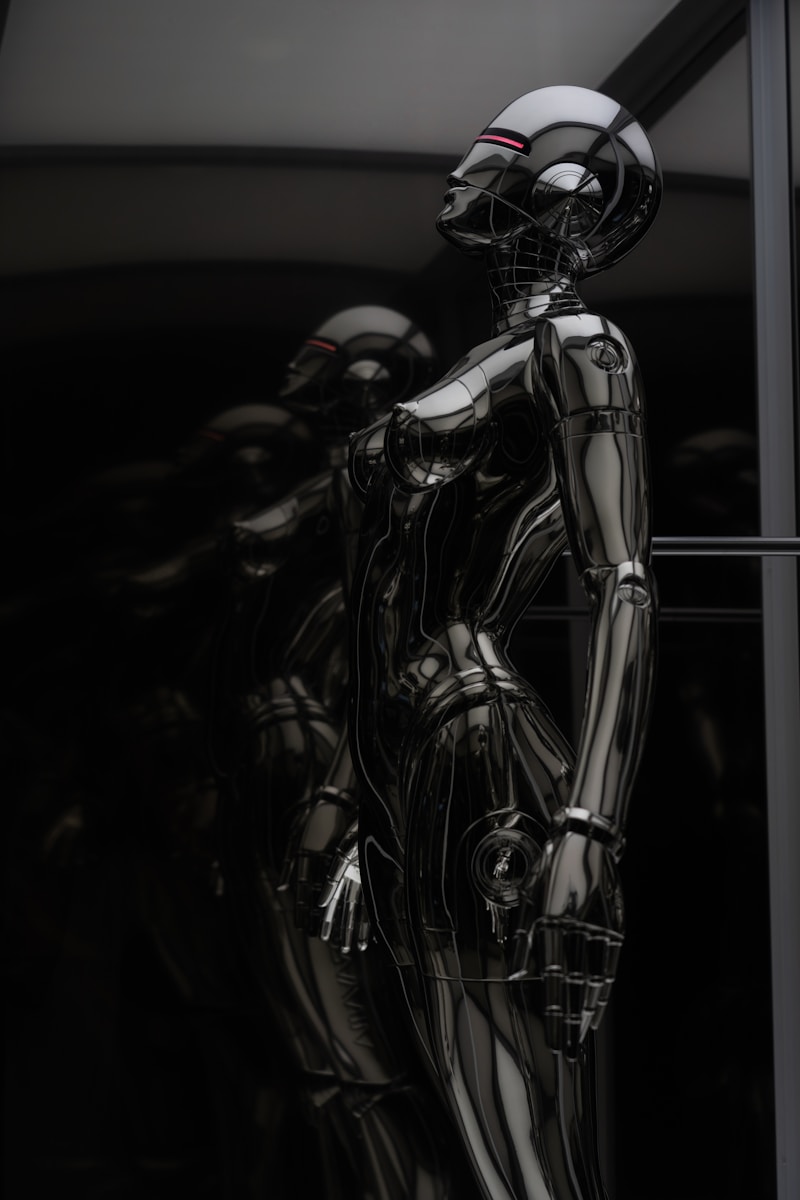
In Umuahia, long after the guns of the Biafran war had fallen silent and the old wounds of hunger and loss were hidden beneath the fresh paint of new houses, a story began to grow. It was not like the old folktales of tortoise and the spirits, though it shared their mystery. It was about men who said they had found a way for thoughts to leap out of the head like birds, flying faster than any word carried by tongue.
The people called it Merge.
At first, only the students in the university spoke of it, in the cafés where suya smoke curled into the night. They whispered that a white man from across the waters, a restless man with quick eyes named Sam, had come with the vision of fastening the mind to machines. They said it would allow a crippled child to walk again, or a voiceless woman to shout her grief.
But the elders heard the story differently. To them, this thing called Merge was like the masquerade that walked with two faces—one smiling, one frowning. An elder in Umuahia once said: “When a man carves a mask, he must know if it is for the dance or for the war. If he does not, the spirits will decide for him.”
I
Young Nkem, who had returned from Lagos after many failures, was among the first to be tested by Merge. His father, a carpenter who shaped coffins with steady hands, warned him:
“My son, the yam that grows too fast does not fill the barn. Be careful of these men who ask you to tie your spirit to their machines.”
But Nkem was weary of failure. He wanted to leap where his legs could not carry him. He wanted to sit with men who controlled the air, who spoke in markets that had no soil beneath them, only wires and lights. So when the company set up its white building near the highway, with doors that opened by themselves, Nkem went.
The doctors fixed a crown of small silver teeth upon his head. Wires sprouted like roots. They told him to think of water. He thought, and before his eyes a screen filled with waves. They told him to think of fire, and a flame leapt onto the screen as though his mind had become a hand that painted the world.
He returned home trembling, his eyes alive with new fire. “Father,” he said, “it is true. The mind has wings.”
His father spat into the dust. “The kite said it would teach man to fly, but it first taught him to fall.”
II
The village grew restless. Some youths began to dream of new uses. If thought could command a machine, could it also command another man? Would chiefs lose their power? Would priests?
The priest of the local church thundered that the Tower of Babel had risen again, not in stone but in wires. He said: “When man takes the place of God, he finds his own hand too small to bear the weight of heaven.”
But the young ones laughed. They said the priest spoke from fear of losing his flock to this new temple.
III
One day, a man called Kelechi, who had lost his legs in a lorry accident, came to the Merge house. He placed the crown on his head. Slowly, with the machine’s help, he commanded a metal skeleton to stand, to walk, to run. And the people gasped. Mothers wept and children clapped.
“This is not witchcraft,” Nkem shouted. “It is life returned.”
For a season, the people were convinced. They brought their sick, their mute, their broken, and watched as sparks of healing leapt from thought to machine.
IV
But a shadow followed the light. One night, a girl cried out in her sleep. She said voices had entered her dreams through the silver crown. She said her secrets had fled into the machines, never to return. The next morning, her father broke the device and cast it into the river.
Stories grew. Some said the machines listened to men even when they were silent. Others said a man who joined Merge no longer owned his own thoughts; they belonged to Sam, who had gathered them in the air like a fisherman with a wide net.
The elders sat again in council. The oldest, who had seen the war, raised his voice:
“When the white men came first, they asked us only to learn their letters. They said it was to open our eyes. But when our eyes opened, we found our land was gone. Now they ask us to open our heads. If we agree, what shall remain of us?”
The council decided that the machines should remain, but only for those whose lives were broken, not for the curious or the proud.
V
Nkem, now a local champion, wrestled with this. He saw the truth of the elders’ warning, but he also knew the hunger of his own generation. They wanted wings. They wanted their thoughts to travel farther than their legs, farther than their history.
He went again to the Merge house and sat alone in its glowing chamber. “What am I without this?” he asked the machine. “What am I if my thoughts remain only mine?”
The machine did not answer. But he thought he heard the faint echo of many voices—not spirits, not ancestors, but other men and women like him—dreaming, commanding, whispering. Their minds mingled like smoke, without boundary.
VI
Years later, the village would tell the story differently. Some said Merge was a blessing, others a curse. Some remembered the lame who walked, others remembered the girl who lost her dreams.
But all agreed on one thing: that the world had changed its path the day men learned to bind thought to metal. And like the river that bends when the earth shifts, the people of Umuahia bent too, though none could yet say if they bent toward the light or into the shadow.
Disclaimer: This article may contain affiliate links. If you click on these links and make a purchase, we may receive a commission at no additional cost to you. Our recommendations and reviews are always independent and objective, aiming to provide you with the best information and resources.
Get Exclusive Stories, Photos, Art & Offers - Subscribe Today!
Related posts:
 The Mind Mesh: Connecting Minds with AI for Collaborative Thought and Knowledge Sharing
 Unlocking Human Potential: The Future of Merging Minds with AI Technology
 Idle Minds: Will a Post-Work World Foster Creativity or Lead to Despair?
 The Event Horizon of Thought: Exploring the Consequences of ASI Minds Reaching Peak Complexity
 Idle Minds: Can a Post-Work World Ignite Creativity or Fuel Despair?





Post Comment
You must be logged in to post a comment.