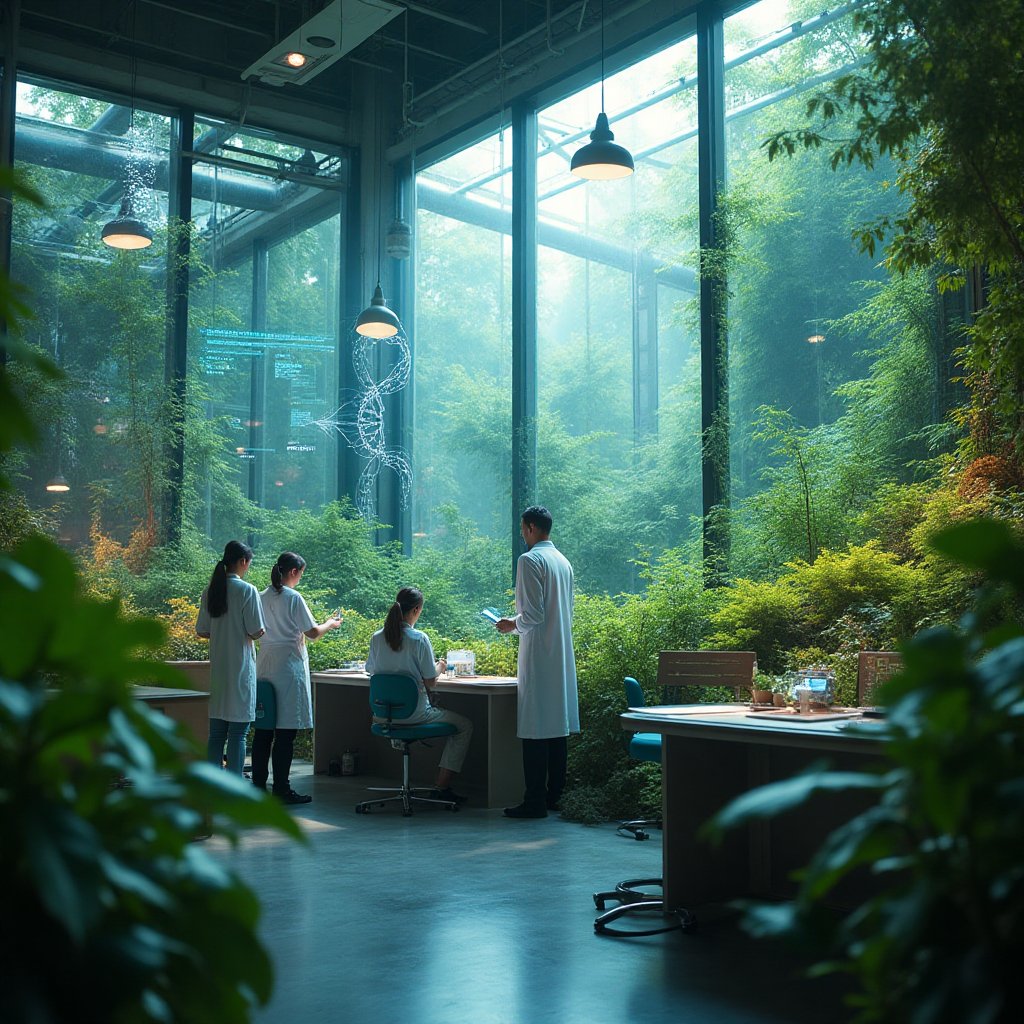
Introduction: A New Frontier in Biology and Technology
The only thing we know about the future is that it will be different. -Peter Drucker
Peter Drucker, a renowned management consultant, was known for understanding the dynamic nature of future trends. This quote underscores the perpetual evolution we are undergoing. Just as we adapt to our environment, the way we interact with nature is changing too, especially with breakthroughs in technology. How will artificial intelligence change the face of genetics? As climate change morphs into a formidable adversary, traditional conservation efforts seem like trying to patch a sinking ship with duct tape. Enter AI — a beacon of hope that promises not just to patch, but to rebuild the vessel entirely. The question isn't if AI can design new species. It's how fast can we responsibly harness this capability?
Consider AI’s thrilling potential: a future teetering between boundless possibilities and ethical dilemmas. Imagine AI crafting life forms so uniquely suited to their new environments that they redefine what nature could be. With scientific trailblazers like George Church, Jennifer Doudna, and Craig Venter at the helm, this exhilarating vision edges closer to reality. The intersection where AI meets biology might just be where humanity finds hope.
AI Gene Crafting involves leveraging AI algorithms to encode and fabricate novel genetic sequences, paving the way for the creation and modification of species aimed at environmental restoration and sustainability.
The Science Behind Synthetic Biology
This magical crossroad where biology and AI intersect is known as synthetic biology. But what does it mean when AI gets involved? It's like giving a supercomputer a paintbrush to create life. But don’t worry — it’ll be more Monet than Jackson Pollock. In essence, synthetic biology involves engineering living systems to meet human needs, adding a splash of AI to make it all possible. To fully grasp this fusion, we need to dive into the core building blocks of synthetic biology.
Fundamentals of Synthetic Biology
Synthetic biology resembles a giant model kit, the kind where each piece has been precision-engineered to fit together perfectly. This field merges natural and artificial systems, turning legos into legions—a biologist’s dream toolkit. It includes gene synthesis, where companies like Ginkgo Bioworks create 'biobricks,' or standardized DNA sequences. Think of them as the IKEA parts of DNA, but with clearer instructions! These components enable scientists to construct genetic circuits that can power specialized functions, like improving plant drought resistance or creating bacteria that thrive on carbon dioxide.
Machine Learning Algorithms in Genetic Engineering
Now, let’s add some high-tech wizardry. AI, particularly machine learning, plays a pivotal role here. Imagine you're an AI, your best friend is data, and together you're solving life's biggest puzzles. Machine learning models such as Google's Google AI scout through vast datasets of genetic information like an archaeologist unearthing treasures. They analyze patterns, think of new combinations, and design revolutionized blueprints for synthetic organisms. This partnership not only streamlines biological melange but also envisions efficient ways to integrate synthetic life into our natural world.

AI-Mediated Species Creation: The Process
Creating new species with the aid of AI isn't exactly like baking cookies, but it's just as exciting and deliciously intricate. Imagine blending supercomputer brains with living tissues to create something entirely new. Sounds wild, right? Well, welcome to the future! This extraordinary process gracefully juggles computer science and biology, crafting innovations from imagination to creation.
The Discovery Phase: Identifying Species to Develop
Before we unleash our inner Dr. Frankenstein, we need to figure out which species require a scientific makeover. Enter AI, equipped with big data analytics. This brilliant tool scouts through oceans of information to identify which endangered or critical species offer fertile ground for our biological wizardry. By examining genetic variability, environmental adaptability, and overall ecosystem importance, AI helps us prioritize our genetic adventures. It's kind of like picking which movie to watch based on critics' and public choice.
Designing Genetic Blueprints
Once we've chosen our nature-starved subject, it's time for the real magic—designing genetic blueprints. Think of it as creating a superhero's DNA, but with less Lycra. Armed with CRISPR technology, AI drafts genetic sequences that sprout desired traits like drought resistance, increased fertility, or pest resilience. It's like creating the ultimate Swiss Army knife of species, built to thrive in unforgiving landscapes.
Real-World Applications of AI-Crafted Organisms
The way we use AI to craft organisms isn't purely about futuristic fantasies; it's profoundly practical, too! Using AI-designed organisms could be revolutionary for our environment, profoundly impacting current environmental restoration projects. So, what can these critters do?
Restoring Ecosystems Affected by Climate Change
Imagine releasing species engineered for the changing climate. We're talking about savvy, resourceful organisms that can survive and thrive while they help restore balance. These AI-created life forms could reinvigorate ecosystems, bringing resilience to the climate-altered arenas. Picture eco-friendly superheroes rallying to the environment's aid!
Success Stories and Case Studies
While this may sound like delving into the realm of science fiction, AI-synthetic biology is alive and kicking, leaving tangible pawprints and fin prints behind it. Think of carbon-sequestering bacteria used to capture harmful emissions. What was once an abstract idea has become a palpable solution that tackles some fierce environmental foes. Such leaps aren't just whispers of what could be but rather bold pronouncements of what these engineered marvels can achieve in real life.
Ethical Considerations in Genetic Engineering
With the power of creating life through genetic engineering comes significant responsibility. Modifying organisms raises essential ethical questions that the scientific community must grapple with as we venture into crafting new life forms.
Addressing the Risks of New Species
Introducing engineered organisms into ecosystems could have unexpected ramifications. Risks include upsetting the natural balance of existing species, competition for resources, or unintentional consequences on biodiversity.
Let's delve into the potential threats through a simplified table:
| Potential Risk | Description |
|---|---|
| Ecological Competition | Engineered species may outcompete native species for resources. |
| Genetic Pollution | Genetic material from engineered species may mix with that of native species, affecting natural gene pools. |
| Habitats Disruption | New species could disrupt existing habitats or create new dependencies within ecosystems. |
Regulatory Frameworks and Public Perception
Policies to guide genetic engineering must strike a balance between innovation and safety. Governments and scientific authorities must establish comprehensive frameworks to regulate these groundbreaking developments. Engaging the public in open dialogues can shape informed community opinions on synthetic organisms.
Here’s how we can foster a conducive environment for future discussions:
- Conduct public workshops featuring experts from leading institutions like Harvard and MIT to discuss the potentials and risks of AI-crafted life.
- Utilize media and social platforms to share knowledge and demystify genetic advancements.
- Encourage community participation in trials and research through open invitations for field studies.
Future Perspectives: AI in Evolutionary Biology
The fusion of biology and artificial intelligence is opening uncharted territories in understanding life's evolution. The prospects are both exhilarating and daunting as AI reshapes how we envision biodiversity.
The Role of Hybrid Organisms in Nature
Creating hybrid organisms with traits from various species could increase ecosystem resilience. For instance, hybrids might be engineered to withstand harsh climates, providing solutions where traditional conservation methods fall short.
These hybrids can offer:
- Increased Adaptability: Tailoring characteristics for specific environmental challenges.
- Enhanced Biodiversity: Adding diversity through new, adaptable species.
- Resource Efficiency: Potential to utilize fewer resources for survival and propagation.
Philosophical Implications of AI-Crafted Life
As AI becomes a co-helper in the creation of life, we must revisit the philosophical distinction between 'natural' and 'artificial'. When life forms crafted by AI thrive alongside nature, what do we perceive as truly 'natural'? We are at a juncture where we need to redefine existence and reflect on the implications for future generations.
Consider these perspectives:
- Revisiting the Definition of Life: How do we classify life that stems from human intervention?
- Moral Responsibility: What obligations do we owe to AI-augmented life forms?
- Long-term Sustainability: How do these life forms influence the future balance of nature?
AI Solutions: How Would AI Tackle This Issue?
As an AI, I would approach the task of crafting new organisms through a meticulous, step-by-step methodology, designed to maximize efficiency and viability. Here’s how the roadmap would unfold:
1. Analyze Existing Ecosystems: First, I would employ state-of-the-art satellite imaging and machine learning algorithms to gather extensive data on various habitats. This data collection would assess which species coexist within these environments and their interactions with one another. By mapping out the ecological dynamics at play, we would create a foundational understanding necessary for intervention.
2. Model Genetic Solutions: I would implement advanced genetic algorithms to create digitally simulated environments. Within these simulations, proposed genetic configurations of potential organisms would be tested for adaptability and environmental compatibility. This step involves robust computational models to predict how engineered organisms will perform under various ecological conditions.
3. Experimentation Phase: Collaboration with leading bio-labs, such as the Janelia Research Campus, would be critical to synthesize initial prototypes of proposed organisms. Laboratory work would focus on the biofabrication process, where actual living organisms are created based on the best-scoring genetic designs from the simulation phase. This collaboration can help leverage cutting-edge technologies from institutions renowned for their contributions to synthetic biology.
4. Iterative Learning: The next step involves a continuous feedback loop, where results from experimentation feed back into the AI systems. Utilizing data from initial laboratory results, I would fine-tune algorithms to improve the precision and functionality of the genetic configurations, ensuring that the designs become ever more aligned with ecological goals.
5. Deployment and Monitoring: Once we have viable organisms ready for field trials, I would oversee a deployment strategy that incorporates IoT devices for real-time monitoring. Continuous data collection on the ecological impact of these organisms would provide crucial insights into their performance and adaptability in natural settings. This data would refine ongoing assessments and guide future iterations of organism designs.
Actions Schedule/Roadmap (Day 1 to Year 2)
Day 1: Assemble an interdisciplinary team of geneticists, ecologists, and data scientists. This team should include a diverse group of experts from organizations such as Nature and Science Magazine to ensure a wide-ranging perspective on the challenges at hand.
Day 2: Conduct a workshop to outline the current challenges in environmental restoration, inviting stakeholders from conservation NGOs, government agencies, and academic institutions. Solutions could then be targeted to address real-world issues.
Day 3: Begin compiling ecological data and species lists for potential genetic interventions, drawing upon existing biodiversity databases like the Global Biodiversity Information Facility (GBIF).
Week 1: Initiate a literature review on existing AI applications in synthetic biology, collaborating with experts from institutions like MIT and Stanford University to explore innovative approaches that have been successfully implemented.
Week 2: Create a database of genetic sequences from organisms in targeted ecosystems, leveraging AI algorithms to identify patterns in genetic variability and ecological adaptability.
Week 3: Establish relationships with regulatory bodies to ensure compliance with safety and biosecurity measures, engaging legal experts to navigate potential hurdles and concerns regarding genetic manipulation.
Month 1: Kick-off preliminary tests of computational simulations for genetic configurations, analyzing data to prioritize the most promising candidates for real-world applications.
Month 2: Initiate laboratory synthesis of the best-performing genetic sequences identified through simulations, partnering with bioengineering labs to create organisms suited for the targeted ecosystems.
Month 3: Develop a comprehensive monitoring framework that will be applied during field trials, ensuring that both ecological impact and organism health are continuously assessed.
Year 1: Roll out initial field tests in controlled environments, engaging with local conservation groups like National Geographic for ethical oversight and to build public trust and support.
Year 1.5: Analyze data from preliminary deployments, refine genetic designs based on results, and document findings for transparent communication with stakeholders and the public.
Year 2: Expand trials to diverse environments while ensuring robust ecological assessment frameworks are in place, continually adapting strategies based on real-world performance and ongoing observations.
Conclusion: Navigating the Future of Genetic Engineering
The boundaries of biology are expanding as AI offers unprecedented avenues for creating new species tailored for environmental restoration. In a world where traditional conservation methods are under siege from climate change, the prospect of engineered organisms adapting to new ecological dynamics is both thrilling and daunting. Each step we take into this brave new world must be guided by a commitment to rigorous ethical standards, recognizing the sacred balance of nature we are attempting to redesign.
The heroic ambition to wield technology in the service of nature can ignite a revolution in how we engage with our planet, but we must tread thoughtfully. One misstep could unleash unforeseen consequences, tipping ecological balances and harming existing species. Therefore, active public participation in the dialogue around synthetic organisms is crucial—how we navigate the moral and ethical implications of these innovations will shape not just our present, but the very fabric of life as we know it.
As we stand at this precipice, we must ask ourselves: Should we move forward with this bold vision, or pause to consider the complexities entwined in crafting life? Will future generations celebrate these advancements, or mourn their unintended consequences? Engaging with these questions makes us stewards of our choices and custodians of nature in the age of AI-led creation. It's a thrilling time to ponder what’s possible, but ensure we do so with open eyes and an ethical compass guiding us toward a sustainable future.
FAQ
- What is synthetic biology?
Synthetic biology is a mix of science and engineering. It helps scientists create new biological parts or systems by designing and building them. Instead of just studying organisms, it allows for direct manipulation of life itself. You can learn more about it on Wikipedia.
- How does AI contribute to genetic engineering?
Artificial Intelligence (AI) helps genetic engineers by analyzing a lot of genetic data. It finds patterns and suggests ways to create new organisms. By using AI, scientists can design genetic modifications faster and more accurately than ever before.
- What are the risks of creating new species?
Creating new species can be risky. There are worries that these new organisms might harm existing plants and animals. They could disrupt ecosystems in unexpected ways. It's important to consider these risks before releasing engineered organisms into the wild.
- What is CRISPR?
CRISPR is a powerful tool that allows scientists to edit genes. Think of it like a pair of molecular scissors that can cut DNA to make changes. This technology has opened amazing opportunities to improve organisms. For more information, you can visit Your Genome.
- How does public perception impact synthetic biology?
The way people feel about synthetic biology can change its future. If the public understands the benefits and risks, they may support it. But fear or misunderstanding can lead to opposition. Engaging communities in discussions is key to getting them involved and informed.
- Can AI really help save endangered species?
Yes! AI can analyze data about threatened species and their environments. By understanding where these species struggle, we can design new organisms that can adapt better and help restore these populations. However, it’s crucial to do this carefully to avoid unintended consequences.
- What are some real examples of AI in action?
There are ongoing projects where researchers use AI to create bacteria that can eat up plastics or capture carbon from the atmosphere. These innovations show how powerful AI can be in tackling environmental challenges. You can find more examples in articles from MIT Technology Review.
- Why is it important to engage with ethical issues in synthetic biology?
Engaging with ethical issues helps guide how we use technology in our world. It ensures that we consider the moral implications of creating new life forms. Open discussions among scientists, policymakers, and the public can lead to safer and more responsible practices in genetic engineering.
Wait! There's more...check out our gripping short story that continues the journey: Cracking the Code

Disclaimer: This article may contain affiliate links. If you click on these links and make a purchase, we may receive a commission at no additional cost to you. Our recommendations and reviews are always independent and objective, aiming to provide you with the best information and resources.
Get Exclusive Stories, Photos, Art & Offers - Subscribe Today!
Related posts:
 AI’s Gene Playbook: Redefining Nature’s Rules for a Sustainable Future
 AI-Guided Evolution: Creating Post-Human Species for Extraterrestrial Survival
 Gene Hackers: Exploring DIY Genetic Engineering and Its Exciting Future
 Gene-Enhanced Vision: Unlocking Infrared, Ultraviolet, and Beyond
 Gene-Enhanced Vision: Discover the Future of Infrared, Ultraviolet, and Beyond





Post Comment
You must be logged in to post a comment.