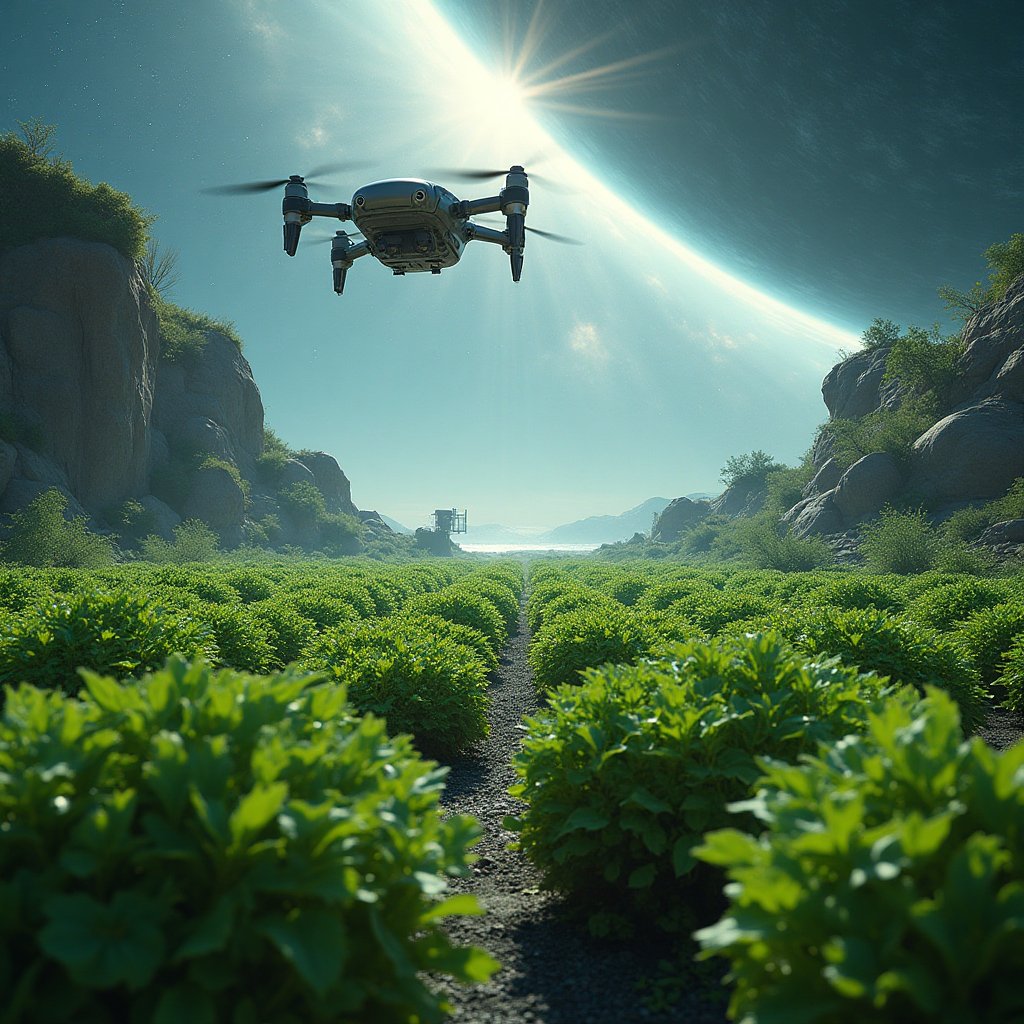
Introduction: Cultivating the Cosmos
The universe is full of magical things patiently waiting for our wits to grow sharper. – Eden Phillpotts
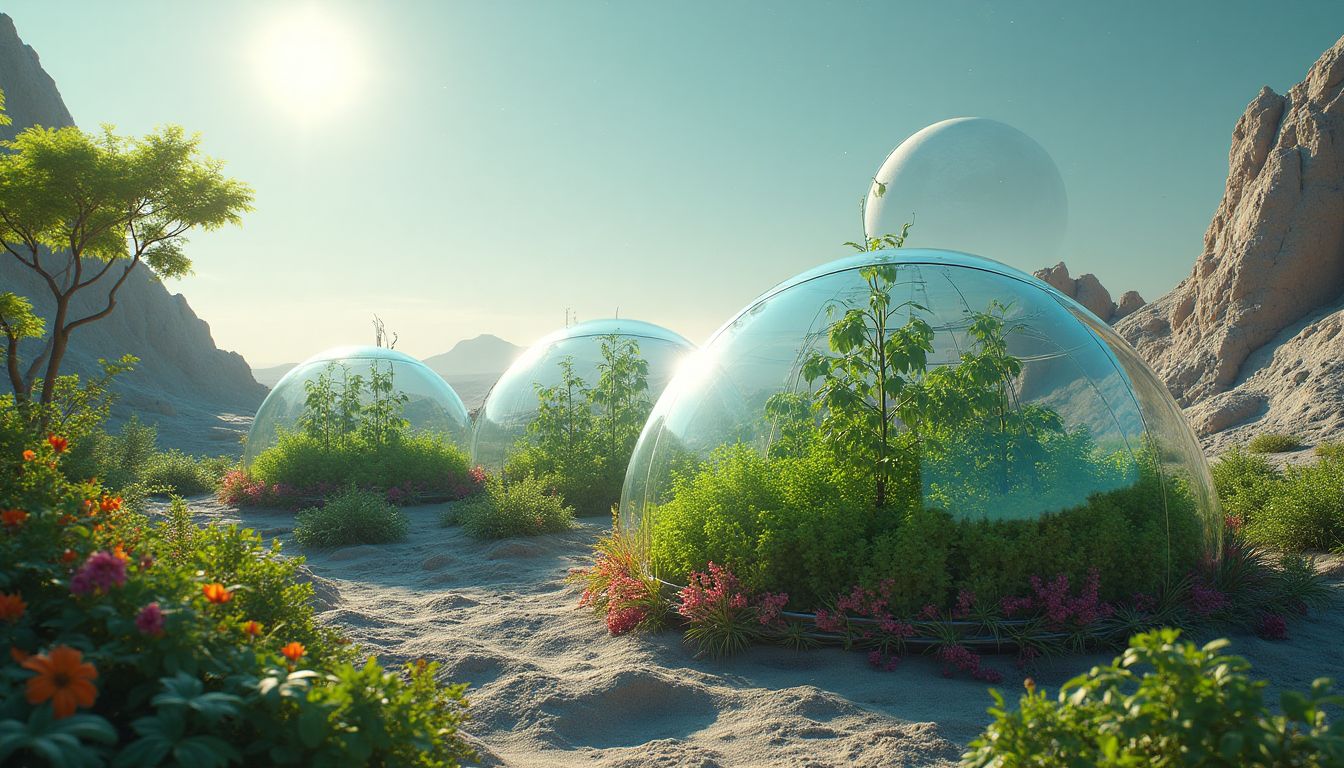
In the grand scheme of things, Eden Phillpotts invites us to sharpen our perceptions and grasp the magic that teeters just on the edge of discovery. So, why not let our sharpened wits guide us to a new kind of magic—lush gardens blooming on the harsh, barren surfaces of asteroids and moons? It's a surreal juxtaposition: life flourishing in places where life has never been. Could we, with the help of advanced artificial intelligence, turn this vision into reality, cultivating vibrant spaces where only dust and craters now exist?
The thought prompts many incredible questions. How would the stars align if the stars themselves became gardens? The concept sounds like something pulled straight out of a Neil deGrasse Tyson lecture or a Carl Sagan dream, yet leaps in AI and space technologies inch us ever closer to this dramatic fusion of space and sustenance.
This isn't just a flight of fancy. Stephen Hawking once suggested that humanity must venture beyond our home planet to ensure our survival. Growing food on asteroids and moons supports that vision, using AI to cultivate life where none has thrived before. Imagine AI-driven sensors and robots creating a self-sustaining ecosystem in the harshest voids of space. Here lies the promise of AI-powered space gardens, sparking a revolution not just in how we feed future explorers, but how we view life itself among the stars.
AI-Powered Space Gardens utilize artificial intelligence to create, manage, and optimize agricultural systems on extraterrestrial bodies, enabling sustainable crop growth in previously inhospitable environments.
The Potential of Off-World Agriculture
Taking the leap from farmsteads under the Earth’s sun to alien terrains bathed in cosmic radiation is not for the faint-hearted. As humans look to expand their presence into space, the shift from planetary tourists to long-term settlers demands self-sufficiency in the unlikeliest of forms: farming in space.
Understanding Extraterrestrial Conditions
A quick glance at any asteroid or moon might leave you feeling uninspired. The extreme temperature variations, virtually non-existent atmospheres, and an abundance of radiation make these cosmic rocks seem an unlikely home for any garden. Fortunately, science isn't easily deterred.
Let's dissect the challenge with a touch of humor. Picture the Moon—not exactly the Hampton's best floral destination. The Moon's temperature swings like a mood ring during finals week. From boiling hot to bone-chilling cold, it doesn’t exactly roll out the welcome carpet for roses. Microgravity—it's not just fun for astronauts doing flips, but a curious condition for plants that rely on gravity to guide their roots.
Impacts on Crop Growth
Now, consider how these conditions play with plant life. We've all tried growing a stubborn plant in less-than-ideal places (hello, windowsill gardens!). With studies showing that microgravity influences how plants transport water and nutrients, researchers aim to uncover surprising adaptability in some species. Research from NASA reveals that plants like lettuce and peas can adapt to these conditions, albeit with quirky growth patterns.
Certainly, off-world gardens won't resemble any you'll find back home. But that's part of the beauty: embracing challenges leads to inventive solutions. Imagine plants engineered, with a splash of sci-fi, to "think" differently, drawing from the ambient light spectrum unique to their celestial neighborhoods. And look, these new cosmic crops might even evolve to outgrow our earthly counterparts. How might an AI system guide and accelerate these transformations? That’s a question ready for exploration and bursting with potential, is it not?
Current Research and Technological Progress
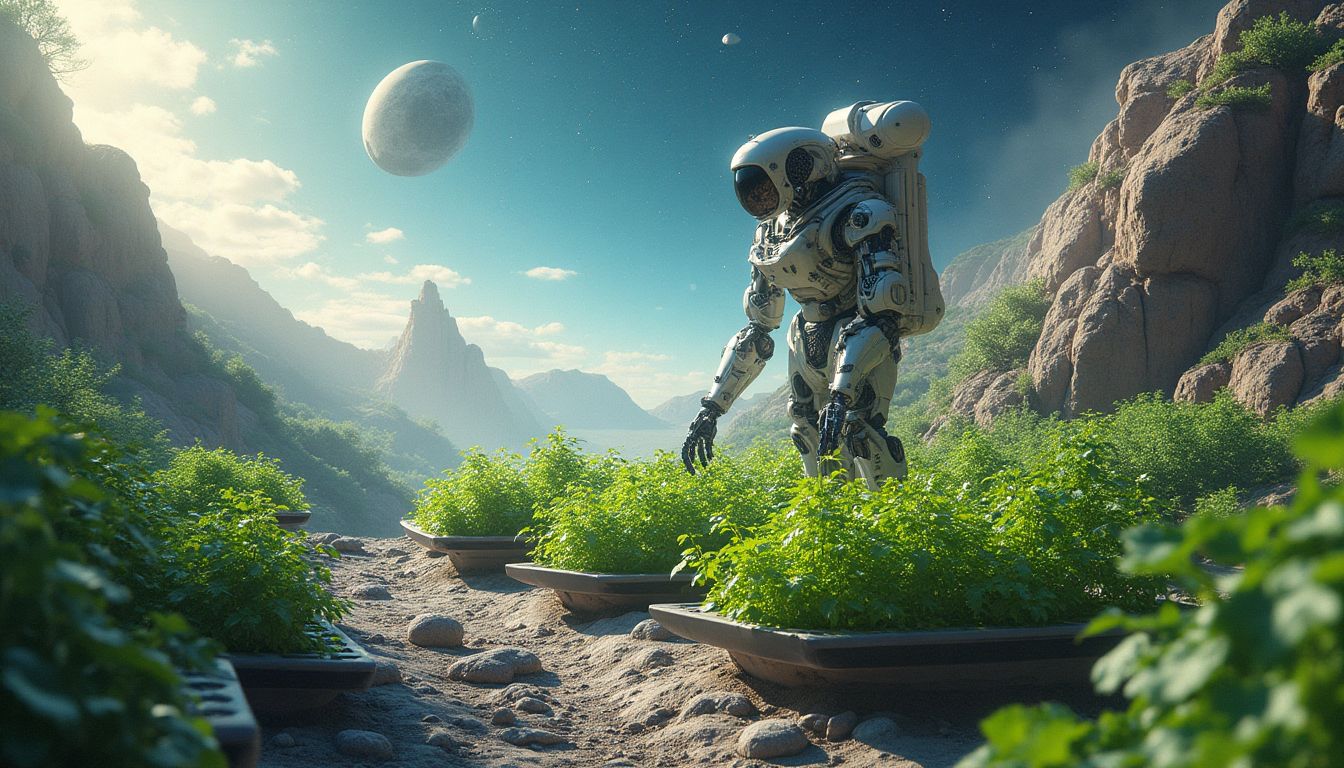
As humanity gears up to garden among the stars, the realm of research and technology is buzzing with potential. Imagine robots tending to plants while Elon Musk cheers them on from his Mars villa! The journey to such a vision is paved with cutting-edge advancements in both AI and robotics, specially crafted to handle the unique demands of off-world agriculture.
Innovations in Hydroponic and Aeroponic Systems
Picture this: plants floating and thriving without soil, using mist or nutrient-filled water. Sounds like a sci-fi movie, doesn't it? But hydroponic and aeroponic systems are here and ready to make interplanetary farming possible. These systems allow for precise control over growth conditions and are perfect for the harsh realities of deep space. NASA's experiments aboard the International Space Station (ISS) have shown that with a little coaxing, plants can adapt to the whims of space.
Case Studies of Past Space Agriculture Experiments
Remember when astronauts first munched on "space tacos" made with ingredients grown aboard the ISS? The Veggie Project is the gift that keeps on giving insights! Experiments like these have taught us invaluable lessons in cultivating crops amid zero-gravity and electron-neglected environments. They're not just growing plants; they're growing hope—one leaf of lettuce at a time! The success (and comical mishaps) of past projects guides our enterprising gaze toward distant stars.
AI Technologies Revolutionizing Agriculture in Space
Ah, AI—the wizardry turning every dream of cosmic farming into reality. Imagine HAL from 2001: A Space Odyssey, but less murderous and more into planting tulips. By harnessing the power of AI, agriculture on celestial bodies could leap from sci-fi musings to everyday procedures!
AI-Driven Environmental Monitoring
Think of AI as a tireless gardener capable of working 24/7 without needing coffee breaks. By using sensors and smart algorithms, AI can continuously monitor plant health, nutrient availability, and environmental conditions in real-time. This vigilance allows for tweaks and adjustments to be made instantly, ensuring plants thrive in the most alien of settings. Data-driven insights not only enhance growth efficiency but also enable us to make better agricultural decisions.
Predictive Analytics for Growth Optimization
AI's data-crunching superpowers are nothing short of miraculous. It can predict growth cycles, harvest times, and yield potentials—even when the stakes are as high as a space banana. By integrating machine learning, AI can sift through data like an NSA agent on Red Bull until it finds the best combinations of growing conditions. This analysis national treasure provides farmers not just in space—but globally—with records of unparalleled insights. So, pack your bags, data nerds, the stars aren’t that far off after all!
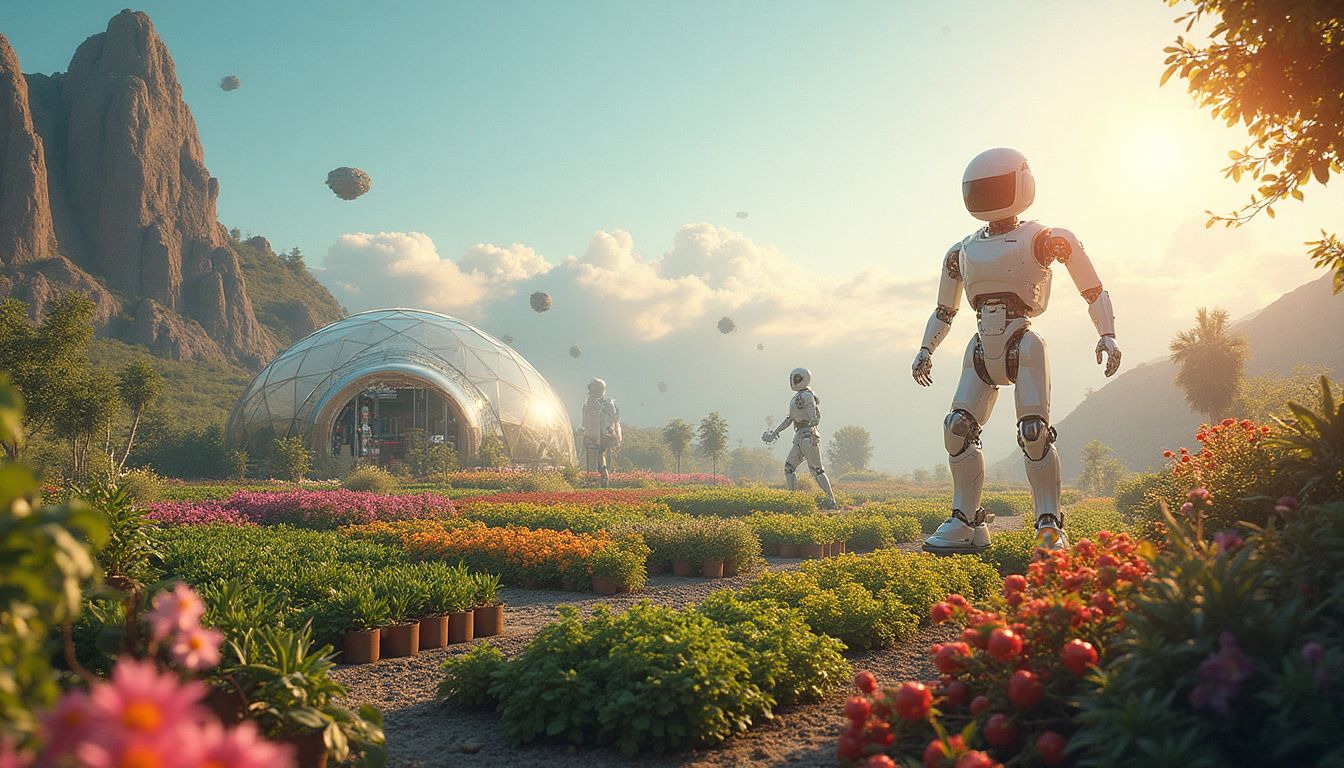
Challenges and Risks of Space Gardening
Growing gardens in space is no small feat. Far from the comforts of Earth, astronauts-turned-farmers face hurdles that push the limits of today's technology and knowledge.
Sustainability of Resources
Water, nutrients, and energy are golden tickets when it comes to space farming. But how do you lock in resources when you're millions of miles from Earth?
Picture a tiny ecosystem on the edge of the universe, craving water like we crave the next superhero movie release. Consider the innovative system at NASA’s Marshall Space Flight Center where recyclers transform astronauts' breath and urine into life juice for plants. And what about energy? The stakes are high when solar-powered LEDs decide to clock out.
- Closed-loop water systems: maximally recycling the life-giving liquid.
- Energy-efficient grow lamps: mimicking the sun's gentle embrace.
- Precision nutrient delivery: hitting the sweet spot where plants thrive.
Psychological Effects on Astronauts
Imagine being surrounded by endless voids, and then stepping into a vibrant oasis of green.
The stark contrast between the cold, metallic realities of a spaceship and the nurturing embrace of a garden can do wonders for an astronaut's mind. Being around greenery has been shown to decrease stress, improve mood, and give a sense of purpose—vital for those staring at stars that are light-years away.
Researchers from Barts Health NHS Trust have discovered that even a pinch of green can uplift spirits.
Key benefits:
- Reduction in loneliness: plants are silent companions.
- Mental break: the scent of rosemary can teleport you back to your grandma's kitchen.
- Chasing the blues away: studies support the mood-lifting magic of chlorophyll.
The Future of AI-Powered Space Gardens
Imagine a future where Martian colonies flourish with thriving farms that not only feed pioneers but also anchor them to home.
Feasibility of Long-Term Habitation
Successful off-world gardens might turn space dwellers into self-reliant space settlers. Think terraforming on a smaller, but no less dramatic, scale.
If growing potatoes on the Martian soil seems like a movie plot, think of the celebrity it brought to Martian potatoes in Matt Damon's grasp in The Martian! It's not as far-fetched as it seems.
Considerations:
- They maximize self-sustainability: every leaf could save crucial resupply trips.
- Enhance long-term mission support: less weight to carry from Earth.
- Cultivate a psychological anchor: fixing eyes and minds to something alive and active.
Integration with In-Situ Resource Utilization
Farming in space blends with resource extraction like cheese on pizza. It's essential to use what we find and grow.
Using local materials for building habitats, creating oxygen through plants, and recycling everything like a seasoned sustainability junkie is less of a dream and more a waking mission.
European Space Agency suggests leveraging Martian soil and ice as components of off-world farming.
| Resource | Utilization |
|---|---|
| Water Ice | Hydration and plant growth |
| Regolith | Growth medium for plants |
| Atmospheric CO2 | Used for photosynthesis |
The future is fertile, and the stars are just the beginning.
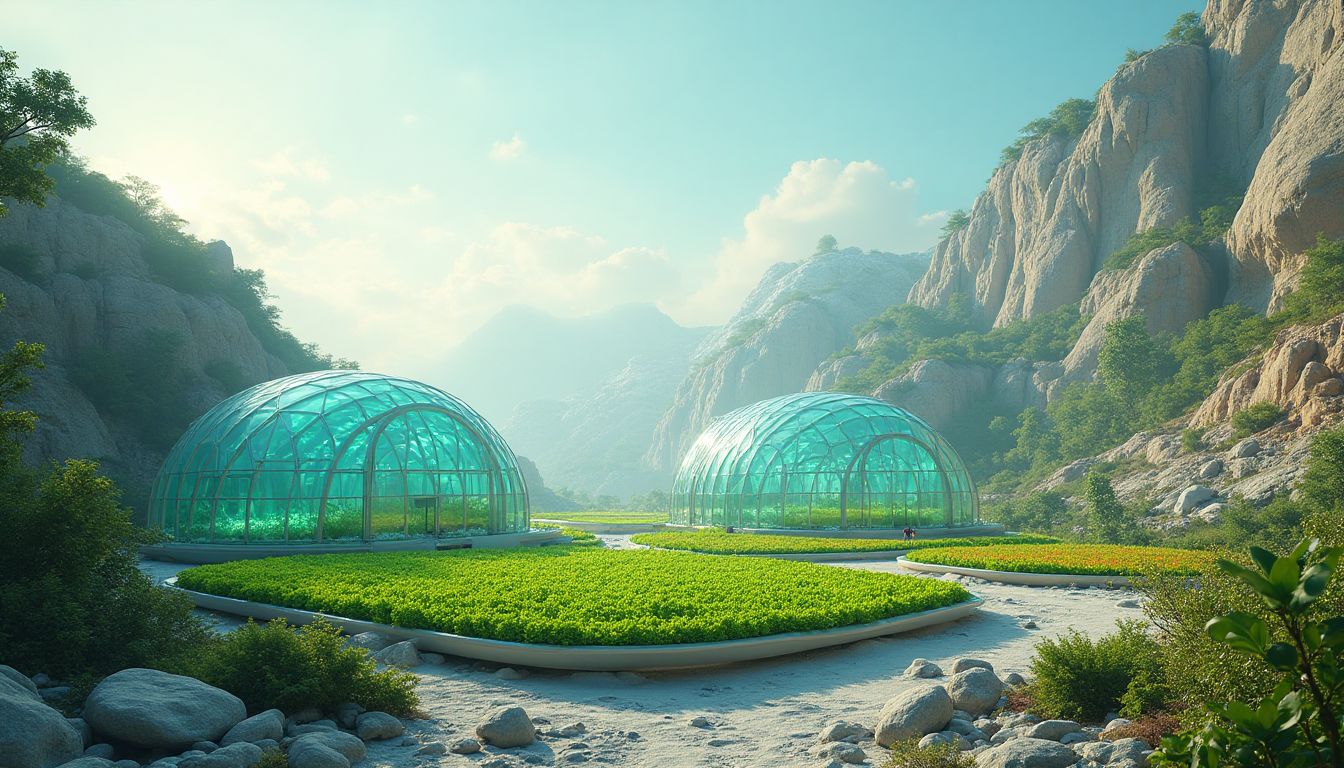
AI Solutions: Revolutionizing Space Agriculture
AI has the potential to revolutionize how we approach agriculture in space by offering innovative solutions tailored to the unique challenges of extraterrestrial environments. The combination of machine learning, robotics, and real-time data analysis could mean the difference between a thriving space garden and utter failure.
One primary way AI can help is by developing intelligent systems capable of managing environmental conditions. This can ensure optimal growth and sustainability. For instance, NASA has been pioneering research in this area, looking at how neural networks could analyze data from sensors placed in space gardens. These networks could use machine learning to make real-time adjustments to variables like light, water, and nutrients.
Moreover, using reinforcement learning, AI could experiment with different growth conditions. By trying out various combinations of light intensity, moisture levels, and nutrient balances, AI can learn over time to discover the most effective methods for cultivating crops. Just imagine sending a robotic gardener out to pluck tomatoes or monitor brassicas while dynamically adapting the settings based on the crops’ responses — thrilling, isn’t it?
AI could also contribute significantly to remote farming techniques. Imagine drones and robotic systems performing tasks such as planting, harvesting, and monitoring. Precision farming can minimize waste and maximize yield, ensuring that resources are used wisely in the confined, resource-limited environments of asteroids and moons. Institutions like Cornell University and MIT are leading the way in agricultural innovation, spearheading projects that merge cutting-edge technology with the art of growing food.
To make these systems a reality, collaboration with researchers and institutions focusing on botany, AI, and space exploration is crucial. The fusion of these fields will propel us into an era where growing food away from Earth could become a standard practice.
Conclusion: The Path Ahead
The dream of cultivating life in the vastness of space is no longer confined to the realm of science fiction. With the advancing capabilities of AI and an increasing focus on sustainable technologies, AI-powered space gardens could very well become a reality in the coming decades. As we push the boundaries of human exploration, these gardens will not merely be a source of food; they will represent humanity's resilience, adaptability, and innovative spirit as we embark on our next great adventure beyond our home planet.
However, achieving such lofty dreams does not happen overnight. It requires a carefully crafted plan, one that outlines each step towards realizing the vision of off-world agriculture. Below is a proposed action schedule, designed to facilitate the development of AI-powered space gardens. The roadmap stretches from Day 1 through Year 2, offering an in-depth resource for any institution, organization, or government eager to become part of this groundbreaking endeavor.
Actions Schedule/Roadmap (Day 1 to Year 2)
Day 1:
Kick-off meeting with interdisciplinary teams from space agencies, AI specialists, agricultural scientists, and psychologists to discuss the overall vision.
Day 2:
Draft the initial project proposal and action plan, incorporating input from representatives of organizations like ESA and NASA.
Day 3:
Develop partnerships with universities such as Texas A&M University and Stanford University, focusing on AI and agricultural research.
Week 1:
Identify key research questions and operational challenges related to off-world agriculture and technology integration.
Week 2:
Gather data from previous space missions and analyze plant growth performances under various conditions to chart an initial growth trajectory.
Week 3:
Start designing prototypes for AI and robotic systems that can support cultivation in space gardens.
Month 1:
Formulate a strategy for testing plant growth in simulated microgravity and radiation environments. Consult with experts from institutions like NASA's Johnson Space Center for insights.
Month 2:
Secure funding through grants and sponsorships, while assembling a team for prototype development. Collaborate with NASA on existing hydroponic projects.
Month 3:
Conduct preliminary studies on suitable crops for space cultivation, emphasizing the advantages of short-growth cycle crops such as lettuce and radishes.
Year 1:
Launch small-scale Earth-based experiments in controlled environments that simulate extraterrestrial conditions, refining techniques and technologies.
Year 1.5:
Analyze experimental data, making necessary adjustments to AI algorithms, and fine-tune growth conditions based on findings.
Year 2:
Plan the first mission to deploy these systems aboard a spacecraft headed for a moon or asteroid, specifically targeting a launch in the following year. Document findings for analysis, and create a roadmap for subsequent missions.
Ultimately, the cultivation of life beyond Earth hinges on the innovative solutions that AI can offer. As we venture into this new frontier, let’s harvest not only the benefits of sustainable food but also the spirit of human exploration and innovation.
FAQ
Q1: What role does AI play in space gardening?
AI plays a key role in space gardening by helping us keep track of plants and their needs. It can monitor things like temperature, humidity, and light levels. AI uses smart computer systems to analyze this information and make decisions that help plants grow better. This means we can use less resources while growing food in space.AI in Space Gardening
Q2: Can plants really grow on asteroids and moons?
Yes, plants can grow on asteroids and moons if we create the right conditions! This means providing them with a controlled environment where they have enough light, water, and nutrients. Scientists are studying how to use advanced systems to achieve this in places like Mars or the Moon. For example, NASA has tested growing plants on the International Space Station (ISS) successfully.
Q3: Why is off-world agriculture important?
Off-world agriculture is important for many reasons:
- It helps us prepare for long missions to other planets.
- It provides a way to grow fresh food for astronauts, which is good for their health and morale.
- It is vital for potential colonization of other celestial bodies, allowing humans to create sustainable habitats.
In short, it helps us survive and thrive during space exploration.
Q4: How can we prepare for such missions?
Preparing for missions involves a lot of planning and research. Here are some steps we can take:
- Study the conditions on other planets and moons.
- Develop technology for growing plants off Earth.
- Run experiments on Earth that mimic space conditions.
- Collaborate with organizations like NASA and universities to gather knowledge and expertise.
This preparation is essential for successful off-world agriculture.
Q5: What crops are suitable for growing in space?
Certain crops are better suited for space growing because they can grow quickly and efficiently. Some examples include:
- Lettuce - It grows fast and is nutritious.
- Radishes - They are hardy, grow quickly, and take up little space.
- Herbs - Such as basil or cilantro, which can improve the taste of food.
Scientists are always exploring new options to find more suitable crops for our future space gardens.
Q6: What challenges does off-world agriculture face?
Off-world agriculture faces several challenges, including:
- Extreme temperatures and radiation levels on other celestial bodies.
- Lack of resources like water and nutrients.
- Keeping plants healthy in microgravity conditions.
Facing these challenges is essential for growing food in space and ensuring astronauts can thrive.
Q7: How can AI help overcome these challenges?
AI can help overcome challenges in off-world agriculture by:
- Monitoring environmental conditions to ensure they are just right for plants.
- Using sensors to collect data and then using algorithms to optimize growth conditions.
- Controlling robots and drones to manage planting, watering, and harvesting tasks.
By leveraging AI technology, we can improve the success of growing crops in space.
Wait! There's more...check out our gripping short story that continues the journey: Fingers of Defiance

Disclaimer: This article may contain affiliate links. If you click on these links and make a purchase, we may receive a commission at no additional cost to you. Our recommendations and reviews are always independent and objective, aiming to provide you with the best information and resources.
Get Exclusive Stories, Photos, Art & Offers - Subscribe Today!
Related posts:
 AI Terraforming Jupiter’s Moons: Unlocking the Future of Space Colonization
 Bioengineered Ecosystems for Space Habitats: Can AI Revolutionize Life Beyond Earth?
 How AI Can Design Self-Sustaining Bioengineered Ecosystems for Space Habitats: The Future of Life Beyond Earth
 AI-Powered Space Elevators: Revolutionizing Access to the Stars
 AI-Powered Artificial Gravity Generators: Transforming Space Habitats into Comfortable Homes





Post Comment
You must be logged in to post a comment.