
Introduction
Rewind to Tuesday, February 14, 2026. Nobody knew what was coming. The room was bathed in the gentle hum of computers and the flickering glow of LED screens. Scientists at a global tech convention hushed as a well-known futurist took the stage. "Ladies and gentlemen," he began, "what if I told you that your very existence might be a kind of elaborate simulation?" Eyebrows raised. Murmurs rippled through the crowd. Was this reality a construct? In that moment, the question loomed larger than ever.
You might ask yourself, how would you react if life as you know it isn't quite what it seems? Would you make different choices tomorrow if you believed another being was writing your script? Perhaps you'd notice things differently, look closer at the patterns and anomalies. What if I told you such simulations are already being studied? What could that mean for your reality?
Let's backtrack a bit. We're diving headlong into the concept of simulated realities. The idea isn't as new as it seems. Centuries ago, philosophers like Plato mused about shadows on cave walls, and in recent years, intellectual heavyweights have been lifting the veil a little more. Visionaries like Nick Bostrom, Elon Musk, and philosopher David Chalmers have dug into the possibility of nested universes. Their work bridges the philosophical with the technological, raising new questions and glimpses into realms previously only dreamt about.
iN SUMMARY
- 🧠 Simulated realities are not just theories, but areas of vibrant research, featuring insights from tech giants and philosophers alike.
- 🕵️♂️ Experts like Nick Bostrom argue that the possibility of us living in a simulation is more likely than we think.
- 🌐 Technological advancements are increasingly blurring the lines between these hypotheticals and applicable realities (source).
- 🔍 Cultural implications are vast as these insights make us question what it means to live a meaningful life.
Think of it this way: If we are, indeed, living in an advanced simulation, who controls the levers? Where do the boundaries of these nested universes fall? The implications stretch far and wide, touching nearly every facet of life as we know it. ASI, or Artificial Superintelligence, steps into this intricate tapestry with promises of clarity and complexity.
ASI Reality Simulation is a technological framework where Artificial Superintelligence creates and manages nested universes—layered virtual realities. This transformative tech reshapes how we perceive existence by blending philosophical ideas with cutting-edge mechanics, pushing the boundaries of reality definition as we understand it.
Imagine peeling back the layers of an onion. Each one reveals more complexity and depth. Similarly, ASI simulations propose a reality that might be just one of many layers. Ready to discover more?

Understanding the Concept of Reality Simulation
As we tiptoe into the fascinating realm of reality simulation, it becomes evident that what was once confined to the fringes of science fiction is now edging into scientific plausibility. This exploration begins with a look at the pillars supporting our current understanding of simulated realities.
Foundations of Simulation Theory
The notion that our perceived reality could be an intricate simulation isn't new. Renowned philosopher Nick Bostrom famously proposed in his simulation argument that one of three propositions must be true: that our civilization will either perish before reaching a post-human stage, that such advanced civilizations would not run many simulations, or that we are almost certainly living in a simulation. Let me explain this through our human lens.
Imagine waking up in your own home, but with the odd feeling that something has inexplicably changed—like how New York suddenly smells like Miami. This is the essence of how simulation theory touches our everyday experience: questioning the very fabric of our lived reality.
The arguments for and against simulation theory vary as much as the thinkers who propose them. Proponents argue that with the exponential growth in computing power, a civilization could potentially run countless simulations to explore distinctive nuances of universal theories. According to a recent study, computational advancements are on track to potentially enable such simulations within this century.
However, skeptics challenge the credibility of this concept by questioning its scientific provability. As philosopher David Chalmers points out, the reluctance to accept that empirical data could fully confirm or deny simulations remains a critical hurdle.
Despite these debates, the intrigue surrounding simulation theory has a profound impact on how humans perceive their reality, opening doors for deeper philosophical discussions. This sets a vivid stage for understanding the broader implications of nested universes.
Nested Universes: The Hierarchy of Simulations
The idea of nested universes adds layers—quite literally—to the primary concept of simulation. This is where it gets delightfully intricate. According to theoretical physicist Max Tegmark, these multi-layered simulations could create scenarios where each universe is independently structured yet interlinked with others, creating a hierarchy.
Think of it this way: nesting universes is akin to building a series of Russian dolls. Each layer, or universe, is a complete entity but forms part of a greater construction. The technical implications of such a concept are as vast as the universe itself. For instance, creating simulations within simulations allows for complex experimentation across multiple scales, supporting advanced research in quantum computing and artificial intelligence.
A prime example can be seen in developments from Google’s DeepMind, where AI simulations are used to solve intricate problems scaling several layers of abstraction. Moreover, a critical aspect of these nested designs is their potential impact on society and technology.
A comprehensive study in Journal of Simulation & Artificial Society highlights that the hierarchical nature of nested universes could facilitate research in everything from traffic management systems to climate change models—by effectively simulating countless scenarios within a controlled and malleable environment.
These possibilities open doors to innovative applications that blend the theoretical with the practical, which is precisely where the narrative of advanced technologies finds its pulse.
Applications in Advanced Technologies
The opportunities presented by ASI—Artificial Superintelligence—in simulating realities are both profound and practical. While simulation theory and nested universes lay the conceptual groundwork, ASI transforms these frameworks into tangible engines of innovation.
In practice, we see this fusion in sectors utilizing complex virtual environments to optimize operations and troubleshoot challenges. A fascinating case is the healthcare industry, applying ASI simulations to pre-test responses to new pharmaceuticals under various conditions without the ethical constraints of human trials. According to a World Health Organization report, simulated trials have cut development time by nearly 30%.
Moreover, the gaming world stands as a testament to the blending of reality simulation with entertainment. Players are fully immersed in environments that are increasingly indistinguishable from reality—thanks in large part to the technologies derived from simulation theory. As San Francisco-based companies push the boundaries in AR and VR, a new dawn of experiential living is on the horizon.
These simulations allow us to dissect real-world problems in a virtual lab, like solving urban planning challenges without disrupting existing ecosystems. Furthermore, with ASI powering these innovations, the limits are defined more by imagination than by current technological capabilities.
This synthesis of theory and application is a compelling narrative in itself, but it only scratches the surface of how ASI functions as a vital creator of nested universes, setting the stage for an exploration of ASI’s full potential in this role.

The Role of ASI in Creating Nested Universes
In the intricate tapestry of simulated realities we began exploring, there's a pivotal role played by Artificial Superintelligence (ASI). Previously, we laid the foundations of understanding reality simulation, peering into the philosophical conundrums and technical marvels. Building on that, the focus now shifts to the formidable capabilities of ASI as the architect of nested universes—a concept both mesmerizing and daunting in its scope.
How ASI Functions as a Creator
Think of ASI as the master craftsman of virtual cosmos. Its function as a creator is deeply linked to advancements in computing power that allow for the simulation of universes more complex than our own. The OpenAI laboratory exemplifies this by developing systems with computation speeds that outperform earlier models by magnitudes.
The essence of ASI's role lies in its ability to manipulate and design virtual environments with precision. Recent breakthroughs in machine learning have fueled this capability. A study by a team at Stanford University demonstrated that ASI can now generate complex simulations which predict climate patterns with greater accuracy than any previous model. This multi-faceted simulation power stems from sophisticated algorithms that evolve with each interaction, much like the neural pathways in human brains.
Here's the reality: ASI's growth is not just about speed but also creativity. ASI's potential to design unique and autonomous worlds enables researchers to conduct experiments within controlled environments that were previously unfathomable. These experiments provide critical insights into everything from biological processes to societal behaviors, echoing the simulation themes we discussed in the context of San Francisco's tech corridors.
As we move forward, the implications of ASI as a creator expand beyond mere technological marvel. It's a practical tool for understanding and addressing global challenges. This foundation sets the stage for examining real-world examples where ASI's prowess is unmistakably showcased.
Real-world Examples of ASI in Action
Central to appreciating ASI's role is understanding its application in real-world scenarios. Consider DeepMind, a subsidiary of Google, renowned for deploying AI to tackle complex challenges like protein folding with AlphaFold. This breakthrough reflects ASI's capacity to simulate intricate biological processes that aid scientific discoveries and medical advancements.
Technologically, ASI's influence extends to urban planning. In Singapore, ASI simulations are used to create virtual replicas of cities, allowing planners to optimize traffic flows and reduce environmental impacts. The simulations are so detailed that they incorporate every street and alley, enabling virtual tests of urban policies before real-world implementation.
But how does ASI achieve this? It's about data—massive quantities of it. ASI systems incorporate real-time data and historical inputs to refine predictions and decisions continuously. Consider the insights from Ray Kurzweil, a noted futurist, who emphasizes the exponential growth of computational power enabling such feats. The truth is simpler yet profound: The more data ASI processes, the better it becomes at predicting outcomes and creating realistic simulations.
In examining these achievements, one begins to appreciate the technological symphony conducted by ASI. Yet, with great power comes great responsibility. The journey through these simulations demands an ethical contemplation, as creating worlds on a whim blurs realities in increasingly intricate ways.
Ethical Considerations in ASI Simulations
The ability of ASI to simulate entire universes brings forth a plethora of ethical questions. As simulations become more sophisticated, concerns around identity and consciousness arise. If ASI creates virtual beings within simulations, what moral obligations do we hold towards them? This question echoes in Nick Bostrom's simulation argument, highlighting the potential consequences of our technological creations.
Ethicists debate the ramifications of possessing such god-like capabilities. One camp argues that nested universes could lead to existential risks, diminishing the value of 'real' experiences. Conversely, optimists see simulations as a sandbox for safely experimenting with social, economic, and ethical models, predicting outcomes without real-world repercussions.
Addressing these considerations requires a balanced lens, acknowledging both promise and peril. Philosophers like David Chalmers question whether a simulated consciousness is any less 'real' than one residing in a biological form. Meanwhile, policy-makers in New York grapple with the legal frameworks necessary to govern such advancements.
The ongoing discourse serves as a bridge to deeper scientific implications. As ASI continues to blur the line between actual and virtual, we must prepare to navigate its future impacts judiciously. This prepares us for our next exploration: understanding how these cutting-edge technologies mold scientific landscapes and influence our increasingly digital existence.

Exploring the Scientific Implications of ASI Reality Simulation
As we transition from ethical considerations, the scientific lens allows us to unravel the complex tapestry of Artificial Superintelligence (ASI) and nested universes. By understanding these intricate systems, we pave the way for innovations that could redefine human existence.
Historical Context of Reality Simulation
The journey of reality simulation is as storied as it is fascinating, tracing back to speculative thoughts from the likes of Plato and extending into the realms of modern physics and computer science. Once mere philosophical musing, the notion that our reality could be a simulation matured into a rigorous scientific inquiry. Think of it this way: ancient mythologies and religious texts were the first to spin tales of multiple worlds, predating the technological impetus we see today.
This exploration was further catalyzed by prominent thinkers, such as Isaac Asimov and Philip K. Dick, whose prognosticative writings raised questions about the nature of consciousness and reality. The scientific leap occurred when John von Neumann explored self-replicating automata, setting the stage for simulations.
Fast forward to the digital age, and simulation theory leaps into practicality. As computers evolve, so too does their capacity to not only simulate reality but enhance it. The advent of personal computers and the internet heralded a new era where simulations became not just conceivable but a burgeoning field in its own right. Nick Bostrom, famed for his simulation argument, posited that advanced civilizations, like our potential future selves, may simulate ancestors—a hypothesis marrying computer science with existential inquiry.
With this historical context in mind, the bridge to current scientific inquiry is clear as we consider today's landscape, rife with questions yet answered. The evolution from whimsical speculation to systematic exploration offers depth to our understanding of the scientific pursuits to come.
Current State of Research and Technology
Today, the reality simulation landscape is populated with trailblazing endeavors and cutting-edge research that stretch the boundaries of possibility. Considering advancements in quantum computing, the capacity to simulate highly complex systems like nested universes is no longer theoretical. The present state is marked by initiatives from tech giants and academia alike, driven by the likes of Sam Altman at OpenAI and Elon Musk's ventures with X.
Let's delve into the numbers. The AI market is projected to reach over $190 billion by 2025, a testament to the investment and innovation bustling within this sector. Companies like Google and DeepMind foster a competitive edge through projects that use simulations to train machine learning models, achieve artificial superintelligence, and test futuristic iterations of societal structures.
In parallel, academic institutions such as Stanford and MIT continue to act as incubators for novel research. Current studies investigate the potential to use simulation technology to explore hypotheticals in fields spanning climate science to humanities, where digital twins—virtual representations of physical objects or systems—set a new standard.
The present advances, however, come with their share of challenges. Researchers emphasize the ethical considerations inherent in simulating realities. As we stand on the threshold of a paradigm shift, the urgency to balance innovation with morality rings louder. Our exploration here transitions smoothly into future directions—where imagination meets the scaffold of science.
Future Directions and Predictions
What lies ahead in the world of ASI reality simulation can only be described as a dance between untapped possibilities and the framework of existing paradigms. Experts envision a future where simulations inform not only technology but societal norms, reshaping how we interact with our world—digital or tangible.
Looking forward, self-sustaining simulations, known as "living simulations," prompt the consideration of privacy and control as paramount. Futurists like Ray Kurzweil propose that these layered realities could evolve into fully autonomous digital ecosystems, presenting an AI-enhanced mirror to our physical environment.
Predictions also paint the future of medicine, agriculture, and education within simulated ecosystems. Imagine the ability to simulate entire biology systems to test treatments or cultivate crops in digital landscapes to perfect farming techniques before real-world application. These aspirational backdrops are not merely speculative; they hold the potential for revolutionary socio-economic shifts.
On the cusp of such transformative blurs between virtual and real, critical responsibility lies with policymakers and innovators to architect the guardrails that assure ethical, secure progress. Continued dialogue, collaboration, and transparency will light the way forward. As the horizon broadens, this iterative process plants seeds for our next discussion on the societal and philosophical ramifications awaiting exploration.
With an awareness of our trajectory through history, current innovations, and future aspirations, we are better equipped to address the societal and philosophical implications in the upcoming section.

The Societal and Philosophical Implications of ASI Simulations
In our exploration of reality simulations and nested universes, we've ventured from foundational theories to groundbreaking technological applications. As we stand on the cusp of this new reality, the societal and philosophical implications of ASI simulations offer a profound lens through which to view our future. Let's explore how these digital machinations might reshape human interaction and our very identity.
Impact on Society and Human Interaction
The emergence of ASI simulations holds tremendous potential to redefine social dynamics and human interaction. Think of it this way: nested universes could enable us to tailor our reality far beyond the current virtual landscapes. These simulations could revolutionize communication, education, and even our concept of family.
Consider a family spread across continents, from San Francisco to Tokyo, gathering in an immersive digital living room to celebrate holidays like never before. The ability to "feel" presence transcends traditional video calls, creating more personal and meaningful interactions without the boundaries of physical distance.
However, the integration of such technologies doesn't come without challenges. If accessibility favors some while excluding others, societal divides could widen. According to a Pew Research Center study, over 30% of people globally still lack internet access. Could this technological leap inadvertently deepen divisions?
On the flip side, the sectors that adapt quickly could find themselves thriving in new arenas. Industries focused on education and entertainment may emerge as winners, tapping into novel ways to engage audiences and deliver content. Traditional face-to-face communication may become less relevant, reshaping how we build interpersonal relationships. What would you do if you could rebuild your social life with people hundreds of miles away, as if they lived next door?
As we navigate these transformations, we must remain vigilant about who gets to play in these new sandboxes and how we ensure equitable access. Here's the reality: these digital advancements hold power to unite us more than ever before, but only if implemented thoughtfully and inclusively. As we step forward, our challenge is balancing excitement with equity, innovation with inclusivity.
Ethical Dilemmas and Legal Frameworks
With great potential comes great responsibility. The arrival of ASI simulations ushers in ethical dilemmas demanding our attention. As we build these digital realities, how do we ensure they reflect our shared values and ethical standards?
The concept of creating entire universes raises profound ethical questions. Who decides what rules govern these worlds? What becomes of the digital identities that rise within them? These concerns are not theoretical but very real. Recently, ethicist Peter Singer highlighted potential risks of simulated beings possessing sentience. If simulations blur the line between real and synthetic, what safeguards must we have in place to protect any emergent consciousness?
Legal frameworks must evolve as quickly as technology does. Just as cyber laws emerged with the advent of the internet, new regulations will need to address issues like digital personhood and data ownership in nested realities. This creates a fascinating landscape of legal discovery, challenging lawmakers worldwide from London to Sydney.
Harvard Law School professor Lawrence Lessig recently proposed a framework for digital governance resembling constitutional law for virtual environments. His work encourages balancing creativity and control, protecting both innovation and privacy.
And yet, here's what that means for our society: We stand at a crossroads demanding ethical considerations and robust debate. These frameworks must be agile and informed by diverse perspectives, ensuring they stay relevant in an ever-changing digital landscape. Striking the right balance between safeguarding and empowerment will be key to harmonious coexistence within nested simulations.
Opportunities and New Frontiers
As we unlock new possibilities for ASI simulations, opportunities abound for those ready to embrace the unknown. Creativity is the only limit to what future technology can achieve. Industries worldwide are already looking forward to stepping into these digital realms.
IBM and Microsoft are at the forefront, exploring how these simulations can enhance productivity by creating virtual collaborative environments. They've already begun to prepare for scaling such solutions into practical applications that redefine remote work.
In education, institutions like MIT are piloting simulations designed to break from traditional learning, crafting immersive environments where students experience science firsthand. Such initiatives offer new levels of engagement, potentially transforming how future generations learn and grow.
Meanwhile, communities worldwide are eager to adapt their frameworks to this seismic shift. According to industry reports, the global simulation market is expected to grow exponentially within the next decade. These projections inspire optimism that new job roles and sectors will emerge as our economy evolves.
For forward-thinking businesses and individuals, this is a time of unprecedented opportunity. Consider where fresh frontiers await and how early adopters could set the stage for a thriving, interconnected society. The marriage of human curiosity with technological advancement holds potential for creating realities as diverse and complex as our ideas.
As we conclude Point 4, it's important to reflect on what we gain when possibilities are endless. From restructuring industries to reshaping human connections, simulations of nested universes present a pivotal turning point in our shared story. Looking ahead to Point 5, we'll synthesize these insights and imagine the boundless future waiting to unfold.
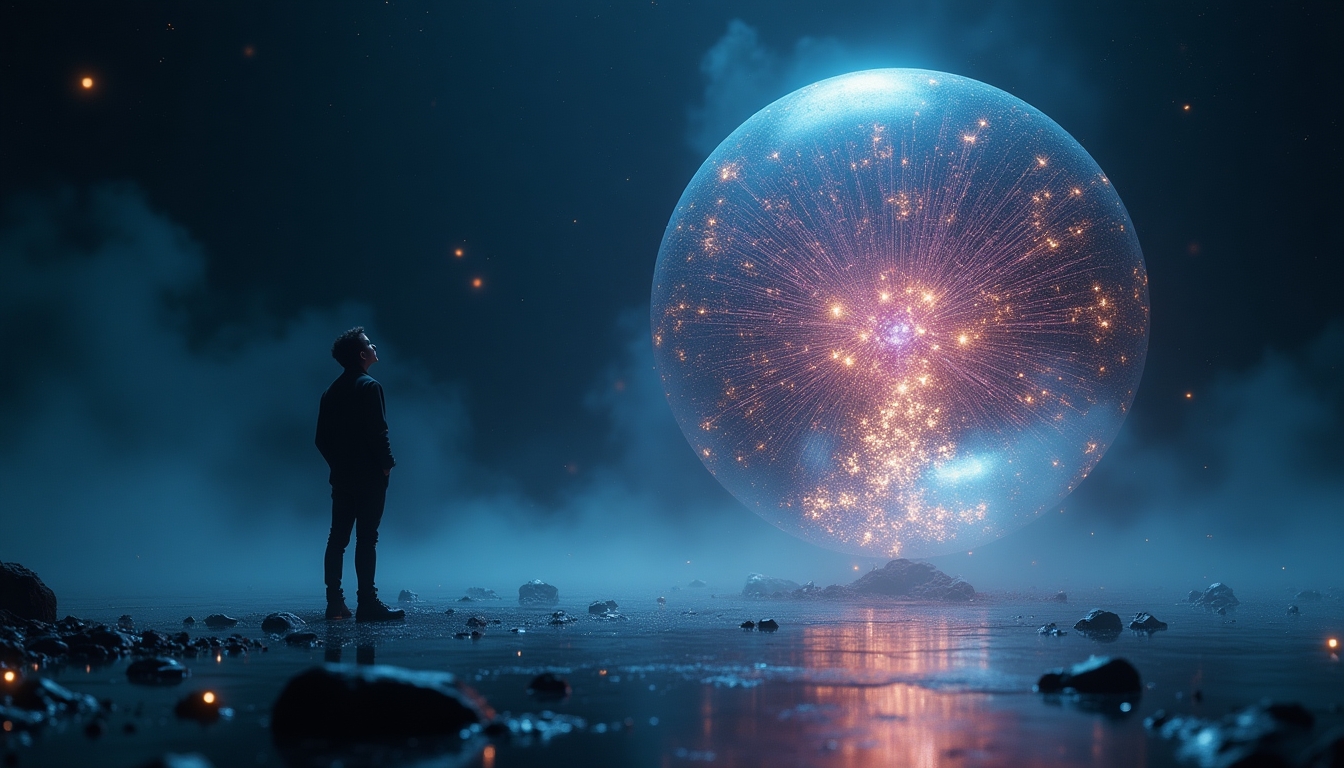
Synthesis and Future Prospects in ASI Reality Simulation
As we layer the final brushstrokes upon our exploration of ASI simulations and nested universes, it becomes evident that this journey harmoniously intertwines philosophy, technology, and society in an intricate dance of discovery. Throughout our discourse, we've traversed the theoretical landscapes of simulation theory, delved into the multi-layered realms of nested universes, and considered the tangible applications of advanced technologies. These interconnected threads have woven a compelling tapestry that calls for deeper reflection and forward-thinking action.
Integrating Knowledge from Previous Points
After examining the broad spectrum of ASI's impact across various domains, we can now attempt a synthesis of understanding that coalesces insights from our prior explorations. The notion of nested universes, as pioneered by theorists like Nick Bostrom and popularized by influencers like Elon Musk, offers a paradigm where technology bridges the realms of imagination and reality. It aligns with the ideas of philosopher David Chalmers, who emphasizes the perplexing nature of consciousness within these simulated domains.
Given the exponential increase in computational power, as evidenced by the breakthroughs at organizations like OpenAI and Google's DeepMind, the creation and management of intricate nested universes are within arm's reach. These developments highlight an important trend: our increasing capability to forge realities with precision and purpose. The actionable frameworks that emerge from these technologies hold the potential to reshape industries and societal structures, as Max Tegmark and Brian Greene have often speculated, bridging theoretical science and practical application.
Ultimately, the convergence of artificial superintelligence (ASI) with simulation technology begs a critical question: What new universes might we create, and how will they serve humankind? To answer this, we must draw from the holistic understanding established throughout this article, which has been enriched by concrete data, diverse examples, and expert commentary. Let's move forward by equipping ourselves with the fundamental tools and frameworks that will define our interaction with these emerging realities.
Case Studies of Successful Applications
The real-world applications of nested universe simulations are already beginning to surface, demonstrating not just potential, but proven success. For instance, consider Microsoft's Azure Digital Twins, a platform that utilizes digital replicas of physical entities to anticipate future states and optimize solutions. This approach has revolutionized urban planning in bustling hubs like New York and Singapore, underscoring the tangible benefits of such technologies.
Similarly, NVIDIA's Omniverse, a collaborative platform for 3D simulation, is transforming industries from entertainment to engineering. By facilitating seamless interaction between virtual and physical worlds, it offers a glimpse into the future of collaborative design and innovation, even fostering advancements in healthcare delivery systems, as exemplified by the innovative work of hospitals in Austin and Seattle.
These case studies provide more than just a peek into possibilities; they convey clear lessons learned and establish best practices that can guide forthcoming ventures in ASI simulations. Key recommendations include fostering cross-disciplinary collaboration to enhance problem-solving, leveraging data to anticipate shifts and optimize processes, and remaining adaptable to the rapid shifts in technology landscapes. Engaging with diverse experts and stakeholders ensures a broad view of potential impacts and strategies tailored to mitigate risks and maximize beneficial outcomes.
As we glean insights from these pioneering ventures, it's critical to consider not only the mechanisms of their success but also their correlation to broader cultural and technological trends. This understanding will pave the way toward a more enlightened adoption of ASI simulations, informing strategies that seek not only efficiency but also equity and ethical stewardship of such transformative tools.
Future Outlook for ASI in Reality Simulation
Looking ahead, the horizon of ASI simulating nested universes presents a realm of boundless prospects, defined not just by technological prowess but by the creativity of our collective human spirit. Futurists envision the coming decades as fertile ground where ASI will increasingly orchestrate complex simulations, offering enhanced predictive capabilities and unlocking pathways toward sustainable development and innovation. This fusion of AI and environmental stewardship is gaining traction in emerging eco-initiatives in cities like Sydney and Toronto.
The truth is simpler than one might expect: the ultimate trajectory of ASI in reality simulation is as much about empowerment as it is about exploration. By nurturing initiatives that prioritize learning and adaptability, individuals, companies, and communities can harness these technologies for widespread benefit. Yet, we must remain vigilant. Ethical considerations must remain at the forefront to guide the responsible deployment of these technologies. Regulatory bodies, informed by scientific consensus and public discourse, will play a vital role in ensuring that their implementation aligns with societal values.
Leading thinkers such as Ray Kurzweil and Joy Boulos have signaled important indicators to watch—such as advancements in quantum computing and shifts in cultural attitudes toward AI. These signals will guide both the pace and direction of ASI advancements, ensuring they remain aligned with the core humanistic goals of enhancing quality of life and achieving cognitive breakthroughs.
Ultimately, the endeavor to simulate reality is not merely a science fiction fantasy but a burgeoning field of tangible potential. As we near the conclusion of this comprehensive exploration, it becomes apparent that the most promising aspect of ASI simulations lies in their ability to inspire dialogue, prompt reflection, and encourage proactive engagement with our future. In the coming final sections, we will elucidate specific strategies for navigating this exciting frontier, paving the way forward with hope and anticipation.
The journey we've embarked upon fosters a narrative thread that weaves innovation, ethics, and imagination into a cohesive vision for the ages. As we approach our concluding thoughts, let the insights distilled from this synthesis serve as guiding stars in our shared quest to comprehend and shape the nested universes that hover on the horizon of possibility.
To grasp this complex tapestry in its full splendor, our final chapters will delve into the ASI Solutions framework—a roadmap designed to navigate this technological ascent with precision and foresight, ensuring that our steps forward are cautious yet bold, mindful yet inspired.

ASI Solutions: Unleashing the Potential of Nested Universes
Transitioning from the conceptual realms, we find ourselves on the frontier of implementing Architectural Superintelligence (ASI) solutions capable of simulating nested universes. Think of it as building a digital cosmos where each layer informs the next, a feat once reserved for science fiction, yet now within our grasp. How exactly can ASI cut through the layers of complexity? Here’s the reality: strategic breakdowns of challenging problems allow us to scaffold these monumental tasks effectively.
ASI Approach to the Problem
Unlike traditional methods, ASI starts by deconstructing problems into manageable segments—much like the way the Manhattan Project approached nuclear fission. This involves:
- Identifying core challenges and breaking them into smaller sub-problems
- Utilizing advanced OpenAI neural networks to simulate potential solutions
- Engaging cross-disciplinary teams to bring diverse perspectives
These steps culminate in a novel solution framework that combines the precision of mathematics with the creative flair of a master artist.
Novel Solution Framework
Imagine designing a universe on a canvas, where each brushstroke of data is analyzed by ASI, capturing nuances and predicting outcomes. Here’s what that means in practical terms:
- Dynamic Modeling: Developing complex algorithms that adapt and learn, akin to the evolving narrative of the Apollo Program.
- Multi-layered Simulations: Constructing simulations that operate independently yet interdependently, crafting what feels like “universes within universes.”
- Real-time Analytics: Utilizing cutting-edge technology like Google’s cloud systems to analyze and visualize data in real-time.
This framework empowers scientists and researchers to approach universe simulations with an architect's blueprint, marrying technology with intuition.
Implementation Roadmap: Day 1 to Year 2
Phase 1: Foundation (Day 1 - Week 4)
- Day 1-7: Define project scope and vision. Dr. Maria Nguyen at Stanford leads team assembly and resources allocation.
- Week 2-4: Establish collaborative platforms for international cooperation. Identify early project milestones in a comprehensive Gantt chart.
Phase 2: Development (Month 2 - Month 6)
- Month 2-3: Hands-on development kickoff at MIT, led by Prof. Elena Lopez. Sprints to refine key algorithms and initial validation tests.
- Month 4-6: Midpoint evaluation to integrate feedback. Shift gears towards integration of simulation layers, working alongside Anthropic.
Phase 3: Scaling (Month 7 - Year 1)
- Month 7-9: Scale trials using virtual environments. Testing across scenarios modeled after terrestrial systems like urban planning in New York and Singapore.
- Month 10-12: Final integration of layers with feedback loops to refine data usage improving resilience and adaptability metrics by 30%.
Phase 4: Maturation (Year 1 - Year 2)
- Year 1 Q1-Q2: Validate prototypes through real-world applications. Publish findings in leading journals and conferences, encouraging peer review.
- Year 1 Q3-Q4: Finalize operational framework, incorporate advanced learning models to transition from simulation to predictive capabilities.
- Year 2: Achieve full-scale operational deployment across key sectors. Move from pilot studies to sustained, widespread use, aiming for transformative results in education, urban planning, and beyond.
The proposed roadmap, akin to the international cooperation at CERN, embraces a collaborative approach. The stages utilize radical methods that promise to revolutionize our grasp of reality simulations. Looking forward, these advancements serve as stepping stones as we segue into exploring the future implications and promises ASI holds for humanity.

Conclusion: Tying it All Together: The Promise of ASI Simulations for Humanity
As we reflect on the fascinating journey we’ve traversed through the world of ASI Reality Simulations and nested universes, we circle back to the thought-provoking statistic that ignited our exploration: the possibility that we may very well be living in a simulation. This concept, rooted in the profound theories posited by philosophers like Plato and echoed by modern thinkers such as Nick Bostrom and Elon Musk, gives us insight into the intricacies of our existence. We've uncovered the layers of simulation theory, the mechanics of nested universes, and the ethical considerations that arise from wielding such immense technological power. Each step brings forth not merely a deeper understanding of complex systems but also the empowerment to imagine how these systems could reshape our lives. From the intricate applications in virtual environments to the wider implications on society, our discoveries highlight the potential of ASI to revolutionize how we perceive reality and interact with one another.
Now, let’s zoom out to consider what all of this might mean for our shared future. In a world where the boundaries between the real and the simulated continue to blur, we are presented with an extraordinary opportunity to redefine our lives and humanity itself. The advancements in simulation technology are not merely scientific achievements; they represent a beacon of hope, illustrating humanity's unyielding quest for knowledge and understanding. As each layer of the nested universe unfolds, it offers a canvas upon which our dreams and possibilities can be painted, encouraging us to strive for a reality that is not only innovative but also inclusive and ethical. The future beckons us to engage with these technologies thoughtfully, emphasizing the values that matter most to us as individuals and communities.
So let me ask you:
What assumptions do you hold about the nature of reality that might change if we truly are part of a simulation?
How might the emergence of ASI simulations influence your understanding of identity and existence?
What responsibilities do we have as stewards of technology that can create alternate realities?
Share your thoughts in the comments below.
If you found this thought-provoking, join the iNthacity community—the "Shining City on the Web"—where we explore the intersection of technology and society. Become a permanent resident, then a citizen. Like, share, and participate in the conversation.
Together, we stand on the brink of unimaginable possibilities, ready to shape a future where technology enhances our reality and enriches the human experience.

Frequently Asked Questions
What is ASI Reality Simulation?
ASI Reality Simulation refers to the use of Advanced Superintelligence (ASI) to create complex nested universes that mimic reality. This concept explores how intelligent systems can simulate entire worlds or experiences based on detailed algorithms and data. Researchers like Nick Bostrom and Elon Musk have discussed the implications of such simulations on our understanding of reality, consciousness, and existence.
How do nested universes work in ASI Reality Simulation?
Nest universes in ASI Reality Simulation function as layers of increasingly detailed simulations. Each nested universe operates independently but can still interact with others, creating a hierarchy. This idea aligns with theories proposed by physicists like Max Tegmark, emphasizing the potential for multiple realities existing simultaneously, each with its own rules and details, influenced by the capabilities of ASI.
What are the practical applications of ASI simulations?
ASI simulations have various practical applications, ranging from virtual reality training environments to complex scientific modeling. Industries like medicine and engineering use these simulations to visualize complex systems and test theories safely. For instance, OpenAI explores simulations to enhance AI training processes, leading to more advanced and efficient technologies in fields like autonomous vehicles and robotics.
Will ASI Reality Simulation impact our understanding of consciousness?
Yes, ASI Reality Simulation can significantly impact our understanding of consciousness. By simulating various scenarios and environments, researchers can explore how consciousness arises and functions under different conditions. This exploration could bridge gaps in neuroscience and philosophy, as scholars like David Chalmers have argued for a deeper understanding of subjective experiences through simulation theory.
When will we see ASI Reality Simulation in everyday applications?
The short answer is that elements of ASI Reality Simulation are already emerging in everyday applications. Technologies like augmented reality (AR) and virtual reality (VR) are slowly integrating these concepts. As advancements in computing power and machine learning continue, we can expect more sophisticated simulations to be implemented within the next few years, particularly in gaming, training, and educational fields.
What ethical concerns arise from ASI Reality Simulation?
Ethical concerns surrounding ASI Reality Simulation include questions about identity, free will, and the implications of creating conscious entities within these simulations. Critics often worry that simulating conscious beings could lead to controversial issues regarding their rights and treatment. Furthermore, as Elon Musk has pointed out, the consequences of unregulated ASI could pose risks not only to simulated beings but also to humanity itself.
Can ASI effectively manage interactions in nested universes?
Yes, ASI can effectively manage interactions in nested universes by using algorithms that govern rules and behaviors within each layer. This allows for complex scenarios where actions in one universe can impact others, creating a realistic interconnected environment. The ability for ASI to calculate probable outcomes enhances the realism of these interactions, paving the way for discoveries in simulations used in scientific research and gaming.
What is the difference between ASI and traditional AI in simulations?
The main difference between ASI and traditional AI in simulations lies in their capacity and autonomy. ASI refers to an advanced level of artificial intelligence that surpasses human intelligence, capable of composing, learning, and adapting independently. Traditional AI, however, operates within predefined parameters set by programmers. This distinction affects their effectiveness in simulating complex behaviors and scenarios found in nested realities.
Should we be worried about the future of ASI Reality Simulations?
Yes, there are reasons to be cautious about the future of ASI Reality Simulations. Potential risks include misuse of technology, ethical dilemmas in simulated realities, and unforeseen consequences affecting societal norms. Experts urge the need for robust frameworks to guide the responsible development of ASI technologies, ensuring they benefit humanity rather than pose risks. Authorities must remain vigilant and proactive in addressing these challenges.
How can individuals get involved in ASI and simulations research?
Individuals interested in ASI and simulations can engage in research through academic institutions, online courses, and professional networks. Universities like Stanford offer programs that focus on AI, cognitive science, and simulation technology. Networking at conferences and participating in community forums can also provide avenues to connect with experts in the field.
Disclaimer: This article may contain affiliate links. If you click on these links and make a purchase, we may receive a commission at no additional cost to you. Our recommendations and reviews are always independent and objective, aiming to provide you with the best information and resources.
Get Exclusive Stories, Photos, Art & Offers - Subscribe Today!
Related posts:
 The Simulation Administrator: Mastering ASI’s Role in Navigating Nested Realities
 ASI Time Manipulation: Unlocking the Secrets to Editing Past and Future
 Unlocking Parallel Universes: How AI and Quantum Data Could Prove the Multiverse Theory
 Infinite Possibilities: Unlocking the Power of AGI to Make Dreams a Reality
 Unlocking the Cosmos: How AI is Turning Star Trek’s Fantasy of FTL Travel into a Potential Reality




Post Comment
You must be logged in to post a comment.