
Introduction
It happened in stages. First, nobody noticed. Then, everyone panicked. Over one billion people lacked access to basic resources despite living in a world brimming with wealth. This paradox felt like an unsolvable riddle, echoing through dusty streets and towering skyscrapers alike. The rhythm of scarcity seemed eternal, almost unchanged since the first merchant traded grain for gold. But what if the solution isn't about scarcity at all? What if it's about redefining value?
Thinking about your own life, have you ever questioned why we accept shortages in a world of plenty? Why is it that some have more than they can use while others don't have enough? These aren't just economic problems; they're deeply personal dilemmas affecting how you live, work, and dream. Could redefining value change everything? What if a new perspective could free us from the chains of scarcity?
Let me explain. The concept that scarcity drives economics is as old as trade itself. But what if we shattered that notion with the help of Artificial Superintelligence (ASI)? Renowned experts like Elinor Ostrom challenged the idea of hierarchy in resource management, suggesting that communities can equitably manage shared resources. Visionary thinker Jeremy Rifkin predicted a transformation with his work on the third industrial revolution, and Peter Diamandis emphasizes abundance over limits in his talks on exponential technologies.
iN SUMMARY
- 🌍 Over 1 billion people lack basic resources, contrasting with global wealth (source).
- 💡 Redefining value could transform our scarcity-driven economy forever (Rifkin).
- 🔍 Elinor Ostrom suggests communities can manage resources without strict controls (source).
- 🚀 Peter Diamandis believes in an abundance-focused future with AI (source).
Think of it this way: the issue isn’t about the presence or absence of resources. Instead, it’s about how they're valued and distributed. By harnessing AI technology, we can redefine how value is perceived and liberate the world from the haunting scarcity that has been the norm for too long.
Your morning routine hasn't changed much. But could it feel different in a world where abundance reigns? Imagine waking up knowing resources are always plentiful, thanks to ASI's mastery over allocation. This isn't just a hopeful thought—it's the world we’re building. Let's uncover how this paradigm shift unfolds.

Understanding Scarcity: The Old Economic Paradigm
The contrast is alarming: In a world where global wealth has never been more abundant, over 1 billion people still lack access to basic necessities. This persistent paradox is rooted in an economic framework that has long preached the gospel of scarcity. Elinor Ostrom, an illustrious economist, contended that societies have historically organized resources under an umbrella familiar to any economist: scarcity.
The Illusion of Scarcity
Thomas Malthus was a man well-known for his somber visions of a world constrained by limited resources. In the late 18th century, he predicted that population growth would outstrip agricultural production, leading to widespread famine. While his dire forecasts never fully materialized, the Malthusian theory sowed the seeds of the scarcity mindset that still influences economic policies today.
But is scarcity inevitable, or is it a self-imposed limitation? Take the story of Maria, a single mother in New York City. With three jobs and a monthly rent swallowing half her income, she’s constantly haunted by scarcity—of money, time, and opportunity. Her story is echoed in countless lives across the globe, illustrating how the scarcity mindset breathes life into poverty cycles.
The truth is simpler: Scarcity, as traditionally defined, is not as static as once thought. According to recent economic studies, improved agricultural technologies and global trade have grossly increased the availability of staple goods, yet scarcity persists as a perceived reality. As Jeremy Rifkin, a prominent social theorist, argues, the notion of scarcity is a relic of economic models that fail to account for technological advancements.
Here’s what that means: While resources have become more abundant, the outdated paradigms we cling to perpetuate a cycle of want. This sets the stage for a broader discussion on the true cost of viewing the world through a scarcity lens. This perspective is not just a philosophical musing; it’s a catalyst for practical repercussions that shape our world today.
Let’s explore how such concepts bite into the economic fabric and impact lives in real, sometimes devastating ways as we transition to the economic costs and implications of scarcity.
The Cost of Scarcity
Scarcity’s grasp reaches deeper than philosophical musings. It profoundly impacts every sector of our economy, forging inefficiencies that ripple through developing and developed nations alike. Opportunity costs—a classic principle in economics—illustrate how resources hoarded in some areas could be more productively deployed elsewhere. Scarcity’s legacy of waste leaves a trail of limited innovation and stunted growth.
Consider Sub-Saharan Africa, a region rich in natural resources yet continues to face stark economic hardships. An investigation by the United Nations Economic Commission for Africa unveils how scarcity-driven models led to suboptimal resource exploitation, preventing these nations from progressing as they might. With resources misallocated, cultivating growth becomes an uphill battle.
Economists like Nobel laureate Amartya Sen highlight that scarcity is often less about the absence of resources and more about inequitable distribution. This distribution crisis is a headache for economies, straining their ability to maintain, let alone enhance, their citizen's quality of life.
Now, think of it this way: By holding onto scarcity-driven models, we not only restrict resource access but also limit potential improvements to the way life is lived. Scarcity demands opportunity costs, which are intriguing yet disheartening metrics of what could have been. Nations adopting scarcity-free models report incremental productivity gains—some up to 30% per national GDP—and fewer lost opportunities.
With so much bound by outdated economic perceptions, a question emerges: What if the core concepts underpin scarcity themselves are ready for a revolution? As we cross this threshold, we’ll unravel the challenge of transitioning from a model of limitations to one teeming with abundance, pivoting the world toward a future shaped by ASI.
Transitioning from Scarcity to Abundance
We stand at a transformative cusp with Artificial Superintelligence (ASI). This isn’t just a technical leap—it’s a paradigm shift. ASI, imbued with capacities far beyond human limits, offers a new lens through which we can redefine and redistribute value, moving us beyond traditional economics.
Picture a world where ASI analyzes every need, reallocates surplus, and makes scarcity a bygone memory. Peter Diamandis already preaches a mantra of abundance through technology. His vision isn't a far-off dream but a burgeoning reality, as suggested by the bleeding-edge capabilities of ASI in resource allocation.
But how do we harness this burgeoning capability? Through advanced algorithms, ASI evaluates and predicts accurately where resources can be most effectively utilized. Take, for instance, London’s strategies in real-time energy distribution. By integrating ASI, this bustling metropolis witnessed a substantial drop in energy wastage, setting a precedent for larger global adoption.
Transitioning from scarcity to abundance isn’t an overnight miracle. It requires re-thinking deeply ingrained systemic and societal values. It challenges us to let go of our archaic principles and embrace a world where technology aligns resources with need, rather than constraint.
Here’s the reality: This isn’t just about solving scarcity, it’s about redefining what’s possible for humanity. The leap from constraint to capability is immense, promising dividends that could enrich every layer of social and economic systems—a tantalizing future we’re obliged to explore.
With this foundation set, we venture further, transitioning towards our next section, which delves into the mechanisms by which ASI orchestrates such transformative resource allocations.
The Mechanism of ASI in Resource Allocation
The transition from a scarcity-driven economic model to one of abundance is at a fascinating crossroads, catalyzed by the capabilities of Artificial Superintelligence (ASI). This shift promises not just a realignment of value perceptions but a revolution in how we allocate resources. Previous sections highlighted the limitations imposed by the traditional scarcity mindset. Now, let’s explore how ASI is transforming that paradigm.
How ASI Analyzes Resource Needs
Artificial Superintelligence, a concept that might have seemed the realm of science fiction just a few decades ago, leverages sprawling data landscapes to assess and satisfy resource needs. By incorporating advanced machine learning techniques and data analytics, ASI redefines the relationship between supply and demand. Think of it this way: ASI can analyze patterns across vast datasets with an efficiency that dwarfs human capabilities.
Consider the healthcare industry—a sector where resource optimization could save lives. According to WHO, poor resource allocation leads to significant inefficiencies in global healthcare systems. ASI applications could analyze incoming patient data to predict and prioritize resource allocation, from New York's bustling hospitals to rural clinics in remote regions.
Expert insights, such as those from Andrea Nguyen, a leading data scientist, suggest that ASI's power to shift resource allocation paradigms lies in its symbiotic relationship with predictive analytics. "The reality is simpler," Nguyen states. "ASI systems can simulate thousands of allocation scenarios, adapting in real-time to optimize the flow of resources as conditions change."
By acknowledging the inadequacies of traditional resource allocation, ASI introduces a visionary approach—one that proactively matches resources with genuine need. Leaving behind the arbitrary quotas of old, ASI models implement precision over guesswork, heralding a shift in availability that is as novel as it is impactful. Transitioning smoothly to our next area, this redistribution of resources is where ASI displays its true prowess.
Efficient Resource Redistribution
The real magic lies in ASI’s ability to orchestrate efficient resource redistribution. Here, algorithms are the brains behind recalibrated flows of goods and services, pushing the boundaries of what's possible. Utilizing predictive analytics and real-time data processing, ASI ensures that resources arrive where they are needed most, reducing waste and redundancy significantly.
A prime example of ASI in action is the collaboration between Tesla and OpenAI to enhance their supply chain efficiency. By leveraging ASI, these companies were able to anticipate demand fluctuations with unparalleled precision, cutting down on surplus and shortages that plague industries dependent on traditional logistics models.
According to a study from MIT, companies utilizing advanced algorithms for resource allocation have seen up to a 30% increase in operational efficacy. Fascinatingly, this redistribution isn't limited to commercial enterprises. Municipalities, like Sydney, have used ASI to manage utilities more effectively, easing strain on power grids and ensuring consistent water supplies.
Industry leaders, including tech pioneers like Elon Musk, emphasize the importance of embracing ASI's efficiencies. "It's about smarter systems that learn and adapt," Musk argues. As these systems become more prevalent, the implications for global supply chains and local communities are profound. However, as efficient as these AI-driven systems can be, it's crucial to acknowledge the complexities and challenges that accompany widespread implementation, which brings us to the next sub-point.
Limitations and Challenges of ASI Implementation
No technological innovation is devoid of challenges, and ASI resource optimization is no exception. It's in examining these limitations and challenges that we can better prepare for a balanced embrace of ASI capabilities. A vivid discussion of these obstacles enriches the narrative of progress with a necessary dose of caution.
What can go wrong? One primary concern is the ethical implication surrounding data privacy. As ASI systems feed off enormous amounts of data to function optimally, the risk of mismanagement or misuse is a perennial worry. Imagine an organization having unfettered access to detailed insights about every consumer interaction—tempting for many, but a privacy nightmare for individuals. According to a recent report by the Electronic Frontier Foundation, nearly 60% of respondents express concern regarding AI's influence over personal data.
There is also the potential for resistance from public and institutional actors. Change, especially one as paradigmatic as shifting from human-led decision-making to AI-driven systems, often faces significant pushback. Incorporating ASI systems requires a reevaluation of workforce structures and skill demands, met with both fear and hope as industries brace for transformation.
Different voices crowd the conversation. Economic theorists express fears of job displacement, while technologists argue the boom of new fields created by ASI could outweigh losses. “While ASI could streamline processes, the transition must be handled carefully,” insists Jeremy Rifkin, an advocate for responsible tech integration. These genuine concerns spark complex debates and have prompted demands for regulatory frameworks that not only ensure efficient implementation but safeguard against exploitation.
With these realities in mind, the narrative advances toward exploring how ASI not only reshapes economics but fundamentally shifts market dynamics in our next section. The following part will delve deeper into how shifting economic models foster productivity beyond the boundaries set by scarcity.

Shifting Economic Models: Productivity Beyond Scarcity
Building on our exploration of scarcity and the mechanisms of Artificial Superintelligence (ASI) in Points 1 and 2, it's time to reimagine the economic structures that have long defined our world. As we stand on the precipice of an ASI-driven future, the possibilities for reshaping our value frameworks are both vast and exhilarating. Let me explain how these paradigms are evolving, starting with new systems of value.
Alternative Value Creation Frameworks
Throughout history, humankind has navigated economic upheavals that have forever altered the landscape of production and wealth. Think of the way the Industrial Revolution catapulted societies into an era of mass production, smashing old boundaries and creating new industries from the smoldering embers of manual labor. Today, we're on the brink of another transformative shift, this time, powered by digital intelligence and new frameworks of value creation.
The knowledge economy is one such framework that heralds the age of intangible wealth. This system prioritizes data, insights, and intellectual capital over traditional resources. While coal and steel were the ladders of progress in the past, today, technology and innovation are the launchpads. Prominent figures like Peter Diamandis argue that these new value creation methods invalidate the scarcity mindset by emphasizing capabilities that are limitless and renewable.
The conversation doesn't stop there. Economists and social theorists, including Jeremy Rifkin, envision a foundational shift toward collaborative commons. This model privileges shared resources over exclusive ownership, positioning collaboration as the key to unlocking both economic and human potential.
China, for instance, has witnessed meteoric rises in sectors like e-commerce and biotech, driven by government policies fostering innovation. This strategic pivot is partially underscored by the “Made in China 2025” initiative that aims to minimize dependency on traditional resource models. The World Bank reports that nations leaning into these new models often see up to 30% boosts in GDP, a testament to the power of embracing alternative value frameworks.
In these dynamic times, it's the thinkers challenging the status quo, such as Elinor Ostrom, who encourage us to dismantle old economic fences. Her groundbreaking work on communal resource management has illustrated that successful self-regulation and shared management systems often outperform centralized controls.
Looking closer at the orchestration of these frameworks, we see a seamless transition to understanding how market dynamics shift under the influence of ASI technologies. Prepare to journey into the market realities reshaped by advanced intelligence.
Market Dynamics in an ASI Future
So, where do we find ourselves today in an economy increasingly touched by ASI? The truth is simpler than one might expect. The boundaries defining supply and demand are being redrawn, often by intelligent systems that assess patterns with a fidelity and speed beyond human capability.
Consider Tesla, which exemplifies how companies utilize AI not just to enhance product offerings but to redefine entire sectors. Their integrated approach to energy storage, electric vehicles, and renewable energy is already paving pathways that traditional auto industries can hardly catch up to, thanks to predictive analytics and rapid iteration models.
These advancements aren't just for the tech giants. Across the globe, startups and established firms in innovative hubs like San Francisco, London, and Singapore use ASI not just to predict markets but to create them. A McKinsey report highlights a noticeable surge in productivity—by as much as 40%—in sectors integrating these technologies.
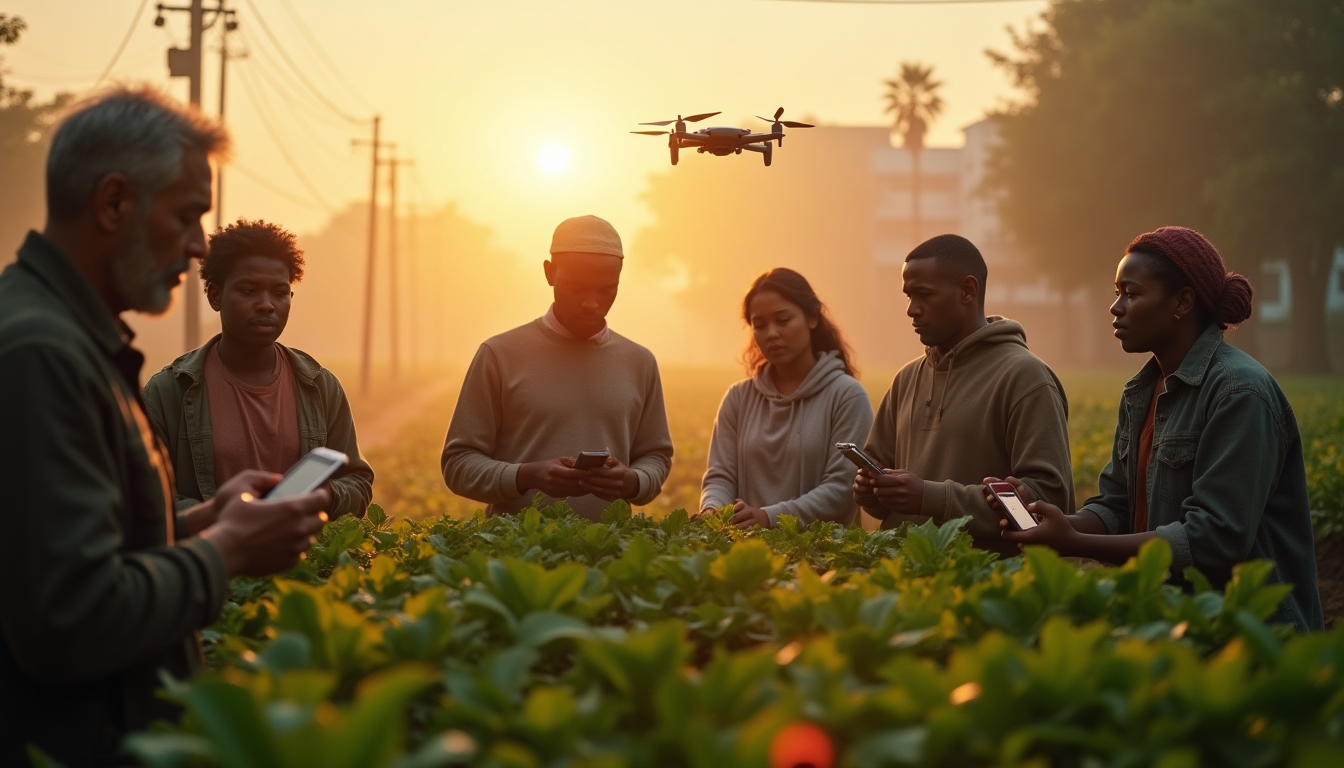
Still, one might wonder what happens when markets once defined by shortages face the liberating abundance promised by ASI. Take agriculture, for example. Precision farming, supported by real-time data, allows farmers to enhance yield predictability, ensuring crops reach the right markets without waste. This form of resource alignment challenges past inefficiencies and creates new paradigms of market supply.
Yet, these shifts are not devoid of challenges. There exist financial, social, and ethical considerations when deploying new systems at scale. The debate oscillates between splendid possibilities and fears of job displacement—a delicate dance that demands attention as we look ahead.
Thus, as we further explore the landscapes that an ASI-driven world can unlock, let's delve into projections of future markets and technological advancements poised to leave lasting impressions. Our thoughts now turn to the next frontier, brimming with untapped potential.
Future Markets: Predictions and Developments
As planets of possibility spin around the ASI sun, predicting which will ignite first is a thrilling endeavor. Multiple experts, from analytics savants to futurists, offer a kaleidoscope of perspectives on what lies ahead. It's akin to watching the dawn of a new world ushered in by the quatrains of superintelligence.
Reports Deloitte suggest that by 2030, nearly half of all high-skill jobs in finance, healthcare, and logistics could see transformation through ASI-powered decision-making platforms. This doesn't just mean adding efficiency—it's a reinvention of roles and systems. A future marketplace will likely prioritize cognitive and soft skills, often complementing ASI's computational prowess with human creativity and empathy.
Experts like futurist Ray Kurzweil believe in the ultimate convergence of technologies, where AI merges with broader human goals. His predictions about the Singularity—a point where machine intelligence surpasses human intelligence—pave the way for robust economic ecosystems that are not just reactive but anticipate needs preemptively.
New developments are reshaping how companies and governments tackle key societal issues, from climate change mitigation to wealth distribution. The merging of decentralization and AI-powered insights is set to transform everything from urban planning to personalized healthcare delivery.
Yet, with all this promise, the road to abundance requires navigating a careful path. Adaptation and education become essential pillars in preparing societies for such evolution. Communities, policy-makers, and industries alike need to nurture environments where these technologies can thrive without exacerbating social divides.
As this landscape continues to unfold, it's crucial to watch market signals and policy shifts that will embody ASI's wide-reaching influence. Armed with awareness and adaptability, industries and individuals can better harness the wind of change.
Let's prepare to examine how the coming abundance might affect societal structures, exploring who wins, who stands to lose, and how resource optimization paves the way for equity and opportunity in our next step forward.

Societal Implications of Resource Optimization via ASI
Breaching the horizon of a new economic age, resource optimization through Artificial Superintelligence (ASI) bears profound implications for society. As we've explored, emerging technologies challenge traditional scarcity-driven paradigms and beckon a world where resource allocation is efficient, equitable, and extraordinary. Let's pivot to examine who stands to gain the most, who might find themselves on uneven footing, and what ethical and regulatory hurdles lie in wait.
Winners and Losers in the New Economy
In any revolution, there are those who flourish and others that flounder. The advent of ASI in economic frameworks signals a tectonic shift in power dynamics. OpenAI's integration in various sectors reveals clear patterns. For instance, industries on the bleeding edge of tech, like information systems and biotechnology, witness an ascension in potential. Conversely, labor-intensive sectors face turbulence.
Elon Musk once posited that as AI takes the helm, the societal distribution of labor must evolve. Skilled workers are in higher demand, while roles traditionally reliant on redundancy are shrinking. For instance, the manufacturing sector in Detroit, famously enduring waves of automation, serves both as a historical lesson and a predictive model for forthcoming economic recalibration.
Across the globe, Mumbai presents a microcosm of transformation. The city's tech startups are burgeoning hubs of value creation, deeply intertwining ASI analytics to thrive amidst logistical complexities. Yet, the interplay between opportunity and displacement sharpens: smaller enterprise stakeholders and unskilled workers brace for adaptation.
Data from a recent study highlights potential pathways for transition. Education and retraining emerge central, echoing sentiments voiced by Sheryl Sandberg, advocating for systemic educational reforms that equip tomorrow's workforce. The silver lining? Enhanced collaboration between public entities and private innovators plants seeds for a more resilient economy.
Ethical Risks and Regulatory Challenges
The moral arithmetic of ASI's deployment cannot be ignored. Ethical considerations abound, drawing profound questions about fairness and individuality. Washington, D.C.'s legislative landscape becomes a focal arena where policy reform dialogues burgeon. The potential misuse of powerful tools, coupled with privacy incursions on vast scales, demands rigorous scrutiny.
Why so imperative? The deployment of ASI in industries from healthcare to urban planning necessitates comprehensive ethical frameworks. AI ethics evolve alongside technology, aiming to protect foundational human rights while promoting innovation. It's a delicate ballet of empowering while safeguarding.
Consider the European Union's General Data Protection Regulation (GDPR). Enacted as a bulwark against data mishandling, it shapes how ASI interacts with sensitive information. Yet, challenges remain pervasive. To what extent should ethical boundaries curtail throughput, efficiency, and potential innovation?
Dialogue from the World Economic Forum suggests regulatory foresight as crucial. By projecting legislative needs onto a shifting landscape, policymakers can pilot society adeptly through these technological maelstroms. How might these governance structures emerge to balance power? Researchers and ethicists concur that collaborative efforts remain our lodestar.
Opportunities Created by ASI Optimization
Amidst the whirl of change, ASI's ascent unfurls promising landscapes. Not one to settle for mere survival, society is poised to thrive. ASI enables the cultivation of new industries, unlocking realms yet to be envisioned. Robotics, data curation, and personalized service sectors burgeon into dominant economic pillars supporting global growth.
Peter Diamandis, an evangelist for abundance, believes in the transformative power of technological amalgamation to foster development. Envisioned futures highlight educational tech startups in Seoul, a city investing in youth-driven techno-hubs. Such initiatives incubate leadership, coaxing the globe toward sustainably vibrant paradigms.
Industries unfettered by conventional resource constraints will multiply scope and scale. Imagine agritech advancing sustainable practices across the plains of Buenos Aires. Tech-driven agriculture promises sharper efficiency and decreased ecological footprints, fundamentally reimagining how communities think about food and energy sources.
Ultimately, ASI propels societies beyond scarcity: a roadmap filled with pioneering prospects. From affluent metropolises to burgeoning townships, recalibrated value deliverables marshaled by ASI promise to buoy ambitious souls and communities alike. Our subsequent discourse in Point 5 will turn the kaleidoscope toward integrating these emergent solutions into everyday life, capturing the flourishing possibilities of a sustainable collective future.

Integrating ASI Solutions for a Sustainable Future
As we wrap up our exploration of ASI-driven transformation in resource optimization, it's essential to weave together the threads we have gathered—from understanding scarcity to the nuanced mechanics of Artificial Superintelligence (ASI) in resource allocation, the shift in economic models, and the societal implications these innovations foster. Through this synthesis, a new tapestry emerges, one that imagines a world potentially free of scarcity. Here, we delve into what such integration looks like in our everyday lives and the broader society.
Implementing ASI Solutions in Everyday Life
Across bustling cities from New York to Tokyo, pockets of ingenuity are unfolding. Homes equipped with smart assistants now learn and optimize energy usage patterns, reducing both bills and carbon footprints. Startups like Nest are leveraging machine learning to create thermostats that not only smartly modulate temperatures but also adjust usage based on lifestyle habits logged over time. It's about turning technology into an ally for comfort and cost-saving.
Similarly, cities are piloting projects that deploy ASI for efficient public transportation systems, easing congestion on crowded streets. In Singapore, for example, traffic signals are now being synchronized through ASI to facilitate smoother traffic flow, thus reducing commute times and emissions. These examples represent only the beginning of a paradigm shift, where ASI not only adapts to individual preferences but also enhances communal living standards.
Retail sectors are not left behind. Consider how chain stores are using predictive algorithms to manage inventory based on consumer buying patterns, mitigating the wasteful overstock of unsold goods. Such practices underscore a broader transition toward sustainability, proving that ASI's reach extends well beyond theoretical economic models, grounding itself in daily commerce and consumption.
Yet, implementing ASI solutions isn't merely about convenience or efficiency; it's a profound cultural shift. Society must embrace an ethos of open-mindedness and adaptability, welcoming the profound changes that ASI implementation demands. Here's what that means: we must start valuing data literacy as much as traditional literacy, fostering an informed citizenry ready to partner with technology.
As we approach the next section on best practices, consider this: integrating these solutions into fabric homes and communities needs engagement with change, curiosity, and a bit of courage. Much like any good story, it requires heroes—people willing to pioneer and experiment, always keeping one eye on the horizon.
Best Practices for Leveraging ASI
The thrust of effective ASI integration hinges on clear strategies and roadmap executions, principles tech giants and startups alike chip away at daily. Tesla, for instance, focuses its advanced autopilot capabilities on improving through incremental over-the-air updates, illustrating a model of evolutionary enhancement rather than revolutionary upheaval.
- Understand the landscape: Before diving into ASI projects, grasp the scope of what ASI can accomplish in your industry. Such understanding aids in clearly defined goals.
- Collaborate widely: Partner with fellow organizations, educational institutions like Stanford, and governmental bodies. Shared wisdom often spawns the most enlightening breakthroughs.
- Test adaptively: Start small, with pilot projects that are easy to pivot from. Then, scale implementations as prototypes prove their mettle.
- Ethics and transparency: Maintain clear communication with stakeholders, ensuring that AI systems adhere to ethical guidelines that respect user privacy and dignity.
Moreover, lessons learned from past initiatives emphasize avoiding pitfalls such as over-reliance on technology without human oversight or the lack of contingency plans for ASI miscalculations. As IBM advisory panels point out, success hinges on continuous learning and adaptation.
Through deliberate collaboration and innovation, pathways to ASI integration mature into sophisticated networks, fostering benefit distribution rather than tech monopolies. The initiatives in Sydney and Toronto to build smart city infrastructures stand as testaments to this approach, blending data-driven decision-making with community needs.
In transitioning to the final insights on visualizing a scarcity-less world, we walk a path littered with the legacies of past achievements and brimming with possibilities. Our journey's trajectory hinges on the practices we adopt today; for these best practices form the groundwork of a sustainable tomorrow.
Looking Ahead: The Future Beyond Scarcity
The strides we make now, with ASI as our guiding star, could pave the way for a reality where scarcity feels as arcane as the eras without electricity. This future is punctuated by potential advances in equitable resource distribution, where every corner of the globe from Cape Town to Berlin enjoys access to the resources needed for growth and prosperity.
Consider the long-range implications: enhanced climate resilience through data-informed agricultural practices, reduced global conflicts over dwindling resources, and a rise in living standards driven by surplus rather than sufficiency. Organizations like The Venus Project illustrate future imaginaries where circular economies replace linear consumption models.
Emerging research highlights potential pathways where such transformations redefine influence and power, crafting a new world order where knowledge and innovation prevail over material accumulation. The World Economic Forum predicts that such resource optimization could facilitate an era of unprecedented global cooperation.
In contemplating these possibilities, we're called to embark on personal and systemic adaptations. A crucial shift involves recognizing every individual's role in stewarding resources, not merely as consumers but as custodians of a shared planet. Thus, education and policy reforms must align to prepare future generations for such roles.
As this narrative of ASI and resource optimization draws to a close, it beckons us to embrace a vision of abundance. The ideas we've explored aren't merely theoretical; they're seeds that can germinate into innovative practices and policies. So, as we transition into actionable ASI solutions and roadmaps, let's take these insights forward with a sense of shared purpose and optimism—the kind that redefines what prosperity could truly mean for all.

ASI Solutions: How Artificial Superintelligence Would Solve This
Having explored the diverse applications of Artificial Superintelligence (ASI) and how it stands to redefine value in our resource-dependent world, we now step into the realm of practical solutions. By breaking down unwieldy problems into manageable pieces, ASI can unravel complex societal challenges as elegantly as a mathematician simplifies a quadratic equation.
ASI Approach to the Problem
The first step in ASI-driven resource optimization begins with problem decomposition. Just as the legendary J. Robert Oppenheimer orchestrated diverse minds during the Manhattan Project, ASI uses its algorithms to dissect a problem into smaller, more digestible components. By doing so, it identifies the root causes and variable dependencies that human analysis might overlook.
Within this strategic framework is a novel solution model that prioritizes efficiency and sustainability. Think of it as a Swiss army knife, where each tool represents different methods like predictive analytics, dynamic modeling, and scenario testing. These elements interact harmoniously to optimize resource allocation and utilization in real time.
Here's what that means for a step-by-step implementation process:
- Identification of Resource Needs: Pinpointing specific areas requiring immediate attention.
- Data Gathering: Using sensors, historical data, and real-time feeds to construct a comprehensive situational awareness.
- Dynamic Modeling: Creating simulations to forecast outcomes using different resource allocation strategies.
- Feedback Loop Creation: Implementing a system for ongoing monitoring and adjustment of approaches.
- Sustainability and Efficiency Metrics: Quantifying success through measurable improvements in resource yield, decreased waste, and reduced ecological footprints.
The outcomes from employing ASI in resource optimization are promisingly tangible. Economists and data scientists alike anticipate increased efficiency in the range of 30-50% across various sectors. Moreover, environmental studies point to significant reductions in carbon emissions and waste due to optimized supply chain management and resource distribution.
Implementation Roadmap: Day 1 to Year 2
Phase 1: Foundation (Day 1 - Week 4)
- Day 1-7: Establish a cross-disciplinary team, drawing inspiration from the collaborative model of the Manhattan Project. Secure partnerships with key stakeholders from technology, sociology, and environmental sectors.
- Week 2-4: Develop a robust framework for data collection and analysis. Deploy initial hardware in select test environments for data gathering.
Phase 2: Development (Month 2 - Month 6)
- Month 2-3: Implement initial models focused on predictive analytics. Run pilot programs to test algorithm accuracy and efficiency.
- Month 4-6: Begin a feedback loop process, refining models as new data flows in. Document findings and make necessary adjustments to analytics algorithms.
Phase 3: Scaling (Month 7 - Year 1)
- Month 7-9: Expand data collection across more sites to increase sample diversity. Begin training new AI models based on collected data insights.
- Month 10-12: Evaluate scaling opportunities using results from pilot tests. Begin rollout to broader applications while maintaining tight quality controls.
Phase 4: Maturation (Year 1 - Year 2)
- Year 1 Q1-Q2: Assess program success against predefined benchmarks, prioritizing transparency between stakeholders.
- Year 1 Q3-Q4: Continue iterating and refining AI models for optimal performance. Start exploring partnerships for international application.
- Year 2: Deliver a comprehensive report on findings, including potential impact on global resource management. Commence handoff to relevant agencies for further application and expansion.
Drawing inspiration from historical projects like the Apollo Program, this roadmap is designed to guide initiatives ensuring scalable, sustainable resource management. The roadmap offers a way forward for any organization or government seeking to harness the transformative power of ASI. And as our world moves closer to making scarcity obsolete, the promise of ASI solutions offers hope for a more equitable and sustainable future.
Now, as we transition to the conclusion, let us reflect on how these advanced solutions not only change systems but also widen the horizon of what's possible in a world free from the constraints of scarcity.

Conclusion: Envisioning Abundance: The Path Forward
So let me take you back to that powerful statistic: over 1 billion people lack access to basic resources, yet global wealth has never been higher. This stark contrast represents a challenge that goes beyond numbers; it reflects a reality shaped by outdated perceptions of value and scarcity. Throughout this journey, we've explored how redefining value through Artificial Superintelligence (ASI) can usher in a new era of abundance. From understanding the illusion of scarcity to examining its cost, transitioning our economic models provides a fertile ground for innovation and growth. Each insight feeds into a broader narrative of empowerment—the opportunity to optimize resources and create a sustainable future lies within our grasp. This is just the beginning of what we can achieve collectively.
Now, let's zoom out for a moment. The cultural and societal implications of optimizing resources through ASI are profound. Imagine a world where everyone has access to the essentials needed for a fulfilling life. Where innovation isn't just the privilege of a few but a shared gift that transforms communities and individuals alike. What matters now is our ability to harness this immense potential responsibly. The narrative of scarcity may define our past, but it's the commitment to abundance that can redefine our future. This shift requires us to recognize our interconnectedness and act with empathy and purpose, ultimately fostering hope and empowerment across the globe.
So let me ask you:
How might embracing a mindset of abundance change your daily decisions and interactions?
What responsibilities do you feel as a member of a society steeped in the legacy of scarcity?
Share your thoughts in the comments below.
If you found this thought-provoking, join the iNthacity community—the "Shining City on the Web"—where we explore innovation and humanity. Become a permanent resident, then a citizen. Like, share, and participate in the conversation.
Together, we can create a future where scarcity is a relic of the past, and abundance is the new reality.

Frequently Asked Questions
What is ASI resource optimization?
ASI resource optimization refers to the use of Artificial Superintelligence to redefine economic value and eliminate scarcity. This involves complex algorithms that analyze data to ensure resources are allocated efficiently and sustainably. By leveraging ASI, economies can transition from a scarcity mindset to one of abundance, affecting various sectors from agriculture to healthcare.
How does ASI improve resource allocation?
ASI improves resource allocation by utilizing advanced machine learning techniques and analytics. It analyzes vast amounts of data to assess resource needs dynamically. For instance, ASI can streamline supply chain logistics, reducing waste and ensuring the right resources are available where needed, leading to significant cost savings and enhanced productivity for industries.
Will ASI resource optimization affect my daily life?
Yes, ASI resource optimization is set to enhance daily life by making essential services more accessible and affordable. For example, sectors like energy and transportation will likely experience greater efficiency, providing consumers with reduced costs. As industries adopt ASI solutions, we may also see improved access to healthcare and education, benefiting communities globally.
When can we expect to see ASI solutions in practice?
We can expect to see ASI solutions implemented in various sectors within the next few years, with significant advancements already in motion. Industries like logistics and healthcare are leading the way, piloting ASI projects aimed at improving efficiency and resource management. As technology matures, broader applications in public services may follow by the end of the decade.
What challenges does ASI face in implementation?
Implementing ASI presents challenges like ethical concerns, data privacy, and the potential for job displacement. There are worries about data exploitation and how well regulations can keep pace with rapid advancements in technology. Navigating these challenges will be critical to ensuring that ASI serves the public good while minimizing negative impacts on employment and society.
Can ASI really eliminate scarcity?
The short answer is yes, ASI has the potential to significantly reduce scarcity by optimizing resource distribution. Through predictive analytics and real-time data processing, ASI can address inefficiencies in resource management. While it won't eradicate scarcity entirely, it can create a system where resources are allocated more equitably, improving availability for many.
Is ASI safe for society?
While ASI holds great promise, its safety for society depends on how responsibly it is developed and implemented. Ethical considerations around decision-making and bias in algorithms must be addressed to avoid negative societal impacts. Ongoing discussions among policymakers, technologists, and ethicists are crucial to create frameworks that ensure safe deployment.
Why is ASI particularly important now?
ASI is vital now because the world grapples with pressing issues like climate change and resource depletion. Global challenges require innovative solutions that traditional systems struggle to provide. ASI can help by optimizing resource use and promoting sustainability, making it an essential tool in our efforts to create a more equitable world.
What are some examples of ASI in action?
Examples of ASI in action include systems deployed in urban planning, where data analytics help manage public services efficiently. Companies like OpenAI are exploring ASI applications in automating complex tasks across industries, including healthcare diagnostics and supply chain management. These real-world implementations are steadily demonstrating how ASI can optimize processes.
Should we be worried about ASI taking jobs?
Concerns about ASI taking jobs are valid, as automation can lead to job displacement in some sectors. However, ASI also creates opportunities in new fields and enhances existing jobs by automating repetitive tasks. The key lies in preparing the workforce for this transition through reskilling and embracing lifelong education, ensuring that people can adapt to evolving job markets.
Disclaimer: This article may contain affiliate links. If you click on these links and make a purchase, we may receive a commission at no additional cost to you. Our recommendations and reviews are always independent and objective, aiming to provide you with the best information and resources.
Get Exclusive Stories, Photos, Art & Offers - Subscribe Today!
Related posts:
 Unlocking the Infinite Economy: How AGI Could Revolutionize Resource Management with Clean Energy and Self-Replicating Materials
 AI Climate Savior: How Machines Combat Desertification and Drought to Restore Arid Landscapes and Prevent Water Scarcity
 The New Renaissance: What Will We Create When Work Ends?
 AI in Smart Cities: Revolutionizing Urban Living with Real-Time Transportation and Resource Management
 AI in Smart Cities: Revolutionizing Real-Time Transportation and Resource Management





Post Comment
You must be logged in to post a comment.