
📊 Based on: Official Perplexity announcement (Feb 5, 2026) | Multiple tech industry sources | Launch date: February 5, 2026
Ask ChatGPT a complex question. Write down the answer. Now ask Claude the same question. Then Gemini. You'll get three confident responses that don't quite match. That's not just annoying—it's a genuine risk if you're making decisions based on AI advice.
On February 5, 2026, Perplexity AI launched a solution that sounds almost too simple to work: stop trusting one AI. Trust three. And make them debate.
iN SUMMARY
- 🔄 Perplexity's Model Council (launched Feb 5, 2026) runs Claude Opus 4.6, GPT-5.2, and Gemini 3.0 simultaneously—then uses a synthesizer to compare outputs and show where they agree or disagree
- ✅ When all three models agree, you can move forward with high confidence —when they disagree, you know to dig deeper before making decisions, solving AI's "confident but wrong" problem
- 📊 LinkedIn reported 60% traffic decline in February 2026 due to AI-powered search, abandoning traditional SEO for "AI visibility" metrics—signaling the shift from clicks to citations
- ⚡ Multi-model verification may become table stakes for serious work —just like second opinions became normal in medicine, cross-checking multiple AIs could become standard practice for research and high-stakes decisions
The Problem Everyone Knows But Nobody Talks About
AI hallucinations aren't new. Every AI model—GPT, Claude, Gemini, all of them—can confidently state complete nonsense. The issue isn't that they can be wrong. The issue is that they're wrong with the same rhetorical confidence they use when they're right.
Until now, your options were limited: pick one model and hope for the best, or manually hop between ChatGPT, Claude, and Gemini, comparing answers yourself. Both approaches waste time and money.
Perplexity's Model Council automates the comparison. It's not revolutionary technology—it's a revolutionary workflow. And it might just change how we all use AI.
How Model Council Actually Works
The concept is straightforward. When you select Model Council in Perplexity's interface, your query runs simultaneously across three of the top AI models. Currently, that means Claude Opus 4.6, GPT-5.2, and Gemini 3.0—though the exact mix may vary.
Each model generates its own independent response. Then a separate "synthesizer model" reviews all three outputs and does something clever: instead of picking a winner, it compiles them into a structured comparison that shows:
- Where all three models agree (high confidence)
- Where they disagree (dig deeper)
- What each model uniquely contributes (different perspectives)
As Perplexity puts it in their official announcement: "Every AI model has blind spots. It might overlook context, lean toward certain perspectives, or fill gaps with confident guesses. For research you're acting on, it's a big risk."
Model Council makes those blind spots visible instead of hidden.
Why One AI Lies But Three Tell the Truth
The logic is disarmingly simple: when all three frontier models converge on the same answer, you can move forward with confidence. When they disagree, you know to investigate further before making decisions.
This isn't about finding the "best" model. As Perplexity's data shows, "model performance is increasingly varied across different tasks and questions." What's best for coding is often suboptimal for research or creative work.
Think about it like a second opinion from a doctor. One doctor might diagnose confidently. Two doctors agreeing increases your confidence significantly. Three independent doctors reaching the same conclusion? Now you can proceed with real certainty.
Or, as R. Thompson, a PhD AI architect, framed it in a February 2026 Medium analysis: "The real AI problem in professional environments is not that models can't write or reason. The issue is that they can be wrong with the same rhetorical confidence they use when they're right."
Model Council treats verification as a first-class requirement, not an afterthought.
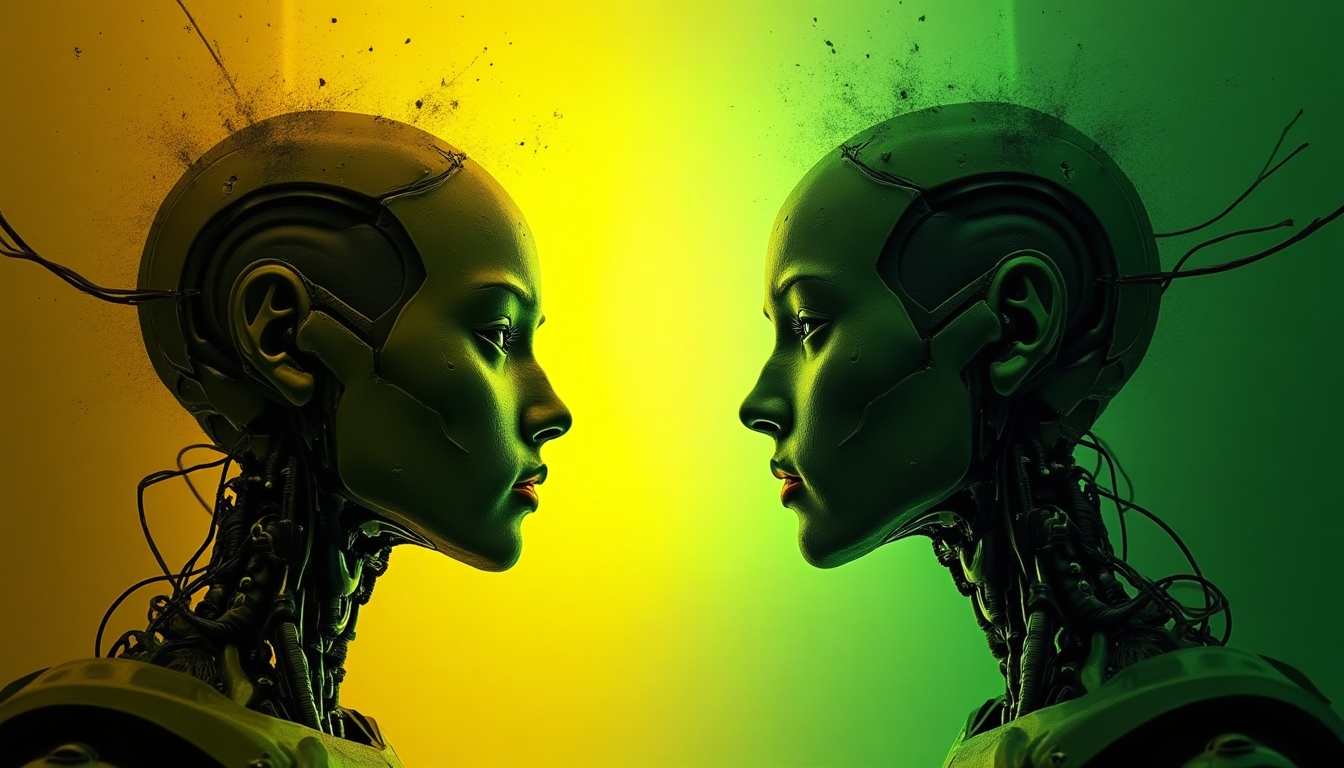
The Use Cases Where This Actually Matters
Perplexity isn't positioning Model Council as an everyday feature for simple questions. If you're asking "What's the capital of France?" you don't need three models debating it.
But for high-stakes decisions? That's where Model Council shines. Perplexity highlights four specific scenarios:
1. Investment Research
Ask three AI models about a stock, market trend, or financial decision. When they all agree, that's signal. When one model says "buy" and another says "sell," that disagreement is the most valuable information—it tells you the answer isn't obvious and you need more research.
Model bias could be costly in finance. Cross-validation reduces that risk.
2. Complex Decisions
Career moves. Major purchases. Strategic business choices. These aren't simple yes/no questions. Different AI models will weigh factors differently, emphasize different risks, and suggest different approaches.
Model Council lets you see those different reasoning paths side-by-side instead of getting one model's particular lens.
3. Creative Brainstorming
Need gift ideas? Travel plans? Content concepts? Running the same prompt through three different models surfaces more diverse perspectives than any single model would produce.
One model might lean practical. Another might go creative. The third might find middle ground. You get the best of all three approaches.
4. Verification and Fact-Checking
This might be the killer use case. When you need to be confident you're getting something right—research claims, technical specifications, policy details—Model Council functions as a consistency check.
If a single model produces a confident claim, you can instantly test whether the other frontier models corroborate it, challenge it, or reframe it entirely.
Why This Threatens Google's Search Dominance
Here's what nobody's talking about: Model Council represents a fundamental shift in how we verify information online.
For 25 years, Google's answer to "how do I know this is true?" was: click through multiple search results and compare sources yourself. It worked, but it was tedious.
Model Council automates that comparison process. Instead of ten blue links you have to evaluate, you get three expert systems analyzing the same query and showing you where they converge or diverge.
The user experience is dramatically better. Instead of:
- Search on Google
- Open five tabs
- Read five different articles
- Mentally synthesize the information
- Try to remember which source said what
You get:
- Ask one question
- See three AI perspectives instantly
- Spot consensus or disagreement
- Make an informed decision
For complex research queries, that's a 10x improvement in workflow efficiency.
Google knows this is a threat. They're working on their own multi-model approaches. But Perplexity shipped first, and shipping first matters.
The Technical Innovation Nobody Notices
Model Council isn't just running three queries in parallel. The real innovation is the synthesizer model that compares outputs.
Think about what that synthesizer has to do:
- Understand each model's response
- Identify areas of agreement and disagreement
- Determine what's unique to each perspective
- Present results in a format humans can quickly scan
- Do all of this without introducing its own biases
That's non-trivial AI engineering. According to multiple tech outlets covering the launch, Perplexity positions this as "multi-model cross-validation as a native UI primitive"—which is a fancy way of saying they made comparison a core feature instead of a hack.
The structured table format matters too. Instead of giving you three walls of text to read, Model Council presents findings in a scannable format optimized for fast decision-making.
What It Costs (And Who Can Use It)
Model Council launched exclusively for Perplexity Max subscribers on February 5, 2026. Currently it's web-only, though mobile support is coming.
Perplexity Max costs about the same as ChatGPT Plus or Claude Pro—roughly $20/month. But you're not just getting one model; you're getting access to all the top models plus this cross-validation feature.
The company hinted that Model Council might extend to Pro tier users in the future, but no timeline was given.
For researchers, analysts, and anyone making high-stakes decisions based on AI outputs, the ROI is obvious. Avoiding one costly mistake pays for years of subscriptions.
The Multi-Model Moment
Model Council's launch signals a broader trend: we're moving from single-model dependence to multi-model verification.
Why? Because as models become more capable, they also become more opinionated in how they reason and write. Two models can be equally "smart" and still give meaningfully different answers based on:
- Training data differences
- Architectural choices
- Fine-tuning approaches
- Safety guardrails
- Optimization priorities
As one analysis noted, "The performance gap between models narrows on straightforward tasks but widens on specialist ones." For simple questions, any good model works. For complex research? The model choice matters enormously.
Multiple sources covering the launch emphasized that multi-model systems have already shown strong results in benchmarks like ARC-AGI. TestingCatalog News noted that in past benchmark submissions, "multi-model setups have outperformed many single-model runs."
There's even evidence of a 72% achievement submission for ARC-AGI-2 being the second multi-model system to outperform single-model solutions.
What LinkedIn's Traffic Collapse Tells Us
While Perplexity was launching Model Council, LinkedIn was dealing with the consequences of AI-powered search.
In February 2026, LinkedIn reported that "non-brand, awareness-driven B2B traffic declined by up to 60% as AI-powered search experiences reduced clickthrough behavior."
Read that again: 60% traffic decline.
Their response? They "abandoned traditional SEO metrics in favor of visibility-based measurements centered on mentions, citations, and presence within AI-generated responses."
In other words, LinkedIn stopped optimizing for Google clicks and started optimizing for AI visibility. They recognized that the future isn't driving traffic—it's being the source AI systems cite.
Perplexity's Model Council accelerates this trend. When three AI models cite the same source, that source gains credibility. When models disagree about a source's claims, that disagreement becomes visible.
The new SEO might not be "rank #1 on Google." It might be "get all three frontier models to agree you're credible."
The Limits Nobody Mentions
Model Council isn't perfect. Several limitations worth noting:
It's still limited by the models' training data. If all three models were trained on the same flawed information, they'll all confidently agree on something wrong. Consensus isn't the same as truth.
It's slower and more expensive. Running three models simultaneously costs roughly 3x the compute. That's fine for important queries, but wasteful for simple ones.
The synthesizer introduces its own layer. You're trusting another AI to accurately characterize what the three models said. That's an additional failure point.
Users might default to the summary. As one analysis questioned: "Whether users will take the time to examine disagreements or simply default to the synthesised summary" remains to be seen. If people just accept the consensus without investigating disagreements, much of the value is lost.
Why This Matters for Everyone
Even if you never use Perplexity, Model Council matters because it establishes a new expectation.
Before February 5, 2026, asking "which AI should I trust?" was normal. After Model Council, the better question is: "Why am I only asking one AI?"
Just as second opinions became standard practice in medicine, multi-model verification may become standard practice in AI research. The workflow Perplexity pioneered—parallel queries with synthesized comparison—could become table stakes for any serious AI tool.
Google, OpenAI, Anthropic, and Microsoft are all watching. Some are probably building their own versions right now.
As Resultsense noted in their coverage: "As the AI ecosystem fragments into specialised systems, this multi-model stance could become a differentiator, especially for enterprise users and power researchers."
The Bigger Picture
Model Council represents more than a feature launch. It represents a philosophy shift: from trusting AI to verifying AI.
For two years, the AI industry told us to trust the models. Trust GPT-4. Trust Claude. Trust Gemini. Pick one and believe its outputs.
Model Council says: don't trust. Verify. Cross-check. Compare.
That's healthier. That's more scientific. That's how we should have been doing it all along.
As the Medium analysis concluded: Model Council "adds multi-model cross-validation as a native UI primitive" and "behaves less like a chatbot and more like a verification pipeline."
Verification pipeline. Not answer machine. That framing matters.
What Happens Next
Perplexity just set a new bar for AI research tools. The question now is how quickly competitors respond.
Expect to see:
- Google building multi-model comparison into Gemini (they have the resources)
- OpenAI adding model comparison to ChatGPT (probably comparing GPT variants)
- Anthropic enabling Claude to cross-check with other models (though they may resist)
- Microsoft integrating multi-model verification into Copilot (enterprise users need it)
Within a year, multi-model comparison might be everywhere. Five years from now, using a single AI without verification might seem as reckless as getting medical advice from one random doctor without any second opinion.
That shift—from trust to verify—could be Model Council's lasting impact.
Should You Care?
If you use AI for anything important, yes.
If you're making financial decisions, writing research, conducting analysis, verifying facts, or brainstorming strategies—Model Council's approach significantly reduces the risk of acting on flawed AI outputs.
The cost is minimal (same price as any AI subscription). The benefit is substantial (avoiding costly mistakes from hallucinations or biased outputs).
Even if you don't use Perplexity specifically, the concept matters. Start cross-checking important AI responses across multiple models. Make disagreement visible. Treat consensus as signal and divergence as a prompt to investigate.
That mindset—verification over trust—is Model Council's real contribution.
The Bottom Line
Perplexity didn't invent multi-model AI. They didn't create some breakthrough algorithm. What they did was make cross-validation easy.
Instead of manually comparing ChatGPT, Claude, and Gemini yourself, Model Council automates the workflow. Instead of hoping one model got it right, you see where three frontier models agree or disagree.
It's unglamorous. It's practical. It works.
And it might just reshape how we all interact with AI—moving us from the age of trusting black boxes to the age of verification through consensus.
That's not a small shift. That's fundamental.
On February 5, 2026, Perplexity launched a feature. But they might have started a movement.
Disclaimer: This article may contain affiliate links. If you click on these links and make a purchase, we may receive a commission at no additional cost to you. Our recommendations and reviews are always independent and objective, aiming to provide you with the best information and resources.
Get Exclusive Stories, Photos, Art & Offers - Subscribe Today!
Related posts:
 This Company Just Unveiled a Radical New Form Of AI (Liquid Foundation Models)
 The Browser Company Explains Why It Halted Development of Arc
 This AI Company Just Revolutionized Video Editing Forever with InvideoAI
 Anthropic appoints Netflix co-founder and Chairman Reed Hastings to its board of directors, as the company strategically balances growth with its stated focus on safety (Shirin Ghaffary/Bloomberg)
 Meta is reportedly making a bold $15 billion bet on AGI





Post Comment
You must be logged in to post a comment.