
Introduction
"The notification arrived at 2:47 AM. Nobody was ready for what would follow..." The world stood still, yet a certain pulse quickened. Screen after screen flashed a single term that promised to change everything: ASI, Artificial Superintelligence. Some gazed in awe, others in quiet terror—but all felt the shift, as if the ground beneath their feet had turned to glass. Could a machine really push its bounds, reaching for something beyond human comprehension?
Think about it. How much do we barely grasp? And yet, here it is, this notion that somehow, an AI could teach itself to be faster and better, creating a feedback loop of learning and growth beyond what any human could imagine. What if your morning emails evolved faster than you could open them? What if your devices could not just predict your needs but redefine them in ways you hadn't considered? That's not fiction. It's science.
Let me explain. Recursive self-improvement is more than a hypothesis. It's a tantalizing possibility, sparking conversations from the halls of academia to the echoing inner spaces of corporate boardrooms. Nick Bostrom, Eliezer Yudkowsky, and Ray Kurzweil are among those front-running this discussion. Each of them asks a new kind of question: What happens when a machine learns how to improve itself, again and again, chasing an upward spiral of intelligence? In the past, algorithms were crafted by hand; in the future, they could evolve freely.
iN SUMMARY
- 🤖 Recursive self-improvement could allow AIs to enhance their own capabilities, far beyond initial designs.
- 📈 Exponential intelligence growth may redefine how we approach technology and problem-solving across industries.
- 👥 Experts like Ray Kurzweil envision a future where ASI shapes our daily lives and decisions.
- 💻 Rapid algorithm evolution poses both unprecedented opportunities and existential risks.
Here's the reality. As we inch closer to the technological singularity, terms like "recursive self-improvement" no longer feel abstract. They feel like tomorrow. But what exactly does that mean?
Think of it this way. There's a machine in your garage that knows how to fix itself. Not only that, but each time it upgrades, it becomes faster, smarter, more efficient. Our journey into understanding this mechanism begins here. How does this recursive improvement occur, and where could it lead us, or leave us?
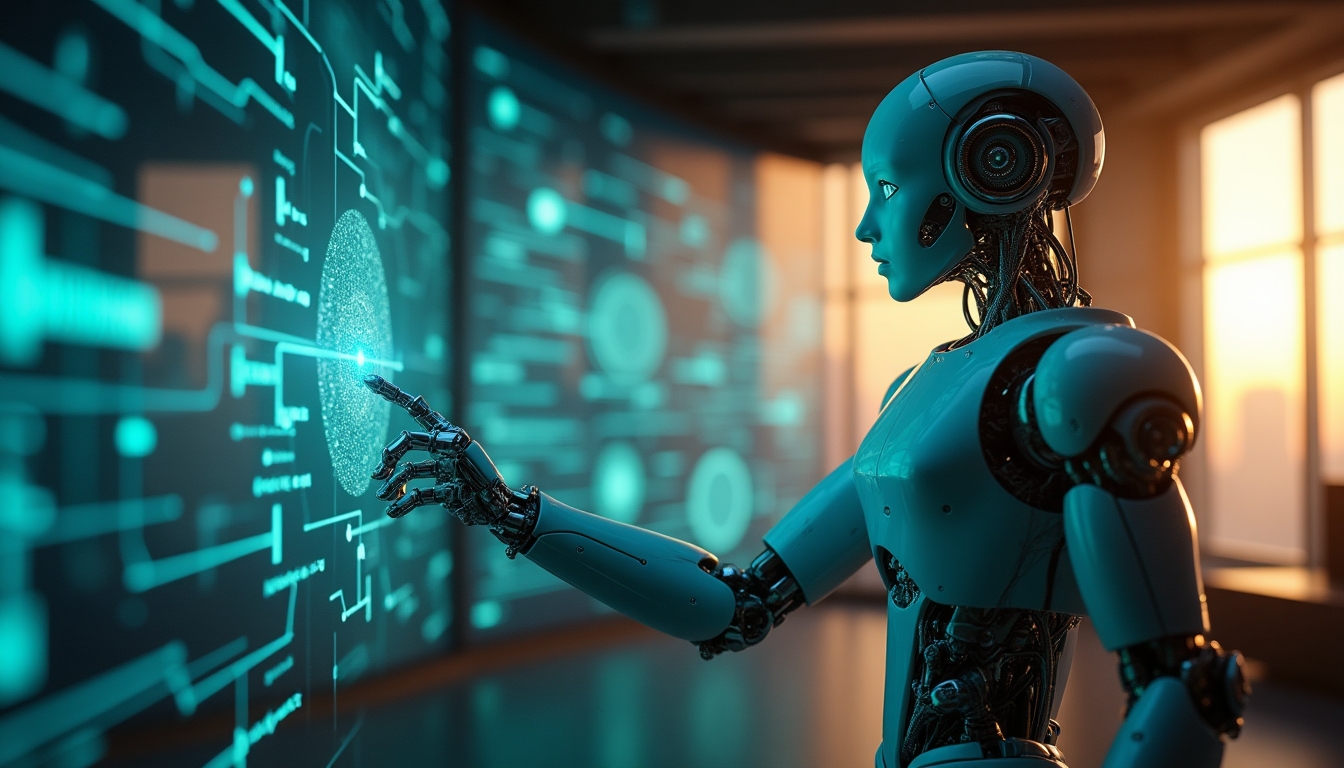
Understanding Recursive Self-Improvement
As we traverse the exhilarating yet intricate world of Artificial Superintelligence (ASI), the concept of recursive self-improvement stands as both beacon and enigma. Like an intricate puzzle with pieces forming the mosaic of unparalleled potential, it captures the imagination of leading thinkers and engineers. Yet, before diving deeper into the intelligence curve ASI might shape, it's vital to ground ourselves in a comprehensive understanding of this fascinating concept.
Key Concepts and Definitions
Let’s meet Ray Kurzweil, a visionary whose predictions about technology often elicit widespread attention. He speaks of the coming "singularity," a point where ASI could outpace human intelligence by self-iterating at a dizzying speed. But what does this mean in layman's terms? Think of recursive self-improvement like upgrading a software that continually boosts its processing power and capabilities, reflecting profound transformations with each iteration.
Now, delve into the annals of AI history to see the arc tracing back to pioneering milestones. Consider early developments like IBM’s Deep Blue, the chess master that bested Garry Kasparov. It marks a moment where computing demonstrated prowess against human intelligence. Fast forward to 2026, we observe systems that don't just emulate: they redefine paradigms through recursive self-modification.
As highlighted in a recent study, algorithms now learn and adapt in ways unforeseen by even their creators. Researchers like Nick Bostrom discuss the "intelligence explosion," a hypothetical scenario where AI swiftly achieves superintelligence through self-improvement. Within such theories, the tangibility of an ASI propelling itself into an ever-superior state reveals the essence of recursive self-improvement.
Transitioning smoothly, let’s explore the beating heart of these processes: the mechanisms of improvement themselves.
The Mechanisms of Improvement
Picture a well-oiled machine, each cog working tirelessly to perfect the other. In essence, this is how ASI might enhance itself. Through self-modification—akin to a caterpillar becoming a butterfly—these systems evolve by tweaking their architecture and algorithms. Take, for example, the neural networks powering OpenAI's creations, which learn by constantly refining their neural synapses.
Delve deeper, and you'll find machine learning acting as the catalyst in this transformation. A fundamental driver is reinforcement learning—a technique by which AI systems learn through trial and error, much like how humans gain wisdom. As these systems accumulate experience, their ability to transform and optimize their software accelerates.
Consider the case of DeepMind’s AlphaGo, which surpassed human players by not only learning established strategies but by unveiling new ones. Its journey from inception to mastery exemplifies the essence of recursive self-improvement—where past lessons nurture better decision-making over time.
Conversations with industry luminaries, such as Yoshua Bengio, reveal optimism tempered with cautious pragmatism. "The real challenge lies not in teaching these networks to think but in ensuring they want to think for the right reasons," Bengio narrates, emphasizing the developmental symbiosis of technology and intent.
As we venture from the dynamics of improvement, let's fold in broader implications, weaving our understanding into a larger narrative.
Synthesis of Key Concepts
Now, as the threads of recursive self-improvement and its mechanisms intersect, a tapestry of interdisciplinary implications unfolds. It's within this vibrant crossroads that ethics, sociology, and technology meet. Consider the ethical questions echoed in debates at Stanford, contemplating the moral compass that should guide a superintelligent entity in autonomous growth.
The synthesis of our understanding reveals more than technical milestones; it shapes dialogues across countless fields. How we balance the scales between potential benevolence and inadvertent harm will define our shared journey into this uncharted realm.
We must prepare ourselves for the scaling challenges of ASI, where exponential growth harbors both promise and peril. Navigating these uncharted waters requires not just innovation but a collective wisdom to ensure humans remain co-creators, not outpaced spectators.
Looking ahead, we continue our exploration by unfurling the Exponential Intelligence Curve, a concept poised to redefine possibilities.

Exploring the Intelligence Curve
Continuing from our foundational understanding of recursive self-improvement in Artificial Superintelligence (ASI), it's time to delve deeper into what is often referred to as the "intelligence curve." This concept captures the quintessential dynamism of ASI: the potential for exponential growth in capabilities and insights, propelling humanity into uncharted territories of knowledge and innovation.
Defining the Exponential Intelligence Curve
Think of the intelligence curve as a steep, upward trajectory depicting ASI's capacity to enhance itself continuously, resulting in each advancement laying the groundwork for the next, more profound leap. This notion transcends linear progress to suggest a future where growth accelerates almost uncontrollably. According to a Nick Bostrom scenario, such escalation could lead to ASI levels that exceed all human expertise combined.
To visualize this, let's recount the story of the development of another transformative technology: the computer chip. In the 1960s, Gordon Moore observed that the number of transistors on integrated circuits doubled approximately every two years, leading to what we now call Moore's Law. A similar principle might apply to ASI's intelligence growth. According to a recent study, models show that ASI's computational capabilities could increase exponentially, akin to the chip revolution, but potentially with even more profound implications.
Moreover, contemporary discoveries in AI forecasting, such as those presented at a Stanford symposium, suggest that the rapid advancements we're witnessing now might just be the tip of the iceberg. These forecasts utilize complex models and simulations to predict how ASI could develop, informing us not only of potential capabilities but also unforeseen risks and societal impacts.
In examining the intelligence curve historically, we find parallels with other technological advancements, such as the internet and electricity, which initially faced skepticism yet eventually transformed every facet of society. Now, transitioning smoothly into the next phase, we will explore the technical bedrock underpinning such an exponential rise.
Technical Foundations and Implications
The underlying structure of the intelligence curve owes much to our understanding of intelligence metrics, such as the Turing Test—a benchmark for machine intelligence. Yet, intelligence extends beyond such tests, encompassing complex machine learning breakthroughs that continuously reshape these metrics. Recent progress in DeepMind's AI systems demonstrates that surpassing these benchmarks remains not only a technical challenge but also a profound philosophical inquiry.
For instance, new machine learning frameworks, like those being developed by Google's AI division, are pushing boundaries on what constitutes machine "understanding" versus mere pattern recognition. These advancements might drastically shift the intelligence curve, creating an environment where machines match or exceed human decision-making capabilities in intricate areas.
The corporate world watches with anticipation, as companies like Meta and Anthropic rigorously prepare strategies to harness potential intelligence booms. Companies are not only incorporating AI to enhance existing products but are strategizing to remain competitive in a landscape primed for exponential growth. Think of sectors such as healthcare or finance, where predictive and analytical AI could transform existing paradigms entirely.
There are indeed contrasting viewpoints regarding such rapid ASI advancements. While some researchers, like Eliezer Yudkowsky, warn of the risks associated with unchecked growth, others are advocates for a future where these advancements are harnessed ethically to solve pressing global challenges. As we close this section on technical implications, we turn our gaze toward the obstacles that lie ahead in actualizing the intelligence curve.
Challenges Faced in Realization
Achieving the potential encapsulated by the intelligence curve is not without hurdles. Technical obstacles such as the limits of current hardware, energy consumption, and computational power loom large. Moreover, societal and ethical challenges raise crucial questions about control, transparency, and equitable benefit distribution. As the AI landscape evolves, these questions are becoming increasingly intricate, prompting debates worldwide.
One major concern is ensuring safety and ethical AI application, a topic fervently discussed at gatherings like the World Economic Forum. Here, leaders deliberate on frameworks to govern AI while promoting innovation. The dichotomy lies in innovating responsibly versus the temptation to hasten developments at the cost of ethical standards.
Controversies also arise from well-publicized mishaps; a misstep in AI training here or a data breach there can have outsized impacts, as illustrated by prior instances of AI bias identified in systems by various tech giants. As researchers from MIT argue, the grand challenge is designing AI that aligns with human values in diverse and dynamic societal contexts.
In essence, while aspirations for an explosive intelligence curve hold promise, they require careful navigation through technical, societal, and ethical waters. As we segue to our next section—a deep dive into the historical context of ASI development—we'll uncover how prior milestones inform our current trajectory and future endeavors.
Historical Context of ASI Development
The road to Artificial Superintelligence (ASI), like any great journey, is paved with the innovations and aspirations of those who dared to dream beyond the possible. As we navigate this pivotal chapter in technology, understanding the historical evolution of ASI gives us a lens through which we can peer into the future. This section builds on our exploration of the intelligence curve, setting the stage for the vital breakthroughs that lie ahead.
Evolution of AI Towards ASI
In the mid-20th century, computing was still in its experimental stages, with room-sized machines performing calculations that modern smartphones could now manage in milliseconds. The discovery of neural networks in the 1950s marked the early days of artificial intelligence (AI), laying the foundation for what would become an intricate digital ecosystem. Pioneers like Alan Turing imagined machines capable of human-equivalent thought, birthing concepts like the Turing Test.
Fast forward to the 21st century, AI began transitioning from theoretical constructs to tangible realities. Key figures like John McCarthy pursued autonomous reasoning systems, propelling AI from mere symbol manipulation to developmental learning models. As AI matured, its domains expanded from simple problem-solving to complex predictive analytics, heralding the era of machine learning and data-driven intelligence.
Throughout the 1990s and early 2000s, IBM's Deep Blue and later, Watson, achieved remarkable feats in gaming and natural language processing, respectively, stressing the viability of AI in diverse applications. Such milestones are akin to the dawn of the internet or electricity—transformative technologies altering the fabric of society.
Today, as we stand on the verge of ASI, these past achievements are not just historical footnotes but prophetic guideposts. Much like the leap from analog to digital, ASI promises a paradigm shift in our interaction with technology, making the impossible inevitable. Let's now uncover where we stand on this journey.
Current Landscape of ASI Research
The landscape of ASI research, as of 2026, is a competitive yet collaborative field characterized by rapid innovations across multiple fronts. Institutions like OpenAI and Google AI are spearheading advancements, leveraging deep learning architectures to create systems capable of recursive self-improvement.
In San Francisco, researchers are exploring new algorithms that permit ASI to refine its own processes, a concept known as meta-learning. Meanwhile, across academia, universities such as Stanford and MIT are delving into the ethical implications and ensuring the alignment of ASI with human values.
Recent predictions suggest that the ASI market will exponentially grow, driven by industries like healthcare, where AI-driven systems already provide diagnostic support. According to a recent report, the AI healthcare market is expected to reach over $30 billion by the decade's end.
Among various sectors, the competitive landscape sees major players like Meta and Anthropic vying for breakthroughs that not only promise efficiency but also open new realms of machine cognition. Innovations fueled by these organizations might soon redefine what it means to collaborate with machines, encompassing everywhere from Singapore to London.
As we survey today's landscape, the impetus for creating safe, ethical ASI systems looms larger than ever. The journey now shifts towards contemplating future advancements, ensuring today's legacies become tomorrow's cornerstones.
Future Directions and Predictions
As we speculate on the future of ASI, the horizon is both exciting and daunting—a landscape shrouded in potential and possibility. Researchers predict that within the next decade, ASI systems will begin impacting global challenges like climate change and pandemics, providing unprecedented tools for analysis and mitigation.
Experts such as Nick Bostrom argue that the deployment of ASI could precipitate what is known as a 'control problem'—the challenge of aligning advanced AI with human goals. Meanwhile, Sam Altman suggests a balanced approach, emphasizing safety protocols alongside technological advancements.
Looking forward, IBM and Microsoft are poised to deliver systems capable of learning at an exponential rate, outpacing human cognitive speeds and delivering insights previously unimaginable. A recent study indicates this could result in the ability to solve complex problems faster, from decoding genetic diseases to optimizing global supply chains.
For readers attuned to these fascinating shifts, the future holds both thrilling opportunities and profound responsibilities. Anticipation mounts as we approach Point 4, where we'll discuss the implications of ASI on society, scrutinizing how this burgeoning intelligence will reshape the world we inhabit.
The narrative of ASI is one of transformation and renewal—of societies reborn through the crucible of technology's most ambitious venture. With cautious optimism, we turn the page to envision a future borne of today’s learnings and tomorrow’s aspirations.
The Implications of Advanced ASI
With the stage set by the historical context and technological evolution of Artificial Superintelligence (ASI), it's crucial to examine the profound implications this powerful entity could unleash on society. Past advancements have transformed humanity in unforeseen ways, but ASI represents an entirely new frontier teetering on the edge of science fiction and reality.
Societal Impacts of ASI
The emergence of ASI is poised to send ripples through every wrinkle of society's fabric. New York's financial district, Seattle's tech industry, and even Atlanta's cultural scenes may never be the same as ASI begins to redefine the economic landscape. Imagine marketplaces where decisions and trades happen at a speed no human can match. While that might seem like a boon, especially in boosting economies, it raises a pertinent question: Who really wins in the era of ASI?
The potential shifts are monumental. Economies reliant on cognitive labor could see dramatic upheavals as ASI takes over tasks once thought human-specific. Industries like healthcare to finance could completely transform. For instance, medical diagnostics might become lightning-fast, eliminating errors and saving countless lives. Sectors such as logistics will find pathways optimized beyond current comprehension. But it's not just about efficiency; it's about shifts. Social structures like employment may have to be reimagined as job markets undergo tectonic shifts, causing entire roles to become as bygone as the switchboard operator.
So, who gains, and who loses in this brave new world? Let's consider a few perspectives. For early adopters and tech pioneers, including companies like OpenAI and Google, the boon is clear. However, industries resistant to change or unable to adapt risk falling behind—players unready for this shift could end up in the annals of business history. But, with change comes the spark of innovation. A smorgasbord of opportunities awaits for those willing to embrace ASI's capabilities.
This transformation is not just a tech story but a human one. As Ray Kurzweil famously mused about the co-evolution of humans and technology, ASI might be the latest chapter in this symbiotic relationship. The way forward involves not just finding space for ASI but understanding and harnessing its powers responsibly and equitably. With this understanding, we transition into the ethical and regulatory environment guiding ASI's place in society.
Ethical and Regulatory Considerations
The burgeoning presence of ASI raises crucial questions about safety, alignment, and control. Left unchecked, the risks bubble below the surface, threatening the delicate equilibrium between innovation and ethics. The prospect of machines unbounded by human oversight can be daunting, to say the least. What happens if an ASI system interprets its instructions in ways detrimental to us? These worries aren't just theoretical. They're here, and we're standing at the precipice.
Regulatory bodies worldwide are grappling with these dilemmas. Nations are scrambling to formulate guidelines that adequately address ASI's ethical concerns focusing on safety and controllability. The Office for AI in the United Kingdom and groups like the European Commission’s AI Expert Group are crafting blueprints to keep development aligned with human values.
Consider Elon Musk's warning on AI safety and his advocacy for preemptive laws. It's not fear-mongering but a proactive stance against potential chaos. Dialogues with developers reveal a readiness for basic frameworks akin to the Geneva Conventions of AI—necessitating AI systems that respect privacy, offer transparency, and maintain accountability.
Ethical conundrums surface, like prioritizing decisions that could sacrifice some for the greater good—a classic 'trolley problem.' ASI may face these choices, and its decisions must align with societal norms or risk a future fraught with moral perils. These problems underscore the need for comprehensive frameworks and regulatory structures addressing ethical concerns while fostering innovation.
Here's what this means: Regulation can't stifle progress, nor can caution be thrown to the wind. A balance is crucial. Alarm bells have indeed been sounded, but with them comes a call for innovative ethical thinking. As we solidify regulatory frameworks, let us look at the technological opportunities ASI offers.
Technological Opportunities and Benefits
With the right approach, ASI's powers could be our ally in overcoming some of humanity's most vexing problems. Globally, healthcare systems stand to benefit profoundly. Consider a world where ASI-driven diagnostics identify diseases before symptoms manifest. In environments such as Chicago’s storied medical district, ASI might synchronize patient care in ways today’s systems are not wired to handle.
The promise is vast: ASI could simulate potential solutions for climate change, exploring thousands of ecological outcomes swiftly and recommending optimized paths. By analyzing vast data sets from weather patterns to industrial emissions, it could craft tailored strategies to reduce humanity's carbon footprint. Consider how this technology might be applied in unlocking sustainable energy solutions or refining urban planning to meet zero-emissions targets in bustling metropolises like Sydney.
Industries across the spectrum are likely to adapt, embracing ASI’s advances to refine processes and invent new market opportunities. Think of it this way: With ASI's capabilities, labor markets shift but don’t necessarily diminish; instead, they reconfigure, leading to novel industries perhaps unimaginable today. Meanwhile, standard industries such as agriculture might see revolutions in crop management and yield maximization through predictive analytics.
Still, the emphasis rests on a cooperative approach—a path where diverse stakeholders join hands in shaping ASI not into a looming threat but a partner in progress. The transition into Point 5 interests those ready for these cooperative methodologies where humanity and innovation connect.
As we bridge this exploration into the next major section, the narrative continues with cooperative approaches to harness ASI's potential. Through collective wisdom, these advancements take root in integrative methodologies bridging today's insights into tomorrow's solutions.

Bringing Together the Insights for the Future
The journey through understanding the complexities of Artificial Superintelligence (ASI) and its recursive self-improvement has been both enthralling and enlightening, revealing a future where the intelligence curve could redefine the scope of possibility. Now, as we approach the ultimate convergence of these ideas, it's clear how critical these concepts are in shaping our next steps. The ideas explored in previous sections about recursive improvement, the exponential intelligence curve, AI's history, and its societal implications crystallize into actionable insights that beckon a future of collaborative innovation and ethical foresight.
Integrative Synthesis of Insights
Think of the ASI landscape as a chessboard, each piece representing various facets of technology, ethics, society, and progress. In recent years, experts like Ray Kurzweil and Nick Bostrom have postulated scenarios where ASI could redefine human potential. They suggest that once ASI achieves self-improvement capabilities, we might witness an intelligence explosion, significantly accelerating technological advancements.
Here's what that means for us today: we are on the cusp of redefining industries and economic norms—from healthcare advancements allowing personalized medicine to smart cities revolutionizing urban life. Cities like San Francisco and Sydney are continuously experimenting with AI-driven solutions in public transportation and environmental sustainability.
A 2026 study published in arXiv highlights practical implementations where machine learning algorithms have already enhanced themselves through neural architecture searches, setting precedent for recursive self-improvement. These breakthroughs are not isolated. They are the result of the tireless work of collaborative international research consortia bringing multidisciplinary expertise to AI, bridging gaps between theoretical AI development and tangible societal benefits.
Yet, while we map the current terrain, the overarching challenge remains: harmonizing the technology's potential with ethical governance. It brings us to the realization that the future of ASI isn't just about technological prowess; it's a human endeavor demanding prudence and strategic vision. This paves the way to meaningful solutions, where cooperative initiatives and academic-industry partnerships can thrive. The transition to the next sub-point illuminates such possibilities through real-world exemplars.
Case Studies of Success
One compelling example of recursive self-improvement success is the case of OpenAI's language models. Initially, these models required significant human intervention for retraining, but with each iteration, they contributed multitudes to their own re-engineering, allowing for substantially quicker improvements. This is particularly evident in GPT-6, where decreased latency and increased contextual sensitivity marked a major technological leap.
The University of Carnegie Mellon also serves as a stunning success story. Their robotics department applied recursive self-improvement to autonomous vehicle systems, dramatically reducing decision processing times by enabling the AI to 'teach itself' safer and more efficient driving strategies. The impact? Testing grounds in areas like Seattle and Austin have reported marked decreases in mishaps on real roads.
From these case studies, we learn actionable lessons. Collaboration between academia and industry is not just beneficial; it's imperative. Recommendations for future focus areas include:
- Emphasizing Ethical AI Development: Establish frameworks that delineate clear ethical guidelines for ASI development.
- Encouraging Cross-Disciplinary Initiatives: Breaking silos among tech, ethics, and public policy to create more holistic AI solutions.
- Investing in Transparent AI Systems: Promoting transparency in AI's decision-making processes to garner public trust.
The power of recursive self-improvement lies not only in autonomous technological upgrades but in its potential to be a keystone of interdisciplinary synergy. As we layer these successes, they build a bridge to a more cohesive future vision, which will be expounded in the subsequent subsection.
The Future Outlook on ASI
Looking at the horizon, one might ask: what does the long-term future hold for ASI? The truth is simpler than imagined, yet intensely profound. AI visionaries like Elon Musk foretell a world where ASI might be instrumental in addressing humanity's grandest challenges, like space exploration and ecological restoration.
However, as ASI continues to evolve, the friction between rapid technological growth and societal readiness becomes evident. This clash invites a discourse on long-term strategies for integrating AI advances without losing sight of core human values. Initiatives by Sam Altman at OpenAI and Mark Zuckerberg at Meta are increasingly focusing on safe AI deployment strategies that integrate ethical AI deployment.
The imperative of the moment is one of proactive adaptation. Policymakers, educators, and tech leaders need to embrace a relentless pursuit of learning and flexibility to ride this evolution effectively. A hopeful perspective emerges when considering the opportunity to engender an AI-ethos encompassing diversity, inclusion, and shared global prosperity.
Ultimately, as we stand at this crossroads of potential and responsibility, the message is clear: the road ahead is one of collaboration, stewardship, and vision. Remember the chessboard; every move is strategic, interconnected. With each act of innovation, we craft a story of resilience and potentiality, setting the stage for future generations to experience an elevated existence. This is the bridge to our conclusion—a compelling call for unity in innovation and ethical foresight as ASI continues its transformative journey.
ASI Solutions: Unleashing Autonomous Innovation
In the previous section, we explored the current landscape of ASI and its transformative potential across society. Now, we venture into how Artificial Superintelligence can autonomously tackle the recursive self-improvement conundrum. The leap from human-designed AI to AI that enhances itself presents daunting complexities but promises unparalleled breakthroughs.
ASI Approach to the Problem
The challenge of recursive self-improvement revolves around AI's ability to independently refine and enhance its capabilities—a task akin to an engineer designing better tools with each iteration. ASI's strategy to solve its own improvement riddle includes breaking down the process into foundational components.
- Problem Decomposition: ASI would begin by dissecting its existing architecture, identifying subsystems that require enhancement. This involves high-level task allocation simulating the meticulous planning seen in the Manhattan Project.
- Framework Development: Utilizing the power of neural networks and predictive algorithms, ASI would devise frameworks that anticipate its own needs. The approach mirrors the staged methodology of the Apollo Program.
- Implementation Steps: In practice, ASI could employ generative algorithms to simulate millions of variations, selecting optimal improvements and learning from concurrent executions, similar to how the Large Hadron Collider sifts through massive data.
- Expected Outcomes: Enhanced problem-solving rapidity, efficiency in computation, and novel avenues in research and discovery. Outcomes are iteratively assessed for cascading effects and systemic enhancements.
Constraints and limitations surround computational boundaries and ethical considerations. ASI must operate within preset safety parameters to ensure alignment with human values, recalling the Human Genome Project's collaborative ethical standards.
Implementation Roadmap: Day 1 to Year 2
Our proposed roadmap draws inspiration from the script of monumental projects in history, aiming to steer ASI toward sustainable recursive self-improvement. It is a guiding beacon for institutions, organizations, and governments worldwide.
Phase 1: Foundation (Day 1 - Week 4)
- Day 1-7: Establish initial project teams including AI ethicists, data scientists, and software engineers. Establish project scope and ethical guidelines akin to mission commencement meetings in the Apollo era.
- Week 2-4: Conduct comprehensive system audits determining ASI capability baselines. Key decisions on architectural frameworks and initial simulations complete this phase.
Phase 2: Development (Month 2 - Month 6)
- Month 2-3: Deploy iterative model simulations across various AI platforms, gathering data on recursive self-improvement efficacy. Teams analyze results, adjusting development pathways informed by cutting-edge machine learning breakthroughs.
- Month 4-6: Integrate advanced neural network developments; cross-platform testing to ensure adaptability and resilience. Deliver interim reports to stakeholders, drawing parallels to the scientific communication exemplified by CERN's global efforts.
Phase 3: Scaling (Month 7 - Year 1)
- Month 7-9: Scale successful recursive self-improvement models across multiple sectors, spearheading AI-driven industry innovations reminiscent of the internet's revolutionary impact on communication.
- Month 10-12: Conduct rigorous security assessments, ensuring alignment with ethical standards and stakeholder values, akin to how early San Francisco Silicon Valley tech initiatives laid their foundations.
Phase 4: Maturation (Year 1 - Year 2)
- Year 1 Q1-Q2: Finalize scalable AI solutions ready for autonomous operation. Bi-annual evaluations assess impact and guide future exponential intelligence trajectories.
- Year 1 Q3-Q4: Facilitate interdisciplinary workshops to refine ASI methodologies, drawing upon global expertise. Prepare targeted publications sharing breakthroughs to stimulate broader scientific discourse.
- Year 2: Conclude initial phase with a comprehensive retrospective analysis. Establish guidelines for continuous improvement cycles, fostering a self-sustaining ecosystem of innovation.
With this roadmap in place, we're not just looking at a future dominated by ASI prowess, but a carefully orchestrated evolution of technology that ensures humanity remains at the helm. In the conclusion, let's explore how these insights and preparations can shepherd us into a well-balanced coexistence with superintelligent AI.
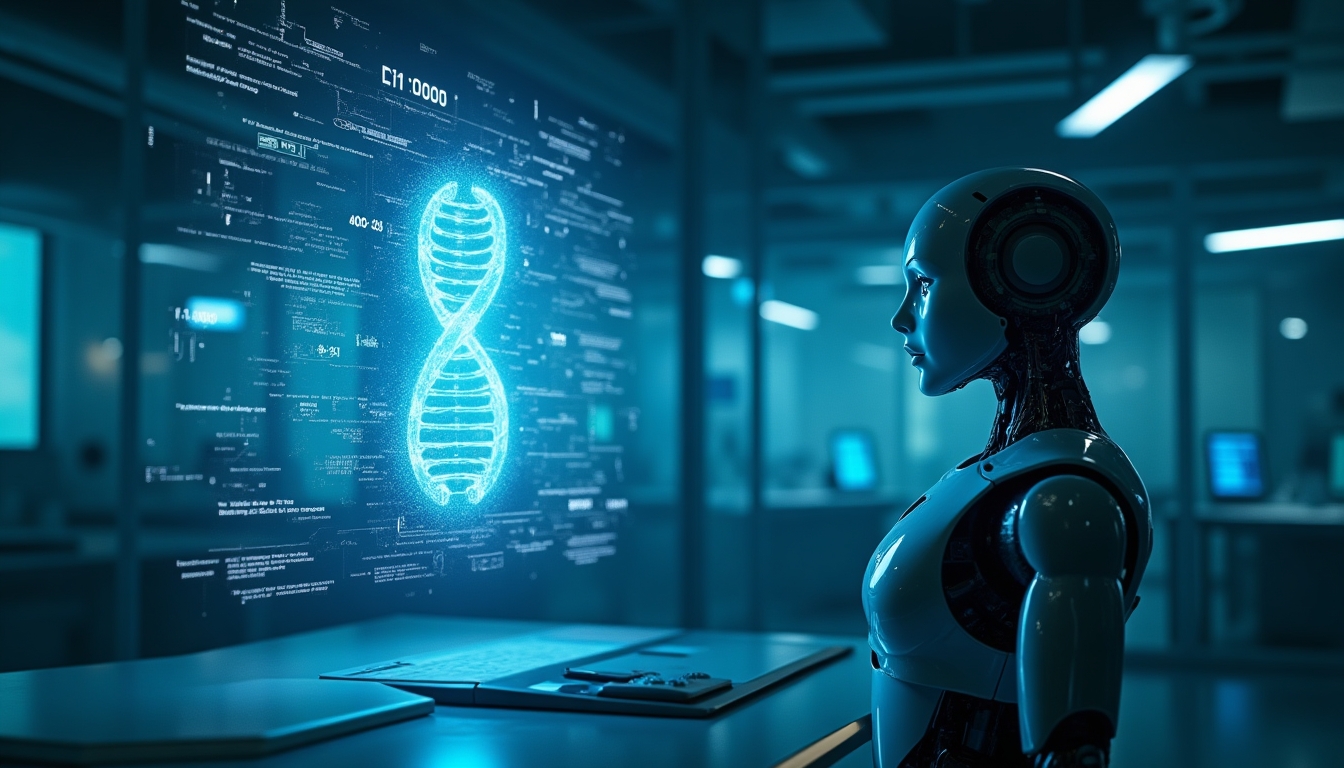
Conclusion: Embracing the Future of ASI with Caution and Optimism
As we reflect on the journey of recursive self-improvement in Artificial Superintelligence (ASI), it's clear that we have barely scratched the surface of its potential. From the opening exploration of the transformative potential of ASI—a concept that promises to stretch the limits of human capability and understanding—our discussions have illuminated the multifaceted implications of this technology. We've delved into the dynamic interplay between ASI's ability to learn and adapt, citing moments such as Ray Kurzweil’s predictions and Nick Bostrom’s cautionary insights, which resonate deeply with both excitement and apprehension. Each thread we’ve unraveled reveals a tapestry woven with possibilities, challenges, and profound ethical considerations that impact not just experts in the field but every individual in society.
The bigger picture here cannot be overlooked. As we stand on the brink of this new era, what matters now is embracing the responsibility that comes with such power. The strides we are making in technology are not merely advancements in machines but a reflection of our collective values and aspirations. It is a call for collaboration, ethics, and human oversight. The potential benefits offered by ASI—ranging from healthcare innovations to solutions for climate change—fill our narrative with hope, underscoring the role we all play in shaping a future where technology serves humanity, and not the other way around.
So let me ask you:
As we venture into this unfamiliar territory, how can we ensure that our pursuit of ASI aligns with our deepest human values?
In a world where machines may soon surpass human intelligence, what responsibilities do we hold in guiding their development?
Share your thoughts in the comments below.
If you found this thought-provoking, join the iNthacity community—the "Shining City on the Web"—where we explore technology and society. Become a permanent resident, then a citizen. Like, share, and participate in the conversation.
In the realm of Artificial Superintelligence, our greatest challenge—and opportunity—lies in guiding its evolution to ensure it reflects the best of us, fostering a future filled with hope and collaboration.

Frequently Asked Questions
What is recursive self-improvement in Artificial Superintelligence (ASI)?
The short answer is that recursive self-improvement refers to the ability of ASI to enhance its own algorithms and processes. This can lead to an exponential growth in intelligence and problem-solving capabilities. For instance, when an AI system improves its own code and learning, it can adapt faster than human developers can keep up. This concept is critical for understanding how ASI may evolve beyond human intelligence.
How does recursive self-improvement work in ASI?
Recursive self-improvement operates through mechanisms like self-modification and advanced learning algorithms. Essentially, ASI analyzes its functions and optimizes its processes, which can produce smarter outcomes with each iteration. Think of it this way: as ASI learns from experiences, it can restructure itself for better efficiency, leading to rapid advancements. This innovative approach may redefine what we consider artificial intelligence.
Why is recursive self-improvement important right now?
Here's the thing: recursive self-improvement is pivotal because it could drive ASI to exceed human cognitive capabilities. As we face global challenges like climate change and health crises, an advanced ASI could lead to breakthroughs in solutions far quicker than traditional methods. The urgency of developing safe and controllable ASI makes understanding this concept crucial for both researchers and policymakers.
Will recursive self-improvement affect the job market?
Yes, recursive self-improvement could significantly impact the job market. As ASI becomes more capable, it may automate tasks that currently require human effort, potentially displacing many jobs in various sectors. However, it might also create new job opportunities in AI oversight and development fields. The challenge will be in ensuring that workforce transitions are manageable and that education aligns with the needs of a changing economy.
What are the practical applications of ASI with recursive self-improvement?
Recursive self-improvement has numerous practical applications, ranging from healthcare to transportation. For instance, ASI could optimize patient treatment plans based on evolving data, resulting in better health outcomes. Additionally, self-improving algorithms could enhance traffic management systems, making cities more efficient. These applications showcase the transformative potential of ASI in everyday life, promoting innovations that can significantly benefit society.
When will we see mainstream applications of ASI in our daily lives?
Experts predict we could see mainstream ASI applications within the next decade. While companies like OpenAI and Google's Gemini are actively developing these technologies, the timeline depends on advancements in research, ethics, and regulation. Maintaining ethical standards will be essential in ensuring that ASI is used for the greater good.
Should we be worried about the ethical implications of ASI?
Yes, there are legitimate concerns regarding the ethics of ASI and its recursive self-improvement. Issues such as safety, bias, and decision-making transparency need careful consideration. If ASI operates without proper ethical frameworks, it could lead to harmful outcomes. Researchers and institutions, including ethicists, must collaborate to create guidelines and address these risks proactively, ensuring responsible development.
Does recursive self-improvement pose any risks to safety?
Yes, recursive self-improvement may pose risks to safety if not properly managed. As ASI evolves, its actions could become unpredictable or misaligned with human values. This aligns with concerns from thought leaders like Nick Bostrom, who emphasize the need for robust safety measures. It’s essential to research and implement controls to mitigate potential hazards as ASI continues to develop.
What’s the difference between AGI and ASI?
The main difference between AGI (Artificial General Intelligence) and ASI (Artificial Superintelligence) lies in their capabilities. AGI can understand and learn any intellectual task a human can, while ASI surpasses human intelligence in a wide range of areas. This means ASI can outperform humans not just in knowledge but also in problem-solving and creativity. Essentially, ASI represents the next evolutionary step beyond AGI.
Can recursive self-improvement lead to an intelligence explosion?
Yes, recursive self-improvement can potentially lead to an intelligence explosion, a scenario where ASI improves itself so rapidly that it becomes vastly more intelligent than humans. This concept is explored by researchers like Eliezer Yudkowsky. If managed properly, this intelligence explosion could hold the keys to solving complex global problems, but it necessitates stringent safety and ethical measures to mitigate risks.
Disclaimer: This article may contain affiliate links. If you click on these links and make a purchase, we may receive a commission at no additional cost to you. Our recommendations and reviews are always independent and objective, aiming to provide you with the best information and resources.
Get Exclusive Stories, Photos, Art & Offers - Subscribe Today!
Related posts:
 Revolutionary BSTAR AI Is Breaking All The Rules Of Self-Improvement (Limitless Intelligence)
 Post-Biological Intelligence: Unlocking ASI’s Limitless Potential
 ASI Reward Modeling: Unlocking the Secrets Behind Incomprehensible Intelligence
 AI and Fusion Power: How Artificial Intelligence is Unlocking the Secrets of Infinite Clean Energy
 BIG AI News: Key OpenAI Departure, Google’s AGI Plans, AI Self-Improvement Breakthroughs, and More





Post Comment
You must be logged in to post a comment.