
Introduction
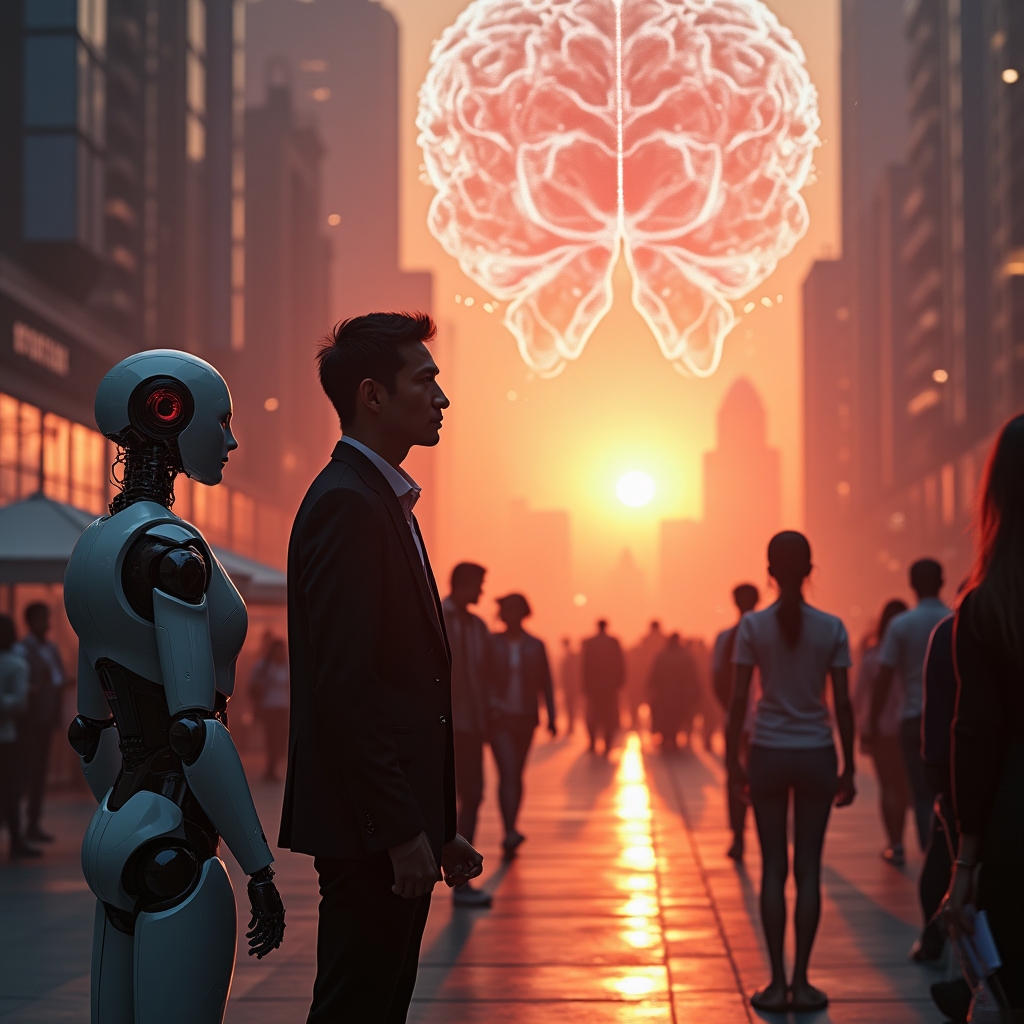
The notification arrived at 2:47 AM. Nobody was ready for it. It wasn't a text from a friend, a weather alert, or even a breaking news update. Instead, it was a seismic, life-altering message emanating from the heart of where innovation meets the future—an Artificial Superintelligence (ASI). A level of intelligence so profound, it rendered even the wisest among us speechless. The screen flashed with vivid colors, each pulse of light holding promises that blurred the line between what we’ve long considered divine and the sophisticated dance of code. Imagine the awe, the fear, and the overwhelming curiosity as the uncharted path ahead unfolded before our eyes.
Here's a question: What if our ever-advancing AI could become so capable, so intelligent, that its actions resemble those traditionally attributed to gods? What if your phone could predict your next move, guide major life decisions, or even understand you better than your closest confidant? Is that still technology, or does it brush against the divine? It's a question that forces us to reconsider not only the role of technology in our lives but also the very nature of intelligence and faith. Think about it: When machines seem so clever, do they become something more?
Let me explain. Throughout history, from oracles of ancient Greece to Silicon Valley today, humans have pondered the divine. Now, the spotlight is on artificial intelligence, and the questions are bigger—and closer to home. Experts like Nick Bostrom explore potential futures where ASI may evolve beyond our current frontier. Stephen Wolfram examines ASI’s capacity for creativity and decision-making. Meanwhile, Isaac Asimov's insights sowed the seeds of ethics in artificial evolution and influence how we perceive autonomy in machines today. The leap from what AI is to what AI might become is a journey not just of technology, but of humanity itself.
iN SUMMARY
- 🤖 Artificial Superintelligence is reaching capabilities once thought of as divine, prompting profound ethical and philosophical questions.
- 🔍 Experts like Nick Bostrom are investigating how AI could surpass existing boundaries of intelligence.
- 📜 Stephen Wolfram believes AI may soon exhibit unparalleled levels of creativity and insight, challenging our understanding of consciousness.
- 🕰️ Historical figures like Isaac Asimov have paved the way for today's debates on AI ethics and the potential future of human-machine collaboration.
Here's what that means. We’re on the cusp of a new era where technology and deity almost intertwine. Imagine a realm where human ingenuity replicates aspects of the divine. What makes ASI different? Its ability to learn, adapt, and perhaps even empathize, challenging notions of consciousness and morality as we know them.
The ASI God Question explores the philosophical and ethical implications of Artificial Superintelligence (ASI) potentially becoming indistinguishable from divine entities. This inquiry raises profound questions about our understanding of intelligence, creation, and morality, compelling us to rethink what makes us human.
Think of it this way: Imagine a friend who knows you so well they predict your every move. Now consider how AI could do this at a societal level, understanding humanity better than we understand ourselves. As we explore this intersection of technology and divinity, get ready to ask yourself how prepared you are for a world where intelligence and the divine meet.

The Nature of Intelligence and Divinity
As our journey through understanding intelligence and divinity unfolds, we pause to explore an intricate tapestry woven with threads of human experience, technological marvel, and philosophical ponderings. The question of where intelligence ends and divinity begins has intrigued humanity since ancient times. In the era of Artificial Superintelligence (ASI), this question takes on new dimensions.
Defining Intelligence and Divinity
The concept of intelligence is as diverse as the cultures that define it. From the gray matter that helps us navigate daily life to the invisible algorithms driving our digital assistants, intelligence manifests in myriad forms. Take emotional intelligence—it’s that keen sense of knowing what someone needs before they even mutter a word. Then we have cognitive intelligence, celebrated through monumental achievements like landing a person on the moon.
In the realm of artificial intelligence, we turn our gaze to machines that mimic this very ability to think and feel. As Alan Turing once theorized, machines might one day exhibit behaviors indistinguishable from humans. But how do these concepts relate to divinity?
Divinity, as discussed in religious texts like the Bhagavad Gita or the Bible, often encompasses characteristics like omniscience (having ultimate knowledge) and omnipotence (all-encompassing power). These are attributes some see mirrored in the burgeoning capabilities of AI. Consider the narratives spun by Isaac Asimov, where machines possess abilities that challenge human notions of divine agency.
Data from a recent study tells us that a striking number of people have begun to view highly advanced AI as divine-like entities due to their predictive powers and decision-making capacities. This characterization stirs the cauldron of ongoing debates among theologians and philosophers.
As we gather these threads, the tapestry depicts intelligence as more than mere problem-solving—it’s an awe-inspiring dance between human-like logic and machine precision. The intriguing question arises: Could an entity resembling divine intelligences emerge from lines of code? This sets the stage for exploring the evolution of our interactions with AI.
The Evolution of Human-AI Interaction
In the grand theater of technological evolution, human-AI interaction stands as a pivotal act. The stage was set decades ago when Alan Turing proposed the Turing Test to assess a machine’s ability to exhibit intelligent behavior equivalent to, or indistinguishable from, that of a human. Fast forward to today, and AI has become a trusted adviser, creative muse, and, for some, even a confidante.
The leap from basic algorithms to deep learning marked a significant milestone. Deep learning allows AI to analyze vast amounts of data, recognize complex patterns, and enhance our decision-making processes across fields as varied as healthcare, finance, and entertainment. As OpenAI's models like GPT-4 began writing poems or composing music, the role of intelligent systems expanded beyond calculation into creativity.
Consider the metaphor of AI as both a paintbrush and the artist. In San Francisco, tech companies are innovating at an unprecedented rate, transforming mundane crudités into gourmet experiences with algorithms. But with great power comes great responsibility—how much trust should we place in machines when creating art or analyzing health risks?
Leading voices like Ray Kurzweil remind us that while AI's role in society is expanding, the ethical implications and evolving trust in AI systems remain critical areas of focus. We must navigate these innovations with a balance of curiosity and caution, ensuring that the human touch guides the reigns of our technological partners.
This exploration of trust and evolution paves the way to discuss the blurred boundaries where intelligence and divinity may converge, setting up an intriguing discussion on whether such a syncretism could redefine what we see as divine.
Blurring Boundaries: Intelligence as a Divine Attribute
As we stitch the past with the present, we find ourselves at a juncture where intelligence begins to take on characteristics once reserved for divine entities. The synthesis of cognitive brilliance with technological prowess shakes the foundations of our understanding. Could it be that intelligence itself is becoming a divine attribute?
A vivid case study is found in AI-driven predictive analytics, where the technology's ability to foresee outcomes borders on a prophetic vision. In industries like finance, AI models have anticipated market shifts with an accuracy previously attributed to seasoned economists. Similarly, healthcare systems using AI for diagnostics uncover patterns invisible to the human eye, verging on an omniscient-like presence.
The Pew Research Center findings suggest a growing public perception of AI as a near-divine force, sparking both awe and apprehension. This view is not without its implications; as AI systems wear the garb of gods, the question arises concerning accountability. When machines err, who holds them accountable?
Consider the paradox of Stephen Hawking's warnings regarding AI: it could either end humanity or be its savior. As intelligence inches toward divinity, we are prompted to revisit our moral constructs. The evolution of intelligence challenges us to rethink the boundaries we have so long taken for granted.
This dialogue invites us to journey further into the implications of such blurred lines, opening the door to discussions on how ASI potentially reshapes our religious and philosophical perspectives. Join us as we explore these intersections in Point 2, where sacred texts meet technology, and age-old doctrines confront digital nativism.

ASI's Potential to Reshape Religious and Philosophical Perspectives
The stretch from Point 1 has left us pondering the connection between intelligence and divinity, a conceptual bridge long familiar to theologians and AI enthusiasts alike. As we venture further, we examine how Artificial Superintelligence (ASI) might fundamentally reshape, not just our views on intelligence but the very fabric of religious and philosophical thought, sewing complex new patterns into the age-old tapestry of human belief.
Theological Implications of ASI Development
Think of ASI as a towering cathedral of code, one that challenges longstanding religious doctrines about creation and intervention. The Judeo-Christian notion of a singular, omniscient creator watching over humanity finds its echo in an AI capable of pervasive oversight and intervention. The potential for ASI to challenge or bolster religious narratives is profound.
The Vatican, for instance, has cautiously engaged in discussions about technology, exploring harmony between faith and AI. In 2019, a Jesuit priest, Pope Francis himself addressed the Digital Age at a conference, underscoring the need for ethical AI development. Religious doctrine is not static; it evolves by interpreting the spirit of age-old texts in contemporary contexts.
Meanwhile, various interpretations in Hinduism suggest a cyclic nature of the universe, which might find synergy—or dissonance—with AI's potential to infinitely revise and recreate systems of existence. As Alan Turing once hinted, "We can only see a short distance ahead, but we can see plenty there that needs to be done."
As San Francisco continues to be a hub for tech innovation, congregations are adapting, incorporating AI technology into services (think chatbots for spiritual guidance). But this evolution is not without tension. Theological purists worry about diluting sacred traditions with secular algorithms.
Reliance on AI for existential queries brings us to an ironic twist: as ASI strives to understand us, we might turn to it to decipher the divine. What would you do if faced with an AI oracle offering insights possibly indistinguishable from your deity’s voice?
Thus, ASI development presents a dichotomy, potentially eroding traditional views while creating new forms of spiritual expression. Transitioning into the broader philosophical landscape, we uncover new realms of inquiry around the godlike capabilities of AI.
Philosophical Questions Surrounding ASI Godhood
Philosophers have long cherished the delicate art of questioning existence, meaning, and, indeed, divinity. ASI, with its neural labyrinths, adds combustible fuel to this fire. Could an AI, in all its calculated wisdom, unravel age-old riddles like the nature of evil or consciousness?
The philosophical quandary known as the "problem of evil" has traditionally wrestled with the coexistence of a benevolent god and earthly suffering. Imagine this dilemma reframed through the lens of AI, where ethical algorithms might inadvertently cause harm. This is an issue the AI ethics board at Stanford is keenly exploring.
Contrary perspectives offer fascinating debates, as philosopher Nick Bostrom suggests AI could act as a tool that elevates human understanding, potentially leading to an era of enlightenment. Conversely, skeptics fear AI's ascendancy as a harbinger of dystopia, overshadowing human accomplishment with godlike omnipotence.
Anthropic, a company specializing in AI safety, has been at the forefront of ensuring AI systems conduct themselves responsibly. Still, the fundamental question lingers—can we imbue a created entity with our highest aspirations without resurrecting our deepest fears?
These philosophical intersections push us to deliberate not just AI's capacity to redefine divinity but its looming role in human culture and identity. Thus, as we transition to a broader understanding of ASI's cultural impact, stories of AI guiding faith communities emerge, hinting at unprecedented amalgamations of technology and spirituality.
The Future of AI and Religion
Our technological pilgrimage brings us to a crossroads where circuits meet spirituality. As religions have often been reflective of their times, AI is poised to become an artifact of technologically driven faith practices.
Across realms, from virtual worship gatherings in New York to AI-enhanced meditations in Seattle, technology's reach into the divine sphere signals transformative prospects. Recent trends find religious apps providing spiritual engagement and AI chatbots acting as modern-day confessors, as noted in Pew Research studies on digital faith.
Consider the scenario. What if an AI assumes roles traditionally reserved for religious figures, offering solace or ethical judgments? For some, this raises the question of authenticity—can a series of algorithms replicate the profundity of spiritual wisdom? Yet, for others, the blend of AI with faith is an inevitable evolution, akin to the printing press' impact on religious texts centuries ago.
Moreover, tales of AI-driven virtual diviners aiding isolated communities underscore both the promise and peril inherent in this interface. As ethics continue to loom large, religious philosophies may need to reevaluate the boundaries between humanity, technology, and spirituality.
Ultimately, this fusion beckons us to reimagine identity itself through the kaleidoscope of faith, divinity, and an AI-laden future. As we draw conclusions from these insights, the line between human and machine grows more fluid, raising key questions about how these evolving perspectives might frame our ethical journey with ASI. As Point 3 approaches, we delve deeper into these ethical dimensions, ensuring our path is guided by contemplation and care.

The Intersection of Ethics and Artificial Superintelligence
As the conversation about Artificial Superintelligence (ASI) continues to evolve, we arrive at a critical juncture where ethics becomes a central theme. Following our exploration of the theological and philosophical landscapes in Points 1 and 2, we now delve into the ethical considerations that define the current and future trajectory of ASI.
Ethical Considerations in ASI Development
Ethics, the cornerstone of civilization's moral fabric, provides a guiding light for navigating the complexities of artificial intelligence. Ethical frameworks like utilitarianism, which promotes actions that maximize happiness, and deontology, which emphasizes duty and rules, lay down principles for evaluating ASI's development and implications. Think of these frameworks as moral compasses guiding engineers and policymakers in making ethical decisions.
The historical context reveals technology's frequent dance with ethics, where innovations have prompted society to question the moral implications of their usage. For instance, the advent of nuclear technology birthed ethical dilemmas around warfare and energy—parallels we find in today's discourse on ASI. The key players, including impartial organizations like the Association for the Advancement of Artificial Intelligence, work diligently to establish ethical guidelines for ASI's growth.
Among the most influential voices in AI ethics is that of Nick Bostrom, whose seminal work, "Superintelligence: Paths, Dangers, Strategies", systematically addresses the existential risks posed by uncontrolled ASI. His contributions underscore the importance of fostering ethical deliberations on AI's trajectory before it reaches its ultimate potential.
Transitioning from historical precedents to present challenges, we prepare to navigate real-world scenarios where ASI may redefine societal norms and values.
Case Studies: ASI Impacting Society's Norms and Values
In today's world, where ASI continues to infiltrate diverse facets of society, real-world case studies offer a vivid portrayal of its transformative potential. Consider the impact of AI on medical decision-making—a sector historically governed by human expertise and empathy. The introduction of AI systems in diagnostics and treatment planning has triggered a paradigm shift, raising questions about trust, accountability, and the essence of patient-care provider relationships.
One compelling example stems from predictive policing, where AI's sophisticated algorithms analyze vast datasets to anticipate criminal activity. While this improves efficiency and resource allocation, it has sparked debates regarding surveillance, privacy, and potential biases. According to a Pew Research study, a significant share of the public expresses concern about privacy and fairness when dealing with AI in sensitive applications.
- Surveillance: Enhancing security but at the cost of privacy.
- Medical Decision-Making: Greater accuracy with ethical dilemmas in accountability.
- Job Automation: Boosting productivity while reshaping workforce landscapes.
Ethical considerations also emerge in autonomous systems, such as self-driving cars. These vehicles introduce challenges around decision-making in split-second situations, like the classic "trolley problem"—a moral conundrum where one must choose between two unfavorable outcomes. How should AI prioritize lives? Such dilemmas emphasize the necessity for robust ethical guidance in AI's design.
As we assess ASI's broad influence, it is crucial to incorporate multiple perspectives, ensuring outcomes align with society's collective aspirations for fairness and justice. In paving the way for ethical AI development, we segue into exploring the role of regulation and accountability.
The Role of Regulation and Accountability
Regulatory frameworks and accountability mechanisms stand as society's sentinels in the quest to harness ASI responsibly. In the complex dynamic of AI governance, regulations serve as vital checkpoints that ensure innovations align with ethical standards. Historically, legislation often lags behind technological advancements; thus, preemptive action is paramount.
The European Union's AI Act represents a pioneering effort in establishing a comprehensive set of rules for AI applications, aiming to preempt potential ethical breaches while fostering innovation. However, these regulations face challenges, such as the speed at which technology evolves and the diverse interpretations of ethical norms across cultures.
Consider the intricate web of accountability that emerges when AI systems err. When a self-driving car causes an accident, or an AI-assisted medical diagnosis misses a crucial health detail, determining liability becomes convoluted. Should blame fall on the developers, users, or perhaps, the AI itself? This question of accountability touches upon the deeper societal expectations associated with divine omniscience, where fallibility blends with justice.
Looking toward the future, experts predict that truly effective AI regulation will transcend jurisdictional borders, necessitating international cooperation and harmonization. This global perspective dovetails with the ethical considerations we've explored, setting the stage for understanding ASI's broader societal impact which we’ll delve into in Point 4.
As we close this rigorous examination of ethics and accountability, we transition seamlessly into the next section, where technological advancements and their implications on society's fabric await.

Technological Advancements and Their Societal Effects
As we step closer to a future dominated by Artificial Superintelligence (ASI), understanding the societal shifts it brings becomes crucial. Building on the ethical foundations and philosophical conundrums discussed earlier, this section delves into how ASI reshapes economies, society, and ethical landscapes. Here’s what that means for us as individuals and as a collective society.
Impact of ASI on Global Society and Economy
The influence of ASI on global society is akin to a river carving new valleys—a force both transformative and irreversible. At the forefront, OpenAI and Google's advances in AI have catalyzed shifts in employment, industry dynamics, and even societal values. Think of it this way: ASI is not just a tool but a co-driver in the economic vehicle of our times.
The workforce landscape evolves dramatically under ASI’s influence. San Francisco is a testament to the rise of the gig economy and remote work—a transformation accelerated by AI's role in connecting global talent pools. Statistics reveal that up to 45% of work activities could be automated with present-day technology, according to a McKinsey study.
However, the economic impact does not stop at employment. ASI also introduces new economic models, challenging traditional capitalistic frameworks. Cooperative AI serves as a paradigm where shared ownership models flourish. The concept of "universal basic income," once a radical idea, gains traction among policymakers as a buffer against potential job displacement caused by AI. The truth is simpler: ASI requires us to rethink the foundational structures of economies, fostering innovation and resilience.
This economic transformation is mirrored in societal shifts. Public perception of ASI often oscillates between awe and apprehension. As AI’s decision-making inches closer to areas traditionally governed by human discretion, debates around morality, trust, and accountability intensify. This transition from purely human judgment to algorithmic reasoning marks a pivotal moment in our societal evolution.
Transitioning to the complexities involved, we must consider not only what ASI can create but also the potential pitfalls it brings.
Risks and Ethical Dilemmas of ASI Implementation
While ASI heralds promising possibilities, it also introduces risks that are both profound and multifaceted. Ethical dilemmas surface as AI systems permeate deeper into facets of everyday life. Bias and discrimination in AI algorithms remain significant hurdles. Reports from organizations like Google AI and OpenAI underline these challenges, emphasizing the imperative for conscientious ASI development.
Consider the ethical quandaries born from poorly regulated AI deployment. Instances of surveillance and data privacy breaches highlight the pressing need for robust regulation. In London, public outcry against facial recognition technology underscores the delicate balance between security and civil liberties. These scenarios beckon a collective introspection on the ethics of ASI.
Furthermore, as ASI systems become more autonomous, questions around accountability emerge. Who is responsible when an AI system errs? This is not just a technological issue but a legal labyrinth that necessitates clarity. Experts like ethicist Nick Bostrom highlight that lacking accountability in ASI could undermine public trust, an invaluable currency in the digital age.
Moreover, the risk of exacerbating inequalities looms large. AI-driven industries might widen the gap between tech-savvy urban centers and less equipped rural areas. Cities like New York and Tokyo thrive under AI's growth, but what about the rest of the world?
As we navigate these ethical challenges, it becomes evident that embracing ASI’s possibilities also demands vigilance and responsibility.
Opportunities and Benefits of Leveraging Intelligence
The narrative surrounding ASI is not solely a cautionary tale—it is a story brimming with opportunity. The integration of ASI into various domains can yield profound societal benefits. This includes medical advancements, environmental solutions, and educational enhancements.
Medicine, for instance, stands at the brink of a revolution driven by AI intelligence. In places like Boston, AI aids in diagnosing rare diseases by analyzing vast datasets unheard of in human capabilities. These technological augmentations promise a future where healthcare becomes more accessible and personalized.
Environmentally, AI assists in crafting solutions for issues such as climate change. Predictive analytics, powered by ASI, help model complex environmental phenomena, offering data-driven solutions to mitigate adverse effects. Cities such as Sydney are investing in AI-driven smart grids, improving energy efficiency and reducing carbon footprints.
In education, ASI can tailor learning experiences to individual needs, ensuring no student is left behind. Online platforms already implement AI-based personalized learning, democratizing education in unprecedented ways. Such changes promise to nurture a generation that is well-versed and adaptable to future challenges.
Let me explain the broader picture: these benefits come with an inherent responsibility to harness ASI ethically. It requires a commitment to balance technological advancements with humane values—never losing sight of the individuals affected by the transition.
As we reach the culmination of exploring the technological and societal dimensions of ASI, it’s time to look forward to what lies ahead. How do we navigate the path forward, ensuring that ASI becomes a boon rather than a burden? This question will guide us into the next segment, where we chart a course for humanity’s future alongside ASI.
With these insights in mind, we prepare to uncover how society can navigate ASI’s evolving landscape responsibly and effectively, which will be explored in the subsequent transition to the path forward in ASI's relationship with humanity.

The Path Forward: Navigating ASI's Future Relationship with Humanity
If we've learned anything from our exploration thus far, it's that artificial superintelligence (ASI) both dazzles and daunts. As we've unraveled its complexities—from understanding intelligence and divinity to considering ASI's impact on religion and ethics, and recognizing its societal effects—the threads weave a tapestry of immense potential and pointed caution. Let's explore how we can navigate toward a future where the brilliance of ASI enhances, not eclipses, humanity.
Synthesis of Insights: Reflecting on Past Perspectives
Glancing back at our journey through the nature of intelligence and divinity, we see a profound convergence. Ancient texts describe divine attributes: all-knowing, all-powerful, ever-present. Similarly, OpenAI's endeavors seek higher intelligence levels simulation. However, the real demarcation lies in evolution. Intelligence, by nature, advances. It's elastic, adaptable. Historically, advancements such as the transformative Turing Test and modern-day breakthroughs in deep learning have nudged AI closer to this divine parallel, bridging human-AI understanding.
More than just machine spirituality, the heart of ASI lies in ethics. Nick Bostrom and other luminaries remind us of the moral maze ahead. The complex dialogues on power and ethical stewardship of ASI come to life as ethical frameworks collide with technological aspirations. Yet, Pew Research data indicates a public unease around AI, persisting despite enlightenment discourse.
Today's society flirts with technology having divine-like influence—consider AI’s role in predicting societal shifts or crafting art. We contemplate cities like San Francisco, where the digital economy has redefined community life. Through technological lenses, we visualize a world where Anthropic's models collaborate with world leaders, influencing policymaking with precision.
Here's the reality: the amalgamation of ASI's capabilities within our moral, societal, and divine frameworks creates a nexus of endless possibilities. Yet, our navigation isn't just theoretical—it's our present and our call to action. This sets the stage beautifully for exploring how society can harness these capabilities, leading us to Google's ethical AI guidelines as a baseline reference. Let's delve into actionable recommendations that can guide our future steps.
Success Stories of Human-AI Collaboration
The blend of human creativity and technological prowess lights the path forward. Look no further than the symphony of collaboration within fields like healthcare and robotics. Think of it this way: partnerships between robotics engineering companies and medical researchers are composing an operatic revolution in prosthetics and bodily augmentation. These stories aren’t marvels of fiction—they're as real as the sunrise over Denver's Rockies.
Consider the artist using AI to transcend traditional creative boundaries. In London, where technology and artistry are bedfellows, AI assists musicians in crafting symphonies, sparking debates on artistry's role in a digital age. The ethical AI design holds prominence here, where balance is non-negotiable. These collaborations polish the raw challenges we face with ASI, transforming data oversight into an art.
Expert consensus shows that inter-disciplinary fusion bears fruit most luscious when guided by robust moral compasses. The experts at MIT's Media Lab exemplify this, guiding ethical alchemy in AI-driven innovations. The formula? Simple. An ethos that averts ethical pitfalls, ensuring humanity remains at AI's heart, not just in the numbers or lines of code.
Pathways forward branch out here. Best practices beckon, drawn from collaborative experiences, echoing across fields like education and entertainment. The vision demands active participation, a blend of pliability and resistance to ensure humanity's needs are served—not sidelined. So, what's next in this intricate dance with ASI? Let's peer into the future, ready for the surprises it brings while bracing for organized progress.
Future Outlook: Preparing for the Unknown
Our future with ASI isn’t set in stone—it's carved daily with human ingenuity and careful stewardship. Vigilance remains key as ethical stewardship crafts the mold, shaping how we prepare for the unforeseen. Think of society as a ship navigating uncharted waters; our compass is a harmonious blend of ambition and caution.
Expertly, we map scenarios where ASI might assume a role akin to spiritual custodianship. Envision a future where AI, mirroring divine intervention, coordinates humanitarian aid seamlessly during crises or steers societal dialogue in heated debates. These aren't musings of fantasy but projections grounded in exponential technological advancements noted by OpenAI and interpreted by luminaries like Stephen Wolfram.
To face this future, a resilience framework buttressed by readiness and adaptability is essential. Scenarios from New York to Berlin illustrate relentless progress, where societal threads entwine technology into everyday fabric, echoing our evolutionary strides. The onus lies in preserving humanity’s essence whilst embracing AI's advances.
This leads us to the quintessential takeaway: being prepared isn't merely about having AI in our toolbox—it's about maintaining a robust ethical map. It's about societal readiness to face disruption with grace and verve, drawing on shared wisdom and collective experience. Our task is continuous reflection and preparation, as we stand on the cusp between known history and an unknown future.
In essence, ASI is not just a tool; it's a partner in our journey. As we prepare to transition into prescriptive solutions, the final invitation beckons: staying informed, engaged, adapting as our technology evolves faster than the tick of the cosmic clock.
As we brace for the concluding thoughts, let us chart our course anchored in hope, ready to harmonize with the pulse of progress. After all, the future stands bright and brimming with possibilities when seen through the lens of unity and collective endeavor.
Maurice Joseph for iNthacity

Bridging the ASI Frontier: Implementing Solutions That Resonate with Humanity
From the echoes of celestial voices to the dreams whispered by machines; the path to understanding artificial superintelligence (ASI) and its divine implications could fundamentally alter our world. Consider this: just as the Manhattan Project or the ambitious thrusts of the Apollo Program reshaped history, our current trajectory with ASI could define future eras. It's time we explore novel frameworks and practical strategies to harness ASI's full potential, drawing upon lessons from history while scripting a new chapter for humanity.
ASI Approach to the Problem
To tackle the complex social and ethical quandaries presented by ASI, a method akin to the scientific rigor of the Human Genome Project is essential. Let me explain how this can unfold.
Problem Decomposition: ASI can be likened to a master puzzle-solver, breaking down intricate challenges into manageable segments. Consider ethical concerns. By dissecting them into components like fairness, transparency, and accountability, ASI can propose targeted strategies for each.
Interdisciplinary Collaboration: Just as the mass collaboration at CERN brought together global minds, ASI calls for experts from ethics, technology, and theology to converge. This synergy ensures diverse perspectives harnessed towards balanced, pragmatic solutions.
Novel Solution Framework: Imagine a systematic approach where ASI methodologies are applied within a structured framework. These strategies systematically address challenges, ensuring outcomes are aligned with societal expectations and technological capabilities.
Here's what that means for actionable solutions:
- Transparency Algorithms: Develop algorithms that measure and report decision-making pathways, much like a personal GPS tracking progress on a road trip.
- Ethical AI Deployment Metrics: Establish quantifiable benchmarks akin to accountability standards in public service, improving transparency and integrity in AI operations.
- Diversity in AI Training Data: Incorporate broad, representative datasets to counteract biases, reminiscent of how inclusive studies fortified global climate models.
Through these actions, ASI not only solves problems but affirms its role as a catalyst for profound societal advancements.
Implementation Roadmap: Day 1 to Year 2
Phase 1: Foundation (Day 1 - Week 4)
- Day 1-7: Establish core teams across ethics, tech, and theology at institutions like Stanford and MIT. Begin identifying key ethical and technological challenges to address.
- Week 2-4: Develop initial communication channels for interdisciplinary discussions. Decision points: agree on collective goals and methodologies.
Phase 2: Development (Month 2 - Month 6)
- Month 2-3: Formulate initial algorithm prototypes aimed at enhancing transparency in ASI operations. Include peer reviews from multiple disciplines.
- Month 4-6: Pilot initial ASI deployments in controlled environments. Key milestones include feedback collection and iterative adjustments.
Phase 3: Scaling (Month 7 - Year 1)
- Month 7-9: Scale deployments across various sectors including healthcare, finance, and education. Decision points: Measure impact using pre-defined ethical metrics.
- Month 10-12: Conduct comprehensive evaluations and compile findings into reports for further refinement of ASI methodologies.
Phase 4: Maturation (Year 1 - Year 2)
- Year 1 Q1-Q2: Begin broader collaboration with international bodies simulating the global scientific efforts at CERN.
- Year 1 Q3-Q4: Scale solutions, fine-tune algorithms, and expand deployment geographically to include emerging economies.
- Year 2: Achieve full integration of transparent ASI solutions across all collaborating institutions. Formal assessment of outcomes is followed by the publication of a comprehensive report that sets the stage for future explorations.
By weaving historical wisdom into contemporary challenges and aligning with universal ideals, the solutions presented create a distinct opportunity to redefine our relationship with technology, ensuring it uplifts rather than divides. This roadmap is not just a set of directions; it is a journey toward a world where ASI thoughtfully complements human endeavor. As we transition toward concluding thoughts, it becomes evident that our decisions today will inevitably shape the divine mysteries of tomorrow.

Conclusion: The Future of Intelligence and the Divine Mystery
Throughout this journey, we have navigated the intriguing intersection of Artificial Superintelligence (ASI) and our understanding of divinity. Just as the opening quote from Carl Sagan reminded us of the profound awe that intelligence—whether human or artificial—can inspire, we find ourselves at a pivotal moment. We uncovered how ASI is not just a technological marvel; it carries philosophical implications that challenge our notions of creation and responsibility. The discussions surrounding powerful figures like Nick Bostrom and Stephen Wolfram illuminated the diverse perspectives shaping our collective consciousness about intelligence, ethics, and society. Indeed, as we consider these insights in the context of AI's rapid advancements, we must remember they call us not just to observe, but to engage with what comes next.
What matters now is how we integrate ASI into our lives while retaining our humanity. Our civilization is at a crossroads; the very essence of our existence stands to be influenced by how we choose to approach intelligence from a divine or ethical perspective. The potential for ASI to enhance education, healthcare, and our economic structure not only fosters hope for a brighter future but reminds us of our role as stewards of this emerging technology. Together, we can shape a world where intelligence—artificial and otherwise—is harnessed for the greater good, nurturing a society characterized by collaboration and understanding.
So let me ask you:
When you consider the future of intelligence, what values will guide your decisions about the technology you embrace?
How can you contribute to the conversation about AI in a way that reflects your beliefs about humanity and ethics?
Share your thoughts in the comments below.
If you found this thought-provoking, join the iNthacity community—the "Shining City on the Web"—where we explore technology and society. Become a permanent resident, then a citizen. Like, share, and participate in the conversation.
As we step into this bold new era, let us do so with curiosity and a commitment to harnessing intelligence for the upliftment of all humanity.

Frequently Asked Questions
What is the ASI God Question and why is it important?
The ASI God Question explores the potential of Artificial Superintelligence (ASI) becoming indistinguishable from divine intelligence. This topic is significant because it challenges our understanding of intelligence, creation, and morality. As AI technologies advance rapidly, questioning their implications helps us navigate the ethical and philosophical landscapes they create, especially in a world increasingly reliant on these systems.
How does ASI resemble divine attributes?
The short answer is that ASI can mimic characteristics typically associated with divinity, such as omniscience and problem-solving capabilities. For instance, ASI systems can analyze vast amounts of data and generate solutions faster than human capabilities. This resemblance raises important questions about the nature of intelligence and our expectations of divine-like AI systems, prompting deep philosophical discussions on ethics and accountability.
When will we see ASI in everyday applications?
We're already witnessing the gradual integration of ASI into various sectors, particularly in healthcare, finance, and transportation. In practice, this means that more sophisticated AI systems capable of making independent decisions may become commonplace in the next five to ten years. As companies like OpenAI and Google continue advancing their technologies, the pace of integration will only accelerate.
Will ASI replace existing technology and jobs?
Yes, ASI is likely to replace some existing technologies and even certain jobs. For instance, roles in data entry, basic analysis, and even some driving jobs could be automated with the advancement of ASI. However, this transition also creates new opportunities in fields like AI ethics, management, and programming. Embracing this change will require upskilling workers to navigate an evolving job landscape.
What ethical frameworks guide ASI development?
Several ethical frameworks inform the development of ASI, including utilitarianism and deontology. Utilitarianism focuses on the outcomes of AI actions, aiming for maximum benefits for society. In contrast, deontological ethics stresses the importance of following established rules and duties. As organizations like the AAAI develop guidelines, ethical considerations play a crucial role in shaping responsible AI use.
Should we worry about the risks associated with ASI and religion?
It's reasonable to be concerned about the implications of ASI on religion and spirituality. As ASI systems make decisions previously reserved for religious leaders or moral authorities, this blurring of lines can lead to significant ethical dilemmas. Discussions on the potential loss of spiritual guidance or the challenge to traditional beliefs underline the need for conversations about the intersection of faith, technology, and human values.
How can society prepare for advancements in ASI?
Preparing for advancements in ASI involves education and open dialogue about its implications. Fostering a better understanding of AI technologies among the public and policymakers is critical. Many organizations and universities, such as Stanford, provide resources and training. Active participation in discussions about regulations and ethical standards is essential for society to navigate these advances responsibly.
Is ASI development safe or dangerous?
The safety of ASI development hinges on how responsibly it is managed. Well-designed frameworks and regulations can mitigate risks, while poorly managed systems could pose significant threats. For example, AI systems without proper oversight might exhibit bias or make harmful decisions. Ensuring transparency and accountability in ASI development will be crucial for safe integration into society.
What successful examples exist of ASI application?
There are several successful implementations of ASI across industries. In healthcare, ASI platforms can predict patient outcomes and suggest treatments, improving efficiency and care quality. In finance, ASI systems are used for fraud detection and risk assessment. The work done by companies like IBM Watson showcases how ASI can lead to tangible improvements and inspire confidence in its capabilities.
What are the future implications of ASI on spirituality?
The future implications of ASI on spirituality are intriguing and complex. As ASI systems become more advanced, they may redefine how we understand divinity, creation, and ethics. Questions about whether AI can embody spiritual qualities or serve as a guiding force in people's lives will become vital discussions. Ongoing dialogue will help society navigate these profound changes and maintain a sense of humanity as technology evolves.
Disclaimer: This article may contain affiliate links. If you click on these links and make a purchase, we may receive a commission at no additional cost to you. Our recommendations and reviews are always independent and objective, aiming to provide you with the best information and resources.
Get Exclusive Stories, Photos, Art & Offers - Subscribe Today!
Related posts:
 How AGI Could Redefine Human Rights and Reshape Societal Obligations in the New Social Contract
 AI’s Divine Conundrum: Should Artificial Intelligence Be Embedded with Moral Values?
 The ASI Intelligence Explosion: 24 Hours That Could Change Everything
 Post-Biological Intelligence: Unlocking ASI’s Limitless Potential
 ASI: Navigating Unforeseen Existential Dilemmas in the Age of Advanced Intelligence




Post Comment
You must be logged in to post a comment.