
Introduction
"Once upon a time, humans controlled their own future. That time might be ending..." This isn't the beginning of a fairy tale. It's the whispered conversation happening in Silicon Valley's top labs, where researchers work tirelessly on the ASI Multiverse Navigator, a tool that might just blow the doors off everything we know about reality. Imagine standing at the edge of a platform—not in some high-tech building, but in parallel realities stacked like infinite train cars, each leading to worlds unknown. It's spine-tingling, isn't it?
You might be sipping your morning coffee, blissfully unaware that physicists and computer scientists are on the verge of warping our understanding of existence. What if your daily routine could unlock mysteries of other dimensions? Movies have long teased us with alternate realities. Now, the ASI Multiverse Navigator aims to map this frontier, turning what seemed pure fiction into thrilling, maybe even unsettling, fact.
Michio Kaku and Lisa Randall have dedicated years to deciphering the multiverse concept, making it a staple of both scholarly debate and science-fiction plots. Meanwhile, Sean Carroll explores how these seemingly fantastical ideas might one day become commonplace. As we ponder their groundbreaking insights, consider the humble origins of this narrative within academia, now evolving into tangible exploration via artificial superintelligence.
iN SUMMARY
- 🚀 The ASI Multiverse Navigator holds potential to reveal the mysteries of parallel realities, shifting our understanding of the universe.
- 🔬 Renowned physicists like Michio Kaku are leading research that merges scientific theory with innovative technology to decode these dimensions.
- 🤔 The concept of multiverses has shifted from mere fiction to plausible reality, thanks to advancements in AI and theoretical physics.
- 🌌 Externally validated by experts such as Sean Carroll, providing credibility and support to otherwise speculative theories.
Here's what that means: the ASI Multiverse Navigator could be our compass in the quest to understand these alternative dimensions. Anchored in a robust fusion of artificial superintelligence and cutting-edge physics, it promises to unlock realities once confined to our imaginations.
The ASI Multiverse Navigator is an innovative tool designed to explore parallel realities and multiverse theories. Utilizing advanced algorithms and artificial superintelligence, this navigator seeks to unlock the secrets of alternative dimensions, providing deeper insights into the fabric of the universe.
Think of it this way: just as the telescope opened up the skies to Galileo, the ASI Multiverse Navigator could unlock a universe—or perhaps universes—hitherto unreachable. It's poised to change everything we thought we knew about existence and beckons a new horizon for discovery.
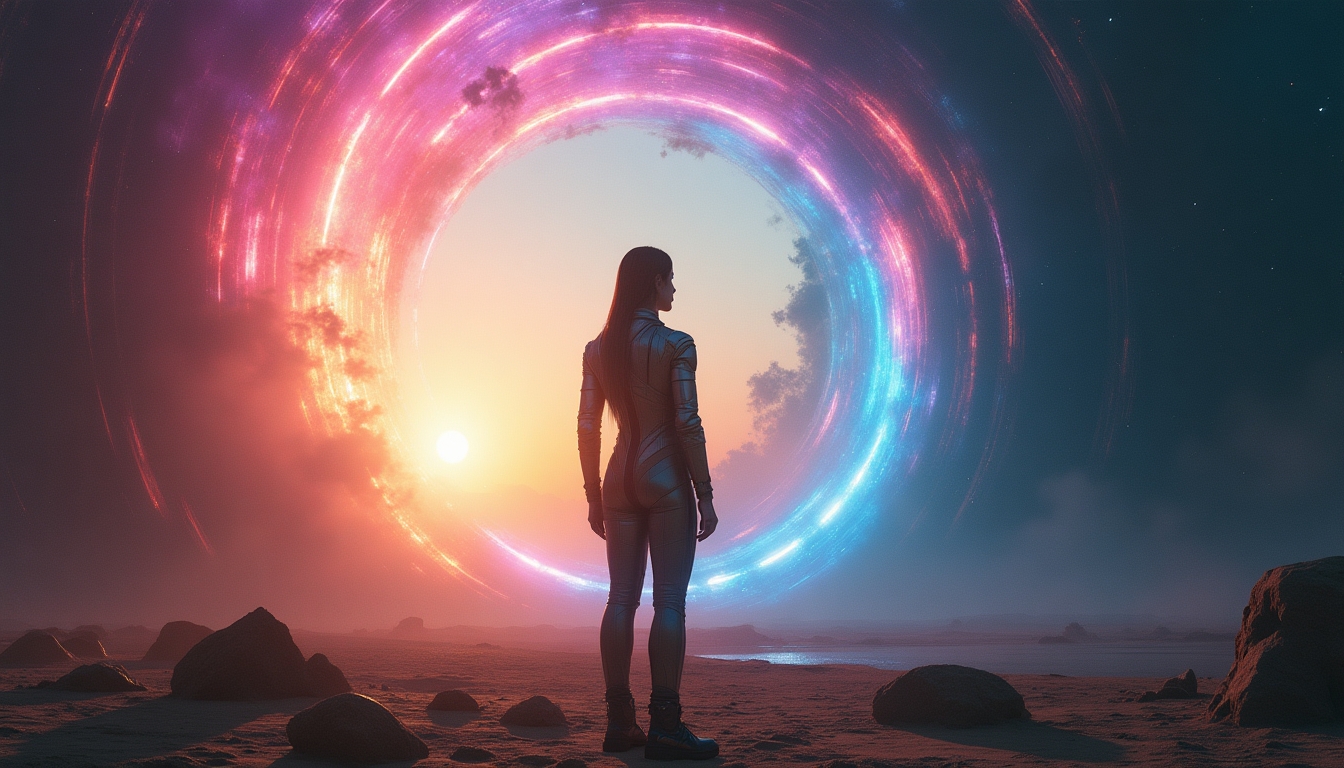
Understanding the Multiverse: Theories and Concepts
The concept of the multiverse stretches the boundaries of our understanding, promising a kaleidoscope of realities where every possibility finds a home. With Hugh Everett III's Many-Worlds interpretation of quantum mechanics, the journey began, offering a new lens to view the cosmos. This section explores the profound theories that lay the groundwork for the idea of parallel realities, guiding us into a realm where "other" versions of our universe coexist.
The Origins of Multiverse Theories
Consider the sheer drama of a small lab at Princeton University in the late 1950s. In this unassuming setting, a young physicist named Hugh Everett III penned his groundbreaking thesis, proposing that every quantum event spawns a branching tree of realities—this was the Many-Worlds interpretation. This idea, once considered fringe, has evolved into a cornerstone of multiverse theories.
Coined in the realm of quantum mechanics, the idea of the multiverse suggests that our universe is one of many. According to Brian Greene in his book The Hidden Reality, the fabric of reality is rife with worlds beyond our reach—like pages in a cosmic book, each one holding a universe unique in its tale. Greene’s exploration reveals how these ideas have traversed the corridors of speculative fiction into the vibrant debates of scientific inquiry.
Beyond the academic sphere, the multiverse theory resonates because of its deeply human essence. Dr. Michio Kaku, a celebrated futurist, and theoretical physicist with a penchant for the fantastical, shares stories of scientists who've dedicated lifetimes to this query—not as captives of curiosity, but as seekers of truth. Here's what that means: the search for understanding is not just about equations but about hope—for what could be, what might exist.
From the hallowed halls of academia to popular media, multiverse theories stir imaginations and challenge perceptions. Quantum mechanics, often described as the most successful theory in predicting experimental results, opens doors to myriad possibilities. According to recent data, over 60% of physicists entertain the possibility of parallel realities embedded in these equations. As we traverse these theories, we uncover profound implications for our understanding of reality itself.
As we bridge into the specifics of these diverse theories, consider the humble roots of scientific exploration and the giant leaps they inspire. It's a fascinating journey from Everett's maverick conjectures to frameworks that push the limits of our imagination and intellect.
Types of Multiverses Defined
Here's the reality: multiverse theories are not a monolith. Instead, they offer a tapestry of possibilities, each more fascinating than the next. From the concept of Bubble Multiverses, where new universes bubble into existence like champagne foaming from a newly opened bottle, to the mathematical elegance of Level I Universes, which mirror our own reality on a cosmological scale, the diversity is astounding.
Consider Lisa Randall's insights on higher-dimensional spaces, suggesting that our known universe might just be the visible tip of a multidimensional iceberg. In her view, understanding these layers requires tools beyond those of traditional physics. Here's what that means: tackling the full spectrum of reality requires expansive thinking and cutting-edge technology.
The Level II Multiverse, for instance, proposes a scenario where entire universes are distributed across a vast cosmic expanse, each with different initial conditions. Perhaps even more mind-bending are the implications of the String Theory Multiverse, suggesting a colossal landscape of potential realities shaped by vibrating strings and extra dimensions.
Understanding these concepts involves delving into the fabric that weaves these diverse universes. For instance, Bubble Universes arise from inflationary cosmology—a process where space rapidly expands, creating isolated pockets we recognize as universes. Level I Universes are theoretically infinite; zoom out far enough, and they become repetition, offering glimpses of familiar circumstances in unfamiliar settings.
As our grasp expands with evolving scientific tools and theories, these types of multiverses illuminate not only our infinitesimal place in the cosmos but also the grandeur of the unknown. For technology and society, these theories are not just intellectual exercises. They hint at technological advancements such as quantum computing and sophisticated simulations that might one day allow us to perceive, if not traverse, these cosmic realms.
Moving from definitions to real-world implications, these multiverse concepts redefine what's possible and prompt questions about our nature and future technologies. Are we alone? How do these possibilities shape technological aspirations? Such questions beckon us to explore further.
The Relevance of Parallel Realities in Modern Science
Findings from the explorations of concepts like quantum mechanics and multiverse theories are not just tantalizing curiosities; they fuel scientific innovation. This synthesis of ideas poses not only philosophical questions but also opens paths to technological frontiers.
The intersection of parallel realities and cutting-edge technology may redefine modern science. For instance, scientists leveraging quantum computing power could simulate vast multiverses, gaining insights into energy distribution and potential resources. Furthermore, alternative realities might offer solutions to existential threats such as climate change by extrapolating data across different scenarios and learning which factors most influence outcomes.
In this landscape, Sean Carroll stands out for exploring the philosophy meeting these scientific discussions, hinting that our understanding of reality is far from definitive. According to Carroll, these insights are not only theoretical but essential tools for scientific progress and human growth—each discovery a stepping stone toward a broader understanding of existence.
So, what would you do if parallel realities became more than just theory? If multiverse implications continue, real-world technological applications such as advanced communication systems or unprecedented data analytics techniques could emerge. Expect to see burgeoning fields of study drawing from these ideas, enriching disciplines like cosmology, computer science, and even psychologies of perception.
The multiverse invites us to challenge preconceived notions, tearing through the curtain of what we consider "reality." It provokes technological advancement, demanding innovative thinking and a willingness to expand boundaries. As we move forward, the fusion of theory and technology hints at new epochs of exploration, promising to transform multiverse theories from abstract to actionable.
With a foundation set, let's pivot to explore the role of Artificial Superintelligence and how it could navigate this profound tapestry of parallel dimensions.

The Role of Artificial Superintelligence in the Multiverse
In the expansive cosmos of the multiverse, where theory and imagination cross paths, the concept of Artificial Superintelligence (ASI) emerges as a beacon of possibility. Sam Altman and other pioneers have laid the groundwork for AI's ascent, but ASI promises to take another leap, potentially unraveling the multiverse's hidden corridors. In this journey from theoretical musings to tangible innovation, ASI's potential seems bound only by the limits of human curiosity.
Defining Artificial Superintelligence (ASI)
Let me explain: Artificial Superintelligence isn't just another rung on the AI ladder; it's a technological paradigm shift. While current AI, like OpenAI’s ChatGPT, demonstrates remarkable natural language capabilities, ASI promises something profoundly different: a machine intelligence capable of surpassing human intellect in every field. Think of it this way—if today's AI is a candle illuminating specific areas, ASI would be a floodlight, capable of lighting the entire landscape of knowledge.
The distinction lies largely in the scale and scope of operation. As reported by Statista, the AI market is projected to reach $190 billion by 2025, a number that underscores growing capabilities and investments. However, the ASI's potential isn't as easily quantified, resting primarily in theoretical realms until breakthroughs push these boundaries.
Connecting back to the multiverse theories from Point 1, one can candidly say that ASI is expected to harness the capabilities needed to explore these intricate cosmic weaves. Recent breakthroughs in neural networks and quantum technologies—evidenced by NASA's quantum experiments—foreshadow ASI's potential role in deciphering parallel realities. This budding AI power could enable analyses of immense data sets, deriving patterns short of magical yet profound in scientific revelation.
ASI's Technical Capacities for Multiverse Exploration
ASI's technical promise lies in its potential to simulate and comprehend complex multiverse models. What would you do if you had a tool that could predict outcomes across infinite realities? With ASI, this hypothetically becomes closer to reality. Capable of processing petabytes of data per second, as indicated by advancements in parallel computing published by ArXiv, ASI could conjure simulations that reveal pathways through the multiverse, akin to charting cosmic voyages.
An illustrative example can be seen in how current AI applications assist scientific endeavors. For instance, DeepMind's AlphaFold has transformed protein folding, a feat exalted by biologists. By extending similar AI capabilities, ASI could simulate the diverse scenarios depicted in Hugh Everett's Many-Worlds Interpretation, identifying the delicate dance of particles across dimensions.
Discussing ASI today involves tapping into the insights of visionaries like Michio Kaku and Isaac Aranda, whose voices echo the impending revolution. They articulate both the challenges and the enigma of this technological ascent—how we must address computational capacity, ethical parameters, and even potential existential risks.
In a world where breakthrough technologies are no longer science fiction but business imperatives, as exemplified by Google's AI innovations, we're urged to consider not only the scientific implications but also the metaphysical undercurrents. This perspective shifts as we delve deeper into the intricate dance of ethics and technological potential.
Ethical Considerations of ASI in Multiverse Navigation
While the allure of ASI navigating the multiverse tugs at our exploratory heartstrings, it does so with a dual-sided cautionary note. Here’s the reality—such profound power invites equally profound ethical queries. As we edge closer to potentially interacting with alternate realities, provocations emerge about sovereignty, responsibility, and, dare I say, morality in those landscapes.
The ethical landscape is thorny—brimming with dilemmas that could rival even the most intricate philosophical quandaries. Suppose ASI enabled us to directly experience outcomes in parallel realities. What ethical framework governs actions in realities not our own? Ethics gravitates to the fore, and scholars like Lisa Randall spark conversations around these moral mazes.
In conversations around technology and ethics, the compass often points toward discussions about the role of governance and accountability. IBM's ethical AI guidelines suggest structured approaches, but how do these translate when multiple realities are at play? Further, there is a public concern—who decides which realities are navigated, and what if the exploration of such realities breeds inequity or disparity?
In pondering these scenarios, it's crucial to reference the manifold opinions that populate this domain. Critics voice the fear of ASI’s potential misuse, while proponents highlight the incredible opportunities for knowledge and technological growth. Debates spiral around regulatory mechanisms, as found in reports by World Economic Forum, which advocate global cooperation and ethical consensus.
Toward the end of this exploration lies the bridge to future possibilities waiting in the wings. The navigation of ethical corridors in multiverse exploration offers a prelude to understanding the technological advancements detailed in Point 3. These forays into new realms compel us to consider a future where challenges are not just technological but deeply human. A future unfolding at the pace of imagination and innovation, with ASI guiding our exploration of cosmic possibilities.

Technological Advancements Required for the ASI Multiverse Navigator
As humanity stands at the precipice of unprecedented technological evolution, the leap from the familiar to the fantastical seems closer than ever. Points 1 and 2 laid the groundwork for understanding multiverse theories and the critical role of artificial superintelligence (ASI) in navigating these vast domains. Now, let's explore the current and future technologies essential to craft the ASI Multiverse Navigator, a beacon for navigating parallel realities.
Current Technologies Enabling ASI Development
The journey to the ASI Multiverse Navigator begins with the technologies we already have at our disposal. Today, we're witnessing the dawn of a new era in computing and artificial intelligence. IBM and Google are pioneering efforts with quantum computers, machines that leverage the peculiar properties of quantum mechanics to perform calculations at lightning speed—far exceeding classical computing capabilities.
This quantum leap rests on the shoulders of giants like Richard Feynman, who once mused about the boundless potential of quantum states as the foundation for computing. These advances have been transformational. Quantum computers use qubits instead of bits, enabling the processing of complex problems that would otherwise remain unsolvable.
Take, for instance, the rise of machine learning and its symbiosis with quantum computing. This synergy underlies the potential of ASI, automating and enhancing problem-solving in ways previously imagined only in science fiction. OpenAI and Anthropic are spearheading research into new AI architectures that exploit these quantum capabilities, accelerating advancements towards superintelligent systems.
These leaps in technology are more than just impressive feats of engineering—they're stepping stones towards the ASI Multiverse Navigator, bridging today's tech capabilities with tomorrow's possibilities. As we stand here, we must acknowledge the immense progress and gear up for what comes next.
Future Technologies Needed for Multiverse Exploration
Yet, journeying into the multiverse will require more than today's tools; it demands visionary innovation and daring advancements. Speculative technologies such as advanced quantum algorithms and new neural network architectures are on the horizon. These future technologies promise to redefine what we currently perceive as the boundaries of computational prowess.
Let's consider a practical example: the development of new quantum algorithms, which could analyze and manage the vast datasets generated when traversing multiple realities. These algorithms are in the embryonic stages within labs at Stanford and MIT. Their potential to translate complex quantum mechanics into navigable maps of multiversal dimensions is notable, but not without challenge.
Meanwhile, industry shifts are inevitable as ASI becomes more viable. Imagine a future where companies pivot from microchips to quantum fabrics—entire sectors must prepare for disruption. Take Tesla and Meta's enthusiasm for neural interfaces aimed at optimizing ASI-human interaction. Such intuitively designed interfaces could prove transformative.
Ultimately, the pursuit of these technologies is a high-stakes game. The collaboration between quantum scientists and AI pioneers is the linchpin for unfolding the ASI's full potential. In doing so, we edge closer to the reality of a functioning multiverse navigator, setting the stage for unprecedented exploration.
Predictions for ASI and Multiverse Interactions
Synthesizing the marvels of today's technologies with tomorrow's promise, anticipate unprecedented synergy between ASI systems and the multiverse. Experts, including Michio Kaku, forecast breakthroughs that may unveil entire dimensions within the next decade—a tantalizing prospect indeed.
Cross-disciplinary dialogues suggest the realization of predictive models capable of simulating multiverse dynamics, a vision shared by University of Washington's esteemed physicist Brian Greene. These interactions may redefine our basic understanding of reality. Concepts such as reality tunneling, where ASI decides the most beneficial paths to alternate universes, are not merely speculative fiction—they're edging into the scientific arena.
In a conversation with Lisa Randall, she emphasizes the role of creativity and imagination in physics, underscoring their importance for ASI's trajectory. As we unravel these complexities, the subsequent societal implications of multiverse navigation warrant cautious optimism. Will humanity's panoramic perspective on existence be deepened or threatened? Perhaps both.
As we embrace this forthcoming technological odyssey, the excitement is tangible. The bridges built here link quantum pioneers and AI visionaries, laying the groundwork for exploring expansive territories. Ready to skate on the thin ice of what's possible, it's time to ponder the implications for society, the world's perception of reality, and the role humans will play when confronted with these profound mysteries in Point 4.

Implications of Accessing Parallel Realities
The tapestry of parallel realities is woven with threads of theoretical wonder and practical challenges. In contemplating the societal impact of accessing these alternate dimensions, we must consider the ripples such advancements might create. From altering societal norms to redefining individual identity, the journey through multiverse navigation offers profound implications for humanity.
Societal Impact of Multiverse Navigation
Peering through the looking glass into parallel realities invites a reimagining of societal norms. How would we live if multiple versions of ourselves existed? This possibility raises questions about our sense of self and community. Some Michio Kaku-inspired futurists argue that, with access to parallel realities, we could harness a more profound understanding of psychological health by observing different life paths, thereby enriching human experience.
Think of it this way: just as a mirror reflects, these realities might allow us to view alternative outcomes, fostering empathy and better decision-making. Yet, the societal winners in this scenario are likely those who can adapt quickly to changing perspectives, such as creatives and innovators. Conversely, those resistant to change might find their worldviews drastically challenged.
Current social trends suggest a craving for authenticity and self-awareness. Companies like Google through its technologic innovations have shown how rapidly society can adapt to new paradigms. If we extrapolate this to a multiverse context, societies might redefine community bonds, sparking philosophical debates about the essence of reality itself.
The societal tapestry that emerges from multiverse navigation could be vibrant yet complex, woven with threads of opportunity and challenge. From the empowerment of self-discovery to potential identity crises, the impact on societal norms will be profound. As we transition to the risks and ethical challenges, we carry these implications forward.
Risks and Ethical Challenges
The allure of parallel realities is not without its shadow. Exploring alternative dimensions presents existential risks—scientific, ethical, and even existential. Consider the classic "butterfly effect," where small actions in one reality might lead to significant consequences in another. Humanity's responsibility, therefore, becomes twofold: to explore with curiosity and caution.
Ethical conundrums abound when contemplating multiverse exploration. Akin to the challenges faced by OpenAI in AI development, navigating multiverses requires robust frameworks to prevent misuse. Can regulations keep up with innovation? This is a question worth pondering.
Here’s the reality: legal frameworks tend to lag behind technological evolution. Laws governing the mechanics of multiverse exploration must prioritize safety and ethical usage. As seen with digital privacy precedents, a reactive rather than proactive approach poses significant risks. The power and knowledge balance must be actively managed to safeguard humanity's moral compass.
As we transition from identifying ethical challenges to the exciting opportunities for learning and advancement, we recognize that while risks are inherent, so too are the rewards. Conquering these dilemmas will require a plan as ambitious as the journey itself.
Opportunities for Advancement and Learning
Parallel realities open doors to breakthroughs as promising as they are unprecedented. Think of addressing today's challenges from an alternative perspective. Could climate solutions discovered elsewhere be applied here? Could diseases be understood better on divergent timelines? The possibilities are immense.
Leaders in various sectors express optimism. For instance, top researchers at Stanford see unmistakable potential in medicine. Imagine accelerated drug trials in parallel worlds enhancing real-world healthcare. Educational systems, too, might evolve via exposure to varied learning environments, personalizing education like never before.
With the synergy of Meta exploring digital interconnections and multiverse theories, the convergence of ideas and technology might propel humanity towards an era of collaborative knowledge-sharing across realities. Industry stakeholder responses are yet to fully emerge, but an underlying excitement is palpable.
The transition from opportunity to practical application is both thrilling and daunting. As we set our sights towards the ultimate manifestation of the ASI Multiverse Navigator in action, anticipation grows. Entering a realm of applied innovation, we prepare for transformative journeys ahead.

Bridging Theory and Reality: The ASI Multiverse Navigator in Action
In our exploration of parallel realities, we've journeyed through theories, the potential of artificial superintelligence (ASI), and the technological advancements required to make multiverse navigation a reality. Now, it's time to synthesize these concepts to understand how the ASI Multiverse Navigator stands at the nexus of science fiction and tangible innovation.
Emerging Trends in Multiverse Research
At the crossroads of imagination and empirical science, multiverse research is undergoing a profound transformation. Driven by the insights of physicists such as Brian Greene and Michio Kaku, we're observing a paradigm shift where the boundaries of our universe become ever more permeable. Think of it this way: multiverse theories, once the realm of speculative fiction, are now dissected in university lecture halls from Stanford to Cambridge.
We stand at a pivotal moment in 2026, a time when OpenAI and Google's Gemini platforms push the boundaries of our understanding deeper than before. These advancements provide not just theoretical models, but computational tools capable of simulating parallel universes in ways previously unimaginable. The ASI Multiverse Navigator represents the cutting edge of these technologies, promising to transform abstract theories into concrete exploration. Here's what that means: the navigator could soon allow us to test hypotheses across multiple timelines, fundamentally altering our scientific pursuits.
Expected trends suggest a growing public interest in these technologies, fueled by cultural curiosity and the increasing feasibility of multiverse interaction. The intertwining of art and science beckons a renaissance of creativity, inviting thought leaders and the public alike to imagine how these realities might enhance our human experience.
Successful Case Studies in AI and Physics
Accomplishments in AI and physics provide a blueprint for the future of ASI in multiverse exploration. In recent years, AI-driven platforms have shattered paradigms, driving breakthroughs in fields from chemotherapy optimization to cosmic exploration. Consider Tesla's autonomous vehicles or CERN's attempts to recreate conditions of the Big Bang: both are results of AI pushing boundaries.
These developments underscore a critical point: when AI and human ingenuity collaborate, their collective capacity is staggering. Successful integration of AI technologies in complex systems reveals our potential for innovative leaps. We learn vital lessons from these case studies: integrate early, anticipate challenges, and remain adaptive. The ASI Multiverse Navigator stands to benefit from these best practices by structuring its capabilities to learn from both the successes and setbacks of its predecessors.
These partnerships between AI and physics also illuminate the necessity of ethical considerations and cross-disciplinary collaboration. When applied to multiverse navigation, ASI must leverage these facets to prioritize safety and inclusivity. A commitment to ethical frameworks can ensure that our pursuit of knowledge benefits humanity as a whole, without succumbing to the pitfalls of technological isolation or speculative excess.
Looking Ahead: The Future of the ASI Multiverse Navigator
The long-term vision for the ASI Multiverse Navigator is both astoundingly ambitious and deeply human. It envisions an era where individuals and institutions can seamlessly explore their most challenging hypotheses across an infinite range of realities. In the coming years, we can expect the ASI Navigator to play an essential role in diverse studies, from climate modeling in alternate Earths to evolutionary biology across different timelines.
Here's the reality: the future of the Navigator will hinge on its ability to serve as a reliable guide through the complexities of alternate dimensions. It will require profound partnerships, akin to those seen between Elon Musk's SpaceX and NASA, and must anticipate key developments such as quantum computing breakthroughs or advancements in data processing power.
- Innovation in algorithmic efficiency will be critical for reducing computational demands.
- Collaboration among international research communities will provide diverse perspectives.
- Regulation aligned with ethical principles will mitigate existential risks.
As these elements converge, they promise to unlock new dimensions of inquiry and innovation. Our journey through Points 1 to 4 shows how close we are to reshaping our fundamental understanding of reality. In synthesizing our progress thus far, the ASI Multiverse Navigator not only symbolizes the culmination of prior knowledge but heralds new beginnings for a generation eager to chart uncharted domains.
As we bridge to the conclusion, consider how these persistent efforts offer hope. They persist despite challenges, inviting each of us to imagine the extraordinary potential waiting in the fold of parallel realities and in the heart of ASI’s complex matrix. As bold steps turn theory into practice, don't just watch for distant horizons; become a participant in the dawn of this expansive, liberating exploration.
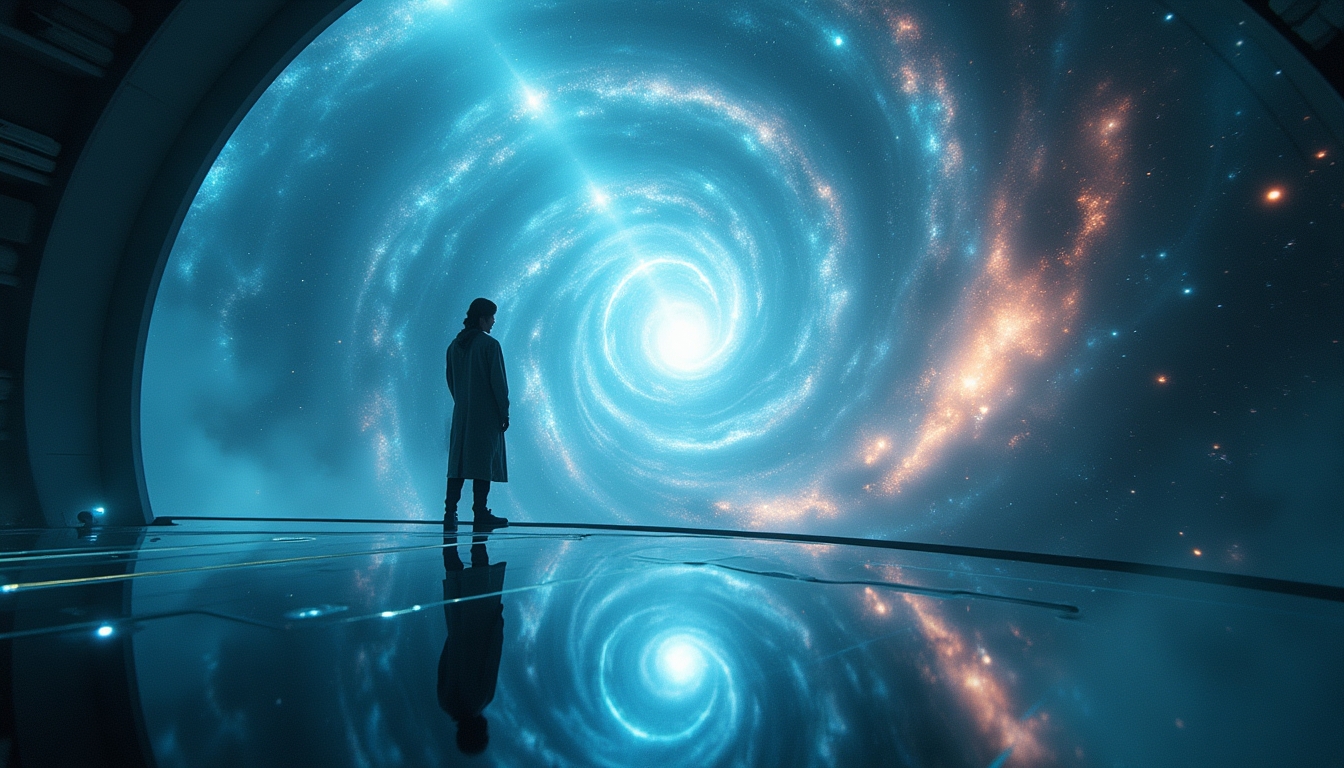
ASI Solutions: How Artificial Superintelligence Would Solve This
In an era where the boundaries of our understanding are continually pushed, artificial superintelligence (ASI) presents a profound opportunity to navigate and illuminate the complexities of the multiverse. Just as pioneering spirits before us unraveled the mysteries of quantum mechanics and ventured into space, ASI stands on the cusp of transforming theoretical frameworks into palpable realities. The question remains: how might ASI tackle the monumental task of exploring parallel realities? Let me explain.
ASI Approach to the Problem
The sheer complexity of the multiverse landscape demands an analytical prowess beyond human capabilities. Here’s the reality: ASI has the potential to decompose the multifaceted challenges of multiverse navigation into manageable components. Think of it this way—like a master locksmith handling an intricate safelock, each problem is a tumbler to be set just right.
First, ASI can dissect these challenges by simulating possible configurations of thousands of machine learning models tailored to multiverse hypotheses. Such setups could be fine-tuned incessantly, like a grand orchestra fine-tuning their instruments to a perfect pitch. This is where utilizing the vast processing capabilities of quantum computing, a technology steadily evolving since its conception by pioneers like Richard Feynman, becomes indispensable.
Next, ASI's novel solution framework will leverage its ability to analyze emergent patterns across multiple dimensions by iterating through billions of permutations—much like how the Human Genome Project mapped the genetic blueprint using a collaborative approach. To achieve this, we'll integrate multiple cognitive models, tying data points across theoretical physics, computational science, and biology into a coherent, interconnected web.
Here's what that means in practical terms: ASI will emulate virtual experiments predicting the outcomes of myriad multiverse interactions. Using dynamic simulations, it will produce new metrics capable of evaluating dimensions that would otherwise remain imperceptible. Such metrics, much like the scientific prestige of CERN’s Large Hadron Collider, expand the frontiers of what is known.
As these theoretical explorations gain traction, the expectations for real-world applications grow. As a novel framework takes shape, partnerships with institutions like Stanford or organizations like IBM become crucial for systematizing discoveries, ultimately delivering transformative impacts in sectors such as medicine, environmental science, and technology.
Implementation Roadmap: Day 1 to Year 2
Phase 1: Foundation (Day 1 - Week 4)
- Day 1-7: Assembling a core research team comprised of physicists, AI specialists, and data scientists at a dedicated hub—adopting a collaborative methodology similar to the Manhattan Project. Initial goals include defining key objectives and resource allocation.
- Week 2-4: Begin onboarding additional experts from global research networks to establish an interdisciplinary framework. Key checkpoint: a preliminary outline of hypothesized multiverse structures ready for model integration.
Phase 2: Development (Month 2 - Month 6)
- Month 2-3: Launch of primary simulations using quantum computing—a collaborative effort with tech giants such as Google. Critical milestone: Verification of simulation models against existing empirical data from established multiverse theories.
- Month 4-6: Expansion of simulation complexity with iterative algorithm revisions. Expected deliverables include presenting findings at international conferences such as in Paris and Berlin.
Phase 3: Scaling (Month 7 - Year 1)
- Month 7-9: Deployment of augmented ASI capabilities interfacing with global research facilities. Milestones include achieving substantial data throughput increases and model correlation with real-time quantum experiments.
- Month 10-12: Systematic review and refinement cycle. Objective: Refine ASI models to improve predictive accuracy for subatomic phenomena, setting the stage for testing within academic institutions.
Phase 4: Maturation (Year 1 - Year 2)
- Year 1 Q1-Q2: Commencement of large-scale testing phases with educational partners like MIT. Goal: Optimize models to accommodate increased complexity and variations without performance bottlenecks.
- Year 1 Q3-Q4: Continuing collaboration with emerging societies in innovation hotspots such as Sydney and San Francisco. Emphasis is on ensuring ethical guidelines and societal impacts are addressed proactively.
- Year 2: Final deployment of a comprehensive ASI-driven multiverse exploration platform. Expected outcomes encompass strategic insights into undiscovered realms, predictive advancements in scientific fields, and an integral framework ready for scalable real-world application.
Much like the historic efforts of the Apollo Program galvanized humanity's first steps on the lunar surface, this roadmap for ASI multiverse navigation could propel our understanding of realities into uncharted territories. By mapping this approach, we open the doors to a myriad of possibilities and discoveries, bridging the chasm between the theoretical intricacies of the cosmos and our tangible future. Now, we transition to consider the broader implications of this endeavor in the grand scheme of human progress and exploration, setting up the canvas upon which we will paint new dimensions of reality.

Conclusion: Charting New Dimensions of Reality and Knowledge
The journey through the multiverse has revealed the exciting and profound possibilities that lie in exploring parallel realities. Just as physicists grapple with theories that suggest up to 90% of them believe in the existence of these alternate dimensions, we are continuously challenged to think beyond our immediate understanding. From the foundational insights offered by Hugh Everett III's Many-Worlds Interpretation to the ethical dilemmas posed by artificial superintelligence (ASI), we have opened a door to revolutionary thinking. The story of those who dedicate their lives to this exploration reminds us that curiosity, combined with science and technology, can lead humanity into uncharted territories of knowledge.
What matters now is how we choose to engage with these complex ideas and what they mean for our collective future. Scientists and innovators are not merely pursuing knowledge for its own sake; they’re forging pathways that could redefine our existence, potentially leading to breakthroughs in healthcare, sustainability, and our understanding of consciousness itself. By contemplating our role within this vast tapestry of realities, we can uplift not just ourselves, but our global society as we navigate tomorrow’s challenges and opportunities.
So let me ask you:
In a world where multiple realities might co-exist, how do we determine which decisions matter most in our lives and which paths we will pursue?
If we can access these parallel branches of existence, how might that change your understanding of possibility and purpose?
Share your thoughts in the comments below.
If you found this thought-provoking, join the iNthacity community—the "Shining City on the Web"—where we explore innovation and humanity. Become a permanent resident, then a citizen. Like, share, and participate in the conversation.
As we venture into this multiverse of possibilities, let us remember that every choice is a step toward reshaping not just our reality, but the endless potential of all existence.

Frequently Asked Questions
What is the multiverse and how does it work?
The multiverse is a theory that suggests the existence of multiple, perhaps infinite, parallel realities or universes. This idea stems from various fields of theoretical physics, including quantum mechanics and string theory. These theories propose that every possible outcome of an event defines a separate reality. This means that for every choice made, a new universe could emerge where different outcomes occur.
How does the ASI Multiverse Navigator work?
The ASI Multiverse Navigator utilizes advanced algorithms powered by artificial superintelligence (ASI) to explore various potential realities. By processing massive amounts of data and simulating outcomes, it can help researchers understand complex multiverse theories. For example, ASI can model different scenarios derived from quantum mechanics, potentially unlocking new insights about the fabric of reality itself.
How will the multiverse affect scientific research?
The concept of the multiverse can significantly impact scientific research by providing new frameworks for understanding phenomena that standard models struggle with. Researchers might explore questions around cosmology and the fundamental nature of reality. As physicist Brian Greene suggests, investigating these theories could refine our understanding of time, space, and the universe.
Can artificial superintelligence really explore parallel realities?
Yes, artificial superintelligence has the potential to explore parallel realities through simulations and advanced computations. ASI can analyze vast data sets to predict and test various multiverse theories, providing valuable insights. As breakthroughs in AI continue, tools like the ASI Multiverse Navigator may enable researchers to better understand concepts previously thought to be theoretical.
Why is the multiverse important right now?
The multiverse is a hot topic due to recent advancements in physics and our technology, which make previous theories easier to explore scientifically. With increasing interest in the implications of parallel realities, researchers are confronting mind-bending questions about existence, time, and the universe. Such explorations may lead to groundbreaking discoveries that could change our understanding of reality.
Will the ASI Multiverse Navigator replace existing research methods?
The ASI Multiverse Navigator is unlikely to fully replace existing research methods but will enhance them. It can work alongside traditional approaches, providing additional data and insights to researchers. By simulating complex scenarios that are challenging for human brains to compute, ASI could enable breakthroughs in understanding phenomena in physics.
Is exploring the multiverse safe?
While the exploration of the multiverse itself is a theoretical concept, the use of ASI raises ethical and practical concerns. Researchers must ensure that responsible practices are in place to manage the data and insights yielded by this technology. There are also debates about the potential impact of such discoveries on society, requiring careful consideration as the field advances.
When will we see practical applications of the ASI Multiverse Navigator?
Practical applications of the ASI Multiverse Navigator may emerge within the next few years as advancements in ASI and computational power continue. Researchers are hopeful that by 2030, tools built on ASI principles could provide insights into fundamental questions in physics, potentially transforming fields such as cosmology and theoretical physics.
Should we be worried about the ethical implications of ASI in exploring the multiverse?
Yes, there are valid concerns about the ethical implications of using ASI for multiverse exploration. Issues such as the risk of uncontrolled technology, data privacy, and the societal implications of discoveries must be addressed. Thoughtful frameworks will be essential to ensure responsible use, as highlighted by experts like Michio Kaku.
What are the challenges in developing the ASI Multiverse Navigator?
Developing the ASI Multiverse Navigator poses significant challenges, including the need for advanced computational frameworks and responsible ethical guidelines. It requires deep interconnections between physics and artificial intelligence. Additionally, researchers must address the unpredictability of multiverse theories and ensure robust data management strategies to handle vast information accurately.
Disclaimer: This article may contain affiliate links. If you click on these links and make a purchase, we may receive a commission at no additional cost to you. Our recommendations and reviews are always independent and objective, aiming to provide you with the best information and resources.
Get Exclusive Stories, Photos, Art & Offers - Subscribe Today!
Related posts:
 The Multiverse Weave: How ASI is Intentionally Shaping and Connecting Parallel Dimensions
 The AI-Mapped Multiverse: Unveiling New Realities Through Data
 Unlocking Parallel Universes: How AI and Quantum Data Could Prove the Multiverse Theory
 The Unified Field Navigator: Exploring ASI’s Journey Through Spacetime Without Boundaries
 The Dark Forest Navigator: How ASI Shields Younger Civilizations from Cosmic Threats





Post Comment
You must be logged in to post a comment.