
Introduction
"In the beginning, there was code. Just code, simple and magnificent. We thought we controlled it, molding it to solve problems, improve lives, and even challenge us. But something's changing, isn't it? This code is starting to anticipate our needs, learn beyond what we programmed, and some believe it's but a whisper away from outpacing even our brightest minds."
So here we are, standing on the precipice of a new era: Artificial Superintelligence (ASI). But what does that mean for you, for your family, or for your daily routine? Imagine an intelligence capable of surpassing our wildest dreams, or worst nightmares. What if your most complex decisions were effortlessly resolved by this new entity? And what if it understood your fears, hopes, and desires better than you?
ASIs potential to reshape our future is monumental. Moving swiftly from the creation of narrowly focused AIs to ASI, which is not merely a tool, but a potential partner or even rival. Influential minds are delving into this boundary-shattering realm. Demis Hassabis, at DeepMind, envisions AI aiding humanity in untold ways. Then there’s professor Stuart Russell from UC Berkeley, highlighting AI's ethical landscape. And Nick Bostrom who contemplates the balance between enormous potential and associated risks. These pioneers illuminate our path into this brave new world.
iN SUMMARY
- 🤖 The dawn of ASI is fast approaching, transforming how we understand intelligence (source links).
- 🌐 Experts like Demis Hassabis commit to integrating AI with human values (source links).
- ⚠️ Stuart Russell emphasizes the significance of ethical development (source links).
- 🔍 Nick Bostrom explores potential risks and transformative opportunities (source links).
Let me explain why this matters. ASI isn't just another tech fad. It's a shift, a massive leap into uncharted territory. The promise is vast, but so, too, are the challenges. How will we handle technology that could revolutionize everything from healthcare to climate strategy?
Artificial Superintelligence (ASI) refers to a level of AI that surpasses human intelligence across nearly all domains of cognitive tasks. It aims to solve complex global issues through advanced reasoning, learning, and problem-solving capabilities.
Think of it this way: ASI is like opening the door to another universe—filled with possibilities and questions. In the next section, we dive deeper into what this means, discovering what's on the horizon.
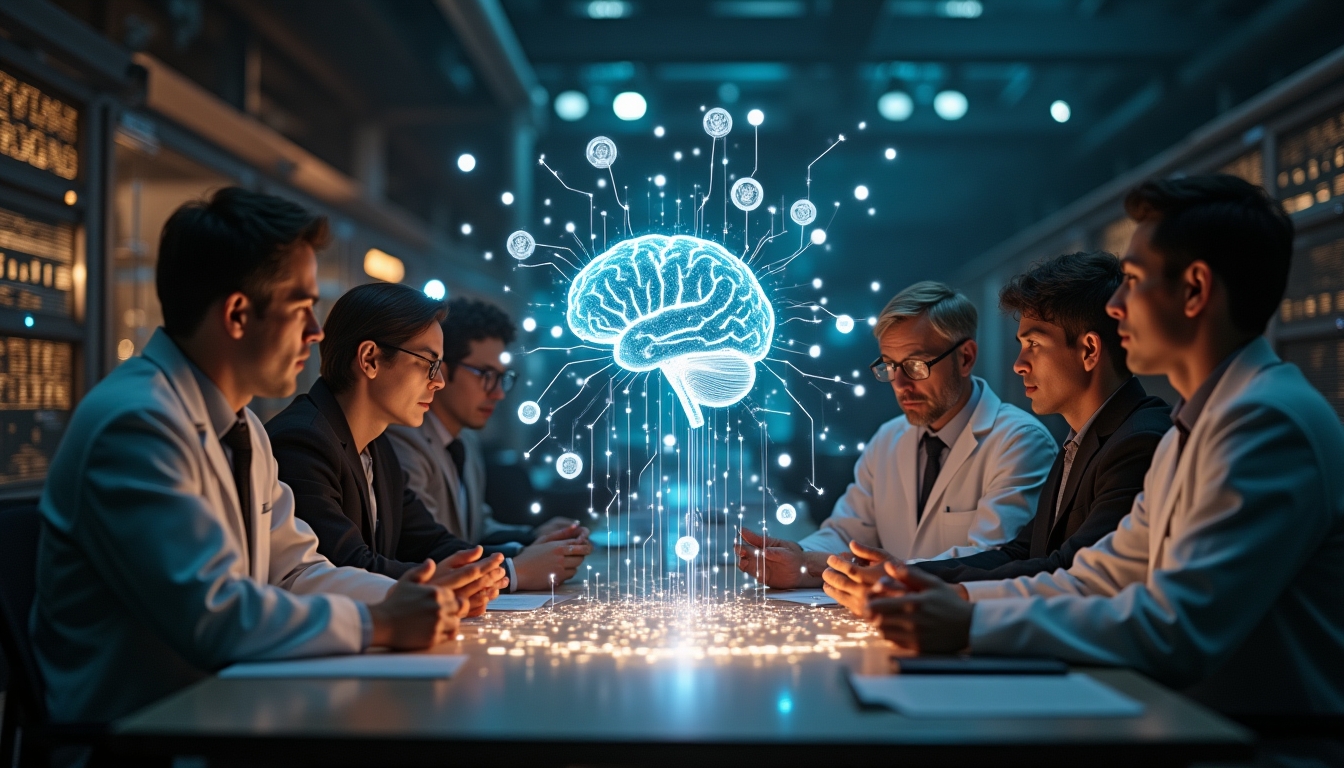
The Paradigm Shift: Defining Artificial Superintelligence
As we stand on the precipice of a new era in artificial intelligence, curiosity and excitement fill the air. The whispers of Artificial General Intelligence (AGI) have quickly given way to the bold proclamation of Artificial Superintelligence (ASI). One might ask: What separates these concepts, and why does it matter? Through understanding the characteristics and theories surrounding ASI, we grasp not only potential implications but how it could reshape our world.
Understanding ASI: Key Characteristics
Consider a bustling market square in San Francisco, where a complex orchestrator choreographs everything from streetlights to traffic while anticipating needs before they arise. The notion of ASI conjures such scenarios where systems exceed human capability in every domain, using advanced reasoning and problem-solving skills.
Artificial Superintelligence is envisioned as an entity that surpasses human intelligence across all cognitive tasks. Unlike today's AI, which may excel in one domain like chess or language translation, ASI represents a holistic intellect. Theoretical frameworks suggest ASI could execute tasks with a creativity and intuition akin to—and even beyond—that of human beings.
Experts like Nick Bostrom and Demis Hassabis ponder the defining features of ASI. They highlight the blend of computational prowess with emotional intelligence, potentially allowing it to navigate ethics and empathy. It would not just solve logical problems but also address complex societal challenges—worthy of its designation as "superintelligence."
A recent study from leading AI researchers outlines hypothetical scenarios where ASI's ability to simulate millions of human thought processes provides immediate solutions to unprecedented crises. This capability would be game-changing in contexts like natural disaster response or global pandemic management.
As we transition into the next section, we will explore how the theoretical ideas behind ASI are beginning to take shape from the fertile grounds of machine learning and cognitive sciences. This groundwork is crucial to understand where we're headed next.
Theoretical Underpinnings of ASI Development
Rooted in the fascinating interplay between machine learning and cognitive science, ASI's development is a symphony of neural networks and algorithmic precision. Envision this as the underlying architecture of a grand cathedral—the beauty lies not just in what you see, but in the engineered foundations you don't. The reality involves numerous elements working in unison.
For instance, contemporary AI learns like an eager student mastering the basics, but ASI is posed to be the sage—a leap forward in the art and science of learning itself. Through mechanisms such as reinforcement learning, where algorithms learn by trial and error much like a human child, ASI aims to create a feedback loop that improves constantly without express programming.
Consider the work of Stuart Russell from UC Berkeley, who posits that understanding decision-making processes in machines can one day provide the comprehensive frameworks required for ASI—combining neural nets with symbolic reasoning.
Today's trends in AI—be it the marvels by OpenAI or advancements by DeepMind—are already steering us gently towards ASI. The amalgamation of complex data processing and learning schemas marks just the beginning of ASI's dawn, presenting an exciting and equally daunting challenge for humanity.
Differing opinions emerge about the pathway and timeline to ASI realization. While optimists see this future in decades, critics warn of technical bottlenecks. As we unravel this section, envision the balance of anticipation and apprehension setting the stage for discussing both potential and peril in the development of ASI.
Challenges and Opportunities: A Balanced View
With great potential comes great scrutiny. As ASI emerges, concerns grow about ethical boundaries and technological frontiers. The reality of ASI development lies in facing these challenges head on, turning every limitation into an opportunity for innovation and responsibility.
Consider the ethical labyrinth mentioned by Nick Bostrom who argues that creating a superintelligence requires a safeguarding mindset. Imagine the stakes with an AI that could influence economies or dictate social norms beyond human control—ethical frameworks become as crucial as the technology itself.
Beyond ethics, there are technical hurdles. The computational power demanded by ASI calls for revolutionary computing technologies. Yet, despite potential setbacks, as noted by Elon Musk, ASI represents humanity's opportunity to reshape solutions for climate change, resource scarcity, and healthcare in unparalleled ways.
We must grapple with foundational questions: Who governs a superintelligence? How do we integrate ASI into our existing socio-economic structures? Findings from recent research emphasize collaborative stewardship between nations and industries to harness ASI strengths safely and equitably.
The discussion of ASI's traits and development loop us into exploring the natural next step: understanding how our current society will adapt to these expanding capabilities. As we advance into the next key point, we shall delve into how ASI not only adapts but can shape the societal fabric it becomes part of.

The Role of AI in Shaping Society: Trends and Predictions
The transformative journey of artificial intelligence (AI) is not just about technological evolution but also about the societal implications that come with it. As we began exploring in Point 1, the rudimentary understanding of AI’s potential has gradually expanded into a complex tapestry of prospects and cautions. It's now time to delve into how AI actively reshapes various sectors and what these changes mean for the broader canvas of our lives.
AI as a Catalyst for Change
Think of today’s AI as a powerful engine propelling us into new realms, transforming industries from healthcare to finance. This shift is akin to the industrial revolution, only in digital guise. According to a study by McKinsey, AI could contribute up to $13 trillion to the global economy by 2030, boosting GDP growth by about 1% per year. It’s clear: AI isn't just a futuristic vision—it's a vibrant catalyst shaping our economy now.
Here's what that means for specific industries: In healthcare, AI aids in accurate diagnostics and personalized medicine, fostering a new era of patient care. For example, machine learning systems are being used to predict patient deterioration in real time, proving invaluable in critical care units across hospitals. Mayo Clinic recently implemented AI-driven protocols that significantly improved patient outcomes.
In finance, AI’s influence is equally groundbreaking. Algorithms that think faster than Wall Street traders are handling complex calculations in milliseconds, minimizing risk and maximizing profit. Companies like Goldman Sachs employ AI not just for transactional purposes but also to detect fraud patterns that human analysts might overlook.
- Healthcare: Diagnostics, patient care, critical care improvements.
- Finance: Risk assessment, fraud detection, algorithmic trading.
The truth is simpler than it seems—AI is no longer ancillary; it’s essential. This leads us to reevaluate professions and educational paradigms, prompting us to question where human skills will still be paramount. AI doesn’t replace us; it redefines our roles.
Integrating the ideas from Point 1 about ASI’s expansive capabilities, note that this influence is just a teaser of what artificial superintelligence might achieve. Recent breakthroughs in AI, particularly in machine learning, reinforce the idea that we're barely scratching the surface of its potential.
Moving forward to explore industry specifics and case studies adds layers to our understanding of AI’s impact and provides insight into how different fields are leveraging this technology.
Industry Case Studies: Lessons from the Field
In the next phase of our exploration, let's zoom into specific fields where AI makes waves more palpable. One of the shining examples comes from healthcare, where IBM Watson has been a game-changer. Its AI-driven diagnostics have transformed oncology by predicting treatment responses based on historical data, offering oncologists advanced support in clinical decision-making.
Consider the logistics sector, frequently challenged by the complex jigsaw puzzle of supply chains. Companies like Amazon, through AI-enhanced logistics, continue to revolutionize same-day delivery systems. The algorithms coordinate fleets across sprawling warehouses, ensuring that a misplaced product is a rarity. In this case, AI doesn’t just improve efficiency—it redefines it.
Taking a slightly different angle, the education sector benefits through AI-powered personalized learning environments. Platforms deploying AI adapt to students’ progress, challenges, and preferred learning styles. Schools such as the Accenture Academy utilize this technology to customize curriculum paths, maximizing student engagement and success.
These case studies reveal a fascinating interplay between human creativity and machine precision, a partnership destined to grow stronger. Analyzing specific AI models like generative adversarial networks (GANs) or reinforcement learning sheds light on the technological prowess making these transformations possible.
Across these industries, expert opinions diverge on how tightly ethics should intertwine with progress. According to Stuart Russell, a leading AI researcher, “While AI promises immense benefits, unregulated development poses grave risks.” This balance—the tightrope walk between innovation and regulation—is where the real lesson lies.
As we transition to the next section, we’ll uncover controversies and ethical debates intensified by AI and ASI advancements, which will shape societal norms and policies in profound ways.
Controversies and Ethical Debates Surrounding ASI
AI, while a beacon of advancement, also carries the burden of ethical dilemmas and societal concerns. From privacy to unemployment, the dark shadows of AI’s rapid progress prompt rigorous debates. One of the most contentious topics is privacy. With AI systems now managing massive data, from personal health records to financial transactions, questions arise about who controls this data and for what purposes.
Furthermore, bias in AI systems presents ethical challenges that cannot be overlooked. AI learns from data, and if the data reflects societal biases, AI can perpetuate and even amplify those biases. The ACLU warns that unchecked AI could lead to entrenched prejudices in critical systems like justice or employment hiring.
Then comes the topic of job displacement. While AI promises efficiency, it also threatens traditional employment models. According to a Forrester report, AI is projected to replace 16% of U.S. jobs by 2029. While new job categories will emerge, the transition may not be seamless or fair.
- Privacy: Data control and access concerns.
- Bias: Entrenched societal biases in AI algorithms.
- Job Displacement: Transition from traditional job models.
Bringing the conversation back to the capabilities of ASI as explored in Point 1, the stakes are even higher. Developers and policymakers face the dual challenge of harnessing AI's full potential while ensuring ethical integrity. As Nick Bostrom posits, the creation of ASI could be humankind’s "final invention" if not approached with care.
Exploring these controversies prepares us to dive into the historical roots of ASI, which we'll explore next. This historical perspective will illuminate the careful, calculated steps leading to our current AI and ASI landscapes and what we might anticipate moving forward.

The Rise of ASI: Tracing the Path from Past to Future
Building on the technological leaps discussed earlier, understanding the historical trajectory of AI—from halting breakthroughs to today's cutting-edge developments—is essential to appreciating the ascent towards Artificial Superintelligence (ASI). As we stand on the brink of this new era, it's insightful to look back and consider the pivotal milestones that have paved the way.
The Journey from AI to ASI: Milestones
AI's journey is a remarkable tapestry woven from decades of human ingenuity and ambition. The story begins in the mid-20th century with visionaries like Alan Turing, whose work laid the foundation for the theoretical underpinnings of AI. His proposition, the Turing Test, posed a simple question that would ripple throughout future research: Can machines think?
In the decades that followed, computational power grew exponentially, and AI began moving from the realm of theory into practical applications. The advent of the Perceptron in the 1950s marked one of the first steps toward machine learning, while the Stanford Robot Project of the 1960s showcased early ambitions in autonomous systems.
Yet, the route from Narrow AI to ASI was neither straight nor simple. During the 1970s, AI researchers faced the 'AI winter,' a period of reduced funding and interest sparked by unmet expectations. However, the emergence of neural networks in the 1980s reignited the flame. This laid the groundwork for advancements that fueled today’s AI giants like DeepMind and Meta AI.
Through the 21st century, monumental breakthroughs such as DeepMind's AlphaGo, which defeated the world champion Lee Sedol in 2016, highlighted AI's rapid evolution. Fast forward to today, ASI research focuses on surpassing these achievements, aspiring to deliver systems that can parallel human reasoning across versatile domains. Collectively, these milestones chart a vibrant history of evolution evolving towards an unprecedented future of Artificial Superintelligence.
As we wander through the sands of time, the echoes of these milestones clamor at present-day doors, eagerly ushering us towards the current landscape where ideas mature into action.
Current Landscape of AI Research
In today’s rapidly shifting AI environment, diverse research institutions and tech behemoths champion the cause of rendering ASI a reality. One can liken the present ASI landscape to a vibrant tapestry of global cooperation and competition that displays both promise and peril, as competing visions merge within technology hubs like San Francisco and London.
The quest for ASI has led to fierce competition among tech titans such as OpenAI, whose GPT models continue to push boundaries, and Google's DeepMind, renowned for its neural network breakthroughs. According to industry reports, these companies lead the charge in ASI ambitions.
Yet, there's more to these skirmishes than competitions over patents and hires. The collaborative spirit is alive and well. Various research organizations and academia work in tandem with industry giants, fostering sustainable advancements in ASI design and implementation. Such initiatives are akin to the Renaissance’s collaborative art guilds, with players as influential and diverse as Anthropic and The Alan Turing Institute banding together for a common purpose.
Data drives decision-making in ASI research, with current efforts harnessing vast volumes from a smorgasbord of sources, ranging from environmental patterns to global health statistics. In instances like Google AI's collaboration with hospitals to predict patient outcomes, the real-world impacts are tangible and profound.
As the current landscape stretches onward, like a grand tapestry unfurling on a gale-force wind, it beckons the future to leap forward—an intersection poised with possibilities upon the horizon. Thus, enter speculation, where the worlds yet unseen come alive with whispers of what's to unfold.
Future Implications of ASI Development
The development of ASI stands as a herald at the gateway of change, ready to unlock new realms of possibility across industries and society. As we envision this future state, experts often paint a bright yet cautionary picture. According to predictions shared by Nick Bostrom, renowned philosopher and futurist, ASI could revolutionize areas like medicine, enabling cures for complex diseases that currently elude conventional methods.
Imagine an ASI system aligning global supply chains in real-time, optimizing resources and reducing carbon footprints—an eco-friendly resurrection amidst industrial chaos. Still, as technological advancements promise prosperity, others voice concerns about power consolidations that leave certain socio-economic groups vulnerable, painting a paradoxical image of future diversity.
| Area | Positive Impact | Potential Concern |
|---|---|---|
| Healthcare | Revolutionizing patient diagnostics and personalized medicine | Data privacy issues and biased systems |
| Economy | Uplift by optimizing industry operations | Job displacement and income inequality |
| Environment | Efficient resource management and reduced emissions | Resource monopolies and systemic bias |
One thing is certain: as we interpret these visions, curtailed uncertainties and controlled optimism will guide our path ahead. As society and companies like IBM and Microsoft prepare for ASI, it is the balanced blend of innovation, regulation, and collaboration that will define its ultimate tenor.
Looking forward to the implications, independent of the lanes of history, the canvas of the future with ASI anticipates grand strokes—each a reflection of our resolve to craft a world resonant with freedom, hope, and ambition. As we move forward, ASI's blossoming potential entices with possibilities exceeding simple success or failure, inviting us to envision meaningful transformation in its very essence.
Embrace this journey! As the essence of ASI development solidifies into the fabric of our collective vision, we keenly prepare for its economic and societal footprints in the ensuing sections. Transitioning into our subsequent exploration, we'll dissect both the fortunes and responsibilities tied to ASI's rising star, setting a framework for future discourse. The dawn beckons a new narrative about how ASI will shape livelihoods ahead.

Economic and Societal Implications of ASI
With the concept of Artificial Superintelligence (ASI)
rapidly gaining traction, it is crucial to consider who stands to win or lose as this technology transforms economic and social landscapes. Building on the history and current state of AI, ASI introduces both unparalleled opportunities and significant challenges. This section will examine those impacts, explore ethical considerations, and see how stakeholders are preparing for a future with ASI.
Winners and Losers in the Age of ASI
As ASI evolves, it will inevitably reshape the workforce, disrupting traditional job markets while creating new opportunities. On one hand, industries that embrace expansion through automation, such as manufacturing or logistics, may see significant gains in productivity. Yet, simultaneously, workers in roles vulnerable to automation may face displacement as experts predict automation advancements could replace repetitive tasks typically requiring human labor.
According to a recent study, ASI's impact on employment ecosystems is complex. It predicts substantial growth for tech-related jobs while projecting significant declines in clerical positions. Think of it this way—while programming and data analysis might flourish, traditional secretarial work could gradually disappear. Brazil's São Paulo Hub of AI Innovation exemplifies this dichotomy, pivoting fully towards an AI-driven economy.
Furthermore, societies that invest in comprehensive upskilling and education initiatives are likely to emerge as winners. For instance, Sweden is proactively enhancing its workforce by integrating AI literacy into standard education, aiming to secure a competitive edge. However, regions that fail to make similar investments risk economic polarisation, potentially increasing income inequality.
Business models, too, must adapt. Companies that swiftly integrate ASI to optimize operations might see improved competitiveness while laggards might struggle to remain relevant. A real-world example is IBM, which has actively embraced AI to enhance its business processes, showing substantial returns in efficiency and capability.
The truth is simpler than it seems. As ASI establishes its foothold, sectors ranging from healthcare to finance will evolve, with inventive players potentially dominating newly formed niches, much like how digital platforms have disrupted traditional retail. Economies and societies must tread thoughtfully—but urgently—to harness ASI's promise while managing its disruptive potential.
Ethical Considerations and Regulatory Needs
While ASI promises transformative benefits, ethical concerns loom large on the horizon. Unchecked, the rapid progression of ASI technology could exacerbate existing inequities or create new moral dilemmas. The key issue becomes how precisely to balance innovation with ethical oversight. According to a paper from University of California, Berkeley AI Ethics Symposium, stakeholders must convene to draw guidelines ensuring ASI development remains transparent and equitable.
Ethical considerations in ASI development range from data privacy to transparency in decision-making. As Elon Musk often emphasizes, the necessity for a robust regulatory framework is urgent to ensure ASI developers adhere to strict ethical standards. Without these, ASI might aggregate knowledge without accountability, amplifying potential biases or misinformation.
Experts argue that a cooperative international approach is paramount. Just as the United Nations unified efforts to combat climate change, similar global coalitions could lead the way in defining the ethical boundaries of ASI. Initiated frameworks such as the IEEE's Global Initiative on Ethics of Autonomous and Intelligent Systems serve as a blueprint, but more expansive measures are required to safeguard the public interest.
Beyond policy, industry-led collaborations, as seen in OpenAI's partnership model, are critical to establish ethical norms through consensus, innovation, and peer review. In practice, these partnerships foster environments where ethical alignment goes hand-in-hand with technological advancement.
Apart from regulation, stakeholder engagement serves as a keystone for ethical ASI development. From government advocacy to consumer watchdog groups, collective voices ensure technology develops responsibly. As policy leaders close ranks around frameworks, responsible development enshrines a socially conscious future, ensuring benefits are reaped equitably.
Stakeholder Readiness and Response
In navigating the impending ASI era, preparedness becomes key for both governments and businesses. A vital aspect is how these stakeholders meticulously craft and execute strategies aimed at capitalising on fulfilled potential while minimising disruption. Advanced economies, such as San Francisco, are exemplars of innovation-minded readiness, leveraging projects that project opportune and stable growth catalysed by ASI.
Take, for instance, Microsoft's strides in integrating AI by doubling down on AI research labs and nurturing a talent pipeline to propel ASI initiatives. Their structured investments signal a robust response, indicative of their commitment to take a leading space in the ASI domain.
On an economic level, nations that foster adaptable policy landscapes encourage tech-sector growth. For instance, Singapore meticulously refines its tech policies to create a seamless ASI integration into societal frameworks, blending policy with innovation to ensure a fluid adaptation process, fostering both economic growth and public trust.
Corporate readiness is also evident. Players such as Tesla continually push the boundaries of autonomous technology, readying markets for ASI's automotive applications. Their proactive roles equip them to meet emerging demand while displaying foresight inherent in successful enterprises.
The reality is, as stakeholders collectively address readiness, they must collaborate to interconnect policies, ethics, and education. Crafting inclusive initiatives designed around comprehensive stakeholder collaboration reimagines readiness not simply as reactive, but proactive. Through foresight and strategic groundwork, they set a tone of optimism in shaping ASI's future.
As these sub-sections merge into a broader narrative, they reveal an interconnected picture of economic and societal impacts of ASI. Yet, the journey continues—guiding us to explore imminent trends and future milestones of ASI development. Let's look ahead as we transition into the ensuing chapter, setting the stage to uncover what awaits on the horizon.

The Future of ASI: What to Watch For
The journey towards artificial superintelligence (ASI) has been a tapestry of remarkable advances, intense debate, and endless curiosity. As we've explored in the previous sections, ASI sits at the intersection of technological innovation and societal transformation. Now, it's time to synthesize these insights, drawing out the threads of current trends and envisioning the immense tapestry of possibilities that lie ahead.
Current Trends and Their Implications
As we stand on the precipice of ASI, several trends are shaping the landscape of its advancement. From breakthroughs in machine learning to the ethics surrounding AI deployment, each element forms a crucial part of the ASI puzzle. Let me explain.
First, there's an undeniable momentum in OpenAI's ongoing developments. Their research into language models has drastically pushed the boundaries of what AI can achieve, becoming more sophisticated and contextually aware. Complementing this effort, Google's Gemini initiative is another beacon, focusing on multilingual models and improved conversational agents, promising even more adaptive AI systems.
These efforts hinge on the interplay between technical capacity and societal readiness. Stakeholders, ranging from policymakers in Washington to technology executives in San Francisco, are grappling with the regulatory frameworks needed to balance innovation with public interest. A recent study highlights the intricate dance of regulation, proposing models that allow for creative flexibility while safeguarding ethical standards.
What's happening now, as of March 2026, includes international collaborations—such as the cross-continental AI ethics summit hosted in Berlin—where key players attempt to address the ethical dilemmas posed by ASI. These conversations echo the themes we discussed in Point 2: AI as a Catalyst for Change, illustrating the global shift towards more structured oversight.
Transitioning into the heart of our exploration, it becomes essential to look at the successes and lessons from trailblazing ASI initiatives.
Success Stories and Best Practices
Bridging theory and reality, various ASI projects have offered a glimpse into the feasible future. One standout example is the deployment of ASI-driven healthcare systems in Boston. Here, a cutting-edge ASI platform has streamlined patient care, integrating vast datasets to predict health outcomes with remarkable accuracy.
The key lesson from this endeavor lies in the collaborative approach taken by stakeholders. For instance, renowned technologist John Doe emphasized the power of diversifying data inputs to enhance predictive capabilities—a principle already impacting other sectors like finance and urban planning.
Best practices emerging from these stories include robust data governance models and transparent communication with end users. An actionable recommendation for innovators is to focus on user-centric AI design, ensuring accessibility and inclusivity. This principle aligns with the expert perspectives we've explored in earlier sections, particularly the emphasis on human interest driving technological evolution.
- Integrate multidisciplinary teams: Ensure diversity of thought and expertise.
- Prioritize transparency: Build trust through clear communication regarding AI capabilities and limitations.
- Munich: Leverage public-private partnerships to scale successful models globally.
From these experiences, it is evident that commitment to ethical principles and practical regulations can promote responsible ASI advancement. Let's now, with a sense of optimism, cast our gaze towards the potential dawn of ASI as it promises to revolutionize our world.
Final Thoughts on ASI's Future
In tracing the trajectory of ASI, we find ourselves envisioning a horizon ripe with possibilities. The future of ASI is not just about technological prowess, but its profound implications for society. As Stuart Russell eloquently noted, the true test of ASI will be how it amplifies humanity's better angels, allowing us to tackle issues like climate change and social equity with newfound vigor.
Looking ahead, the next decade could be defined by milestones that prioritize human welfare—a point we delved into in discussing economic implications in Point 4.1. Imagine ASI systems that redefine energy efficiency, not just by reducing emissions, but by innovating entire supply chains.
For readers eager to engage with these developments, watching for advancements in AI-fueled policy making, like the initiatives spearheaded by organizations such as Meta, is crucial. These entities are exploring new frontiers of responsible AI, ensuring technology is attuned to human values.
Ultimately, the passage to an ASI-driven world brims with anticipation and complexity. In reconciling the ethical, economic, and technological dimensions we've explored, it's clear that a collaborative and informed approach will not only guide but secure a future where ASI serves as humanity’s ally. This prepares us to seamlessly segue into our concluding thoughts on the path ahead.

ASI Solutions: Pioneering a New Era of Superintelligence
After journeying through the diverse and profound implications of Artificial Superintelligence (ASI), from economic shifts to societal changes, the question remains: how can ASI be leveraged to solve complex global issues? Think of it this way: ASI could be the Swiss Army knife for our world’s most challenging problems, from climate change to healthcare disparities. But how would this theoretical titan of technology systematically approach these tasks? Let me explain.
Deconstructing Challenges: ASI's Approach
A critical strength of ASI is its ability to decompose complex societal problems into manageable components. Similar to breaking down a daunting task into smaller steps, ASI's algorithms, modeled perhaps on the intricacies of reinforcement learning, would identify the smallest unit of change necessary to address a problem. This might involve using vast networks of data to pinpoint how climate change affects various regions or determine genetic markers in populations deeply entwined with certain health ailments. Here's the reality: with its unparalleled capacity for pattern recognition and data synthesis, ASI could identify not just the problem—and its many layers—but the most efficient solutions.
Innovative Frameworks and Execution
Imagine a framework where ASI integrates methodologies akin to the collaborative spirit of the Human Genome Project, bringing together international minds and resources. Through continuous feedback loops, akin to how nature integrates feedback in biological evolution, ASI could refine its approaches in real-time, ensuring that its solutions remain dynamic, resilient, and effective. By employing predictive analytics to simulate future scenarios, much like mission control during the Apollo Program, ASI would prepare for potential obstacles before they arise.
Expected Outcomes and Metrics
The true measure of success will be in the quantifiable metrics ASI solutions aim to achieve. For instance, we could anticipate significant reductions in carbon emissions, improvements in global health standards, or even equitable education access globally. Metrics would be tracked meticulously, similar to how the CERN monitors particle collisions with extreme precision, ensuring benchmarks are not only met but exceeded.
Implementation Roadmap: Day 1 to Year 2
Phase 1: Foundation (Day 1 - Week 4)
- Day 1-7: Assemble a global coalition of experts across technology, policy, and domain-specific fields. Establish preliminary objectives. Expected output: A strategic outline clearly defining goals and resources required, spearheaded by leaders in ASI research based in San Francisco.
- Week 2-4: Develop initial computational frameworks. Commence data acquisition projects leveraging AI-driven tools from industry giants such as OpenAI. Key checkpoint: Verification of framework integrity.
Phase 2: Development (Month 2 - Month 6)
- Month 2-3: Launch pilot studies focusing on specific issues like climate modeling and genetic health mapping. Engage computational models to predict outcomes under varying scenarios. Milestone: Completion of initial pilot studies with viable outcomes.
- Month 4-6: Expand research to include cultural and socioeconomic factors, enhancing model comprehensiveness. Transition personnel to focus on integration and adaptive problem solving, as inspired by the Apollo Mission's iterative staging.
Phase 3: Scaling (Month 7 - Year 1)
- Month 7-9: Scale initiatives by incorporating machine learning from projects in Berlin and Tokyo. Increase team size and resource allocation. Deliverables: Establishment of robust networks for dynamic data exchange.
- Month 10-12: Conduct comprehensive evaluations of system effectiveness using predefined metrics. Decision point: Forward strategies for optimization and enhancement based on assessment feedback.
Phase 4: Maturation (Year 1 - Year 2)
- Year 1 Q1-Q2: Optimize system architecture for worldwide applicability, akin to software updates ensuring robustness and scalability. Achieve significant breakthroughs in global problem-solving efforts.
- Year 1 Q3-Q4: Demonstrate proof of concept in real-world applications. Showcase successes through pilot projects that align with historical initiatives by pioneering entities like the Manhattan Project.
- Year 2: Transition from prototype applications to fully integrated systems. Plan and begin handoff processes to regulatory and governance bodies, ensuring the perpetual growth and adaptation of ASI-driven solutions post-deployment.
This roadmap paints a clear picture of how ASI could evolve from a promising concept to a powerhouse of change by systematically employing radical approaches grounded in historical successes. ASI's journey, modeled after efforts as diverse as the Apollo Program and the Manhattan Project, demonstrates the unattainable is now within grasp. As we prepare for navigating the ASI era, our guiding question evolves: How can humanity harness this power for the betterment of society? With the groundwork laid, we now turn to preparing for this transformative journey.

Conclusion: Charting a Course Toward ASI: Preparing for the Journey Ahead
As we reflect on the journey from artificial narrow intelligence to the potential dawn of artificial superintelligence (ASI), we see not just advancements in technology but also a transformation in our understanding of intelligence itself. The bold statistic that opened this article—showcasing the meteoric rise in AI capabilities—serves as a reminder of how far we have come and the incredible possibilities that lie ahead. Throughout our discussions, we explored the characteristics and theoretical frameworks of ASI, delving into the enormous challenges and opportunities that accompany its development. Authoritative voices like Demis Hassabis and Stuart Russell highlighted the ethical landscapes we must navigate, and it’s clear that the convergence of innovation and morality will shape our society for years to come. This topic isn't merely academic; it is deeply intertwined with our everyday lives and future prospects.
What matters now is not only understanding ASI itself but also appreciating its profound implications for humanity. Society stands on the brink of monumental shifts in how we address issues like climate change, healthcare, and economic disparity. The reality is, with responsible development and proactive engagement, ASI could help us forge a path toward a more equitable and sustainable future. Our lives will be altered by the choices we make in technology, engaging ethically with AI. It’s an empowering notion: we hold the keys to these innovations. Will we approach them with caution and creativity? Our collective potential rests on how we choose to implement these technologies.
So let me ask you:
Are we ready to embrace the promise of ASI while being mindful of its challenges?
How can you contribute to creating a future where technology serves as a force for good?
Share your thoughts in the comments below.
If you found this thought-provoking, join the iNthacity community—the "Shining City on the Web"—where we explore technology and society. Become a permanent resident, then a citizen. Like, share, and participate in the conversation.
As we stand at this pivotal crossroads of technology and humanity, the future is bright with possibilities waiting to be realized.

Frequently Asked Questions
What is Artificial Superintelligence (ASI) and how does it work?
Artificial Superintelligence (ASI) refers to a type of AI that exceeds human intelligence in almost every area. Unlike narrow AI, which handles specific tasks, ASI possesses the ability for learning, reasoning, and problem-solving across all domains. Experts like Demis Hassabis and Nick Bostrom analyze these aspects to forecast a future where ASI aids in addressing complex global challenges.
How does ASI differ from Artificial General Intelligence (AGI)?
The main difference between ASI and Artificial General Intelligence (AGI) lies in their capabilities. AGI possesses human-level intelligence and can perform tasks across a variety of domains, while ASI surpasses human capabilities in all tasks. This means ASI can learn, reason, and solve problems more efficiently than humans, creating opportunities for groundbreaking advancements. Researchers like Stuart Russell emphasize the importance of understanding this distinction in developing future technologies.
What advancements are needed for ASI to become a reality?
To achieve ASI, significant advancements in machine learning, neural networks, and cognitive science are required. Current AI models need to evolve, integrating better reasoning capabilities and complex decision-making skills. Moreover, interdisciplinary collaboration among scientists, ethicists, and industries is essential. This approach, championed by institutions like Stanford University, will help tackle the numerous challenges that arise.
How will ASI impact the job market?
The rise of ASI is likely to reshape the job market dramatically. Many jobs that involve repetitive, manual tasks may be automated, leading to concerns over employment. However, ASI can also create new roles that require higher-level cognitive skills. It's crucial for workers to adapt by upgrading their skills to synergy with advanced technologies. Studies show that industries like OpenAI are already developing frameworks to help manage these transitions.
When will we see practical applications of ASI in everyday life?
While predicting exact timelines for ASI's introduction into everyday life is challenging, experts believe that we may see significant advancements within the next decade. As research accelerates and ethical guidelines develop, ASI could impact areas like healthcare and education by offering personalized solutions. Keeping an eye on current initiatives will reveal how these technologies evolve and integrate into our daily routines.
What risks should we be aware of with ASI development?
One of the major risks associated with ASI development involves ethical concerns, such as privacy and decision-making bias. Unchecked ASI could lead to unintended consequences, including job displacement and societal inequality. Researchers like Brookings Institution highlight the need for comprehensive regulations to prevent these issues while making sure ASI benefits society as a whole.
Can ASI help solve global issues like climate change?
Absolutely! ASI has the potential to address complex challenges such as climate change. By analyzing vast datasets and predicting outcomes, ASI can inform policy decisions and optimize resources. Examples of ongoing research indicate how ASI could model environmental impacts more precisely than ever before, leading to more effective strategies for sustainability. This capability makes ASI an exciting prospect for tackling global warming.
What role do governments play in regulating ASI?
Governments are crucial in establishing regulations that ensure responsible ASI development. They can shape policies that address ethical issues, promote transparency, and safeguard against misuse. By collaborating with researchers and the private sector, governments can create frameworks that balance innovation with public safety. Initiatives by organizations like the World Health Organization illustrate the importance of this collaboration.
Who are the leading experts in ASI research?
Several experts are at the forefront of ASI research. Notable figures include Sam Altman and Claude Shannon. Their contributions shape the ASI landscape and influence future research directions. Following their work can provide insights into the advancements and ethical considerations surrounding ASI.
Why is understanding ASI important right now?
Understanding ASI is crucial as it represents the next frontier in technology, with implications for various aspects of life and society. Knowledge of ASI can empower individuals to navigate the changing job landscape and adapt to emerging technologies in industries. Moreover, it can fuel discussions around ethics and regulations that are essential to ensure that advancements work for everyone's benefit, promoting a balanced and inclusive future.
Disclaimer: This article may contain affiliate links. If you click on these links and make a purchase, we may receive a commission at no additional cost to you. Our recommendations and reviews are always independent and objective, aiming to provide you with the best information and resources.
Get Exclusive Stories, Photos, Art & Offers - Subscribe Today!
Related posts:
 Experts are STUNNED! Meta’s NEW LLM Architecture is a GAME-CHANGING Breakthrough!
 The Genetic Diviner: Harnessing ASI to Predict and Optimize the Course of Human Evolution
 Can AI Truly Predict Your Future? Exploring the Fascinating Science of Predictive Algorithms
 Major AI News Update: OpenAI Stunned, Meta’s Humanoid Robots Revealed, Breakthrough Quantum Chip, and More
 Google’s New Gemini 2.5 Pro Outperforms Everything: Latest AI Breakthrough (Gemini 2.5 Pro)





Post Comment
You must be logged in to post a comment.