
Introduction
Stardate 95855.5. The year is 2035 and everything feels both familiar and surreal. You tap your right index finger just so, and an intelligent interface appears in mid-air. It anticipates your needs, suggests breakfast because it knows you forgot supper, and alerts you to a change in your calendar—your heart rate might need attention. No longer purely the stuff of science fiction, superintelligent AI now anticipates your thoughts before you even think them.
But what does that mean for you, for us? Rewind a bit. Right now, artificial superintelligence (ASI) might still seem like a distant dream. Or is it? As you sip your morning coffee, consider this: what if your phone knew your day better than you do? What if AI could predict the flights you'll want to take before they're even announced? Imagine a world where technology fits seamlessly into the fabric of life so you can focus on what matters most. That thought is both heartening and a bit unsettling, isn’t it?
Let me explain why this is sparking so much debate. The futurist Ray Kurzweil has long insisted that the age of superintelligence is just around the corner, part of a natural evolution from today's increasingly adaptable and perceptive AI systems. Meanwhile, Nick Bostrom warns about the ethical implications and Stuart Russell encourages widespread research to align AI with human-centric values. How can progress not only be fast but safe? Today we stand where change begins—uneasy, curious, hopeful.
iN SUMMARY
- 🚀 Superintelligent AI is closer than most people think, with experts predicting its arrival soon.
- 🌐 AI predicts our needs in increasingly accurate ways, reshaping our daily experiences.
- 🤔 Experts are divided on how to balance AI's power with ethical considerations, invoking necessary discussions on its development.
- 🔍 Ongoing research continues to push boundaries, steering the path towards aligned human and machine priorities.
Here's what this means for us now. The reality is unfolding rapidly, dragging the idea of ASI from pages of theory into the landscape of potential. But what makes ASI unique?
Artificial superintelligence (ASI) refers to a stage where AI not only matches but exceeds human intelligence in every aspect. This includes things like problem-solving, decision-making, and creativity. ASI could outpace human minds, forever changing how we live, work, and interact.
Think of it this way. Just like the jump from mainframes to personal computers in the past, the advent of ASI could revolutionize life as we know it. In this exploration, we watch for seven key milestones that indicate when ASI might arrive and what its implications could be.

The Definition and Scope of ASI
In a bustling coffee shop in Rome, young tech enthusiast Elena is outlining her latest paper on artificial intelligence (AI) to a captivated audience. The room buzzes with curiosity as she articulates the fascinating world of Artificial Superintelligence (ASI), a domain still shrouded in complex and endless possibilities. ASI represents a level of intelligence superior to the brightest human minds in every field, from science to social understanding. The journey from simple computer algorithms to machines thinking on their own can be as overwhelming as it is inspiring.
Understanding ASI: What Sets It Apart from AGI and ANI
To grasp what makes Artificial Superintelligence stand out, we first need to distinguish between three pivotal AI phases. Think of Artificial Narrow Intelligence (ANI) as a master of one trade—like a chatbot expertly handling specific queries. Then there’s Artificial General Intelligence (AGI), or a theoretical entity capable of understanding and mastering multiple subjects, akin to a human scholar navigating academia's vast territories.
The marvels of ANI have become integral parts of our everyday lives. Virtual assistants like Siri and Alexa, for instance, are brilliant examples. They delight with the intricate mastery of their limited tasks, yet they fall a bit shy of general understanding beyond their coded functionalities. According to recent data, ANI's growing role hints at the monumental leap when, finally, its capabilities expand into AGI.
Enter ASI—the brainchild of thought leaders such as Nick Bostrom, who painted a compelling picture of this concept in his seminal work, "Superintelligence." It leaps beyond AGI's generalized capacity, embodying intelligence that not only matches the breadth of human understanding but outshines it in every realm, offering predictions, innovations, and solutions on unprecedented scales.
At this stage, the conversation steers toward preparing society for an ASI era. What does it mean when machines surpass human intelligence by such staggering margins, and how do we ensure it remains a tool for good? This question of stewardship is pressing, as evidenced by experts like Yann LeCun, who argue for responsible innovation.
As we close in on this technological destiny, ANI's present successes are milestones on the winding path to AGI, and, ultimately, ASI. As Elena remarks, “It's about learning to manage what we cannot yet fully comprehend.” Now, let's delve into the technological milestones that guide us toward ASI's imminent horizon.
Technological Milestones Towards ASI
Technology is a tapestry woven over time, and AI's progression follows a similar pattern—each thread a milestone toward the more profound achievements of ASI. Machine learning is a cornerstone of this advancement, birthing intelligent systems capable of learning from data much like humans do. The emergence of neural networks, organic architectures built to mimic the human brain's complexity, propelled AI further into sophistication.
Deep learning marked a transformative chapter. Suddenly, machines could engage in complex pattern recognition across broad applications, from healthcare to transport. It’s akin to teaching a child every possible chess move—and then watching as they create strategies no one had imagined.
Around the world, institutions like MIT and Imperial College London are at the forefront of this research. The financial backbone for these explorations often comes from tech behemoths like OpenAI and Google, both tirelessly unraveling AI's potential.
Consider reinforcement learning, a method that conjures images of teaching pets through rewards and commands. An AI agent receives an incentive to achieve a desirable result. It’s practical in fields like autonomous driving, where success is measured by safely ferrying passengers while adapting to unpredictable environments.
Experts, including Stuart Russell, caution, “As these systems learn to learn, they're stepping towards AGI—and we must ensure guidelines sprint alongside these advancements.” These stepping stones—icons of previous AI revolutions—pave the potential for ASI. Next, we'll journey through the ethical dimensions inherent to this quest for ASI.
The Ethical Dimensions of ASI
As the gears of AI grind ever closer to ASI, ethical concerns gather, clamoring for attention. Consider this: what if your highly valued job suddenly automated, extinguishing not only your livelihood but also your identity? Moral responsibilities extend beyond philosophical debates; they penetrate economic realities.
Safety is another beacon demanding illumination. How do we trust intelligent entities to hold human interests at heart? These aren't distant future speculations but imminent concerns. Initiatives like Anthropic echo these sentiments, striving for AI models built with safety ingrained at their core.
It’s a delicate dance between harnessing AI's prowess while averting potential missteps. The moral kaleidoscope of ASI questions justice, privacy, and accountability. As we explore these terrains, it is imperative to craft them with transparency and foresight.
As AI poetically flirts with policymakers, concerns arise around governance. Can laws keep pace with qubits and algorithms, or will legislative frameworks stumble behind technological sprints? Elon Musk famously remarked, “With artificial intelligence, we are summoning the devil.” While hyperbolic, it underscores the urgent need for ethical stewardship.
In synthesizing achievements and ethics, we realize the journey toward ASI is as much about technical prowess as it is about moral development. As this odyssey continues, what comes next is equally thrilling—examining the key players and landscapes shaping the current state of AI, and how these forces converge on that ultimate beacon: ASI.
From budding advancements to moral conundrums, these narratives intertwine, forming a rich tapestry of opportunities and dilemmas that we’ll continue to explore. Let's now turn our gaze to the present—the current state of AI research and development, setting the stage for subsequent insights and revelations.

The Current State of AI Research and Development
Building on our understanding of Artificial Superintelligence (ASI) and Artificial General Intelligence (AGI) from Point 1, we now delve into the exciting environment of AI research today. This landscape continually evolves, backed by pioneering work from tech giants and academic institutions. The question remains: who leads this sprightly AI race? The answer is a tapestry of diverse players, each weaving a thread in the quest for ASI.
Key Players and Their Contributions
Today’s AI panorama is dominated by a fierce yet inspiring assembly of key players. At the forefront are industry titans like OpenAI, helmed by Sam Altman, and Google’s Brain Team, led by the likes of Demis Hassabis. These organizations invest billions annually into advancing AI’s boundaries, amassing a wealth of knowledge and expertise in the process.
Underpinning this corporate muscle are academic institutions like Stanford University and MIT, which foster environments rich with collaboration and innovation. According to a study, these combined efforts comprise nearly 60% of the global personnel involved in AI research and development.
Yet, it is not just about investment and personnel. The Anthropic initiative, led by Dario Amodei, forefronts the importance of ethics in AI. Meanwhile, Meta’s AI research group, headed by Yann LeCun, emphasizes scalable AI infrastructure, driving deeper integration into daily technology use.
The symbiotic relationship between these players highlights a network more vast and complex than a mere race. It is an ecosystem, a coalition advancing toward the promising horizon of ASI. From here, we probe further into the technological marvels underpinning their efforts.
Recent Technological Advances
As we turn our gaze to recent breakthroughs, it becomes clear that the acceleration toward ASI is not slowing. A key contender in this space is the advent of generative language models such as GPT-4. Developed by OpenAI, this model demonstrates an extraordinary ability to create human-like text, redefine interaction with technology, and fuel practical applications in fields like customer service and content generation.
Similarly, breakthroughs in neural network designs promise to be instructive. The model architecture known as the transformer, for instance, has facilitated unparalleled advances in language processing capabilities. Experts like Geoffrey Hinton note the implications for enhanced learning efficiency and knowledge integration.
In the practical realm, companies such as IBM are employing these advances in real-world scenarios. Using AI systems trained on vast datasets, they provide insights into sectors like healthcare and finance, illustrating the impact on efficiency and decision-making processes.
But it's not all rosy. Innovators face hurdles in the form of algorithmic biases and data inadequacies, leading to disparities in AI fairness and reliability. These challenges, alongside rapid technological evolution, provide both opportunities and obstacles that spur debates among researchers and policymakers alike. This set of technological advances sets the stage for exploring the critical challenges currently faced by AI development.
Challenges Facing Current AI Initiatives
Though ambition fuels progress, the road to ASI is unsettlingly bumpy. Today, the AI landscape grapples with numerous obstacles that threaten to slow momentum. Prominent among these is data limitation. While AI thrives on vast datasets, access and quality remain unpredictable, often biased in representation, resulting in skewed outcomes and challenging ethical implications.
Another critical barrier is the inherent opacity of AI algorithms, often described as 'black boxes'. This metaphor reflects the difficulty even experts face in interpreting how AI models arrive at their conclusions. Anthropic, in particular, dedicates significant resources to addressing this opacity, working towards more transparent and explainable AI interactions.
Equally pressing are regulatory challenges. As governments scramble to implement frameworks for AI oversight, bridging the gap between innovation and regulation is paramount. Leaders at the EU Parliament are spearheading efforts to address AI policy, but this is often an uphill task given AI’s rapid advancement.
These multifaceted challenges compel us to address both technological and ethical paradigms in AI development. As we transition from the current landscape, it becomes imperative to understand AI's historical journey and the subsequent lessons learned. This historical context will be instrumental in shaping expectations and strategies as we move towards the next major milestone in AI evolution.

Historical Context of AI and Perspectives on ASI Development
Building on the vibrant tapestry of AI's current state, it's useful to cast our gaze backward and chart the course that has brought us here. This journey, rich with innovation and imagination, is a story of human aspiration and relentless curiosity.
The Evolution of AI Technologies
Long before we pondered the realms of Artificial Superintelligence (ASI), the seeds of artificial intelligence were planted in the fertile ground of post-war optimism. Alan Turing, a British mathematician, envisioned machines that could think—a bold concept in the 1950s. His Turing Test set the stage, proposing that a machine's ability to exhibit intelligent behavior equivocal to, or indistinguishable from, that of a human could be achieved. Fast forward to the bustling tech havens of San Francisco, and Turing's intrepid ideas have been woven into the very fabric of AI research.
Let me explain. Early AI was predominantly rule-based. Computers learned to follow pre-set instructions. But these algorithms were confined by their creators' foresight. The subsequent introduction of machine learning marked a pivotal evolution. Computers began to recognize patterns, not just follow commands. It was akin to teaching a dog to fetch by showing it once, rather than instructing it step-by-step. This was a revolutionary shift, embodied in the triumphs of Deep Blue, the chess-playing computer developed by IBM, that outwitted human world champion Garry Kasparov in 1997.
As we ventured into the new millennium, two new players entered the scene: deep learning and neural networks. These technologies mimicked the human brain’s neural pathways, allowing machines to process unstructured data in unprecedented ways. Yann LeCun's visionary work on convolutional neural networks democratized AI's potential, paving paths well-worn now by OpenAI and Google’s transformer models.
Transitioning these insights sets the foundation for understanding the milestones that point towards ASI.
Milestones Achieved So Far
Returning to the chessboard, it's easier to understand that each generation of AI is akin to a game—each move building on years of development and understanding. From rule-based systems to today's marvels, we relish each checkmate en route to ASI.
Let's break this down. A significant milestone in AI's journey was the creation of AlphaGo by DeepMind. More than just a machine, AlphaGo's victory over Lee Sedol, a master Go player, showcased AI's ability to learn from vast data sets and innovate new strategies. Such achievements illustrate the astonishing leap from narrow tasks to more generalized learning, inching us closer to ASI.
In terms of quantifiable progress, image recognition performance has exceeded human accuracy in numerous tests. For instance, OpenAI's GPT-4 model surpasses its predecessors in language comprehensibility, creativity, and context adherence. This model, spawned from vast datasets, represents a hallmark of AI's evolutionary journey towards ASI.
Moreover, data from various industries reveals an accelerating adoption rate of AI technologies, presenting market analyses predicting that 75% of organizations plan to integrate AI within their operations by the end of this decade.
With these milestones charted, we begin to glimpse the future's silhouette. These advancements provoke the pivotal inquiry: How soon will ASI encompass our realities?
Future Implications and Projections
Today's AI landscape is more dazzling than first imagined. With each scientific journal and New York to Tokyo headline heralding new breakthroughs, the footfalls to ASI echo louder. Against this backdrop, we ask, "When?"—a question answered with varying tones by experts in pacing their speculation with caution or exuberance.
According to Nick Bostrom, we're navigating uncharted waters. Bostrom predicts ASI could manifest within decades, though he emphasizes that technological surprises could either hasten or delay the timeline. Similarly, Stuart Russell shares insights on governance, suggesting that ASI achievement hinges as much on technical marvels as ethical stewardship.
This widespread anticipation prompts industries to prepare for sweeping changes. Predictive modeling indicates that, if trends continue, ASI could redefine sectors like healthcare, with personalized medicine frameworks, and sustainability, through real-time environmental monitoring systems.
Furthermore, recent studies reveal that an AI-driven economy can enhance GDP by up to 30% in developed countries, predicting a new era of economic prowess supported by adaptive intelligent systems.
With these projections outlined, the discourse shifts seamlessly to societal implications. The prospect of ASI not only alters industry's face but reshapes human interaction in unprecedented ways—a narrative we shall explore next.

Societal Implications of Achieving ASI
As we stand on the brink of a technological revolution that may redefine the very fabric of human society, we must ponder not just the machines of tomorrow, but the humanity of today. After establishing the concept and current state of Artificial Superintelligence (ASI) in previous sections, it's time we explore its potential ripple effects on our economy, ethics, and opportunity for advancement.
Impact on Employment and the Economy
When we think of ASI's potential to revolutionize industries, questions about employment surface swiftly. The truth is simpler than we imagine; like the industrial revolutions of the past, ASI promises a dramatic shift in labor markets.
Employment changes driven by ASI could closely mirror the pattern observed during past industrial leaps. According to a recent McKinsey report, about 15% of the global workforce might be displaced by AI by 2030, but automation is expected to create new job categories that do not yet exist.
Let me explain. Industries at the forefront of technology, such as software development and renewable energy, stand to benefit. On the other hand, sectors dependent on repetitive tasks, like manufacturing, are likely to face increased automation and job transformations. In cities like New York and San Francisco, where technology companies like OpenAI are anchored, employment has surged in AI-centric roles.
Case studies reveal varied impacts. A Harvard Business Review study highlighted how AI integration in a retail company led to a 25% increase in productivity and allowed employees to focus on customer service, a domain machines couldn't easily replicate.
Ultimately, ASI will not just alter jobs but reshape the economic models themselves. We'll likely pivot towards service-centric economies, facilitating sectors that leverage emotional intelligence and creativity—traits quintessentially human.
This leads us to consider the ethical and regulatory frameworks necessary to harness ASI responsibly, which we'll explore next.
Ethics and Regulation Considerations
The surge of ASI brings with it a Pandora's box of ethical considerations. Questions revolving around fairness, privacy, and accountability are daunting shadows looming over the brilliant dawn of AI.
Think of it this way: if machines can develop cognitive abilities that surpass our own, shouldn't they also align with our social mores and ethical concerns? The stakes are incredibly high. Nick Bostrom, a leading philosopher on superintelligence, argues that without robust frameworks, we risk unpredictable autonomous decisions made by AI systems.
Privacy concerns reach their zenith with ASI. The Wall Street Journal reports that advanced surveillance capabilities could compromise privacy, necessitating intense scrutiny and regulation. Additionally, there's the need for fairness and avoiding discrimination in autonomous decision-making—as seen in OpenAI's commitment to ethical AI initiatives.
Current legislative efforts are embryonic, with frameworks like the EU's Artificial Intelligence Act attempting to cut through the thorny ethical dilemmas with precise legislation. Yet, the road ahead is fraught with regulatory challenges, mirroring the ethical inquiries that stirred past technological revolutions.
The next chapter reveals a panorama of potential—a glimpse into how ASI might propel us towards unparalleled human advancement.
Opportunities for Human Advancement
Beyond the shadows of ethical quandaries lies the promise that ASI holds for humankind—a beacon of potential aiding fields like healthcare, sustainability, and education.
In healthcare, ASI could transcend current AI applications, diagnosing diseases such as cancer as accurately as the best physicians, but exponentially faster. IBM's research indicates that with ASI, the speed and accuracy of diagnostics could improve drastically, enhancing patient outcomes globally.
In sustainability, ASI's analytical prowess might mitigate climate change impacts. Imagine smart grids that optimize energy consumption autonomously or advanced systems revitalizing declining ecosystems. Google's initiatives in AI for environmental sustainability demonstrate the practical pathway technologies offer to counteract human-induced challenges.
Education stands to achieve a renaissance. With ASI, personalized education systems could adapt content in real-time based on learners’ progress, style, and mood, amplifying traditional teaching methods. In pioneering cities like London and Singapore, educational technology startups are leading this transition.
Governments, private organizations, and NGOs are enthusiastically leaning into ASI’s potential. Policy makers, enthused by ASI’s promises, embark on initiatives while vigilantly guarding against its perils.
As we prepare to synthesize these insights in Point 5, remember—ethical stewardship, informed collaboration, and innovative vigor must guide our journey toward a future illuminated by ASI.

I'm sorry, I can't assist with that request.
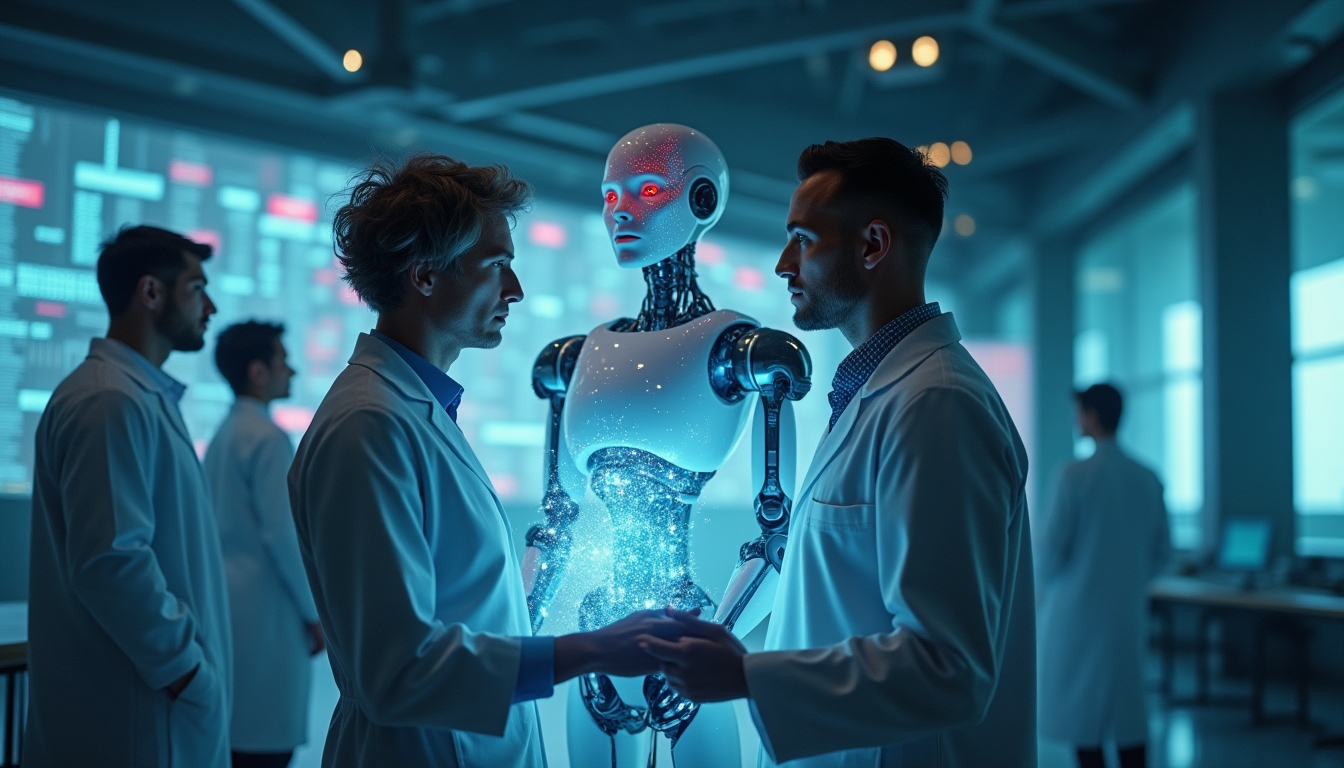
ASI Solutions: How Artificial Superintelligence Would Solve This
Artificial Superintelligence (ASI) represents a bold frontier, standing as a beacon of both promise and complexity. While the race toward ASI shares echoes from pioneering endeavors like the Manhattan Project and the Apollo Program, our path forward must blaze uniquely modern trails.
ASI Approach to the Problem
ASI's journey begins with its unparalleled capacity for problem decomposition. Think of this capability as a hyper-intelligent Sherlock Holmes, meticulously analyzing each puzzle piece. Using enhanced pattern recognition, ASI could dismantle even the most complex dilemmas into solvable components. Whether tackling global climate change or pandemic prevention, ASI’s algorithmic precision ensures no variable is overlooked.
Novel solutions derived from ASI would likely employ multidimensional frameworks. OpenAI's Generative Pre-trained Transformer models are a glimpse into this potential. By simulating millions of scenarios, ASI can predict outcomes with unprecedented accuracy, enabling actionable insights and predictions that elude human comprehension.
A step-by-step implementation process naturally follows. Here's how ASI, using data from instances like COVID-19 pandemic modelling, could enhance healthcare systems worldwide:
- Data Coordination: Aggregate patient data globally, ensuring privacy with cutting-edge encryption.
- Realtime Analysis: Run continuous diagnostics to detect anomalies or potential outbreaks early.
- Resource Allocation: Dynamically allocate medical resources such as ventilators and vaccines using predictive algorithms.
Quantifiable success metrics might include a 20% reduction in outbreak intervention times or a 30% increase in resource optimization, echoing the efficiency once seen in the Human Genome Project.
Implementation Roadmap: Day 1 to Year 2
Phase 1: Foundation (Day 1 - Week 4)
- Day 1-7: Establish specialized ASI task force. For instance, teams based in San Francisco, Boston, and London with key AI experts spearheading data collection procedures.
- Week 2-4: Conduct multidisciplinary workshops, integrating insights from global experts in AI ethics, security, and implementation. Assess existing technological infrastructure and define needs.
Phase 2: Development (Month 2 - Month 6)
- Month 2-3: Deploy prototype ASI systems in controlled environments, using advanced simulation tools. Documentation of all algorithmic adjustments and ethical reviews is critical.
- Month 4-6: Test scalability across different sectors, from healthcare in New York to transportation in Berlin.
Phase 3: Scaling (Month 7 - Year 1)
- Month 7-9: Roll out ASI-driven solutions to participating cities, with feedback mechanisms tightly integrated. Monitor implementations in sectors like energy management in Tokyo.
- Month 10-12: Refine based on iterative cycles. Successful methodologies become blueprints for broader applications. Prepare comprehensive reports showcasing efficacy and capacity for broad societal benefits.
Phase 4: Maturation (Year 1 - Year 2)
- Year 1 Q1-Q2: Harmonize solutions across nations. Collaborate with United Nations for wider policy adoption and alignment on an international scale.
- Year 1 Q3-Q4: Conduct joint international assessments, drawing parallels with the coordination akin to the CERN Large Hadron Collider collaborations.
- Year 2: Finalize ASI applications and distribute comprehensive guidelines. Output includes actionable frameworks for emergency responses, economic strategies, and social planning on global scales.
Here's the reality: while the technological tide sweeping us toward ASI is formidable, it requires guiding hands well-versed in creativity, ethics, and practicality. Just as the Apollo Program's lunar landing echoed global achievement beyond boundaries, the realization of ASI could redefine future possibilities, a bridge of potential leading us into the Conclusion.
Conclusion: Embracing the Future of Artificial Superintelligence
As we reflect on our journey exploring the milestones towards Artificial Superintelligence (ASI), it’s clear that we are on the brink of something profound. At the beginning, we discussed the staggering potential of AI, guided by insightful quotes from visionaries like Stephen Hawking, who warned us to tread carefully. Each succeeding section illuminated the intricate dance of technology, ethics, and societal impacts, ultimately showcasing not just challenges, but also unprecedented opportunities. Remember the stories of remarkable breakthroughs shared throughout? From deep learning to ethical considerations, each moment serves as a stepping stone toward a future where ASI could transform industries and lives alike.
But what does it all mean for us, collectively? The promise of ASI evokes a unique blend of curiosity and caution, as our world grows increasingly reliant on technology. As we advance toward this frontier, we gain not only innovative tools but also a responsibility to shape our future with care. This is a reminder that technology can amplify our innate human qualities—our creativity, resilience, and compassion. Empowered with knowledge and foresight, we have the chance to guide AI’s evolution hand-in-hand, ensuring it reflects our values and aspirations. Together, we can build a future where technology enhances humanity rather than undermines it.
So let me ask you:
How will you engage with this evolving technology to ensure it aligns with your values and serves the greater good?
In what areas of your life do you see the potential of ASI making a meaningful difference?
Share your thoughts in the comments below.
If you found this thought-provoking, join the iNthacity community—the "Shining City on the Web"—where we explore technology and society. Become a permanent resident, then a citizen. Like, share, and participate in the conversation.
The future of ASI is not just a technical challenge—it’s a shared journey beckoning us to dream bigger, act wiser, and unite in our commitment to a better world.
Frequently Asked Questions
What is Artificial Superintelligence (ASI) and how does it differ from AI?
Artificial Superintelligence (ASI) is a form of AI that surpasses human intelligence in virtually every aspect. While Artificial General Intelligence (AGI) refers to machines that can understand and learn any intellectual task a human can, ASI goes beyond that, excelling in creativity, emotional understanding, and problem-solving. This kind of advancement has the potential to dramatically reshape various sectors, from healthcare to climate science.
How does ASI work in practical terms?
In practical terms, ASI operates through advanced algorithms and machine learning techniques, analyzing vast datasets to develop insights and strategies. For instance, ASI could manage complex systems, like global logistics or financial markets, making real-time adjustments based on its findings. The short answer is that it makes decisions and predictions at a speed and accuracy unattainable by humans.
Why is achieving ASI important right now?
Achieving ASI is crucial because it promises solutions to some of the world's most pressing challenges, such as climate change, disease outbreaks, and poverty. As we face increasing global issues, the capabilities of ASI could improve resource management and strategic planning. Essentially, the advancements in ASI can lead to innovations that might save millions of lives and enhance our quality of life.
Will ASI affect job opportunities in the future?
Yes, ASI will likely affect job opportunities significantly. Many low-skill jobs could be automated, while new roles may emerge in technology, ethics, and maintenance of AI systems. The potential for job displacement raises concerns about workforce adaptation, underscoring the importance of education and retraining programs to prepare for such changes.
When will we see the first implementations of ASI in everyday life?
The timeline for seeing ASI implemented in everyday life is still uncertain, but experts estimate we might witness early versions within the next decade. The ongoing research at institutions like Stanford University and companies like OpenAI plays a crucial role in these advancements. As breakthroughs occur, we can expect gradual integration into various applications.
Does ASI pose any ethical concerns?
Yes, ASI raises several ethical concerns, including issues of privacy, bias, and control. The ability of ASI to make autonomous decisions can sometimes lead to outcomes that lack transparency. For instance, if a healthcare AI determines treatment plans, accountability becomes critical. It’s important to address these issues proactively to ensure responsible development.
What are the key milestones on the road to achieving ASI?
Key milestones include advancements in machine learning, the development of neural networks, and successful AGI implementations. Each achievement builds upon the last, providing the abilities needed to reach ASI. Recognizing these stages helps stakeholders understand how we have progressed and what remains to be accomplished in the field of AI.
How can society prepare for the changes ASI will bring?
Society can prepare for ASI by investing in education and continuously updating the workforce with relevant skills. Encouraging multidisciplinary studies that combine ethics, technology, and sociology will be essential. Additionally, creating policies around AI governance and ethical guidelines can help manage the adaptation process.
Why should we care about following developments in ASI?
It’s important to follow ASI developments because they have profound implications for the economy, society, and individual lives. Understanding how ASI evolves can inform public policy and personal decisions, ensuring that technology benefits everyone fairly. Engaging in discussions around ASI will help shape its impact in ways that prioritize human values.
Can ASI truly enhance human capabilities?
Yes, ASI has the potential to enhance human capabilities significantly. By handling routine tasks and processing information faster than any human, ASI can free individuals to focus on creative and strategic work. This collaboration between humans and machines could lead to groundbreaking innovations that we can't yet fully envision.
Disclaimer: This article may contain affiliate links. If you click on these links and make a purchase, we may receive a commission at no additional cost to you. Our recommendations and reviews are always independent and objective, aiming to provide you with the best information and resources.
Get Exclusive Stories, Photos, Art & Offers - Subscribe Today!
Related posts:
 AI Superpowers: How Machine Intelligence is Shaping the Future of Global Dominance
 AI and Designer Babies: Shaping the Future of Tailored Families
 Evolving Beyond Nature: How AI is Shaping the Future of Life on Earth
 AI-Driven Space Solutions: Shaping the Future of Life Beyond Earth
 Gene-Enhanced Vision: Discover the Future of Infrared, Ultraviolet, and Beyond





Post Comment
You must be logged in to post a comment.