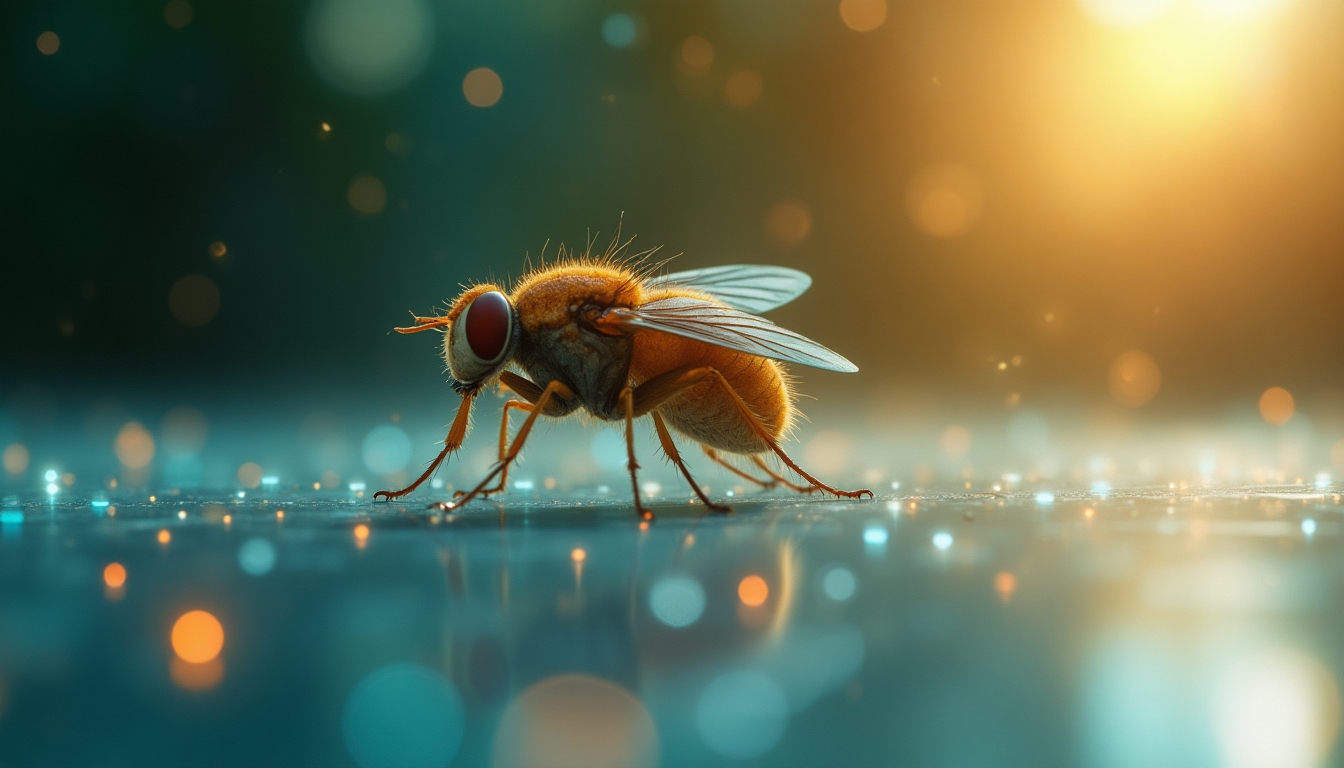
Imagine a future where the lines between machine and biology blur to the point that virtual creatures behave indistinguishably from real ones. That's not the distant narrative of a science-fiction story but a stepping stone we have reached today. A groundbreaking development by a company called Eon Systems has taken the scientific community by storm, setting the stage for a potential redefinition of our approach toward Artificial General Intelligence (AGI).
iN SUMMARY
- 🧠 A company replicated a fruitfly brain digitally, allowing a virtual fly to walk without prior instruction.
- 🔬 This approach is distinct from current AI training methods
- ⚙️ Limitations remain, particularly involving chemical interactions within the brain.
- 🚀 The implication could alter the path toward AGI and raise philosophical questions about consciousness.
The Advent of Digital Consciousness
Let me explain. Eon Systems, led by scientists like Dr. Alex Whistner with expertise from institutions such as Harvard University and MIT, has managed a feat never before achieved at this scale. They scanned the complete brain of a fruitfly, recreating its neuronal wiring in a computer simulation. This wasn’t a simple copy-paste project; it was a years-long endeavor involving electron microscopes and countless computational processes, culminating in a real-time, lifelike simulation.
Understanding the Science: A Connectome's Role
The process began with the creation of a "connectome"—think of it as a detailed wiring diagram of the fly's brain. This map includes 125,000 neurons and 50 million connections (Nature, https://nature.com). Although this number pales in comparison to the human brain's 86 billion neurons, the achievement underscores the sheer complexity and labor involved.
The digital reconstruction resulted in a simulation where the virtual fly exhibited behaviors such as walking and even grooming without any prior training or instruction, setting it apart from existing AI models that rely heavily on data-driven learning and reinforcement training. This simulation has moved beyond mere imitation; it represents the real thing operating on a different platform.
Breaking Down the Process
- Step 1: Taking the real fly brain and slicing it into incredibly thin layers.
- Step 2: Employing machine learning to understand different types of brain cells and their roles.
- Step 3: Recreating a virtual fly body in a physical simulation environment.
- Step 4: Connecting the virtual brain to a virtual body, enabling interaction with a simulated world.
Limitations and Philosophical Questions
Does this mean we're on the brink of achieving AGI? Not quite. As highlighted by skeptics, the current simulation lacks vital biological elements like neurochemicals, essential for modulating experiences such as motivation or pleasure. Additionally, about half the cells in a brain, known as glial cells, are missing from this model, serving essential supportive and functional roles alongside neurons.
Perhaps the most profound barrier, however, lies in the static nature of the simulation. It's based on a snapshot of a now-defunct organic brain, incapable of learning or adapting—a stark contrast to the dynamic nature of living brains.

Bridging the Gap: From Fly to Human
Nonetheless, Eon’s success signifies something promising for future aspirations of human brain emulations. It's crucial to understand that this is merely a proof of concept. It confirms that if one can replicate neural architecture accurately, one might induce lifelike behavior from an artificial platform. The leap to a human brain is substantial yet not inconceivable as computational techniques and technologies advance.
A Different Path to AGI?
While there's a long road ahead before this parallel technology can scale up from flies to complex beings, it offers a tantalizing glimpse into an alternative path to intelligence. Unlike AI that learns from data or reinforcement, this method taps into the intrinsic design of nature's creations.
Conclusion: Pondering the Potential
Could Eon Systems’ breakthrough influence AGI development on a larger scale? What might be the implications of digital consciousness on our worldview, ethics, and understanding of our own minds? Join the discussion and explore the broader societal impact by staying connected to iNthacity's city portals and science news. I invite you to share your thoughts and curiosities. How do you see the future of AI evolving, and what responsibilities do we carry in shaping it responsibly?
Become a part of the iNthacity community and contribute your voice. We look forward to your comments, insights, and lively discussions to continue exploring the boundaries of technology and consciousness. If a fruitfly's brain could rewrite the narrative, imagine what wonders lie within our grasp!
Remember, every great leap in science started with a question—and perhaps a fly.
Wait! There's more...check out our gripping short story that continues the journey: Winds of the North

Disclaimer: This article may contain affiliate links. If you click on these links and make a purchase, we may receive a commission at no additional cost to you. Our recommendations and reviews are always independent and objective, aiming to provide you with the best information and resources.
Get Exclusive Stories, Photos, Art & Offers - Subscribe Today!
Related posts:
 This Company Just Unveiled a Radical New Form Of AI (Liquid Foundation Models)
 AI Breakthrough: Why This Video Model is Terrifying Experts and Viewers Alike
 The Shocking OpenAI Leak That Will Redefine GPT-6 Forever
 OpenAI And Microsoft Just Made A Game-Changing AI Breakthrough For 2025 Technology
 Revolutionary ‘Mirror-Proof’ Drugs: Geneva Chemists Create Millennia-Stable Chirality Breakthrough!





Post Comment
You must be logged in to post a comment.