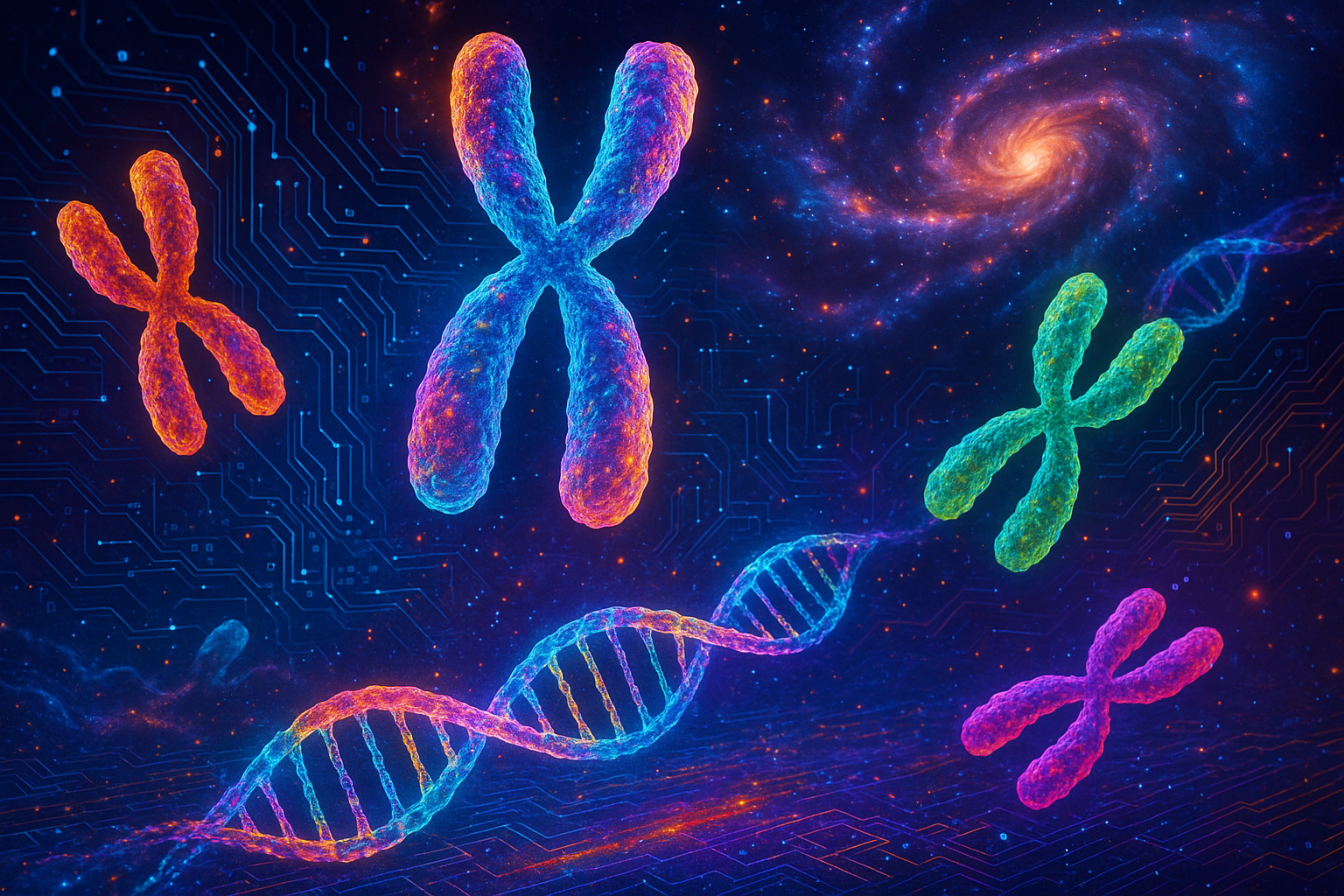
In a groundbreaking advancement for genetic research, a team of scientists has developed a remarkable AI tool that can predict the 3D shape of chromosomes within individual cells. This innovative technology provides a fresh perspective on our genes, unveiling how they function and interact with one another. This matters not just to scientists but to everyone, as understanding our genetic makeup is essential in fields like medicine, agriculture, and personalized treatments.
The AI tool, as noted in a recent Science Daily article, opens new avenues in research by accurately mapping the complex structures of chromosomes. Why should you care? Well, the knowledge gained from this tool could lead to significant advancements in how we understand diseases, traits, and even evolution.
The Need for 3D Visualization of Chromosomes
For decades, scientists have studied the linear arrangement of DNA, but this approach cannot fully capture the real-world complexities of how genes are organized in three-dimensional space within the nucleus of a cell. Imagine trying to understand a tangled ball of yarn by only looking at a single strand! The AI technology developed helps us visualize these complex structures, allowing for a clearer understanding of genetic functioning.
Breaking Down How the AI Tool Works
This cutting-edge tool uses machine learning algorithms to analyze extensive genomic datasets. By feeding the AI vast amounts of existing genetic data, researchers give it the ability to learn and make predictions about the 3D shapes of chromosomes. The tool examines various patterns of gene expression and physical distances between DNA regions, thus giving a holistic view of how our chromosomes are formed.
Here’s a simplified breakdown of the process:
- Data Collection: Gather vast datasets of genetic information.
- Analyzing Patterns: The AI surveys how genes express themselves and how they are spatially located.
- 3D Prediction: The AI creates a predictive model showing the 3D structure of chromosomes.
Why This Matter to Different Fields
The ramifications of this technology reach far beyond the lab. Let’s explore some key areas where this AI tool can make a positive impact:
- Medical Research: Understanding genome structure can lead to breakthroughs in identifying the causes of genetic disorders.
- Cancer Treatment: Knowing how certain genes interact can guide personalized therapies and enhance treatment efficacy.
- Agricultural Innovation: This knowledge might help genetically modify crops for better yields or disease resistance.
- Evolutionary Biology: Insights into chromosome structure may shed light on evolutionary processes and species development.
Potential Limitations and Ethical Concerns
While the potential benefits are astounding, it’s crucial to consider the challenges that may accompany this research. Ethical concerns regarding genetic manipulation and privacy arise as the distinction between natural and AI-derived genetic models blurs. Therefore, ongoing discussions regarding regulation and ethical guidelines in genetic research must occur alongside technological advancements.
A Call for Community Engagement
This revolutionary AI tool is a testament to what collaboration and innovation can achieve in transforming our understanding of genetics. However, it is essential for the community—including scientists, ethicists, and the public—to engage in open conversations about the implications of these advancements and ensure that they benefit humanity as a whole.
Final Thoughts: Where Will This Lead Us?
As we stand at the intersection of technology and biology, the way forward seems to hold immense possibilities. How we interact with this new information will define the future not only of genetic research but also of the very fabric of life itself. What do you think about these advancements? Are you excited or concerned about what AI means for understanding our genetics? Join the discussion in the comments below!
At iNthacity, we invite you to continue exploring this fascinating subject. Apply to become a permanent resident, then a citizen of iNthacity: the "Shining City on the Web" by joining our community. Like, share, and participate in the ongoing debates as we dive into the intricate world of technology and its impact on us!
Disclaimer: This article may contain affiliate links. If you click on these links and make a purchase, we may receive a commission at no additional cost to you. Our recommendations and reviews are always independent and objective, aiming to provide you with the best information and resources.
Get Exclusive Stories, Photos, Art & Offers - Subscribe Today!
Related posts:
 Revolutionary 2D Quantum Sensor Breakthrough Unveils New Opportunities for Enhanced Magnetic Field Detection
 Microsoft’s AI Security Chief Unintentionally Reveals Walmart’s Ambitious AI Plans After Protest
 The Immortal Cell: How AI is Revolutionizing the Fight Against Cellular Aging
 ChatGPT Isn’t Even The Best AI Tool: Top Alternatives You Need to Know
 Clicky: The Ultimate Web Analytics Tool You Didn’t Know You Needed





Post Comment
You must be logged in to post a comment.