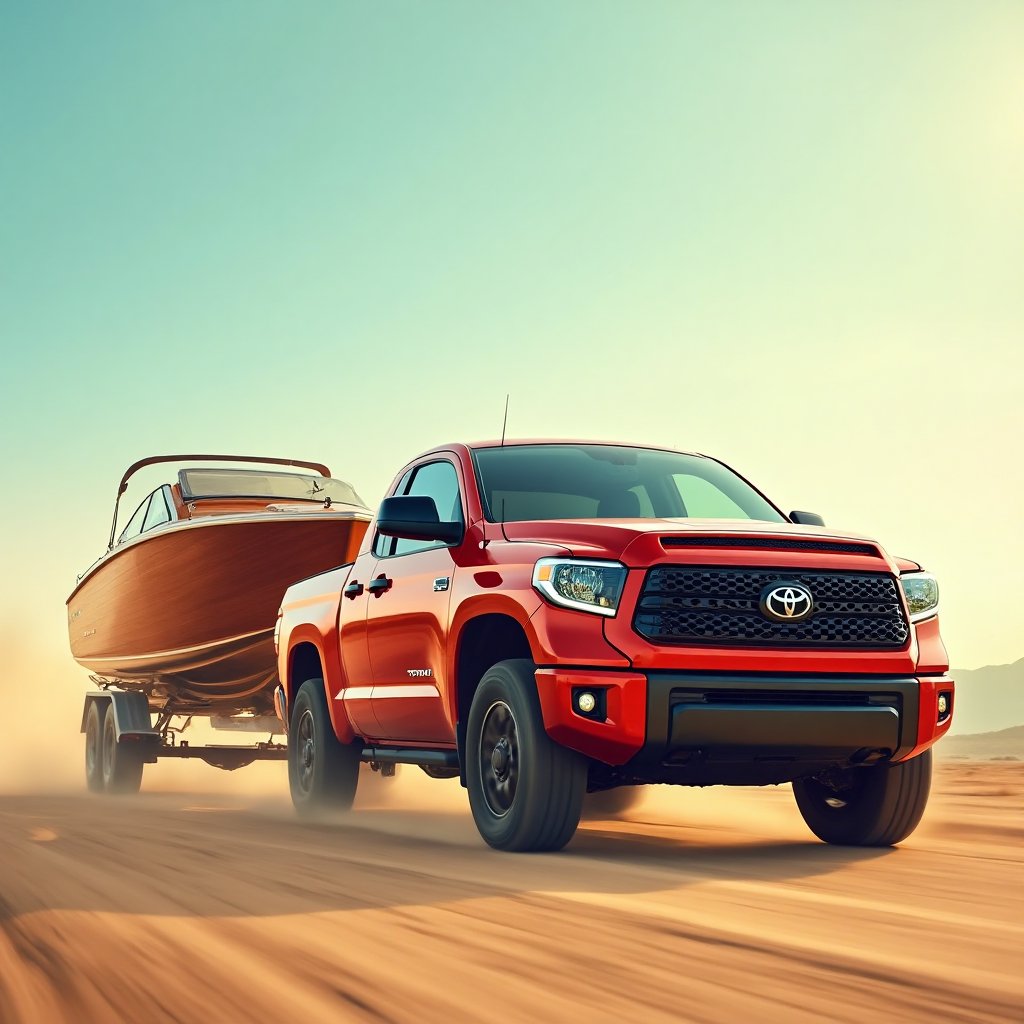
What if your truck could do more than just haul groceries? What if it could pull a boat, a trailer, or even a small house? The Toyota Tundra has been turning heads for years, not just for its rugged good looks but for its ability to handle heavy loads with ease. Whether you're a weekend warrior or a full-time contractor, understanding the Tundra's towing capacity is key to unlocking its full potential. And let's be honest, who doesn’t want a truck that can do it all?
Renowned automotive journalist Edmunds has praised the Tundra for its reliability, while MotorTrend has highlighted its impressive towing capabilities. Even Popular Mechanics has weighed in, calling it a "workhorse for the modern age." But what makes the Tundra stand out in a sea of trucks? It’s not just about raw power; it’s about smart engineering and thoughtful design.
In this guide, we’ll break down everything you need to know about the Toyota Tundra’s towing capacity. From its max load specs to how it compares to competitors, we’ve got you covered. So, buckle up and get ready to discover why the Tundra might just be the truck of your dreams.
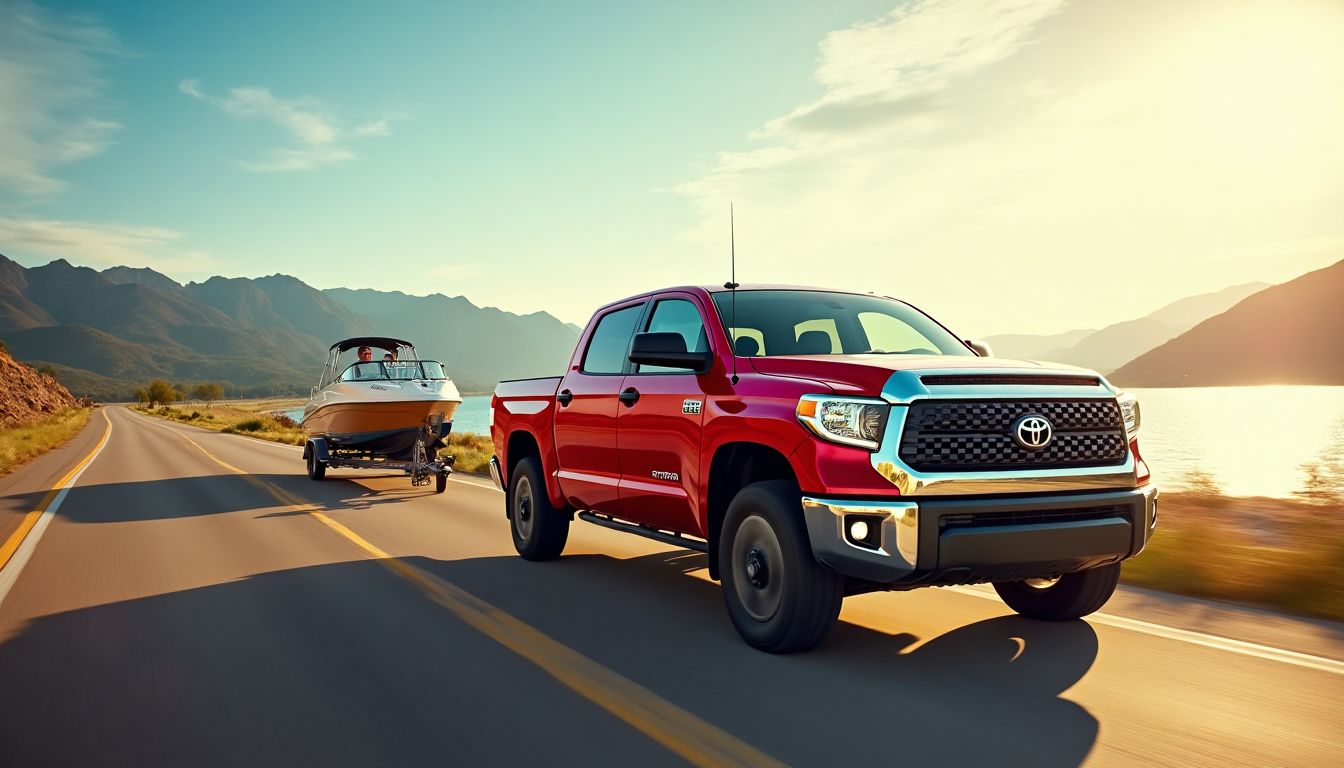
The Toyota Tundra can tow up to 12,000 pounds, making it one of the most capable trucks on the market, thanks to its robust V8 and hybrid engines, advanced towing technologies, and durable build.
What is Towing Capacity and Why Does It Matter?
Before we dive into the specifics of the Toyota Tundra, let’s start with the basics. Towing capacity is the maximum weight a vehicle can safely pull. It’s not just about how much your truck can drag down the road; it’s about doing it safely and efficiently. Think of it like this: you wouldn’t ask a Chihuahua to pull a sled, right? The same logic applies to trucks.
Several factors influence towing capacity, including engine power, transmission type, frame strength, and cooling systems. The Toyota Tundra excels in all these areas, making it a top contender in the towing game. Its reinforced frame ensures stability, while its integrated trailer brake controller and towing modes make hauling heavy loads a breeze.
How Does the Tundra Stack Up?
When it comes to towing, the Toyota Tundra is no slouch. With a maximum towing capacity of 12,000 pounds, it’s in the same league as heavy hitters like the Ford F-150 and the Chevrolet Silverado. But what sets the Tundra apart is its reliability. While other trucks might have flashy features, the Tundra is built to last, making it a favorite among truck enthusiasts.
Real-world applications of the Tundra’s towing capabilities are just as impressive. Whether you’re hauling a boat for a weekend getaway, an RV for a cross-country adventure, or heavy equipment for a job site, the Tundra has you covered. And don’t just take our word for it—Tundra owners rave about their experiences. One owner even joked, "It’s like having a superhero in your driveway."
Tundra Towing by Engine Type
Not all Tundra engines are created equal when it comes to hauling your toys (or your mother-in-law’s antique armoire). Let’s break down how each powertrain handles the heavy lifting.
V8 Engine Performance
The Toyota Tundra’s 5.7L V8 is like that gym buddy who insists on deadlifting your warmup weight—reliable, slightly old-school, and annoyingly strong. With a max towing capacity of 10,200 lbs, it’s perfect for:
- Pulling a mid-sized RV to Yellowstone
- Hauling a bass boat without breaking a sweat
- Pretending you’re in a truck commercial while merging onto the highway
Pros: Simple mechanics, widespread service availability, and that satisfying V8 growl.
Cons: Thirstier than a college kid at a keg stand (14-17 MPG highway).
i-FORCE MAX Hybrid Engine
Toyota’s hybrid system is like giving your truck a PhD in efficiency. The i-FORCE MAX combines a twin-turbo V6 with an electric motor to deliver:
- 12,000 lbs of towing capacity (enough for a luxury Airstream)
- Instant torque for smoother hill climbs
- 20% better fuel economy than the V8 when unladen
Fun fact: The electric motor’s torque fills in the turbo lag gaps, making it feel like you’ve got a superhero sidekick under the hood.
Choosing Your Engine
Ask yourself:
- Do you tow often or just occasionally? (Hybrid shines for frequent towers)
- Is your wallet married to gas stations? (V8 owners: invest in Shell stock)
- Do you enjoy smugly explaining hybrid tech at tailgates? (No judgment)
How Hybrid Tundras Perform When Towing
Skeptics said hybrids couldn’t tow. The Tundra i-FORCE MAX responded by dragging their doubts behind it at 75 mph. Here’s the science (and street cred):
Hybrid Mechanics 101
The system uses a 48-hp electric motor between the engine and transmission. When you stomp the pedal:
- Electric torque kicks in instantly (0.5 seconds faster than turbo spooling)
- Gas engine takes over at higher speeds
- Regenerative braking recharges the battery downhill (free energy!)
Real-world test: TFL Truck towed 9,200 lbs up Colorado’s I-70 with the hybrid maintaining 65 mph—no sweatier than a yoga instructor in a sauna.
Fuel Economy Paradox
Towing with any truck murders MPG, but the hybrid’s secret weapon is off-load efficiency:
| Scenario | V8 MPG | Hybrid MPG |
|---|---|---|
| Empty highway cruise | 17 | 22 |
| Towing 8,000 lbs | 9 | 10 |
Translation: The hybrid’s savings add up if you’re not always towing—like buying bulk toilet paper even though you live alone.
Long-Term Towing Health
Hybrid skeptics worry about battery degradation. Toyota’s countermeasures:
- Battery cooling system keeps cells at optimal temps
- 10-year/150,000-mile warranty on hybrid components
- Pro tip: Avoid parking at Death Valley in July
Bottom line: This isn’t your Prius-owning neighbor’s hybrid. It’s a Tundra that bench-presses.
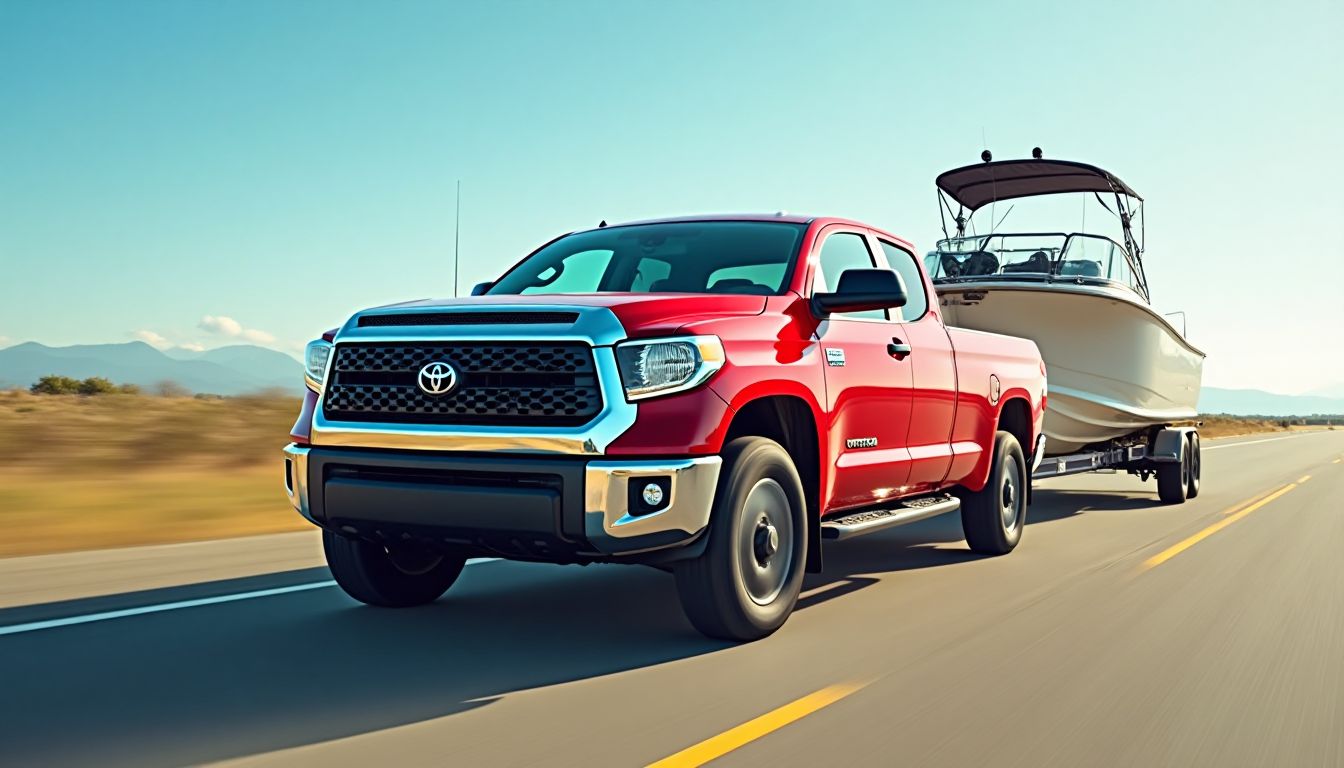
Ideal Trailers for the Tundra
When it comes to towing, the Toyota Tundra is a versatile beast, but pairing it with the right trailer is key to maximizing its potential. Whether you’re hauling a boat for a weekend adventure or moving heavy equipment for work, the Tundra can handle it—if you choose the right setup. Let’s break down the types of trailers that work best with the Tundra and how to match them to your needs.
Types of Trailers
The Tundra is compatible with a wide range of trailers, each suited for different purposes. Here’s a quick overview:
- Utility Trailers: Perfect for hauling tools, furniture, or landscaping materials. These are lightweight and versatile, making them ideal for everyday use.
- Boat Trailers: Designed to transport boats, these trailers are built to handle watercraft of various sizes. The Tundra’s towing capacity makes it a great match for larger boats.
- RV Trailers: For those who love road trips, RV trailers are a must. The Tundra can comfortably tow mid-sized RVs, ensuring a smooth ride for your adventures.
- Flatbed Trailers: These are ideal for heavy-duty tasks, like transporting construction equipment or vehicles. Their open design allows for easy loading and unloading.
Matching Trailers to Tundra Models
Not all Tundra models are created equal when it comes to towing. Here’s how to match your trailer to your Tundra:
- V8 Tundras: With a towing capacity of up to 10,200 pounds, the V8 is perfect for mid-sized trailers like utility and boat trailers. It’s a reliable choice for occasional towing.
- Hybrid Tundras: The hybrid model, with its 12,000-pound capacity, is better suited for heavier loads like large RVs and flatbed trailers. Its instant torque and fuel efficiency make it a standout for frequent towers.
For example, if you’re towing a Keystone RV, the hybrid Tundra is your best bet. On the other hand, a Shoremaster boat trailer pairs well with the V8 model.
Towing Accessories
To get the most out of your Tundra’s towing capabilities, you’ll need the right accessories. Here’s a list of essentials:
- Hitch Systems: A sturdy hitch is the foundation of safe towing. Consider a weight distribution hitch for heavier loads.
- Trailer Brakes: These are crucial for stopping power, especially when towing heavy trailers.
- Mirror Extensions: Improve visibility with extended mirrors, making it easier to see around your trailer.
Brands like Curt Manufacturing and Reese Towpower offer high-quality towing accessories that are compatible with the Tundra.
FAQs
Got questions about the Toyota Tundra’s towing capabilities? We’ve got answers. Here are some of the most common queries, answered in plain language.
What is the maximum towing capacity of the Toyota Tundra?
The Tundra can tow up to 12,000 pounds when equipped with the hybrid engine. The V8 model maxes out at 10,200 pounds. Both are impressive, but the hybrid takes the crown for heavy-duty towing.
Can the Tundra tow a fifth-wheel trailer?
Yes, but you’ll need the right setup. Fifth-wheel towing requires a specialized hitch, which can be installed in the Tundra’s bed. Make sure to check the weight limits and ensure your Tundra is equipped to handle the load.
How does the Tundra’s towing capacity compare to other trucks?
The Tundra holds its own against competitors like the Ford F-150 and Chevrolet Silverado. While the F-150 can tow up to 14,000 pounds in some configurations, the Tundra’s hybrid model offers a competitive 12,000-pound capacity with the added benefit of hybrid efficiency.
What is the payload capacity of the Tundra?
Payload capacity ranges from 1,440 to 1,940 pounds, depending on the model. This is the weight your Tundra can carry inside the truck itself, including passengers and cargo.
Does the hybrid Tundra require special maintenance for towing?
While the hybrid Tundra is built for heavy towing, regular maintenance is key. Keep an eye on the hybrid system’s performance, and follow the manufacturer’s guidelines for towing. This ensures your Tundra stays in top shape for years to come.
Harnessing AI for the Future of Towing
The future of towing is being reshaped by Artificial Intelligence (AI). From optimizing vehicle design to enhancing real-time towing assistance, AI is revolutionizing how we approach heavy hauling. Let’s explore how AI can tackle towing challenges and provide innovative solutions for truck owners and manufacturers alike.
AI in Vehicle Design
AI is transforming how trucks like the Toyota Tundra are designed and engineered. By analyzing vast amounts of data, AI can optimize engine performance, frame strength, and even aerodynamics to maximize towing capacity. For instance, companies like Toyota are using AI-driven simulations to test how different materials and configurations perform under stress. This ensures that the Tundra can handle heavy loads without compromising safety or efficiency. Additionally, AI can help engineers identify the best hybrid powertrain configurations, blending electric and gas power for towing-specific needs.
AI-Powered Towing Assistance
Imagine having a co-pilot that monitors your load in real time, suggests the safest routes, and alerts you to potential hazards. AI-powered towing systems are making this a reality. Smart technologies, such as Tesla’s Autopilot, are being adapted for trucks to provide seamless towing experiences. These systems can adjust braking power, optimize fuel consumption, and even predict how weather conditions might affect your journey. For novice towers, AI-driven tutorials and real-time feedback can make towing less intimidating, while experienced drivers can benefit from enhanced precision and control.
Predictive Maintenance
One of the most significant benefits of AI is its ability to predict and prevent issues before they occur. Using sensors and machine learning algorithms, AI can monitor the Tundra’s engine, transmission, and cooling systems to detect signs of wear and tear. Companies like Caterpillar are already using AI for predictive maintenance in heavy machinery, and similar systems can be implemented for trucks. This not only extends the vehicle’s lifespan but also reduces the risk of breakdowns during critical towing tasks.
Revolutionizing Towing: An Action Schedule/Roadmap
Here’s a detailed roadmap for integrating AI into towing, inspired by the meticulous planning of historical projects like the Manhattan Project. This schedule leverages today’s technology and innovative thinking to create a future-ready towing ecosystem.
Day 1-30: Research and Development
- Form interdisciplinary teams of engineers, data scientists, and automotive experts.
- Collaborate with leading AI companies like OpenAI and DeepMind to develop specialized algorithms for towing.
- Analyze real-world towing data to identify common pain points and areas for improvement.
Month 2-6: Prototyping and Testing
- Develop AI-powered prototypes for towing assistance and predictive maintenance systems.
- Conduct extensive testing on Toyota Tundra models to refine these technologies.
- Engage with truck owners and drivers for feedback and iterative improvements.
Month 7-12: Implementation and Scaling
- Integrate AI systems into the Tundra’s manufacturing process, ensuring they are cost-effective and scalable.
- Launch pilot programs in key markets to demonstrate the benefits of AI-enhanced towing.
- Partner with towing accessory manufacturers to create AI-compatible products.
Year 2: Expansion and Optimization
- Expand AI towing solutions to other truck models and brands, creating a universal standard.
- Use AI to develop autonomous towing capabilities, enabling trucks to haul loads with minimal human intervention.
- Monitor performance data and continuously optimize AI systems for better efficiency and safety.
The Tundra’s Towing Legacy and the Road Ahead
The Toyota Tundra has long been a symbol of strength and reliability for truck enthusiasts. Its robust towing capacity, combined with cutting-edge technologies like hybrid engines, has set a high standard in the automotive industry. But as we look to the future, the integration of AI promises to take towing to unprecedented heights. Imagine a world where your truck not only hauls heavy loads but also thinks, predicts, and adapts to ensure every journey is safe and efficient.
AI is not just a tool; it’s a paradigm shift. It offers solutions to challenges we didn’t even know we had, from predictive maintenance to autonomous towing. For truck owners, this means more freedom, less stress, and the ability to tackle bigger projects with confidence. For manufacturers, it’s an opportunity to innovate and lead in a rapidly evolving industry.
As we embrace this AI-driven future, questions arise: How will these advancements change the way we work and play? What new possibilities will open up when towing becomes smarter and more intuitive? These are the questions that will shape the next chapter of the Tundra’s legacy—and the future of towing itself.
Ready to join the conversation? Share your thoughts in the comments, and don’t forget to subscribe to iNthacity’s newsletter for more insights and updates. Together, we can build a "Shining City on the Web" where innovation and community thrive.
Toyota Tundra Towing Capacity FAQ: Everything You Need to Know
1. What is the maximum towing capacity of the Toyota Tundra?
The Toyota Tundra can tow up to 12,000 pounds when equipped with the i-FORCE MAX hybrid engine. The standard 5.7L V8 engine can handle up to 10,200 pounds. Towing capacity varies based on:
- Engine type (V8 vs. hybrid)
- Drivetrain (4x2 or 4x4)
- Axle ratio (higher ratios improve towing)
- Trailer hitch setup (weight distribution hitches help with stability)
For exact numbers, check the Toyota Tundra official specs.
2. How does the Tundra’s towing compare to the Ford F-150 and Chevy Silverado?
The Tundra competes closely with the Ford F-150 and Chevrolet Silverado, but each has strengths:
| Truck Model | Max Towing Capacity | Best For |
|---|---|---|
| Toyota Tundra | 12,000 lbs | Heavy-duty towing with hybrid efficiency |
| Ford F-150 | 14,000 lbs | High-tech towing features |
| Chevy Silverado | 13,300 lbs | Diesel engine torque |
The Tundra stands out for reliability, while the F-150 offers more tech, and the Silverado has strong diesel options.
3. Can the Tundra tow a fifth-wheel trailer?
Yes! But you’ll need:
- A fifth-wheel hitch (like the Curt Q24{:target="_blank" rel="noopener noreferrer"})
- A properly reinforced bed (some models need aftermarket support)
- A trailer brake controller (standard in newer Tundras)
Fifth-wheel towing is best for large RVs or horse trailers, but check your payload capacity first!
4. What is the payload capacity of the Tundra?
Payload = how much weight the truck can carry inside (including passengers and cargo). The Tundra’s payload ranges from 1,440 to 1,940 lbs, depending on:
- Engine choice (hybrid models have slightly lower payload due to battery weight)
- Bed length & cab style (CrewMax vs. Double Cab)
- Suspension upgrades (TRD Pro models have reinforced setups)
Always subtract trailer tongue weight (10-15% of trailer weight) from payload!
5. Does the hybrid Tundra require special maintenance for towing?
The i-FORCE MAX hybrid is built for towing, but follow these tips:
- Check battery cooling (hybrids generate extra heat when hauling)
- Use premium fuel (recommended for best performance)
- Monitor transmission temps (especially in hot climates)
- Rotate tires more often (towing wears them faster)
Toyota’s hybrid maintenance guide has full details.
6. What’s the best trailer for a Toyota Tundra?
Here are top trailer matches for the Tundra:
Utility Trailers (up to 7,000 lbs) – Great for ATVs, motorcycles, or construction gear. Travel Trailers (up to 10,000 lbs) – Perfect for family camping trips. Boat Trailers (up to 12,000 lbs) – Ideal for large fishing boats or yachts. Flatbed Trailers (up to 10,500 lbs) – Best for hauling vehicles or heavy equipment.
For heavy loads, consider a gooseneck or fifth-wheel trailer with a weight-distribution hitch.
7. How does the Tundra’s hybrid engine help with towing?
The i-FORCE MAX hybrid gives instant electric torque, which means: Smoother acceleration (no lag when pulling heavy loads) Better fuel economy (saves gas compared to a pure V8) Regenerative braking (helps recharge the battery when slowing down)
It’s like having a turbo boost without the extra gas guzzling!
8. What towing features come standard on the Tundra?
Toyota packs the Tundra with smart towing tech, including:
- Integrated trailer brake controller (no extra parts needed)
- Tow/Haul mode (adjusts shifting for heavy loads)
- 360-degree camera system (helps with hitching up)
- Blind-spot monitoring with trailer detection (safety first!)
Higher trims (like Platinum and TRD Pro) add adaptive cruise control for easier long hauls.
9. Can I tow with a Tundra in extreme weather?
Yes, but take precautions: Winter Towing: Use snow tires, check 4WD mode, and avoid sudden braking. Summer Towing: Watch engine temps, use synthetic oil, and take breaks. High Winds: Slow down, use sway control, and balance your load.
For off-road towing, the TRD Off-Road package adds skid plates and upgraded suspension.
10. Where can I find more Tundra towing tips?
Check out:
Got more questions? Drop them in the comments below!
Wait! There's more...check out our gripping short story that continues the journey: The Flames of Narrative

Disclaimer: This article may contain affiliate links. If you click on these links and make a purchase, we may receive a commission at no additional cost to you. Our recommendations and reviews are always independent and objective, aiming to provide you with the best information and resources.
Get Exclusive Stories, Photos, Art & Offers - Subscribe Today!


Post Comment
You must be logged in to post a comment.