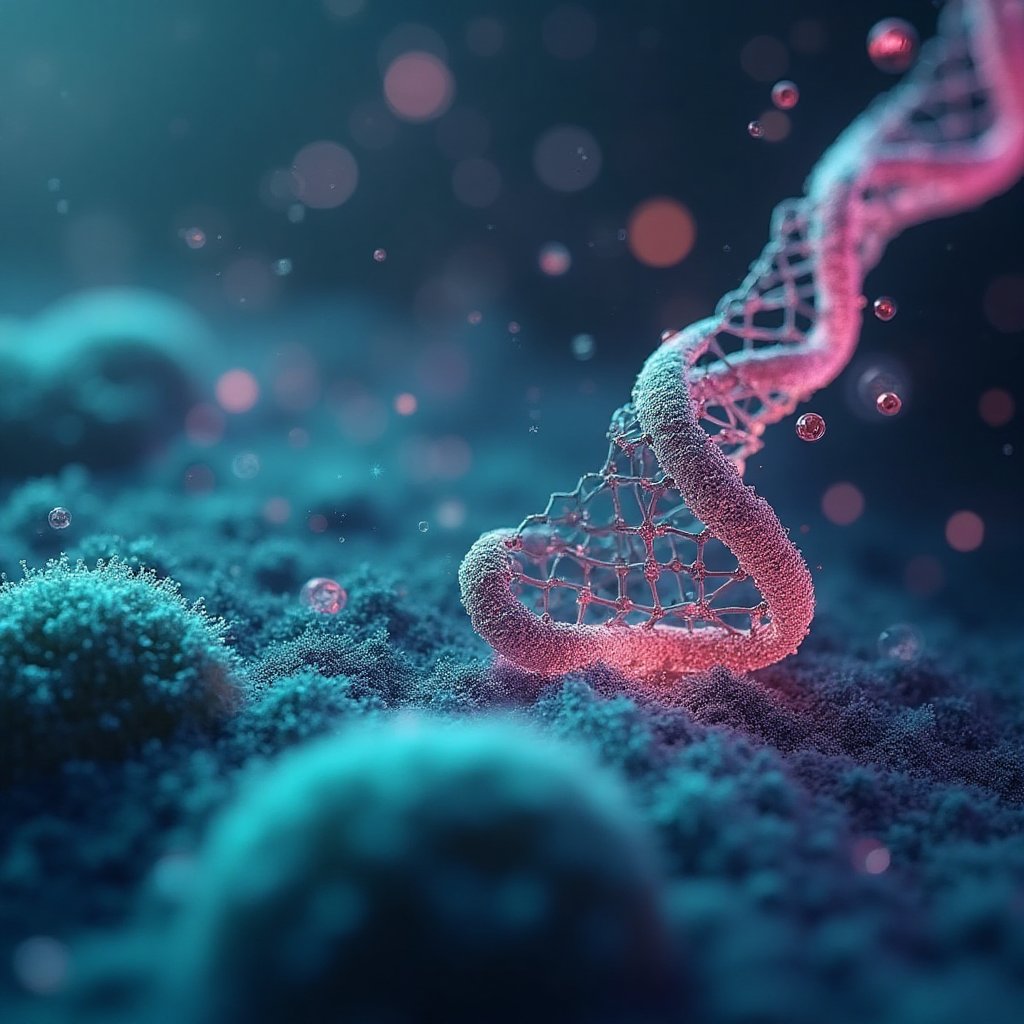
Imagine a world where tiny robots, smaller than a strand of hair, could roam inside your body, delivering life-saving drugs directly to where they’re needed most. Sounds like science fiction, right? Well, thanks to groundbreaking research from the University of Stuttgart, this futuristic vision is becoming a reality. According to a recent study published in Nature Materials, scientists have developed DNA nanorobots that can alter artificial cells, paving the way for revolutionary advancements in medicine and synthetic biology.
The Science Behind DNA Nanorobots
At the heart of this innovation is DNA origami, a technique that allows scientists to fold DNA strands into specific shapes using shorter DNA sequences called "staples." Think of it as nanoscale origami, where researchers can design intricate structures with precision. Prof. Laura Na Liu and her team at the University of Stuttgart have harnessed this technology to create DNA nanorobots capable of controlling the shape and permeability of synthetic cells.
These synthetic cells, known as giant unilamellar vesicles (GUVs), mimic the structure and behavior of living cells. By using DNA nanorobots, the researchers were able to manipulate these GUVs, creating transport channels that allow large molecules to pass through the cell membrane. This breakthrough could revolutionize drug delivery, enabling therapeutic proteins and enzymes to reach their targets more efficiently.
Why This Matters
The implications of this research are staggering. For decades, scientists have struggled to deliver large therapeutic agents across cell membranes effectively. Traditional methods often involve complex and inefficient processes, but DNA nanorobots offer a simpler, more precise solution. "This work is a milestone in the application of DNA nanotechnology to regulate cell behavior," says Prof. Liu.
Imagine a cancer patient receiving a treatment that targets only tumor cells, sparing healthy tissue. Or consider a diabetic patient whose insulin delivery is finely tuned to their body’s needs. These scenarios could become routine thanks to DNA nanorobots. The ability to program these tiny machines to open and close transport channels on demand opens up endless possibilities for personalized medicine.
The Bigger Picture
This research doesn’t just promise better drug delivery; it also challenges our understanding of synthetic biology. As Prof. Stephan Nussberger, a co-author of the study, points out, "The functional mechanism of the DNA nanorobots on GUVs has no direct biological equivalent in living cells." In other words, these synthetic platforms are charting new territory, offering insights that could inspire future innovations.
But the potential doesn’t stop there. Could DNA nanorobots be used to create entirely synthetic organs? Or perhaps they could be deployed to repair damaged tissues at the cellular level? While these questions remain unanswered, the possibilities are tantalizing.
The Challenges Ahead
Of course, no groundbreaking technology comes without hurdles. One major challenge is ensuring the safety and efficacy of DNA nanorobots in living organisms. While GUVs provide a simplified model, real cells are far more complex. Researchers must also address ethical concerns, such as the potential for misuse or unintended consequences.
Another question is scalability. Can these DNA nanorobots be mass-produced cost-effectively? And how will regulatory bodies respond to this new form of therapy? These are just a few of the issues that scientists and policymakers will need to tackle as this technology evolves.
The Role of DNA Origami
DNA origami is the unsung hero of this story. By folding DNA strands into precise shapes, scientists can create structures that interact with their environment in specific ways. In this case, DNA origami allows the nanorobots to change their shape and influence the behavior of synthetic cells.
This technique isn’t just limited to medicine. It has applications in fields like materials science, where it could be used to design self-assembling nanostructures, or in computing, where it could enable the creation of molecular-scale circuits. The versatility of DNA origami makes it a cornerstone of modern nanotechnology.
What’s Next?
The next step for Prof. Liu and her team is to test their DNA nanorobots in more complex biological systems. They’re also exploring ways to refine the design of these nanorobots, making them more efficient and versatile. As Prof. Hao Yan, another co-author of the study, puts it, "Our approach opens up new possibilities to mimic the behavior of living cells. This progress could be crucial for future therapeutic strategies."
For those of us watching from the sidelines, it’s an exciting time to be alive. The fusion of biology and technology is giving rise to innovations that were once the stuff of dreams. And with DNA nanorobots leading the charge, the future of medicine looks brighter than ever.
Join the Conversation
What do you think about the potential of DNA nanorobots? Could they revolutionize medicine as we know it? Or do you have concerns about their safety and ethical implications? Share your thoughts in the comments below!
And don’t forget to become part of the iNthacity community. Apply to become a permanent resident of the "Shining City on the Web", where innovation and conversation thrive. Like, share, and participate in the debate—your voice matters!
Recommended Reading
- For more on DNA origami, check out this book on Amazon.
- Interested in synthetic biology? Explore this comprehensive guide.
- Stay updated on the latest in nanotechnology with this journal.
As we continue to push the boundaries of what’s possible, one thing is clear: the future is now. And it’s powered by DNA.
Disclaimer: This article may contain affiliate links. If you click on these links and make a purchase, we may receive a commission at no additional cost to you. Our recommendations and reviews are always independent and objective, aiming to provide you with the best information and resources.
Get Exclusive Stories, Photos, Art & Offers - Subscribe Today!
Related posts:
 Revolutionary DNA Nanorobots Transform Artificial Cells: A Breakthrough in Targeted Drug Delivery and Synthetic Biology
 AI and the Quest for Eternal Youth: How Artificial Intelligence is Transforming Anti-Aging and Cellular Rejuvenation
 Artificial Black Holes: How AI Could Revolutionize Cosmic Singularity Simulations and Unlock Extreme Physics
 Researchers Engineer a Herpes Virus to Activate T Cells for Enhanced Immunotherapy
 The Immune Revolution: Empowering Cells to Combat Any Disease




Post Comment
You must be logged in to post a comment.