
Introduction: The Rise of AI in Education
The mind is not a vessel to be filled, but a fire to be kindled. – Plutarch. In today's fast-paced world, Plutarch's words ignite a debate hotter than a summer in Texas. While education aimed to spark curiosity in young minds, AI in classrooms could just serve them automated lesson plans on a silicon platter. So what's the catch?
By 2025, the traditional classroom staples – chalk dust and apple-laden desks – are mingling with AI. Schools aren't just sites of learning anymore; they're testbeds for futuristic technologies. With the likes of OpenAI leading the helm of AI innovation, educators face a big question. Are robots here to edge out our teachers, or just shake up their chalky old routine?
Authors like Sir Ken Robinson and academics such as Salman Khan have long championed personalized learning. Yet, as tech titans dive into education, one wonders: Can algorithms match the quirky wisdom of a human educator? Will they "know" when a student needs that extra "Aha!" moment or a pat on the back? Let's explore if AI is setting the stage for a teacher's curtain call or a standing ovation in support.
Artificial Intelligence (AI) in education is revolutionizing learning by creating personalized experiences, from virtual tutors to adaptive learning systems. However, there's concern over it potentially replacing human educators, raising questions about empathy and the essence of teaching.
The Evolution of AI in Education
Artificial Intelligence hasn't just appeared overnight like some tech genie. It's been building a presence in classrooms for over a decade, starting modestly but evolving into something that might just change the way our kids learn forever.
Historical Context
Once upon a time – let's say the '60s – we saw the first sprouts of computer-aided instruction. Not flashy, but a start. Fast forward to now, and we have intelligent tutoring systems that feel like something right out of a sci-fi novel. This growth reflects a steady trajectory from those humble beginnings.
Current Applications
Today, platforms like Duolingo and Google Classroom are essentially household names for any student or educator. We also have AI-assessment tools that feel like having a digital teaching assistant neatly tucked in your computer. These innovations are shaping educational outcomes and may redefine the imagery of classroom success, but do they support or supplant your friendly neighborhood teacher?
Future Trends
Experts like Andrew Ng expect great leaps in machine learning and natural language processing over the next few years. Imagine your math homework with customized help – perfect for you – created by an interface that understands how you think. Sounds like magic? Or maybe just the next big thing in classrooms.

Personalized Learning: A Double-Edged Sword
Picture yourself as a student navigating an endless sea of textbooks. It's easy to feel lost without someone to guide you. Enter AI, your digital lighthouse, which promises to tailor your educational journey. Personalized learning, courtesy of AI, is like having a magic schoolbag that knows exactly what you need to succeed. But is it a blessing or a curse?
Adaptive Learning Technologies
Adaptive learning platforms resemble your favorite video game's sidekick, analyzing your every move. They make real-time adjustments to content, ensuring you're always engaged and learning effectively. Picture Khan Academy or BrainPOP, where lessons morph based on your strengths and weaknesses. This means more knowledge retention and less yawning in class.
Equity and Accessibility
Now, let's look at the flipside: equity. Can AI be the great equalizer? Imagine classrooms across different neighborhoods, each with access to varied resources. AI has the potential to level that playing field, offering every student a chance to shine. Yet, not everyone agrees. Critics warn that AI might replicate existing inequalities. Are we handing them a golden ticket, or is Willy Wonka's chocolate factory only for a select few?
Concerns About Standardization
Here's where it gets tricky: AI's efficiency might also be its downfall. Critics fear a one-size-fits-all approach could stifle creativity. Education isn't a burger joint; no one orders the same thing. We need classrooms where imagination gets extra cheese. AI, in its quest for perfection, mustn't turn our children into technology's version of fast food. After all, don't we want more Einsteins and fewer androids?
Virtual Tutors and Their Efficacy
Picture this: It's midnight, and Little Timmy is fretting over fractions. His parents? As math-savvy as a banana. Should they call a tutor? Enter the virtual tutor, ready to help at a moment's notice. Think of it as having an Einstein in your pocket, minus the wild hair. But does a screen offer the same magic touch?
AI Tutors in Practice
Virtual tutors are not figments of science fiction; they're already hard at work. Take A Level Chemistry's AI tutors, which offer instant feedback and limitless patience. Schools around the globe, from Sydney to Seattle, are showcasing AI tutors as a quick fix for the education scuffles. In this race of silicon versus skin, who takes the medal?
Comparison with Human Tutors
Try stacking up a digital tutor against a human one. Is it easier said than done? Research highlights that AI tutors can boost academic performance, yet something's amiss. Can they truly offer emotional support? Picture this: Georgia aces math but struggles with confidence. Can an AI tutor, with its precise algorithms, replicate the reassuring smile of Mrs. Maple? How long before machines beat a tender pat on the shoulder?
The Role of Emotional Intelligence
Here's the real clincher: Human teachers come with empathy built-in. They sense when students are adding anxieties rather than numbers. AI, for all its brains, lacks the heart. Yes, AI might ace in calculations, but how about that sprinkle of encouragement? Emotional intelligence remains a realm where humans reign supreme. Can a bot gauge Timmy’s excitement when he nails those fractions? We can only wonder.

The Teacher's Role: Adapting or Obsolete?
In a cozy classroom in small-town Kansas, Mrs. Thompson begins her day not by lecturing but by facilitating a lively discussion among her second graders. You'd almost forget there's a digital assistant quietly humming in the corner, tracking participation and providing prompts. This blend of teaching styles highlights a new chapter in education, where the traditional role of teachers is evolving. But, is this evolution a revolution or a revelation? Let's dig into the heart of the matter and see.
Teachers as Facilitators
Today's educators are transforming from solely knowledge providers to facilitators of a comprehensive learning experience. Imagine teachers as conductors of a grand orchestra, guiding each student to play their part in harmony. With AI handling administrative tasks, teachers focus more on nurturing skills like critical thinking and creativity. This shift doesn't just enhance classroom environment, it resonates on a personal level with both students and educators.
An example rippling through educational circles is Finland's use of interdisciplinary studies where subjects are taught in relation to each other, not in isolation. This method isn't merely fixed; it's dynamic with AI supplying data to tailor each lesson's pitch and tempo. Ms. Smith, a math teacher in Helsinki, shared that AI's input helps her direct attention where it's truly needed – the unique needs and strengths of her students.
Professional Development and Training
As AI makes waves in education, professional development becomes a lifeline. The scene is reminiscent of embarking on a new adventure with uncharted territory. Training programs equip teachers with the skills to wield these digital tools effectively. It's not just about learning, but evolving.
In the bustling academic world of Harvard University, professors attend workshops and seminars focused on effectively integrating AI into curricula. By upskilling, educators don't just adapt; they innovate, transforming potential into progress.
Teacher-AI Collaboration
In this brave new world, collaboration is key. When teachers join forces with AI, something remarkable happens. Picture a duet where one balances the melody of empathy, and the other provides the rhythm of efficiency. Together they create a seamless educational experience.
Consider the example from Texas A&M University, where teachers and AI systems partner to enhance student engagement through personalized content. The AI recommends resources while teachers add context and vibrancy. This synergy amplifies the classroom's impact, reinforcing that educators, not AI, spearhead meaningful interactions.
Ethical Considerations in AI Education
As the horizons of AI education expand, ethical conundrums surface like warning flags on a complex course. Ethical considerations mustn't be an afterthought but intertwined with every step of AI's integration. These issues aren't mere speed bumps; they are pivotal points of reflection and decision-making on this educational journey.
Data Privacy Concerns
With AI systems gathering ostensibly ordinary classroom data, privacy becomes a minefield of complexity. Imagine a vault, not quite locked, holding sensitive information and personal insights. Schools need stringent locks and keys to ensure AI systems safeguard student privacy without fail.
The Federal Trade Commission's guidelines on student data privacy emphasize keeping personal information secure, ensuring compliance with standards such as COPPA and FERPA. Adhering to these principles and implementing encrypted data practices is paramount.
Bias in AI Algorithms
Algorithmic bias can be as sneaky as a fox, quietly influencing outcomes without a sage to mind the store. Such biases entrenched in AI can mirror existing prejudices, altering the educational landscape subtly yet significantly. The solution? Vigilance and rigor in auditing these algorithms for fair play.
- IBM advocates for transparency in AI by conducting thorough bias audits.
- Ensuring diverse datasets to refine AI's decision-making processes, minimizing bias.
The path is demanding but rewarding, establishing equity as an educational pillar cultivated through AI technology.
The Human Element in Ethics
At the junction of technology and ethics, the human element is the guiding light. It's vital to ensure AI serves as an ally in promoting educational equity, not an obstacle. Teachers have a crucial role as ethical stewards ensuring these systems advance equality, not exempt it.
Organizations like the Ethical AI Institute provide frameworks to draw strategies teaching staff can adopt, enhancing AI's beneficial reach. Leveraging AI's potential while upholding ethical integrity is the ultimate balancing act in education. Teachers are tasked to nurture values and wield technology like the true heroes they are, steering AI towards a brighter horizon.
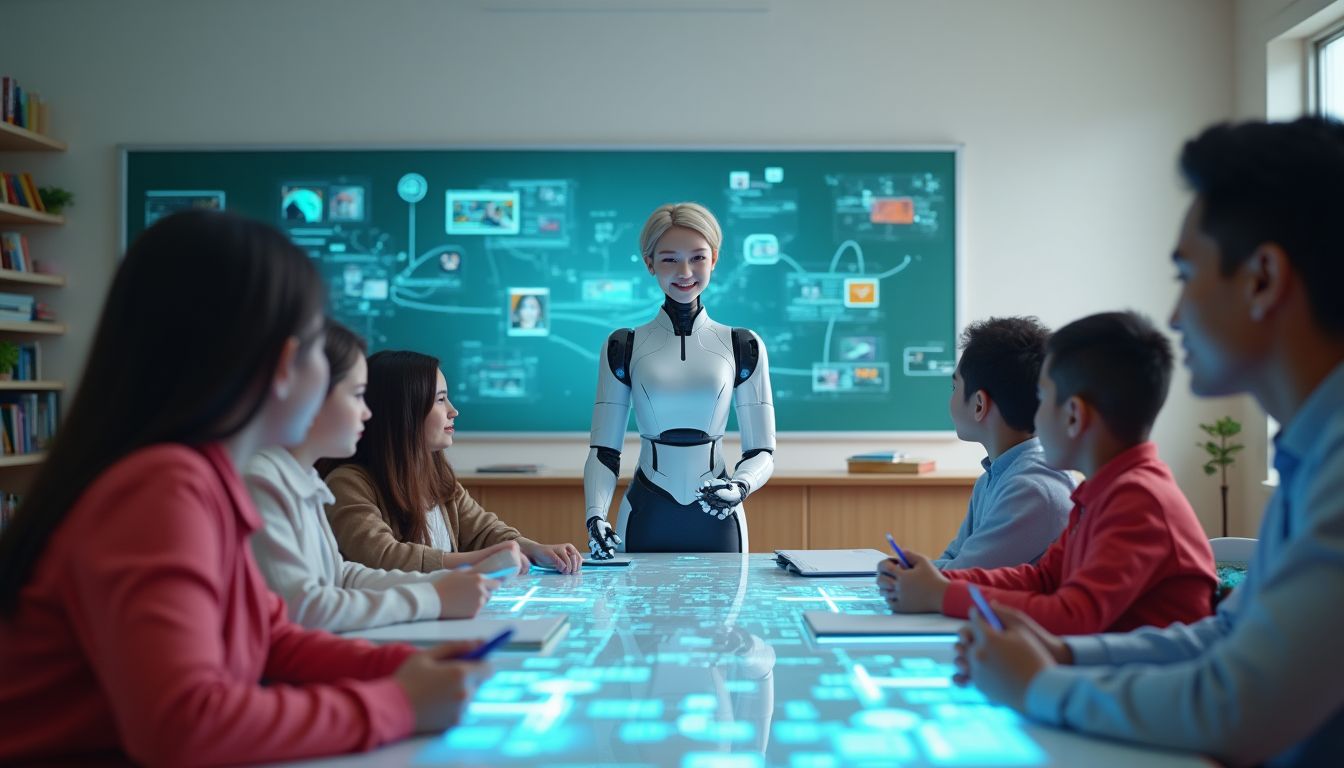
AI Solutions: Embracing Our Technological Companion
As we stand at the crossroads of technology and education, the integration of Artificial Intelligence (AI) offers immense potential. However, this journey needs careful navigation, ensuring we leverage AI to enhance, rather than replace, the human elements of education. Here are several actionable strategies, framed within a comprehensive roadmap, to harness AI in educational settings while addressing potential challenges.
Actions Schedule/Roadmap: Charting a Course Towards Successful AI Integration
Day 1: Initial Assessment
Kick off the campaign by evaluating existing technology in your institution's ecosystem. Gather a diverse team of educators, tech experts, and student representatives to facilitate a meaningful feedback loop regarding current experiences with technology and identify gaps that AI could fill.
Day 2: Research & Development
Engage in targeted research to identify the most promising AI technologies currently enhancing educational outcomes. Connect with organizations like Edutopia, to access best practices and case studies from schools that have successfully implemented AI tools.
Day 3: Stakeholder Meetings
Foster open dialogue with educators, IT professionals, and administrative staff to shape a shared vision for AI integration. Consider setting up a workshop with experts from institutions like the Harvard Graduate School of Education to discuss pedagogical approaches that align with AI innovations.
Week 1: Forming an Advisory Team
Recruit a task force of experts specializing in AI, educational technology, and ethics. This team will guide the process of thoughtful AI adoption, ensuring that mission and values remain front and center during decision-making.
Week 2: Pilot Programs
Launch pilot programs using carefully selected AI tools in a controlled environment. For example, collaborate with platforms such as Knewton to tailor learning experiences for a select group of students, allowing for deep dives into the technology's application.
Week 3: Collecting Feedback
Gather qualitative and quantitative data from pilot participants—both students and educators—to evaluate AI tool performance. This period is crucial for identifying successes and areas for improvement. Use surveys and personal interviews to understand user experiences and outcomes.
Month 1: Evaluate Pilot Outcomes
Review the data collected from pilot programs to analyze academic performance and engagement levels. Incorporate insights into decision-making regarding potential adoption on a larger scale, ensuring this reflection includes feedback from all stakeholders.
Month 2: Training Programs
Develop comprehensive professional development sessions to familiarize educators with the newly adopted AI technologies. Partner with organizations such as the International Society for Technology in Education to facilitate workshops that emphasize both the technical and pedagogical aspects of AI.
Month 3: Full-Scale Implementation
Initiate a larger rollout of AI tools across classrooms. Ensure robust support structures that empower educators to integrate AI seamlessly into their teaching practices. Assign tech mentors to classrooms to provide real-time guidance and encouragement as teachers familiarize themselves with new tools.
Year 1: Continuous Monitoring
Establish a monitoring committee responsible for overseeing the AI integration process. This committee should include various stakeholders, representing students, educators, and IT professionals, to track implementation progress and student outcomes continuously.
Year 1.5: Review and Adjust
Upon gathering ongoing feedback, reassess technology usage and teaching practices, making necessary refinements to enhance the effectiveness of AI tools. Aim for a responsive approach, where real-time adjustments can significantly impact learning outcomes.
Year 2: Establish Best Practices
Create a compendium of successful AI integration practices across the educational sector. Collaborate with institutions like the EDUCAUSE to disseminate findings and promote a community of practice that can support broader educational reforms nationwide.
Conclusion: Navigating the Future of AI in Education
As we look ahead, the conversation about AI in education is both exciting and daunting. It presents a myriad of opportunities and challenges that require our careful consideration. While AI has the potential to enhance personalized learning and streamline administrative tasks, it cannot replicate the warmth, creativity, and empathy that human educators bring to the classroom. Instead, we must envision an educational landscape where AI and teachers collaborate, creating a harmonious balance that highlights the strengths of both. This is not a battle against machines but an invitation to embrace them as allies in an ever-evolving educational journey. The future does not lie in choosing between AI and human educators but in forging a path forward that prioritizes the needs and dreams of every student. As we embark on this quest, let us remain committed to fostering inclusive, equitable, and inspiring educational environments for all.
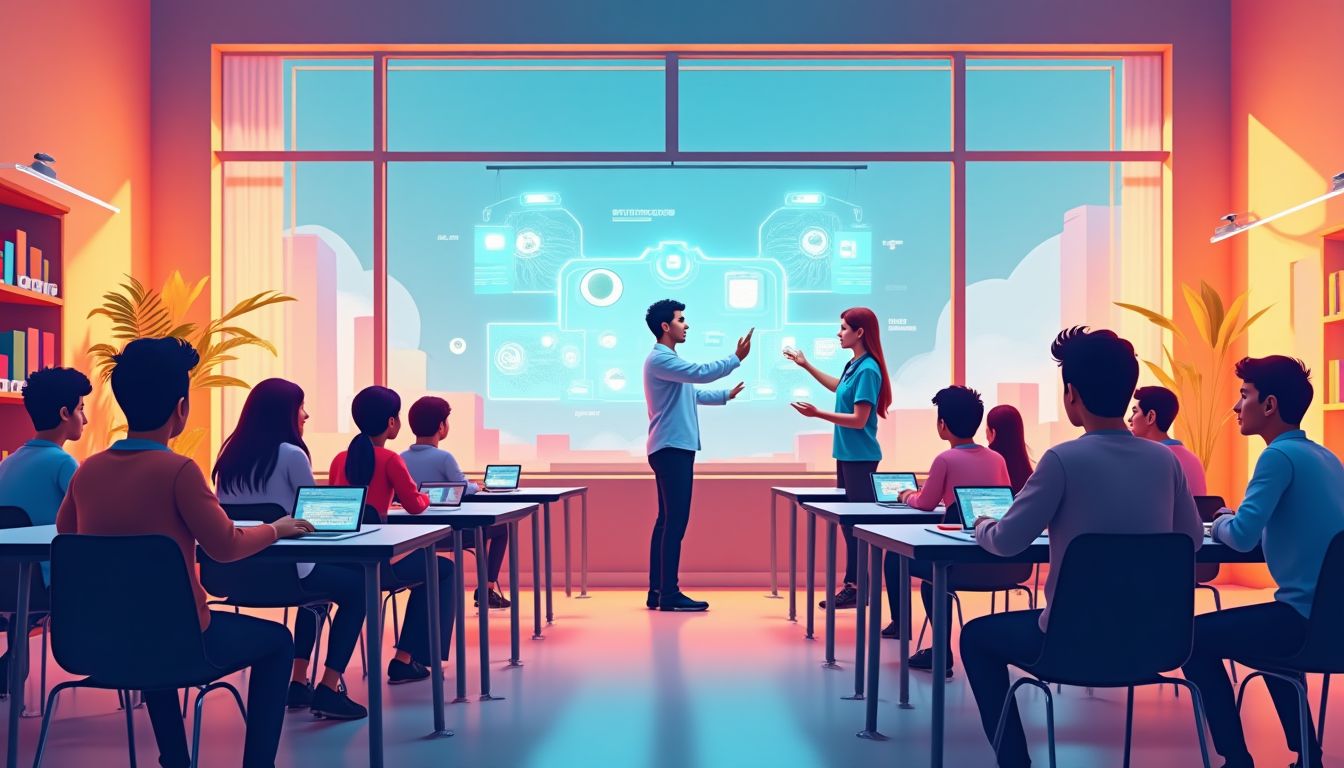
Frequently Asked Questions about AI in Education
1. Will AI completely replace teachers?
No, AI is not designed to replace teachers. While it can assist in many ways, such as providing personalized lessons and feedback, it cannot replicate the warmth, encouragement, and emotion that human teachers offer. Teachers inspire students, nurture their growth, and support them in ways that technology simply can’t.
2. How can AI improve personalized learning?
AI can analyze how each student learns, allowing it to customize lessons based on individual needs. For instance, platforms like Khan Academy use AI to suggest practice exercises tailored to a student’s understanding, making learning more effective and engaging.
3. What are the ethical concerns regarding AI in education?
Several ethical issues need to be addressed, including:
- Data Privacy: How is student data being collected and used? It's important to ensure that this information is kept safe.
- Algorithmic Bias: If AI is trained on biased data, it can lead to unfair treatment of some students.
- Equity: We need to ensure that AI technologies do not widen the gap between different groups of students.
4. How should teachers adapt to the integration of AI?
Teachers can benefit from ongoing training to learn how to use AI tools effectively. Embracing technology can enhance their teaching by allowing them more time to focus on engaging with students and less time on administrative tasks. Professional development programs, such as those offered by Edutopia, can provide valuable resources.
5. What role can parents play in this transition?
Parents can help by staying informed about AI technologies being used in their child’s education. They can ask schools about how data will be used and advocate for transparency. This is an important step in ensuring that educational technology is used responsibly and effectively.
6. Are there examples of AI helping students?
Yes, there are many success stories! For instance, IXL is an interactive math platform that adjusts questions based on a student's responses. This allows students to work at their own pace, ensuring mastery of concepts before moving on.
7. Can AI support students with special needs?
Absolutely. AI tools like N2Y create customized learning experiences for students with disabilities, offering them tailored resources that fit their unique needs. This helps make education more inclusive and accessible.
8. How do teachers feel about AI in the classroom?
Many teachers express a mix of excitement and concern. They appreciate the potential for AI to reduce their workload and improve student outcomes but worry about the implications of relying too heavily on technology. Open communication between educators and tech developers is key to bridging these concerns.
9. What does the future of AI in education look like?
The future is bright! As technology advances, we’ll likely see AI that is more intuitive and capable of understanding the complex needs of students and teachers. This can potentially lead to a more engaging and effective educational experience for all.
10. How can AI help in assessment and feedback?
AI can provide real-time feedback to students, helping them understand their strengths and weaknesses immediately. For example, Educake provides instant evaluation of quizzes, allowing students to learn from mistakes as they go, ultimately improving their learning journey.
As AI continues to evolve, it's essential to keep the conversation going. What are your thoughts about the role of AI in our schools? Share your opinions in the comments below!
Wait! There's more...check out our gripping short story that continues the journey: The Last Keeper of Truth

Disclaimer: This article may contain affiliate links. If you click on these links and make a purchase, we may receive a commission at no additional cost to you. Our recommendations and reviews are always independent and objective, aiming to provide you with the best information and resources.
Get Exclusive Stories, Photos, Art & Offers - Subscribe Today!
Related posts:
 When Machines Govern: Can AGI Truly Replace Politicians?
 Will AI Replace Psychologists? How Machines Are Transforming Mental Health Care
 Can AGI Revolutionize Education? Hyper-Personalized Learning vs Traditional Schools
 From Science Fiction to Reality: AI in Education Changing the Game
 The Rise of Autonomous Governance: Can AI Replace Politicians?




Post Comment
You must be logged in to post a comment.