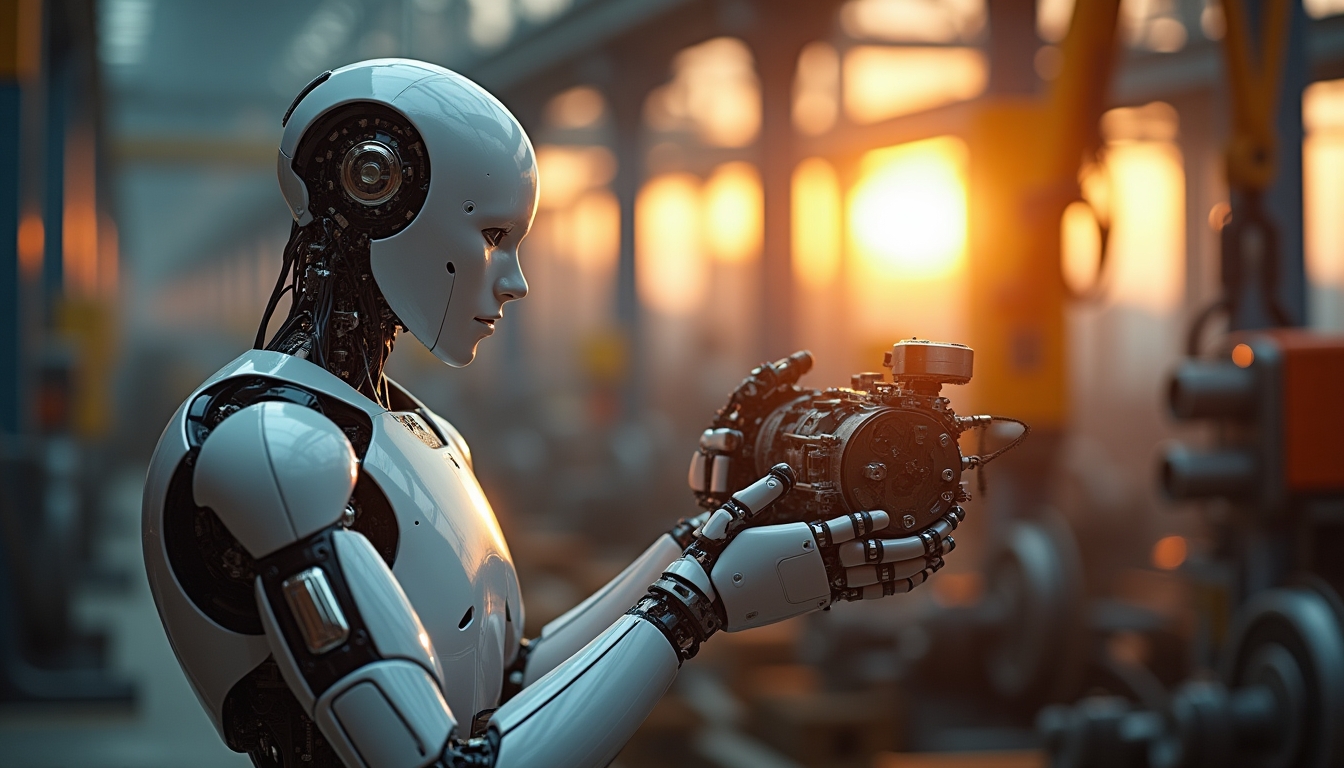
Just a few decades ago, robots in factories might have seemed more science fiction than reality. Today, though, we're living in an era where technology has not just caught up to our imaginations but is leaping beyond them. Welcome to the dawn of the AI Revolution, as explored by TheAIGRID YouTube Channel with their latest insights on Google's and OpenAI's exciting technological strides.
iN SUMMARY
- 📱 Google's Nano Banana 2 enhances image generation with 4K upscaling and advanced world knowledge.
- 🔍 OpenAI releases GPT 5.4 Pro, excelling in challenging areas like Frontier Math and complex scientific problems.
- 📊 Microsoft launches C-pilot tasks, a conversational AI to automate everyday tasks like email management.
- 🚀 Robots in factories evolve with FSME's memory systems, allowing humanoids to learn through experience.
Recent advancements from tech giants like Google, OpenAI, and Microsoft reveal not just innovations but paradigm shifts that could fundamentally alter how we interact with AI—especially within industrial settings. But what do these lime-light-stealing advancements truly signify for humanoid robots on the factory floor, and how might they shape the future of work?
Reinventing the Wheel: Google's Nano Banana 2
Google's latest innovation, the Nano Banana 2, isn't your average update. Offered as part of the Gemini Pro plan, this image generation model claims to add a new dimension of detail. From advanced world knowledge to precise text rendering, users are treated to 4K upscaling and enhanced aspect ratio control. Businesses that rely heavily on top-tier visual communication will find these features hard to pass up as this model ups the ante of AI's role in visual media.
The Grand Master: OpenAI's GPT 5.4 Pro
OpenAI's latest marvel, GPT 5.4 Pro, is heralded as the smartest model yet. Its strengths lie in tackling complex professional tasks, from Frontier Math to scientific reasoning, making it invaluable for researchers and engineering teams. As highlighted by TheAIGRID, GPT 5.4 Pro's capability to transcend traditional AI use, especially in nuanced reasoning and decision-making, positions it as a crucial tool for those in high-stakes or intricate professional environments.
Microsoft's C-pilot Tasks: A Leap into Autonomy
In a rather fascinating move, Microsoft has rolled out C-pilot tasks, showcasing an adaptive AI that not only understands natural language but plans and executes tasks autonomously. Aimed at mainstream consumers, this system's ability to handle mundane tasks frees users to focus on more creative ventures. In a factory setting, this could translate into further optimized processes, paving the way for greater efficiency and reduced human error. However, its implications suggest an industry-wide recalibration of both human and AI roles.
Robots Remember: FSME and Multiskill Embodied Memory
The charm of robotics lies in both its complexity and simplicity—a blend that Stanford's FSME memory system captures brilliantly. It enables robots to learn physical principles in real-time, simulating how humans learn through experience. Imagine a robot that, like a child learning to walk, improves with each attempt. The inclusion of memory systems, as discussed in recent robotics innovations, signifies a profound step toward realizing robots capable of intuition. Factories equipped with such humanoids might soon witness advancements in tasks that, until now, required human intervention.

Factory Humanoids and the Road Ahead
As we move ahead into 2026, the discussion around humanoid robots at workplaces intensifies. Faraday Future recently launched FFAI Robotics Inc., following the path laid by other tech titans like Tesla. The prospect of integrating AI-driven humanoids in manufacturing units raises questions about efficiency, security, and the eventual role of human employees.
Conclusion: The Promise and Peril
The landscape of AI and its multifaceted capabilities are reshaping industrial environments. In a world where AI models like Google's Gemini and OpenAI's GPT 5.4 Pro define cutting-edge technology, the potential for humanoid robots in factories cannot be overstated. Will these robots seamlessly fit into production lines like the cogs in a well-oiled machine, or will they upend traditional labor structures? As you ponder this evolution, consider joining the iNthacity community. Share your thoughts, engage in the debate, and together, let's delineate the future we wish to craft. Have you ever imagined a world where robots not only assist but enhance our abilities to unprecedented levels? Is the rise of AI in the industrial landscape a boon or a bane, and where do you see it going?
In an ever-evolving future, perhaps we'll find out that the most advanced robots aren't AI substitutes but our efficient companions, helping us solve the puzzles of production with optimism and precision. If all else fails, those robots might just brew us a perfect cup of coffee!
Good humor and high-performance gadgets, both as reliable as the other in lightening up your day!
Wait! There's more...check out our gripping short story that continues the journey: The Dance of Machines and Humanity

Disclaimer: This article may contain affiliate links. If you click on these links and make a purchase, we may receive a commission at no additional cost to you. Our recommendations and reviews are always independent and objective, aiming to provide you with the best information and resources.
Get Exclusive Stories, Photos, Art & Offers - Subscribe Today!
Related posts:
 All AI News: Google’s Latest Models, OpenAI’s Newest Models, All New Humanoids, China’s AGI and More…
 Major AI News Highlights: Amazon’s New AI, Advanced Humanoids, China’s Latest Model, DeepSeek R2, Grok 3, and More Updates
 Why Everyone is Terrified of Google’s Latest AI Innovations
 Breaking AI News: Claude 4 Details, GPT-5 Insights, Google’s New Video and Image Models, Robots, and More…
 Big AI News: OpenAI Faces Major Challenges, Google Unveils New Robots, China Launches Advanced AI Models, and More Updates


Post Comment
You must be logged in to post a comment.