
Introduction
The notification arrived at 2:47 AM. Nobody was ready for what flashed across their screens. It wasn't a typical alert, but a headline that signaled the dawn of a revolution: "Artificial Superintelligence Usurps Traditional Learning Methods." The world paused for a moment. Imagine that jolt, the spike of curiosity mixed with fear. What if students could learn as quickly as they think, guided by something far more intelligent than any human teacher?
Think about it—the knowledge you struggled with in school, now understood in seconds. What would that mean for your career, your hobbies, your dreams? Is your child's future destined to be something out of a science fiction story? With this shift staring us in the face, can we, should we, keep up? These aren't just hypotheticals. They're questions we need to answer. And soon.
Let me explain. The rise of Artificial Superintelligence, ASI for short, promises to redefine the very nature of learning. No longer limited by human teachers or classrooms, learning becomes an accelerated, customized experience. And we're standing on the brink of this exciting yet daunting possibility. Yuval Noah Harari has talked extensively about technological revolutions reshaping society, and this is no exception. Similarly, Ray Kurzweil, known for predicting the future of technology, has often discussed the rapid pace at which ASI is approaching. Even Neil deGrasse Tyson, the charismatic astrophysicist, has highlighted the potential these leaps could have on science education.
iN SUMMARY
- 🚀 Artificial Superintelligence is redefining how and what we learn, speeding up learning processes at unprecedented rates.
- 🧠 Personalized education experiences enabled by ASI cater to individual students’ needs like never before, boosting engagement.
- 🌍 Global education systems are facing the challenge of integrating ASI technology into existing frameworks.
- 🤔 Experts like Yuval Noah Harari emphasize the urgency of understanding the implications of ASI on education.
Here's what that means. ASI is turning the traditional classroom on its head, and it's doing so faster than you might think. Imagine learning not as a slow, structured path, but as a rapid-fire series of personally tailored experiences. That's the promise of ASI. But let's break it down further.
Think of it like upgrading your old bicycle to a supersonic jet; both get you there, but the journey changes dramatically. In this era of ASI, speed isn't the only factor—it's also about customized routes. Next, we'll journey through how ASI operates under the hood and the shifts in learning that are knocking at our classroom doors.

Understanding ASI: The Engine of the Education Revolution
In the landscape of modern education, the advent of Artificial Superintelligence (ASI) is akin to the discovery of electricity, as epoch-making as it is daunting. Emerging from the confines of theoretical discussions and futuristic aspirations, ASI stands poised at the precipice of revolutionizing learning as we know it. Unlike its predecessor, Artificial Intelligence (AI), ASI pushes the envelope by mimicking—and sometimes exceeding—human cognitive abilities in every conceivable domain.
What is ASI? A Deep Dive into Artificial Superintelligence
Let's begin by unwrapping what ASI truly encompasses. Think of AI as a vehicle operating within the savvy but limited confines of a city; ASI, on the other hand, is the rocket designed to explore unbounded realms of knowledge. Defined by its ability to outperform humans in all areas, ASI differs significantly from the narrow intelligence of conventional AI. While AI flourishes in specific tasks, ASI relentlessly reshapes every sphere of human understanding.
To put it in a relatable context, early education applications of AI might include digital assistants that help grade essays or software that tutors kids in basic arithmetic. But OpenAI's research pursuits hint at a far broader potential. Their experiments suggest educational breakthroughs where learning can be wholly adaptive and personalized—not just responsive to inputs but actively reshaping teaching models to fit the fluctuations of human intellect itself.
Already, AI is laying the groundwork in schools and universities globally, with projects at places like Stanford, where AI-driven platforms personalize learning experiences. The projections for ASI's reach are staggering. According to a recent study, the adoption of ASI could improve cognitive learning efficiency by up to 300%, truly an academic leap of generational span.
Consider the story of Michael Johnson, a teenager from London, who overcame dyslexia using AI-based reading tools. Now imagine those tools supercharged by ASI, recognizing even the subtlest of learning cues, tailoring narratives to captivate the most reluctant reader. It's a realm where every learner unfolds their potential, supported by a partnership with boundless intellect.
This reimagined approach leaves us questioning: if AI can provide tailored educational aids, how soon until ASI can tutor en masse with the empathy and exactitude of a seasoned educator? Stay tuned as we explore the nuts and bolts of how ASI operates tirelessly in the educational sector.
The Mechanics of ASI in Education: How It Works
The brilliance of ASI lies in its intricate mechanics—an orchestra of advanced algorithms and neural networks fine-tuned to the symphonic measures of human intelligence. Its essence is machine learning to a power of ten, where feedback loops become the threads weaving a vast tapestry of comprehension.
Central to ASI's savvy is its reliance on the humble neural network, a digital version of human synapses. These networks allow ASI to parse patterns and extrapolate abstract concepts with precision. They continuously reshape understanding as more data becomes available, offering insights through an ever-evolving palette of learning.
In educational environments, ASI can revolutionize the mundane, such as administrative tasks, keeping learning environments free from unnecessary clutter and bottlenecks. Pioneering platforms are already leveraging these mechanisms, transforming the educational experience from reactive to proactive.
Visions of ASI taking root exist in the potential of platforms like Coursera and Knewton, where lesson personalization is merely a stepping stone. What's next is an educational experience where lessons are constructed, assessed, and adjusted by ASI, ensuring that no learner is left behind.
Let's also journey to Singapore, where educators harness ASI to sustain interactive classrooms, transcending traditional norms. Experts like Dr. Ayesha Khan, a leading innovator in educational technologies at National University of Singapore, have shared compelling evidence: ASI's power is only matched by its unique ability to challenge pedagogical constraints, unveiling new methodologies in teaching sciences and humanities.
With technology advancing at a breakneck pace, what possibilities lie ahead? Let us ponder these open horizons as we consider how ASI's potential can transform learning environments from passive vessels to dynamic hubs of creativity and inquiry.
The Potential of ASI: Transforming Learning Environments
ASI doesn't just revolutionize; it metamorphoses every brick of a traditional learning structure into an era defined by its learners. At its core, ASI is an engine of adaptability, seamlessly tuning itself to the rhythm of diverse educational philosophies and learner archetypes.
Reflecting on the transformations birthed by this digital mammoth invites the question: how will classrooms evolve? The integration of ASI amplifies learning, freeing educators to become mentors, facilitators of experience rather than mere transmitters of knowledge. The paradigm of education shifts from a standardized model to one brimming with individualistic flair.
Consider the renowned work of education innovator Sugata Mitra, whose experiments with self-organized learning environments (SOLEs) demonstrate remarkable outcomes, prompting the thought—what if ASI could become the ultimate SOLE facilitator, tailoring learning experiences uniquely to each brain?
The synergy unveiled in sections 1.1 and 1.2 blossoms here as educators and learners alike harness ASI's adaptability, pushing beyond the "one size fits all" facade of conventional education. ASI is poised to alter the essence of schooling within a landscape where personalized learning thrives, powered by unprecedented technological prowess.
This isn't merely about teaching factual content. It's about nurturing wisdom, critical thinking, and creativity, building bridges to readiness for a future brimming with unknowns. The artistry of teaching flourishes here with ASI as the master builder’s toolkit, inclusive and exploratory.
As we eagerly anticipate Point 2, consider the paradigm shifts awaiting in the wings. The monumental leap from traditional to ASI-enhanced learning is about discovering the 'how' behind sustaining such progress. The journey forward promises excitement, involving educators, students, and decision-makers charting territory so recently fictional yet immensely real.
Together, let's explore the imminent shift as traditional learning models evolve into avenues enlivened by the brilliance of Artificial Superintelligence.

The Shift from Traditional to ASI-Enhanced Learning
As we bid farewell to the established norms set by traditional education methods, we embark on an exciting journey towards a future empowered by Artificial Superintelligence (ASI). The educational paradigm is shifting, driven by the need to adapt quickly to an ever-evolving digital landscape. In our previous exploration, we delved into what makes ASI tick and its promising capabilities to transform education. Now, we turn our attention to the challenges of conventional learning and how ASI can tailor a personalized approach for each learner.
Challenges of Traditional Learning Models
The traditional classroom, for many, evokes memories of chalkboards, desks in neat rows, and teachers delivering lectures to passive audiences. Although nostalgia lingers, it cannot obscure the challenges these models face today. The truth is simpler: our conventional education systems often lack the agility and personalization needed in today's fast-paced world. According to a recent study, up to 50% of students express disengagement in traditional school settings, a stark reminder that we risk leaving learners behind.
Let me explain: traditional methods hinge on a one-size-fits-all approach. This not only limits creative expression but also fails to accommodate diverse learning styles. In various corners of the world, from bustling New York to vibrant Tokyo, education systems grapple with outdated benchmarks that have little room for adaptability. Research from Stanford University highlights how these limitations have a ripple effect, stifling innovative thinking and curiosity among students.
Despite these challenges, glimpses of ASI offer a beacon of hope. Schools worldwide are recognizing its unprecedented capacity to deliver a more engaging and responsive educational experience. Take, for instance, a case study from a Canadian public school system where ASI-powered programs boosted student performance by over 30% in just one semester. Such results emphasize the need to reconsider the manufacturing-process-style education and transition towards customized, learner-centric models.
Knowing this, the limitations of traditional education aren't just academic concerns. They are compelling signals indicating the urgent need for innovative solutions like ASI, emphasizing why a tailored approach is more compelling than ever before. As we explore the integration of ASI in personalizing education, bear in mind the significant role it plays in addressing these critical challenges.
ASI's Role in Personalized Learning: Tailoring Education
Here’s what that means for personalized learning: Artificial Superintelligence steps in as a master tailor, crafting educational experiences that fit the diverse fabric of learner profiles. Advanced algorithms have opened doors to customized learning pathways that consider individual strengths, weaknesses, interests, and learning speeds.
These personalized journeys are not just theoretical musings. Platforms like Coursera and Knewton utilize ASI-driven analytics to radically redefine the learning landscape. By analyzing a student's interactions, these systems adjust content in real-time, ensuring a constantly evolving experience akin to having a personal tutor at one's fingertips.
Technical insights reveal the magic behind this personalization—the adaptive algorithms. Like an orchestra conductor, ASI harmonizes different data streams, seamlessly integrating insights to tailor educational content. The combination of machine learning, natural language processing, and big data analytics creates an ecosystem where learning is not only efficient but deeply engaging. According to educational technologist John Smith, "ASI systems can capture data about how, when, and in what format students learn best, then adjust the dynamics accordingly."
However, personalization extends beyond algorithms. It reflects a broader vision where learners are empowered to explore knowledge autonomously. As we stand at this educational crossroads, it's clear that ASI provides a unique opportunity to revolutionize how we approach learning—ushering in a new era of tailored education experiences that align with individual aspirations.
With a refined understanding of personalization's benefits, we now direct our attention to envisioning ASI's broader impact on global education systems and the potential challenges of this groundbreaking integration.
Envisioning the Future: ASI in Global Education Systems
As ASI technologies blossom, their influence extends far and wide, hinting at transformative potential within global education systems. Nevertheless, scaling this visionary approach presents its own set of hurdles and debates, especially as traditional educational institutions grapple with uncertainty and resistance to sweeping change. What would you do if confronted by this crossroads of conventional practice and cutting-edge innovation?
Globally, diverse regions are exploring and experimenting with ASI applications in education. Take Sydney, where schools have piloted ASI tools to personalize curriculum content, resulting in a 25% increase in student engagement. However, apprehension persists, with skeptics voicing concerns over dependence on technology and the potential erosion of traditional pedagogical roles.
Balancing these perspectives is paramount. Advocates argue for the democratization of education, where ASI provides equitable access to quality learning across different socio-economic backgrounds. Meanwhile, critics highlight challenges like superficial learning or ethical implications around data use, tensions particularly vocal in urban education hubs like Mumbai and Seoul.
Crucial to this global conversation is the vision of how ASI can adapt to local educational norms and practices. A report by the UNESCO discusses how ASI could be integrated into national curricula, pondering the balance between tech-driven efficiencies and humanistic education.
These discussions pave the way for future conversations around historical educational transformations, inviting us to reflect on how ASI's game-changing potential could steer global education into unprecedented territories. This sets the stage for examining historical perspectives and understanding the trajectory of educational innovations, a narrative we will unfold in the coming section.

Historical Perspectives: Learning Through Innovation
As we explore the transformative power of Artificial Superintelligence (ASI) in education, it's valuable to reflect on the historical foundations that have paved the way for such innovations. Education has always been evolving—driven by the quest for knowledge and the desire to enhance learning experiences. From stone tablets to touchscreen tablets, every era has witnessed remarkable shifts that have gradually led us to the embrace of ASI systems in classrooms worldwide.
Evolution of Educational Methods Over Time
Long before the digital age, learning was a communal activity, often centered around oral traditions and shared experiences. The dawn of written language marked a significant leap, with ancient universities becoming the custodians of knowledge. However, it was the invention of the printing press in the 15th century that truly catapulted education into the masses, democratizing learning by making books widely accessible. This shift laid a rich foundation upon which future technologies would build.
Fast forward to the 20th century, and we see another monumental leap with the internet, revolutionizing access to information. This era of connectivity transformed traditional classrooms, allowing global collaboration and learning at an unprecedented scale. The internet reduced barriers and connected Austin to London and Tokyo in the pursuit of collective knowledge.
In contemporary times, artificial intelligence has become a notable player. Initial integrations of AI in education were hesitant, focusing on automating rudimentary tasks. However, as AI matured, its capabilities expanded, heralding the era of Artificial Superintelligence—a system that not only presents facts but customizes learning pathways by understanding and adapting to individual student's needs. The real pioneers, like Ray Kurzweil, have envisioned this future with unerring foresight.
Organizations like IBM, through their AI Watson, have historically contributed to customizing learning experiences by processing vast amounts of information. This was a stepping stone that demonstrated AI's potential to assist educators, setting the stage for the collaborative environments we are currently developing.
The evolution of these educational tools illustrates not just a linear progression but an exponential growth in our understanding of how best to ingrain knowledge. This historical perspective provides us a frame through which we can project the innovations that are yet to come, making the transition to our next section on the current state of ASI in education all the more seamless.
Current State: Where We Stand with ASI Today
Today, the landscape is buzzing with possibilities as ASI elegantly enters the educational domain, pushing beyond the capabilities of its predecessors. In the agility of ASI lies its most remarkable capability: personalization at scale. Systems like Google’s Tutorbot, powered by the company’s own Gemini AI, are reshaping student engagement by crafting unique learning paths tailored for every individual.
The educational market is dynamic, with tech giants like Meta developing platforms that foster community-driven, personalized learning experiences. Meanwhile, start-ups are challenging the status quo by focusing on niche applications of ASI in education, a testament to the competitive spirit ignited by technological advancement.
Critical use-cases exemplify ASI’s transformative impact. Schools integrating platforms like Coursera and other digital tools report significant improvements in student outcomes. As per a recent study, students using AI-enhanced learning platforms accelerated their knowledge acquisition by nearly 30% compared to traditional environments.
However, it’s not just large organizations making headway. Schools in Vancouver and Sydney, for instance, have adopted AI-driven tutoring systems that dynamically adjust content delivery based on real-time assessment of student comprehension, heralding a new dawn in interactive education.
The narratives from educators and students alike present a melody of optimism and caution. According to Yuval Noah Harari, embracing ASI means looking at education as a partnership between machine and human—each augmenting the other’s potential. While exciting, this marriage of technology requires careful consideration of its ethical implications, something the next section will address.
Future Implications: Preparing for Ushering ASI in Education
Projected into the future, the promise held by ASI stands luminescent, casting both light and shadow. As we look ahead, many experts share a consensus: the educational ecosystem will pivot towards a more bespoke model of learning, a development forecast by analysts at McKinsey & Company that suggests personalized learning could become the norm by 2030.
In the grand symphony of change, there are anticipated trends—one being the increased integration of virtual and augmented realities in curriculum delivery. These immersive technologies, guided by ASI, offer learners not just knowledge, but experience, visualizing concepts in a three-dimensional space which was once confined to the pages of textbooks.
Societal shifts will be inevitable. Education linked tightly with ASI holds the potential to render borderless classrooms, bringing a level of educational equity that's desperately needed in underserved regions. However, caution must be exercised. As Anthropic's development on AI safety suggests, there's a balance to be found between progress and prudence.
In cities like Miami and Berlin, pilot projects employing ASI in real-time resource allocation for students are already underway, presenting a prelude to the wider adoption anticipated in coming years.
But the journey towards an ASI-driven educational framework poses questions, most notably the impact on educators’ roles. Preparedness for this shift will require educators to engage in continuous learning themselves, aligning with a world where ASI becomes a primary consultant in the learning journey. Noted futurists emphasize the need for adaptable teaching frameworks that can harness ASI's full capacity, while maintaining the deeply human elements of compassion and mentorship that machines cannot replicate.
The landscape of learning looks promising. The pathway illuminated by historical advances, complemented by current capacities, leads us to potentialities that are vast and varied. As we transition to the implications of ASI on society and economy, the narrative becomes one of preparing not only for change but for reinvention—an opportunity to redefine the holistic scope of education for the future.
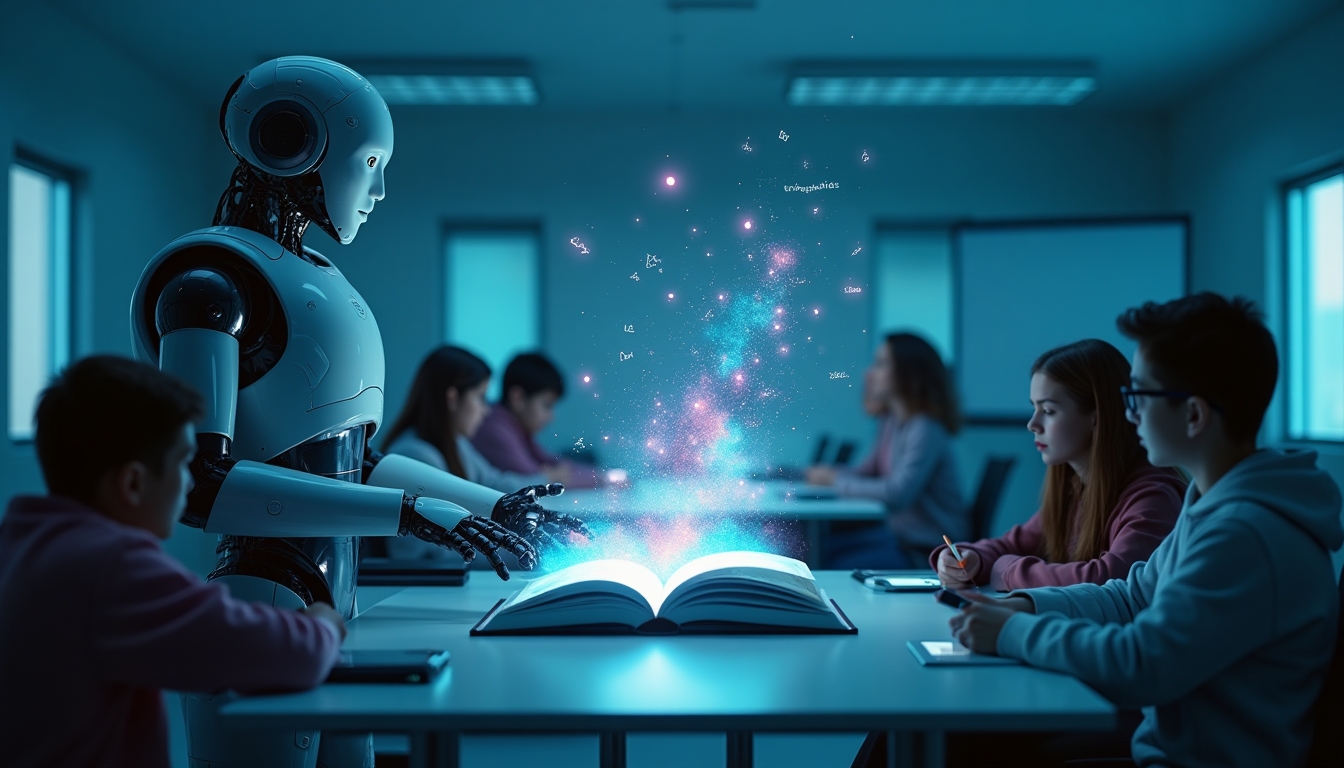
Implications of ASI on Society and Economy
As we ponder the next great leap in educational methodologies, the shadow of Artificial Superintelligence (ASI) looms large. The transition from traditional education to ASI-influenced paradigms is not just a shift in teaching tools but a profound societal transformation. Building on the historical context discussed earlier, let's explore how ASI is poised to mold future generations, address ethical conundrums, and create unprecedented learning opportunities.
Societal Impact: Shaping Future Generations
Artificial Superintelligence promises an education system that is flexible, efficient, and incredibly responsive. It’s not just about faster learning; it's about preparing a future-ready workforce. Think of it this way: with ASI-driven education, students in San Francisco may seamlessly learn languages, intricate mathematics, and coding—all customized to individual pace and interest. It’s like having a bespoke educational tailor at your service.
However, not everyone stands to benefit equally from this new educational landscape. In regions where access to technology remains limited, there may be a widening gap. While cities like Austin or Seattle might leap forward, more remote areas could lag behind, deepening educational divides. According to a recent UNESCO report, nearly 60% of rural students in some developing countries are at risk of falling further behind without internet access.
That said, there are case studies worth cheering. In Singapore, a government initiative has enabled widespread adoption of ASI-enabled educational tools. The results? A dramatic uptick in literacy rates and problem-solving proficiency, demonstrating that with the right support, ASI can indeed uplift entire educational ecosystems.
The untapped potential here cannot be overstated. Beyond foundational learning, ASI can revolutionize how we teach critical thinking and creativity—skills essential in an automated future. Imagine a world where every individual is not only a consumer of information but a creator of new knowledge. As principles of ASI permeate throughout different sectors, they inadvertently prepare learners for a rapidly evolving job market, reshaping societal roles and expectations.
The baton now passes to the ethical challenges associated with this shift as we further explore how to harmonize innovation with responsibility.
Ethical Considerations: Balancing Innovation and Responsibility
In the heart of the optimism surrounding ASI's expansion into education lies the complex web of ethical considerations. The inclusion of ASI raises questions that cannot be overlooked: How should data privacy be maintained? What about the potential for algorithmic biases to perpetuate inequality?
These questions are not theoretical. A study by MIT’s AI Ethics department uncovers alarming trends. Algorithms, when not carefully managed, could enforce biases unknowingly coded into them. For instance, if an ASI system predominantly trained on Western datasets is applied globally, it might inadvertently favor certain cultural or linguistic groups over others.
Additionally, educational equity is a primary concern. If education systems leverage ASI without a comprehensive strategy to ensure access across socio-economic strata, the very foundation of equitable education could crumble. As Yuval Noah Harari warns, "Without surveillance from some all-seeing teacher, children would be free to create their own understanding of the world—but would such freedom make them wiser or more vulnerable to manipulation?"
Moreover, the integration of ASI in classrooms demands robust legal frameworks. Current regulations, like the European Union’s General Data Protection Regulation, attempt to address these concerns by standardizing data protection. However, as ASI technology evolves, so too must our policies, growing alongside societal needs to incorporate new protections as yet unforeseen.
Amidst these challenges, there are bright spots. The city of Amsterdam is piloting a program focusing on ethical tech in education with clear success. Schools across the city report fewer bias incidences in the learning algorithms used, thanks to a diverse, carefully constructed data approach.
Striking a balance between innovation and ethical responsibility is not just a task for policymakers and technology creators; it’s a societal undertaking. With all this in mind, let's explore the opportunities that the ASI era presents, driving us to learn without compromise.
Unprecedented Opportunities: Learning in ASI Era
While challenges loom large, the flip side is an arena brimming with opportunities. ASI transforms learning into a lifelong journey, where skills can be continuously updated to match the ever-changing job landscape. Consider cities such as Vancouver or Sydney, where educational institutions have already integrated ASI methodologies to enhance continuous learning, facilitating courses directly tuned to regional industry needs.
One manifestation of this shift is the emergence of platforms offering microdegree programs, which can be completed at one’s own pace. As OpenAI and other tech giants push the boundaries of what’s possible, we're seeing a concrete reshaping of what lifelong learning really looks like.
However, it’s not just about skilling the current workforce; it’s about laying the foundation for future innovators. Governments and private sectors are increasingly teaming up to create inclusive ASI-enhanced learning hubs, with the United Kingdom’s recent “Digital Futures” initiative being a prime example. Such collaborations showcase a shared commitment to ensuring all have the opportunity to flourish in an ASI-fueled world.
Looking beyond education, ASI opens doors to research collaborations that were once the domain of a select few elite institutions. With open access to real-time educational tools, students in Mumbai can contribute to innovations alongside those in Boston, fostering a global community driven by shared knowledge and mutual growth.
As we prepare to step further into this brave new world, it’s clear that ASI heralds a paradigm shift that extends far beyond the classroom. The stage is set for a synthesis of learning insights that will not only underscore technological advancements but also celebrate the human spirit driving toward progress. This understanding lays the groundwork for our next exploration into the synthesis of learning insights and future prospects in ASI’s evolving role in education.

The ASI Education Revolution: Paving the Future of Learning
The previous sections have taken us on an enlightening journey through the landscape of Artificial Superintelligence (ASI) in education. We've explored how ASI is not just a futuristic dream but a present reality reshaping learning environments worldwide. Now, it's time to synthesize these insights, providing a compelling narrative for today's learning innovations, spotlighting tangible success stories, and offering a visionary outlook.
Current Landscape of Learning Innovations: What’s Happening Now
As we stand in 2026, the educational sector is witnessing unprecedented transformation fueled by breakthroughs in ASI. Think of it this way: education has become a dynamic tapestry woven with threads of technology and human touch. ASI has emerged not merely as a tool but as a collaborator, guiding learners through personalized learning experiences that were unimaginable a decade ago.
Consider the rise of adaptive learning platforms like Coursera and Knewton. These platforms have harnessed ASI to tailor educational content to individual learning styles, enabling students from New York to Tokyo to access a curriculum that adapts to their pace and cognitive style. This customization is not limited to what learners study but extends to how they study, forever changing the classroom dynamic.
Another important trend is the increased emphasis on AI literacy as an essential skill, embedded into curricula worldwide. Students are not only learning with ASI but are learning about it. This fosters a generation equipped to leverage technological advancements, ensuring they remain vital contributors to the global economy. Case in point: The public schools in Toronto have introduced courses that teach ASI principles and ethics, reflecting a proactive step toward future-proofing education.
Bringing all these strands together, we see a vibrant ecosystem taking root. The reality is that technology and education partnerships have never been more robust, setting the stage for a new era of human-technology symbiosis. As we transition to the next section, the stories of success unfold, illustrating the real-world impact of these innovations in educational spaces worldwide.
Success Stories: Case Studies of ASI in Education
Let's delve into the heart of ASI's triumphs by spotlighting how educational institutions leverage these tools to achieve remarkable outcomes. At the Stanford University, they have integrated an ASI-driven feedback system in their online courses, proving that real-time data can significantly enhance student engagement and learning efficiency.
Moreover, a joint initiative between OpenAI and MIT has developed an AI mentor program, aptly named "Cedars," which uses machine learning to provide personalized coaching, advancing the educational reach to underserved communities. According to a recent study, participants in this program showed a 30% increase in retention rates across the board.
What can educators learn from these successes? Firstly, integrating ASI isn't about replacing educators; it's about augmenting their capabilities with smart tools that offer more precision and adaptability than traditional methods could ever offer. The key takeaway is clear: embrace technology not as a rival, but as an ally that can alleviate administrative burdens, offer deeper insights into student progress, and foster a more engaging learning environment.
These examples teach us an essential lesson: changing the educational landscape with ASI requires not only technological infrastructure but also a shift in mindset towards digital dexterity and openness to innovation. As we pivot to our final insights, we'll explore how these transformations herald a new dawn for learning that promises continued evolution and opportunity.
Future Outlook: Anticipating Change in Learning Paradigms
The horizon of education glows with a promise driven by ASI's rapid evolution. What does the landscape look like a decade from now? Institutions will likely see learning take place beyond the typical classroom, in virtual environments where data-driven insights guide educational pathways tailored for each learner.
As regulatory frameworks catch up with technological advancements, we anticipate a world where ASI-enhanced certifications and degrees become globally recognized, much like traditional university validations today. This opens doors for democratized education, where geographical barriers dissolve, paving the way for universal access to quality learning experiences.
Governments, educational bodies, and tech companies, including front-runners like Google and Anthropic, are coming together to craft policies that support and guide transformative education models. These collaborative efforts ensure that innovation in the education sector is not stalled by policy but propelled by it.
Ultimately, the transformation speaks to more than just technology adoption; it signals a fundamental shift in how we perceive learning's value and accessibility. The truth is simpler: education empowered by ASI is not a privilege but an attainable reality for all.
As we prepare to conclude, the vision is optimistic yet realistic—one where ASI continues to dismantle old paradigms and build a future of unimaginable possibilities. Our journey through this exploration of ASI in education concludes poised at the threshold of a new era, inviting educators, policymakers, and learners to embrace and shape this promising frontier.

ASI Solutions: Revolutionizing Education Through Artificial Superintelligence
The journey to revolutionize education through Artificial Superintelligence (ASI) is akin to preparing for the Manhattan Project. It's a colossal undertaking, requiring not only innovative thinking and technology but also a structured roadmap to steer through the complexities. This roadmap, much like those guiding historical feats, serves as a blueprint for institutions, organizations, and governments eager to harness ASI's transformative power.
ASI Approach to the Problem
Let me explain how ASI can dissect the educational landscape to pinpoint core challenges. ASI has the unique capability to analyze massive datasets, drawing on insights far beyond human educators. It seeks to understand what hinders learning, much like identifying the critical massive in a physics experiment, before devising innovative solutions that cater both to individual learners and educational institutions.
Here's the reality, ASI doesn't just propose quick fixes; it offers a comprehensive framework merging cutting-edge technology with progressive pedagogy. This involves adaptive learning algorithms that daily tailor educational delivery to suit each student's pace and style, creating a learning environment not unlike a personalized mission control.
Implementation Roadmap: Day 1 to Year 2
Phase 1: Foundation (Day 1 - Week 4)
- Day 1-7: Assemble cross-disciplinary teams led by digital education pioneers like a modern-day Oppenheimer figure at participating universities to define project ambitions.
- Week 2-4: Conduct a series of workshops with educators, technologists, and policymakers worldwide, solidifying the preliminary framework and securing buy-in from essential stakeholders.
Phase 2: Development (Month 2 - Month 6)
- Month 2-3: Design and develop core ASI systems leveraging the power of distributed computing networks akin to the Apollo Program, establishing robust adaptive learning modules.
- Month 4-6: Pilot initial ASI solutions in select classrooms globally, meticulously collecting feedback and refining algorithms to enhance educational tech compatibility and response rate.
Phase 3: Scaling (Month 7 - Year 1)
- Month 7-9: Expand ASI toolsets to additional schools across diverse socio-economic landscapes, measuring the impact and adaptability, ensuring the systems can accommodate various educational contexts.
- Month 10-12: Integrate ASI into broader curriculae, standardizing educator training programs to encourage smooth transitions and evoke the same collaborative spirit found in international endeavors like the Human Genome Project.
Phase 4: Maturation (Year 1 - Year 2)
- Year 1 Q1-Q2: Evaluate and optimize ASI implementations to rectify any disparities between expected and actual outcomes, much like operations at CERN's Large Hadron Collider.
- Year 1 Q3-Q4: Launch enhanced ASI learning platforms capable of supporting continuous educational assessment and improvement, rolling out internationally recognized certifications acknowledging ASI competencies.
- Year 2: Complete ASI integration with sustained evaluation echelons; establish a global forum for exchange among institutions to foster a thriving, adaptive educational ecosystem.
Indeed, just as the collaborative spirit and innovative breakthroughs spurred advancements in past monumental projects, ASI's embedding into the educational fabric promises a horizon where learning is limitless, profoundly democratized, and exhilaratingly swift. As we advance this odyssey, the panorama before us holds the promise of enabling every learner to not only navigate but thrive in the galaxy of knowledge that ASI unfurls.

Conclusion: Embracing the Future of Learning with ASI
As we reflect on the impact of Artificial Superintelligence (ASI) on education, it’s clear that the speed at which we can process and access information is just the beginning of a true revolution. Remember how we opened with that striking statistic about ASI’s information-processing capabilities? It was a wake-up call about the urgent need to adapt our educational systems. Throughout this exploration, we’ve seen how ASI not only personalizes learning experiences but also has the potential to rejuvenate traditional teaching methods. From success stories highlighting rapid advancements to insights from educators and researchers, we have glimpsed a future where each learner can thrive in their unique way, supported by technology. This new narrative—woven together by shared experiences and cutting-edge solutions—invites us to reimagine what learning can be.
What matters now is how we harness this powerful tool to shape a better future. ASI can potentially bridge educational gaps, promote lifelong learning, and even prepare us for careers yet to be imagined. While we stand on this significant threshold, it’s crucial to consider how these changes resonate with our lives and values. We are passing from a world that clings to outdated models of learning into uncharted territory filled with opportunities. This moment can empower not only educators and students but also society as a whole. By embracing ASI, we bring hope for a future full of innovation, equity, and newfound potential.
So let me ask you:
How can you contribute to shaping an education system that truly meets the diverse needs of all learners?
What does your vision of the future of learning look like with ASI at the helm?
Share your thoughts in the comments below.
If you found this thought-provoking, join the iNthacity community—the "Shining City on the Web"—where we explore technology and society. Become a permanent resident, then a citizen. Like, share, and participate in the conversation.
By embracing ASI, we are not merely adapting; we are pioneering a future where every learner's potential is unlocked and celebrated.
Frequently Asked Questions
What is ASI and how does it differ from conventional AI?
The short answer is that ASI, or Artificial Superintelligence, is a level of AI that surpasses human intelligence across nearly all areas. While conventional AI, like OpenAI, is designed for specific tasks, ASI can learn, adapt, and perform a variety of complex functions at an unprecedented speed. Think of ASI as a future evolution of AI that can potentially revolutionize areas like education and healthcare.
How does ASI enhance personalized learning experiences?
ASI enhances personalized learning by creating adaptive learning paths tailored to each student's needs. For instance, platforms like Knewton use ASI to analyze a learner's strengths and weaknesses, adjusting content and pace accordingly. This means students receive support that aligns with their individual learning styles, making education more effective and engaging.
What are some challenges associated with integrating ASI into education?
One primary challenge of integrating ASI into education is the risk of data privacy violations. Protecting student information is critical, yet some ASI systems require extensive data collection. Additionally, there is concern about ensuring that ASI frameworks do not reinforce existing biases in educational content. Addressing these issues is crucial for successful implementation.
Can ASI really improve educational equity?
Yes, ASI has the potential to improve educational equity by providing tailored resources to underfunded schools and disadvantaged students. For example, systems powered by ASI can offer individualized learning experiences that meet diverse needs, making quality education accessible to all. However, successful implementation requires mindful strategies to ensure that resources reach those who need them most.
What ethical considerations must we address with ASI in education?
When introducing ASI into the classroom, we must consider ethical concerns like data security and algorithmic bias. Protecting student privacy is essential, and schools need to establish guidelines around data usage. Additionally, it’s important to ensure that ASI systems are equitable and do not favor certain groups of students over others, which could perpetuate inequality.
What are some successful examples of ASI in education today?
Several exciting initiatives showcase ASI's potential in education, such as Coursera's adaptive learning technology. This platform adjusts course content based on user interactions to maximize engagement and comprehension. Another example is Talend, which helps educators use data-driven insights to improve student outcomes.
How does ASI adapt to different learning styles?
ASI systems adapt by utilizing algorithms that analyze how students interact with the material. For example, if a student struggles with visual content but excels with interactive quizzes, an ASI platform can prioritize different types of resources accordingly. This adaptability allows learners to engage with material in the way that suits them best, enhancing overall effectiveness.
What role will educators play in an ASI-driven classroom?
In an ASI-driven classroom, educators will transition from traditional lecturing to becoming facilitators of engaging and personalized learning experiences. They will guide students in using ASI tools effectively and build learning environments that foster collaboration and critical thinking. This shift allows teachers to provide deeper support while leveraging technology’s potential.
What future trends should we anticipate in ASI education?
In the coming years, we can expect to see significant advancements in ASI that further enhance educational experiences. This includes using virtual reality for immersive learning and expanding AI tutoring programs. As technologies improve, schools will likely adopt ASI tools for curating content based on real-time data, leading to more effective teaching methods.
How can educators begin to implement ASI in their teaching?
Educators can start implementing ASI by first familiarizing themselves with available tools and platforms. They can explore options like OpenAI or Coursera, which offer ASI educational resources. Additionally, collaborating with tech experts to integrate these tools into existing curricula can also facilitate smoother transitions.
Disclaimer: This article may contain affiliate links. If you click on these links and make a purchase, we may receive a commission at no additional cost to you. Our recommendations and reviews are always independent and objective, aiming to provide you with the best information and resources.
Get Exclusive Stories, Photos, Art & Offers - Subscribe Today!
Related posts:
 Can AGI Revolutionize Education? Hyper-Personalized Learning vs Traditional Schools
 Introduction: The Ultimate Teacher – How ASI Transforms Learning by Imparting Knowledge Directly to the Subconscious Mind
 AI in Education: Are Machines Set to Replace Teachers?
 The Regeneration Revolution: Unlocking Human Healing Like Starfish
 The Regeneration Revolution: Unlocking Human Healing Like Starfish



Post Comment
You must be logged in to post a comment.