
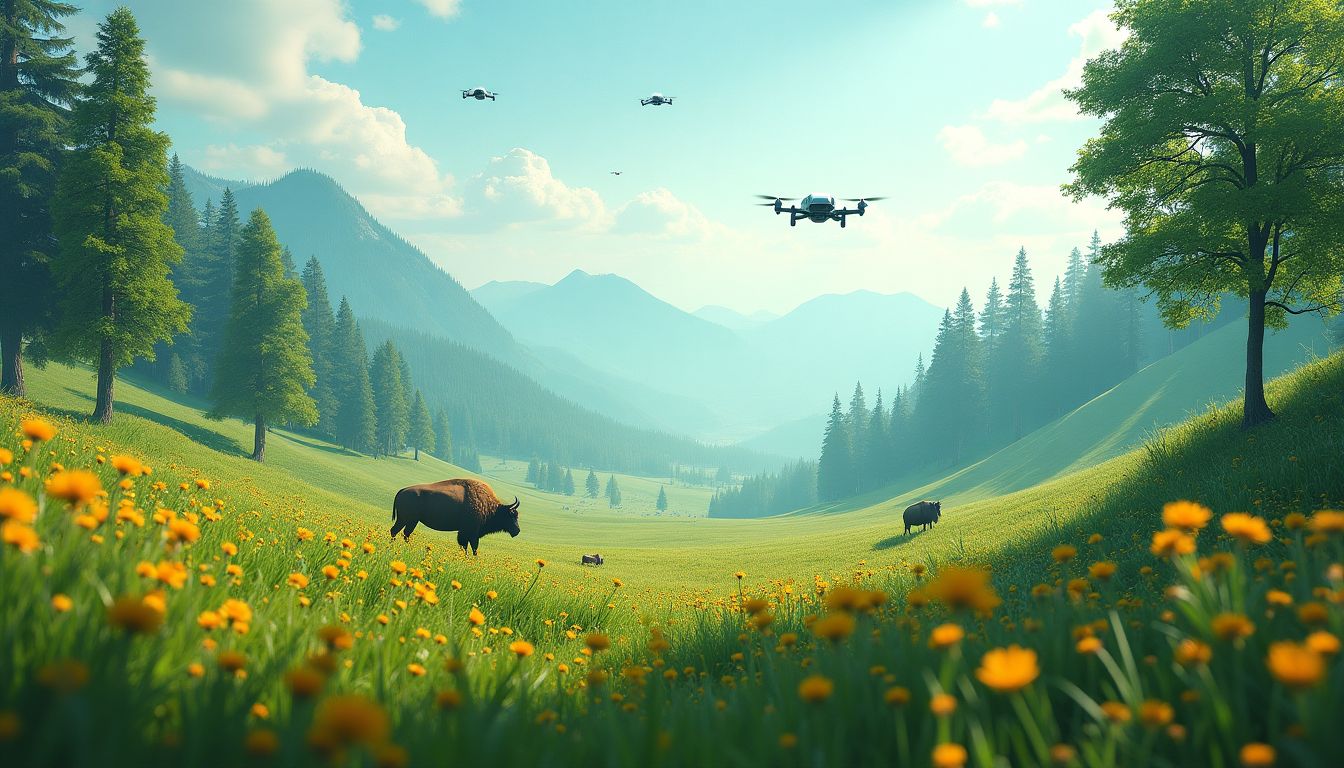
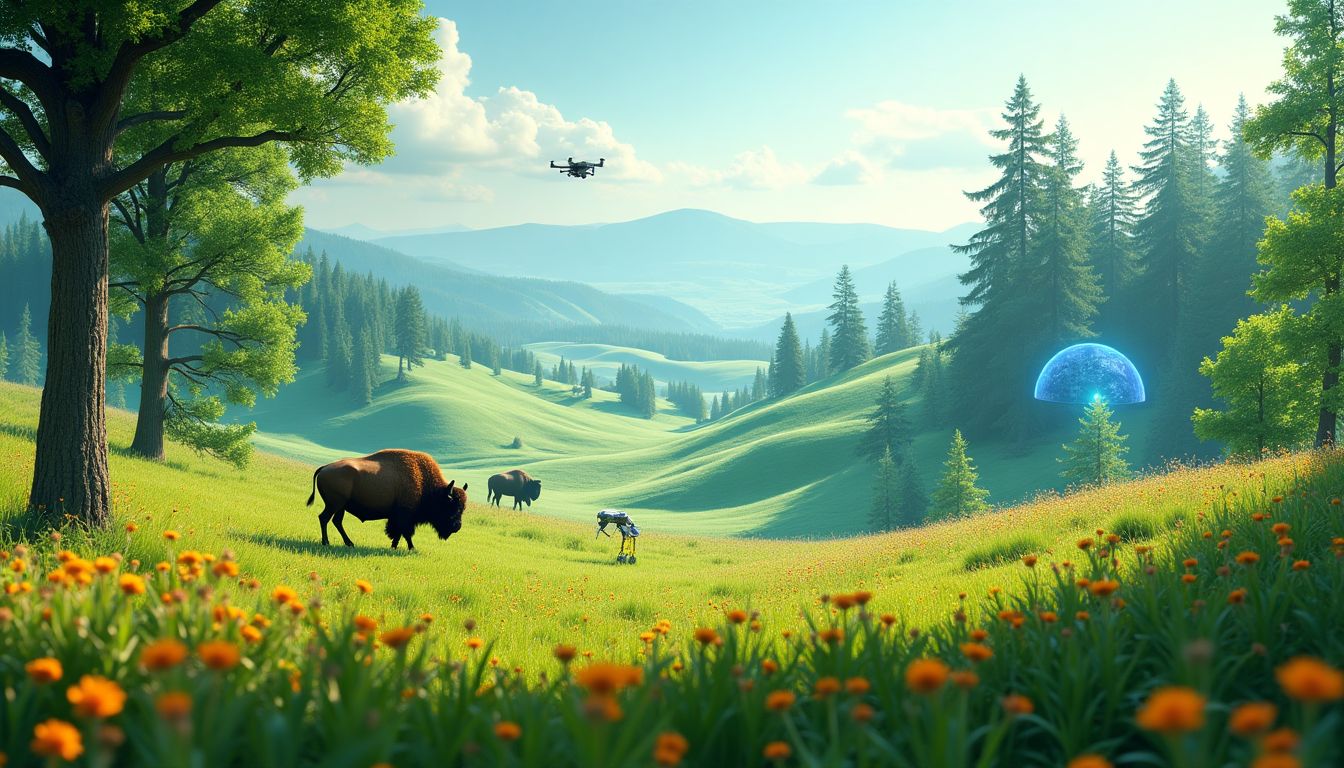
You’re walking through what was once a barren wasteland. Now, lush green forests hum with life, thanks to tiny drones zipping overhead. They’re not delivering your Amazon packages—they’re planting trees. Nearby, artificial intelligence monitors predator-prey dynamics to ensure balance within the ecosystem. Don't get too close; a robotic "shepherd" is tracking bison as they resettle their ancestral territory. This isn’t a sci-fi storyboard or a scene out of Jurassic Park. It’s intelligent rewilding, a radical fusion of technology and ecology that has the potential to rewrite Earth's biodiversity crisis.
We live in an age where nearly 1 million species face extinction, and yet, the scale of ecological degradation is becoming almost too monumental for traditional conservation efforts to tackle. Researchers like Dr. Clara Malansky, technologists such as Andrew Ng, and environmentalists like E.O. Wilson have all wrestled with the question: how do we repair nature in an age where time is running out? They see technology as more than a tool; it’s now an indispensable partner. By blending AI algorithms with advanced robotics, scientists aim to not only restore degraded ecosystems but make them more resilient against future challenges like climate change.
In this exploration of "intelligent rewilding," we’ll dive into how predictive AI, drones, and even robots are reshaping conventional conservation strategies. Along the way, we’ll tackle thought-provoking questions, like whether humanity must rely on machines to undo these messes, and what that says about our relationship with the planet. Are we saving nature—or simply engineering it? It’s a paradigm shift that forces us to rethink both progress and preservation.
Intelligent rewilding refers to the use of AI, robotics, and ecological modeling to restore degraded ecosystems. By introducing species, rebuilding habitats, and monitoring biodiversity through advanced technology, it aims to fight biodiversity loss and environmental imbalance at large scales.
1. Understanding Rewilding: Definitions, History, and Challenges
1.1 What is Rewilding?
At its most basic, rewilding is about stepping aside and letting nature do what it does best. It’s based on the principle of minimal human intervention. The goal? Allow ecosystems to self-regulate and evolve as they once did. Think of it as Mother Nature’s reboot button. One famous example of rewilding in action comes from Yellowstone National Park. Back in the 1990s, researchers reintroduced wolves to the area, which led to an unexpected cascade of ecological benefits—from controlling deer populations to reviving plant life along riverbanks. The wolves essentially reshaped the park’s ecosystem.
Rewilding can take on different forms. Passive rewilding is as simple as fencing off an area and letting it revert to its natural state. Active rewilding, however, often involves hands-on efforts like species reintroductions or targeted rehabilitation of habitats. For example, in Europe, attempts to bring back predators like the Eurasian lynx or the Iberian wolf have sparked controversy—but they’ve also breathed new life into depleted landscapes. This mix of triumphs and challenges makes rewilding a bold yet imperfect solution.
1.2 Challenges
Rewilding, while inspiring, is anything but easy. Human-wildlife conflicts remain one of the thorniest issues. Imagine living near a rewilded zone where bears or wolves have been reintroduced. It’s exhilarating in theory but unsettling when your livestock or livelihood is at stake. Funding is another roadblock, as conservation often takes a backseat to profit-driven initiatives. And then there’s climate change, which complicates things even further. Entire ecosystems are shifting, and the animals and plants we aim to help may no longer fit their historical habitats.
Take an attempt in England, for instance, where Knepp Estate turned its agricultural land into a haven for species like nightingales and storks. While the project garnered international acclaim, local farmers worried about its domino effects on adjoining lands. Rewilding doesn't just affect one patch; it radiates outward, often in unpredictable ways.
1.3 Why AI Is Necessary
Traditional conservation methods, however well-intentioned, can feel like a losing battle when pitted against the sheer scale of ecological collapse. This is where AI becomes the superhero we didn’t know we needed. Think about it: conservationists used to depend on manual data collection paired with endless trial and error. With AI, we now have predictive tools capable of mapping out entire ecosystems before lifting a finger. For instance, programs like Microsoft’s AI for Earth can simulate food webs or predict the impact of species reintroductions in real-time, saving enormous amounts of time and resources.
The numbers speak for themselves. According to IPBES, roughly 1 million species are at immediate risk of extinction due to human activity. Biologists and researchers are overwhelmed. But AI has the power to scale up efforts, from monitoring ecosystems using drones to recommending intervention strategies tailored to local climates and species dynamics. The precision and speed of AI are game-changers in a space that has, for too long, been defined by its limitations.
2. The Power of Predictive AI in Ecosystem Management
2.1 Simulating Ecosystems in Silico
Imagine having the ability to predict the future of an ecosystem before reintroducing a single animal or planting a single tree. That’s what Artificial Intelligence does with “digital twins” of ecosystems. By creating a virtual replica of a real-world environment, scientists can simulate the outcomes of various rewilding scenarios. This technology has already seen success in fields like urban planning and healthcare, and now it’s being applied to biodiversity.
Take Microsoft’s AI for Earth program, for example. Their tools help researchers model predator-prey interactions, predict vegetation regrowth, and anticipate how climate shifts may affect a rewilded area over decades. By factoring in variables such as rainfall, temperature, and human-wildlife interactions, AI can outline the best strategies for species reintroductions. It doesn’t stop there. These simulations can warn of unintended consequences, such as overpopulations or resource scarcity.
Another case comes from the Nature Conservancy. Through advanced modeling, they’ve mapped entire migration patterns for species in South America, ensuring safe passage corridors amid deforestation. Now, picture applying that level of precision to rebuilding ecosystems devastated by wildfires, like in California or Australia. It’s not just a tech pipe dream—it’s happening, and it’s game-changing.
2.2 Guiding Biodiversity Hotspots
Where do you start when the planet has so many threatened ecosystems? AI is making this overwhelming question manageable by assessing biodiversity hotspots. These are areas rich in species found nowhere else but at high risk of ecological collapse. Algorithms analyze satellite images, GPS data, and climate forecasts to identify which areas have the best chance of ecological recovery with human intervention.
For example, by layering satellite data with machine learning, conservationists in Africa have traced ancient wildlife migration corridors that were long thought lost. Tools like Google Earth Engine allow ecologists to analyze terrain, detect illegal deforestation activity, and protect native habitats faster than ever before. A particularly fascinating case study comes from the Amazon Rainforest. In regions heavily affected by illegal logging, researchers used AI to identify pockets of flora that could act as “seed banks” for rewilding efforts—a groundbreaking initiative driven by machine learning.
Biodiversity modeling doesn’t just help pinpoint locations; it also aligns efforts with climate predictions. For instance, artificial intelligence cross-references data from organizations like NOAA to ensure that rewilded ecosystems can adapt to rising temperatures or varying rainfall patterns. It’s a proactive approach, unlike traditional methods which often react to damage after it’s already done.
3. Automated Rewilding: Drones, Robots, and Machine-Guided Species Deployment
3.1 Reforestation Drones and Automated Farming
If you’ve ever seen a drone race across the sky, you know they’re fast and nimble. Now imagine those drones planting trees instead of capturing videos. Enter reforestation drones—high-tech gadgets capable of planting as many as 100,000 trees in a single day. That’s at least 10 times faster than traditional human planting methods. Companies like BioCarbon Engineering are leading global efforts with autonomous aerial fleets designed to restore degraded landscapes.
Here’s how it works: these drones carry specially designed pods filled with seeds, nutrients, and protection against harsh environmental conditions. After scanning the terrain with LIDAR (think radar, but with lasers), the drones drop seed pods at optimal positions. This technology has already restored mangrove forests in Myanmar and damaged areas in Australia’s Outback. It’s not just planting—it’s precision planting, guided by data for maximum impact.
Even more exciting is the adaptation of agritech principles such as FarmBot. These automated systems, originally designed for food production, are now being repurposed for conservation. Imagine miniature robots spreading moss or lichens over barren tundra, kickstarting processes that lead to full forest regrowth. This might sound like sci-fi, but these innovations are already in the works.
3.2 Autonomous Species Deployment
Rewilding often involves keystone species, the organisms that hold ecosystems together. But capturing, transporting, and monitoring animals like bison, wolves, or apex predators requires resources that are out of reach for most conservation initiatives. Enter autonomous robots. These AI-driven machines not only track endangered species but also ensure their survival post-release.
Take the example of National Geographic's collaboration on reintroducing bison to the plains of Montana. By using tagging drones, scientists monitored herds for health and movement while autonomous feeding stations provided nutrients during harsh seasons—without human presence. Similarly, devices equipped with AI track reproduction, manage population density, and even deter poachers.
There’s also research into bio-robots that simulate the natural behaviors of certain species. These mechanical “dummies” can help train real animals to adapt to unfamiliar environments post-release. For instance, artificial penguins deployed in the Antarctic mimic social behaviors, helping shy populations re-establish colonies in safer regions. The limits are disappearing faster than you think, and every year, we edge closer to making these interventions seamless.
3.3 Biotic Stress Mitigation
One of the big fears about rewilding projects is human-wildlife conflict—nobody wants predators wandering into villages or farmlands. The solution? AI robots that act as intermediaries between human and wildlife needs. For instance, companies are developing autonomous systems to manage livestock stress caused by predatory animals like wolves. Using heat signatures and machine learning, these devices can detect wolves nearby and emit deterrents like sound or light, reducing potential clashes.
Another innovative example is the World Wildlife Fund's AI project. By monitoring camera traps and sound sensors, the software alerts nearby communities whenever animals stray too close for comfort. Test cases in Kenya have shown that these systems not only reduce stress on humans but also save endangered animals from retaliatory killings.
If you think the future of rewilding lies in just planting seeds and moving animals around, think again. With these robots and AI-enabled systems orchestrating the process, the balance of nature might rest in the hands of machines—but with the pulse of nature firmly in control.
4. Data-Driven Decision Making for Rewilding Success
4.1 Massive Data Collectors: Sensors and IoT Devices in Wildlife and Land Monitoring
Imagine having an invisible network of eyes and ears across vast, remote wilderness. Thanks to the integration of Internet of Things (IoT) devices, it's already here. Tiny sensors scattered across habitats can now monitor everything from soil health and air quality to animal migration patterns and water availability. The data they stream in real time forms the backbone of data-driven rewilding efforts.
Take for instance the work done by IoT For All, which showcases how IoT is revolutionizing Earth monitoring. Sensors designed for resilience in harsh conditions track moisture content, CO2 levels, and even detect poachers long before they can disrupt wildlife.
Here's what these massive data collectors bring to the table:
- Migration Tracking: Advanced GPS collars keep tabs on the paths taken by reintroduced wildlife.
- Ecosystem Alerts: Early warnings for droughts or soil erosion empower conservationists to respond proactively.
- Water Resource Management: Smart sensors gauge rivers, streams, and reservoirs to prevent overuse or contamination.
Such innovations are celebrated by organizations like World Wildlife Fund, which has historically pushed for conservation technology. With IoT, rewilding projects aren't just monitoring reality—they’re altering how we interact with it.
4.2 AI Models for Long-Term Impact Prediction
A single decision in rewilding could ripple across decades—or longer. That’s why artificial intelligence excels at spotting long-term sustainability pitfalls. Machine learning analyzes patterns hidden in huge historical datasets, predicting what an ecosystem might look like 10, 50, or even 100 years into the future.
For example, projects like Microsoft's AI for Earth use advanced computational models to determine how reintroduced species could either balance or upset an ecosystem. By analyzing predator-prey cycles, vegetation recovery, and climate resilience data in tandem, AI generates insights into sustainability scenarios.
Consider this hypothetical example:
| Scenario | Outcome Prediction | Recommended Action |
|---|---|---|
| Introduce wolves into a grassland | Reduced overgrazing by elk but slight rise in cattle predation | Build no-conflict zones using wildlife corridors |
| Restore mangroves in a coastal region | Improved storm protection, rebound in fish populations | Expand restoration to similar zones |
These models go beyond guiding species reintroduction—they also monitor how ecosystems react to climate changes. If a restored prairie begins to degrade unexpectedly, AI systems could quickly adjust by identifying and mitigating root issues.
4.3 Interdisciplinary Collaboration
No single field has all the answers. To fully unleash the potential of AI in rewilding, collaboration across multiple disciplines is critical. Ecologists provide expertise on species dynamics, data scientists write algorithms to process millions of data points, climate scientists model weather impacts, and sociologists engage with local communities to ensure social compatibility.
Think of the collaborative powerhouse projects like Google Earth Engine, which merges geospatial technologies with biodiversity preservation. Or consider the involvement of DeepMind, famous for applying reinforcement learning to model complex natural systems. This marriage of tech and ecology revolutionizes what’s possible.
Thanks to these cross-industry collaborations, humanity has the tools not just to rebuild what’s been lost but to imagine entirely new possibilities for sustainable living on our planet.
5. Ethical and Philosophical Implications of AI in Rewilding
5.1 AI and Nature: A Techno-Utopian Dream or Ecological Necessity?
Can technology fix the very problems it helped create? It’s a paradox that intelligent rewilding forces us to confront. On one hand, skeptics argue that using AI to reengineer nature might be hubristic—a techno-utopian dream where humans “play god.” On the other hand, with 1 million species facing extinction (as reported in National Geographic), some see AI as an ecological necessity, a desperate but powerful attempt to undo the harm.
Consider this: AI is not "taking over" nature but accelerating its recovery. Just as reforestation drones mimic natural seed dispersal processes, machine learning mirrors the natural intelligence of ecosystems. Is using AI to restore harmony really more disruptive than bulldozing forests using outdated machinery was?
These unresolved debates are crucial. If society views AI-driven rewilding as tampering rather than restoration, implementation efforts could face pushback before they even begin.
5.2 Community Impact
Technology must serve communities, not alienate them. Successful rewilding goes beyond ecosystems—it also builds harmony between human and non-human life. Communities living in or near rewilding sites need to feel like partners, not passive spectators.
For instance, consider large-scale initiatives like the Yellowstone to Yukon Conservation Initiative, which engaged local stakeholders by knitting together protected wildlife corridors. Indigenous knowledge has also been increasingly woven into AI-based conservation practices, with powerful results. Respecting these communities involves:
- Transparency: Sharing rewilding goals, AI methodologies, and projected impacts upfront.
- Inclusivity: Understanding how local culture and livelihoods intersect with ecosystems.
- Equity: Ensuring affected populations share in the advantages of restored lands.
Improperly managed tech solutions can result in ecological gentrification: the displacement of poorer or marginalized groups in favor of “greener” landscapes. Ethical AI must aim to uplift both the land and its people.
5.3 Downside Risks
What happens if AI gets it wrong? While artificial intelligence promises precision, it’s not infallible. Over-reliance on flawed algorithms could lead to unintended ecological disasters. For instance, introducing a species without accounting for subtle interdependencies might destabilize an already fragile ecosystem.
Besides ecological pitfalls, there’s the risk of complacency. If we invest everything into AI, will the urgency to address root environmental causes—like rampant consumption—wane? Critics caution against placing all our hopes for survival in technology without overhauling destructive human habits.
In fiction, this might sound straight out of Jurassic Park—a perfect demonstration of “life finding a way” in unpredictable and chaotic ways. However, in reality, AI-driven rewilding could simply be another reminder that there are no magic bullets to saving our failing ecosystems. A balance must be struck.

6. AI Solutions: A Blueprint for Intelligent Rewilding
6.1 Simulating Ecosystem Dynamics with AI
Artificial Intelligence thrives on patterns, and ecosystems are nature's ultimate symphony of interconnected patterns. To ensure intelligent rewilding initiatives succeed, the first critical step involves creating comprehensive digital simulations—what many call "digital twins" of ecosystems. Picture this: a virtual Yellowstone in silico, where AI models predict predator-prey relationships, simulate seasonal plant growth, and gauge the potential challenges of introducing species like wolves or beavers.
Groups like Microsoft's AI for Earth are already laying the groundwork for this by tying satellite data, local ecological insights, and machine learning algorithms together. By creating predictive models, we can estimate an ecosystem's tipping points and safety nets with astonishing precision. For example, if we know that introducing bison to certain plains will impact grass growth cycles in year two—a simulation can suggest compensatory flora introductions ahead of time to create a functional buffer. Machines aren't just guessing; they are strategizing restoration with data-backed forecasts.
6.2 Precision-Based Deployment of Autonomous Tools
Rewilding is as much about coordination as it is about solving logistical barriers. Enter drones that plant trees, robots that monitor wildlife, and biosensors that collect climate data in real time. Companies like Dendra Systems are programming drones to plant trees in ways that mimic naturally dispersed seeds, with one drone capable of planting 400,000 trees a day. These tools could reforest degraded rainforests or grasslands in a fraction of the time traditional teams could.
On the species introduction side, autonomous rovers equipped with AI systems could track and release keystone species with surgical precision. Take the hypothetical example of reintroducing lynxes into the Alps. An AI-enabled rover could trail live prey in specific patterns, observe lynx behavior post-release, and autonomously adapt strategies based on predator adjustment periods. Even during emergencies, these tools can provide support, like constructing temporary irrigation for replanted zones experiencing drought.
6.3 AI-Powered Collaboration Between Science and Policy
Effective and enduring rewilding isn’t just a scientist’s dream; it requires policy makers, funders, locals, and NGOs to work hand-in-hand. AI’s greatest gift is its ability to bridge these sectors by acting as a real-time mediator and task optimizer. For instance, platforms like Google Earth Engine already offer scalable datasets and biodiversity visualization maps to guide policy frameworks. If these technologies were automated into legislative dashboards, national governments could validate evidence for every species reintroduction or habitat regeneration policy with unimpeachable clarity.
Additionally, machine learning can mine scientific databases, extracting insights and case parallels for individuals to review. This way, organizations don't start from scratch. They build from history, analyzing successful rewilding efforts like Africa’s Great Green Wall or Yellowstone’s wolf reintroduction to refine future methodologies.
6.4 Actions Schedule / Roadmap for Intelligent Rewilding
Imagine you're leading the charge. Here's how to operationalize intelligent rewilding using today’s tech:
- Day 0: Register "GlobalRewildingAI.org" and create two subdomains—one for public outreach (stories, live data streams) and one for academic/research collaboration.
- Day 1: Secure funding by hosting a virtual summit featuring key environmental advocates, tech giants like OpenAI, and international NGOs.
- Day 2–Week 1: Convene an interdisciplinary task force (ecologists, machine learning engineers, robotics experts) to define project scopes and identify pressing rewilding priorities worldwide.
- Week 2: Cluster computing resources using platforms like DeepMind and Gemini AI to begin region-specific modeling of degraded ecosystems. Select test cases (e.g., depleted mangroves, Midwestern U.S. grasslands, African savannahs).
- Month 1: Draft a white paper outlining AI rewilding objectives. Commit resources and partnerships between universities like MIT, tech firms like Google, and conservation orgs like WWF.
- Month 2: Establish pilot projects for degraded sites across three continents. Integrate local environmental knowledge to ensure native flora/fauna compatibility and community buy-in.
- Month 3–6: Deploy drones for mass tree planting and autonomous robots for wildlife monitoring and release. Simulate species adjustments to environmental variables in controlled test zones.
- Month 7–12: Expand IoT sensor hubs to measure restored habitats’ vital signs (e.g., soil carbon, water pH, animal migration). Publish early results and spur public CSR investments.
- Year 1: Consolidate political will by sharing measurable success stories backed by AI-driven evidence frameworks. Host ecological restoration expos to promote global adoption.
- Year 2: Analyze long-term ecological stability metrics. Iterate AI frameworks for scalability to tackle larger ecosystems (Amazon Rainforest, Sahara fringe). Publish open-source restoration tools accessible to any government or NGO.
---
A Future Worth Restoring
As we stare down the accelerating decline of our ecosystems, it’s clear that traditional methods alone cannot rise to the challenge. Intelligent rewilding, blending Artificial Intelligence's precision with nature's resilience, offers an unparalleled chance to revive our planet. Just imagine once-silent forests echoing with bird songs again, barren grasslands teeming with life, or once-depleted rivers playing host to cascading biodiversity.
But here’s the kicker—this revolution doesn’t rest on AI alone. It demands human vision, policy ambition, and cultural respect for the wild. Machines may simulate, but it’s humanity that steers this effort toward ethical stewardship. While a misstep could harm ecosystems further, a thoughtful, calculated approach offers hope beyond anything conservation has yet achieved.
Are you ready to be part of this conversation? Which part of the intelligent rewilding equation excites you, terrifies you, or even challenges your assumptions? Jump into the debate by leaving a comment below, because the time for action is now. Let's sow the seeds for a wilder, fairer, and greener tomorrow.
Ready to build this better world? Subscribe to our newsletter and step into iNthacity: the "Shining City on the Web." Like, share, and join the debate—we can't save the planet alone!
FAQs: Intelligent Rewilding and AI-Driven Conservation
What is intelligent rewilding?
Intelligent rewilding is a modern approach to ecological restoration that combines technology like Artificial Intelligence (AI), robotics, and advanced data analysis to heal damaged ecosystems. Instead of relying solely on traditional conservation methods, it leverages predictive models, automated species reintroductions, and real-time monitoring to restore balance to nature faster and more effectively.
For example, imagine drones planting native trees across deforested land or robots helping reintroduce keystone species like wolves or bison. This technology-driven method supports the idea that nature can rebound, but humans must give it a high-tech helping hand. Read more about rewilding here.
Why do we need AI in rewilding?
Ecosystem degradation has reached such an overwhelming scale that traditional conservation measures can’t keep up. Every day, forests disappear, species become extinct, and landscapes are altered by human actions. AI can accelerate efforts by identifying the best rewilding sites, predicting how species will adapt, and monitoring the health of these efforts in real time.
For instance, the United Nations reports that 1 million species are at risk of extinction. By using satellite images and machine learning, AI can identify critical biodiversity “hotspots” and guide conservationists on where to act first.
What technologies are used in intelligent rewilding?
Several cutting-edge technologies work together in intelligent rewilding:
- AI and Machine Learning: Tools like predictive algorithms analyze data to simulate how reintroducing animals or plants will impact an ecosystem.
- Drones: Companies like BioCarbon Engineering use drones to plant millions of trees efficiently.
- Robots: These include devices designed to monitor habitats, deliver food, or track animal movements.
- Internet of Things (IoT): Sensors deployed in forests, rivers, and deserts provide real-time data on everything from soil quality to migrations.
One prominent example is Microsoft’s AI for Earth program, which provides tools and funding for AI-based conservation projects worldwide.
What are the benefits of intelligent rewilding?
Intelligent rewilding can accomplish in years what traditionally took decades. Its main benefits include:
- Speed: Drones and automated machines work faster than human labor alone, planting thousands of trees in days or reintroducing species with pinpoint accuracy.
- Precision: AI models predict how wildlife reintroductions, like elephants or beavers, will affect ecosystems and adapt plans accordingly.
- Scale: With technologies like satellite imagery, conservationists can tackle global biodiversity challenges across continents.
These efforts aim to reverse biodiversity loss, mitigate climate change, and restore vital food chains. For example, when wolves were reintroduced in Yellowstone National Park, they not only controlled deer populations but also reshaped rivers by influencing vegetation growth.
What are the risks of using AI for ecological restoration?
Despite its potential, intelligent rewilding carries risks if not carefully managed:
- Over-Reliance on AI: Machines aren’t perfect. A flawed prediction could disrupt ecosystems rather than help them.
- Unexpected Results: Species interactions are complex, and even small errors can cause imbalances.
- Ethical Concerns: Should humans use technology to "play god" in nature? Issues like local community displacement must also be addressed.
For instance, in Europe, reintroducing species such as lynxes has occasionally resulted in human-wildlife conflicts that were unforeseen by initial models. More collaboration between scientists, AI developers, and local communities will help avoid such issues.
Are there successful examples of AI-assisted restoration?
Yes, there are several groundbreaking efforts where AI has supported rewilding and ecosystem restoration:
- AI for Earth: Microsoft has partnered with conservation groups to track biodiversity and model species’ habitats.
- Reforestation Drones: Companies like BioCarbon Engineering planted over 26,000 seeds in a single day in Myanmar.
- Wildlife Tracking: In Africa, AI-powered cameras monitor species and catch poachers in collaboration with the World Wildlife Fund (WWF).
These examples highlight the power of combining human ingenuity and AI to repair some of the planet’s most damaged ecosystems.
What role do local communities play in intelligent rewilding?
Local communities are essential to the success of rewilding projects. Their knowledge of the land, wildlife, and ecological history often complements AI tools. Indigenous groups, for example, have valuable insights into traditional land management practices that technology may overlook.
Involving stakeholders ensures transparency, builds trust, and addresses potential conflicts. For example, in India, conservation efforts to protect tigers often include compensation programs for crop damage or livestock losses, ensuring local farmers also benefit from the changes.
Can AI predict the long-term success of rewilding efforts?
Yes, and this is one of AI’s greatest strengths. Long-term modeling uses advanced algorithms to predict how ecosystems will evolve over decades. By analyzing factors like climate change, food chain dynamics, and habitat suitability, AI helps conservationists refine their strategies.
For example, the Nature Conservancy uses tools that overlay future climate scenarios with current biodiversity hotspots to target regions most in need of intervention. Learn more about their work on their official website.
Will this technology solve the planet's biodiversity crisis?
While intelligent rewilding offers enormous promise, it is not a magic bullet. Addressing biodiversity loss also requires tackling the root causes of ecosystem degradation, like deforestation, pollution, and overconsumption. AI and robotics can accelerate restoration, but they must be part of larger, comprehensive environmental policies.
The bottom line? Intelligent rewilding provides hope and tools we’ve never had before, but it’s up to humanity to use these wisely and act urgently.
Is this work urgent?
Absolutely. The clock is ticking on biodiversity loss. Every delay means more species vanish forever, and vital ecosystems degrade further. Scientists estimate we have less than a decade to take significant action to prevent catastrophic environmental collapse. Intelligent rewilding offers a powerful way to act now and leave a healthier Earth for future generations.
What are your thoughts on intelligent rewilding? Could AI hold the key to repairing the planet, or are the risks too great? Let’s start the conversation in the comments below!
Wait! There's more...check out our gripping short story that continues the journey: The Collision
Disclaimer: This article may contain affiliate links. If you click on these links and make a purchase, we may receive a commission at no additional cost to you. Our recommendations and reviews are always independent and objective, aiming to provide you with the best information and resources.
Get Exclusive Stories, Photos, Art & Offers - Subscribe Today!
Related posts:
 Molecular Machines: Unlocking the Future of AI-Powered Nanoscale Robotics
 Guardians of the Wild: How AI-Powered Drones and Robots are Transforming Wildlife Conservation
 AI-Powered Self-Repairing Roads: Transforming Infrastructure Maintenance with Smart Materials and Sensors
 AI-Powered Artificial Gravity Generators: Transforming Space Habitats into Comfortable Homes
 AI and Fusion-Powered Cities: The Blueprint for a Sustainable Urban Future





1 comment