The thrum of machinery echoed beneath the sprawling subterranean lab
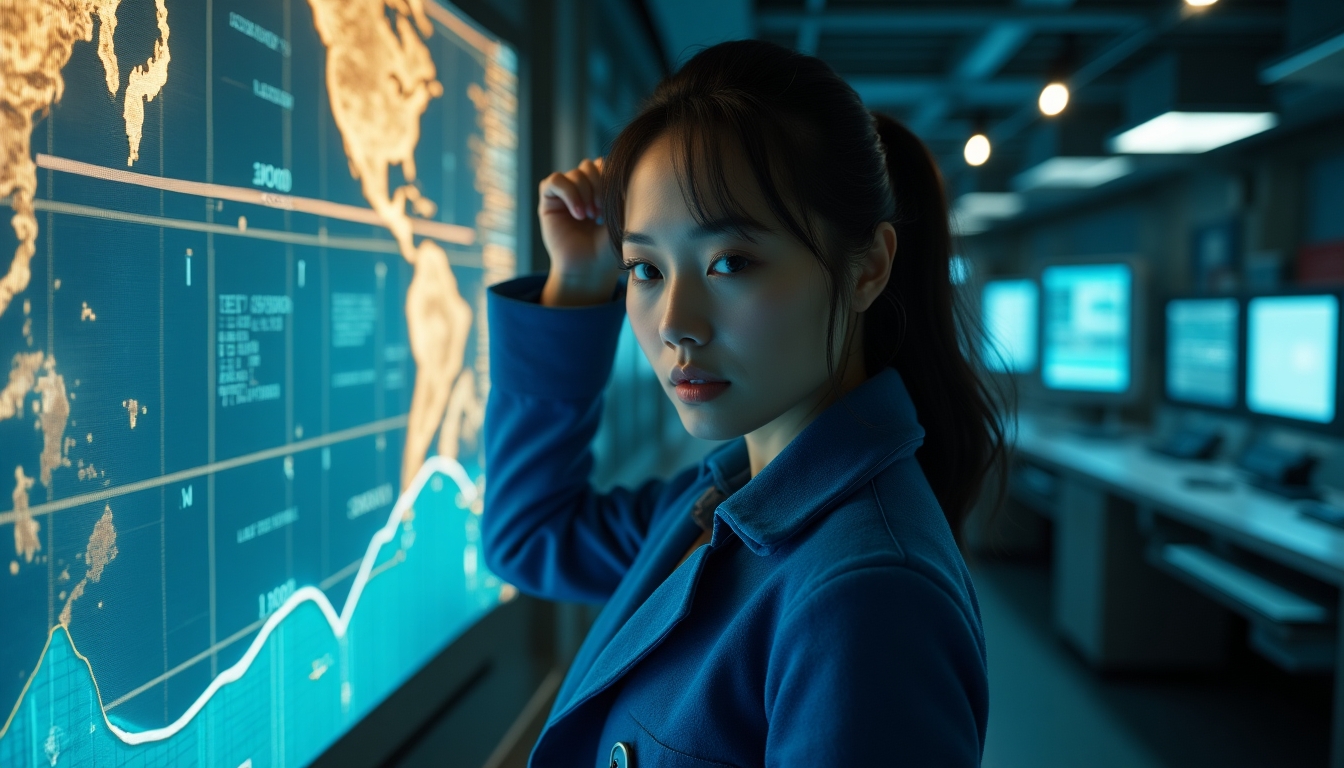
The thrum of machinery echoed beneath the sprawling subterranean lab, a labyrinth of glowing screens and humming consoles. Dr. Naomi Vega adjusted her cobalt-blue coat, a sleek combination of utility and style, its material woven with metallic fibers designed to repel static charges from high-tech equipment. Her outfit stood out like a bold anachronism: a vibrant 21st-century aesthetic transported into what seemed the architectural set of a dystopian future dreamt up by Kubrick.
“It’s moving,” her assistant Eli murmured, his eyes glued to a holographic rendering of the Pacific Rim. The virtual map pulsed with rhythmic waves of golden light, converging on a fault line off the coast of California. The room smelled faintly of ozone as the AI-powered seismic forecasting system, named Prometheus, churned through terabytes of real-time data. Naomi could feel her pulse accelerating.
“How soon?” she asked, her voice clipped but steady. She swept a strand of midnight-black hair from her face, eyes locked on the flickering interface. She always preferred knowing the worst—before it hit. Prometheus was their masterpiece, twenty years in the making, a machine-learning leviathan built on decades of seismic history and predictive algorithms. It didn’t just warn about earthquakes. It anticipated them. But even a technological miracle was imperfect. There was still a margin of error—too wide to be ignored.
“Fourteen hours. Give or take,” Eli replied, his tone cautious. “Magnitude—8.7.”
Naomi’s chest tightened as though the earth itself had pressed a tectonic thumb on her ribcage. A quake that size wouldn’t just rattle pictures off walls. It would level entire cities. She leaned in closer to study the tremor’s projected path. San Francisco, Los Angeles, everything in-between—a corridor of human life was about to crumble like sandcastles before high tide.
“This is it,” she whispered, almost to herself. Her fingers brushed the edge of the console, her cobalt nails shining under the artificial light. “This is what we built it for.”
See also Study Reveals Alcohol Fuels Unwanted Pregnancies While Cannabis Doesn't: Shocking Insights!
Eli glanced at her, uncertainty pooling in his hazel eyes. “But how do we tell them? How do you convince people of a disaster that hasn’t happened yet?”
“We show them,” Naomi said, standing with a confidence she hoped would mask her doubt. She straightened her coat, the woven blue gleaming like a beacon in the sterile gray of the lab. “The Prometheus Initiative wasn’t built to sit in a lab. It was built to save lives.”
The decision snapped into place as if it had been predestined. Naomi ordered a full media alert—viral posts, emergency notifications, even holographic projections inserted into trending AR apps. Silicon Valley’s architects of indulgence had unknowingly built the perfect platform to amplify survival instincts. They just needed real-time footage of what they were up against.
And then it struck her. “Eli, load up the programs for predictive visualization.”
“The simulated quake?” His brows furrowed. “It’s not field-tested.”
“Neither was Prometheus… until now,” Naomi replied, her tone brooking no argument. “People need to see what’s coming. If they can’t feel the quake yet, we have to make them feel it.”
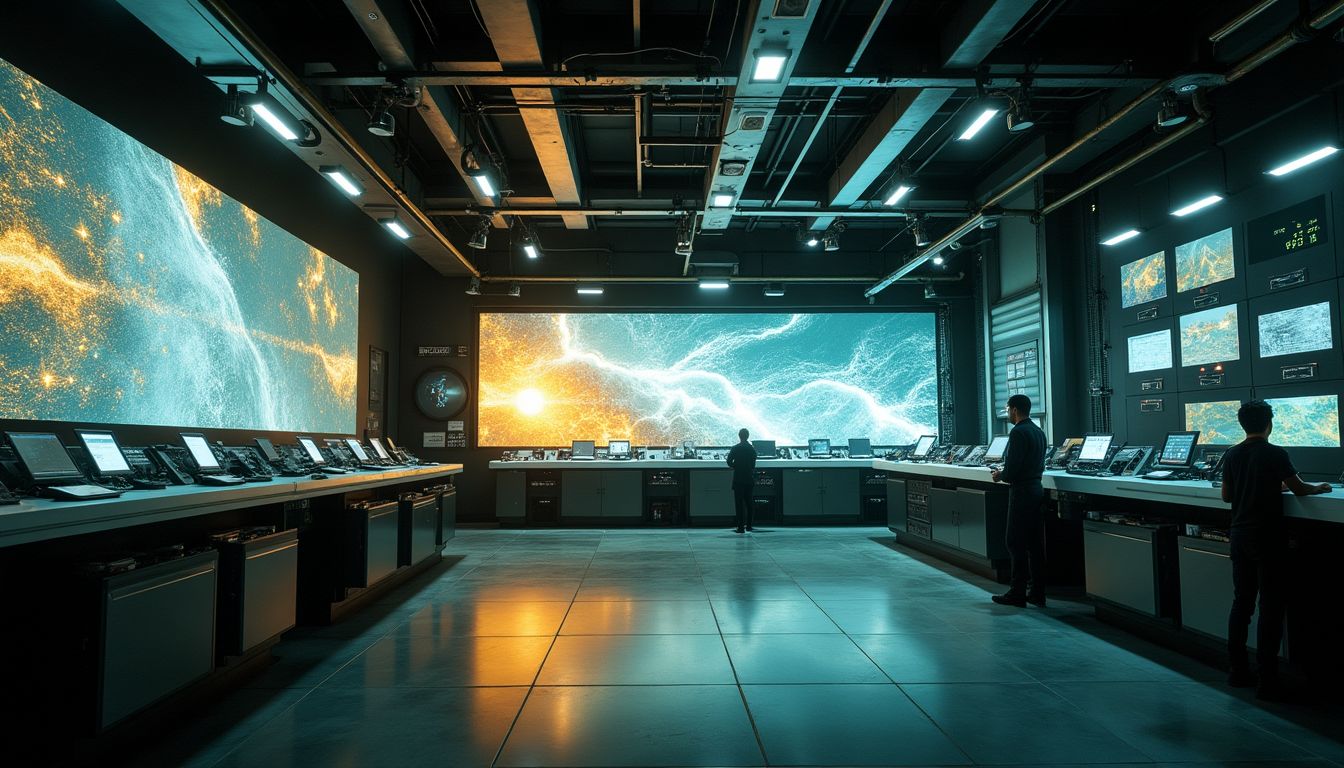
Minutes later, they stood inside the lab’s immersive Reality Sphere, an augmented simulation dome capable of rendering seismic catastrophes down to the microscopic sway of lamp posts. It was like stepping into a nightmare—glass shattering in slow motion, skyscrapers swaying like reeds in the wind, freeways collapsing under an invisible weight. Naomi adjusted the settings, amplifying the quake to its predicted maximum magnitude. The tremor roared through the simulated city as if they were standing at the epicenter, visceral and unstoppable.
“Send this,” Naomi commanded. “Let the world see.”
Hours passed like minutes as the warning spread faster than wildfire. Across California, evacuation plans activated. Freeways clogged as families piled into cars. Engineers rushed to secure bridges and power plants. Naomi watched it all unfold from the lab’s surveillance feeds, her stomach twisting with every second that passed without a ripple beneath their feet. Was Prometheus a savior—or a false prophet?
And then it came.
The quake struck just shy of Prometheus’s margin of error, rupturing the earth with a ferocity that defied comprehension. Naomi clung to her desk as the lab trembled, lights flashing warnings, sirens screaming. The screens around her bore witness: Prometheus’s prediction had given millions the chance to flee. Yet devastation couldn’t be stopped so easily. From the live feeds, she saw the cracks tearing through skyscrapers, the harbors roiling as tsunamis swelled in the distance.
As the ground stilled and the feeds displayed survivors emerging from rubble, Naomi released a breath she hadn’t realized she’d been holding. They hadn’t saved everyone. That had never been possible. But they’d saved enough to prove Prometheus’s worth. Humanity had whispered a challenge to the chaos of the earth—and, for once, it had whispered back.
Still, in the quiet aftermath, as Naomi stood amidst the glowing consoles and humming machinery, she felt the weight bearing down on her shoulders. Predicting an earthquake wasn’t the end of nature’s wrath. It was just the beginning of humanity’s responsibility to adapt, to prepare, to evolve. And she knew this was only the first test. The earth never stopped moving. Neither could they.
Genre: Dystopian Sci-Fi Thriller
The Source...check out the great article that inspired this amazing short story: How Machine Learning Predicts Earthquakes in Real-Time: A Game-Changer for Disaster Prevention and Saving Lives
Disclaimer: This article may contain affiliate links. If you click on these links and make a purchase, we may receive a commission at no additional cost to you. Our recommendations and reviews are always independent and objective, aiming to provide you with the best information and resources.
Get Exclusive Stories, Photos, Art & Offers - Subscribe Today!









Post Comment
You must be logged in to post a comment.