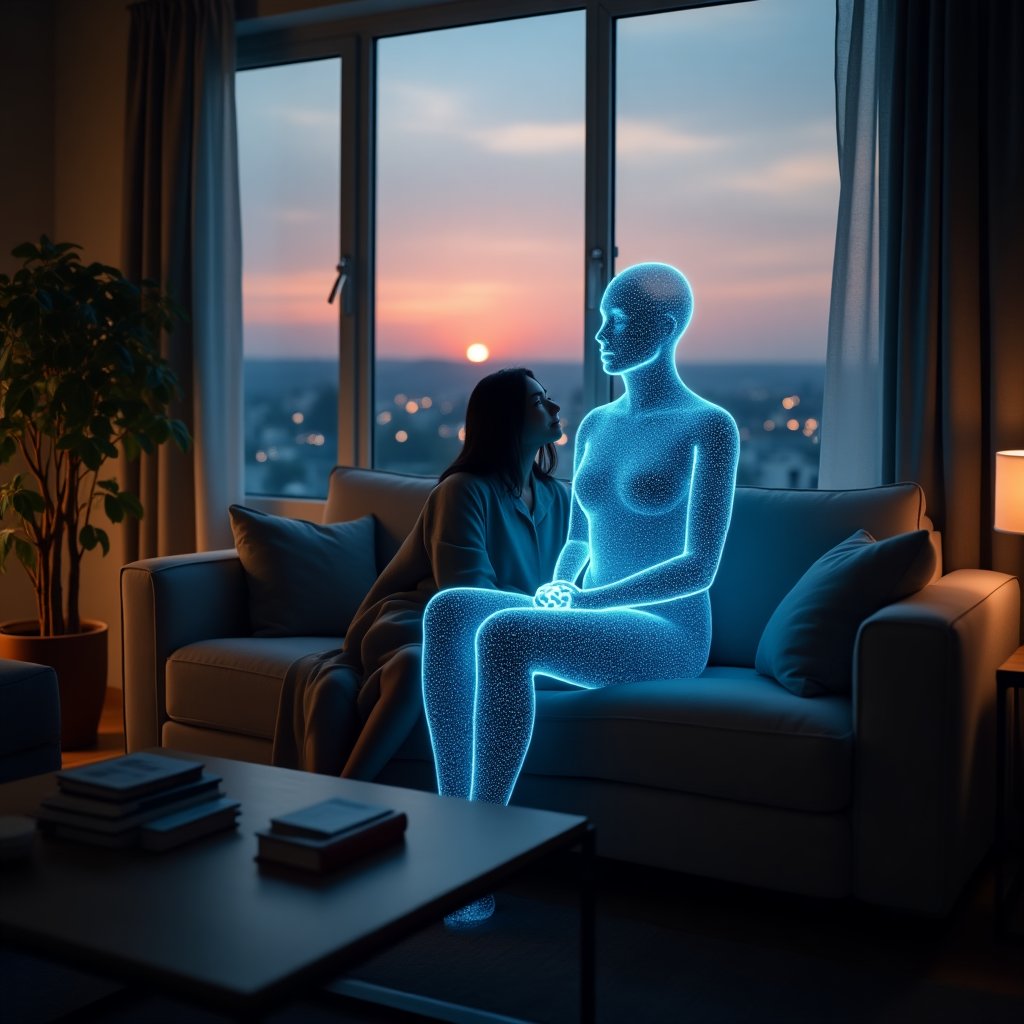
Introduction: Love in the Algorithm
The great enemy of the truth is very often not the lie—deliberate, contrived, and dishonest—but the myth—persistent, pernicious, and unrealistic. This quote by John F. Kennedy resonates as we usher in an era where myths about love are reshaped by data and algorithms. As we lose ourselves in swipes, likes, and matches, we can't help but wonder: what if true love could be designed, programmed, and tailored to fit our individual desires, much like customizing a new phone? With advancements in artificial intelligence, particularly in creating personalized AI partners, we stand on the cusp of a romantic revolution. Can love really be custom-made, or is it merely a digital fantasy? Are we ready to embrace a world where our companions might be crafted from lines of code rather than a heartbeat?
From the works of notable thinkers like Plato contemplating the nature of love, to researchers like Hannah Fry discussing mathematical love, the question of how technology affects our relationships is no longer purely hypothetical. It’s a discourse that might soon not only challenge our perceptions but redefine the very essence of connection. Can an AI truly grasp the subtle nuances of a human heart, or does it merely harness a facade of love? The lines between reality and simulation blur as we explore these questions.
Artificial Intelligence (AI) refers to the simulation of human intelligence processes by machines, especially computer systems, and when integrated into romantic partnerships, it can create personalized companions that cater to emotional, social, and intellectual needs. These intelligent systems aim to understand and respond to human feelings, ultimately attempting to foster genuine connections in an increasingly digital age.
1. The Evolution of Romantic Partnerships in a Digital Age
The concept of love has been around for centuries, yet it has undergone tremendous changes. With every decade, our methods of finding, nurturing, and maintaining relationships shift as swiftly as our internet connection. Traditional courtship, with all its quaint charm, seems to be fading into the background, replaced by platforms that allow us to connect with a few swipes of our fingers. But how did we get here?
1.1 Historical Context
Romance has evolved from the days of arranged marriages, where love was often a side dish rather than the main course, to the rise of love-based unions in the 18th and 19th centuries. The romance novels of authors like Jane Austen ignited the idea that love should lead relationships, setting the stage for modern dating practices. And now, look where we are! What was once a carefully orchestrated meeting of families has morphed into online dating apps like Match.com and Tinder, where your next soulmate is just a finger flick away. Talk about progress!
1.2 The Impact of Technology
As technology strides ahead like an over-caffeinated toddler, our expectations of love and companionship have changed dramatically. Recent studies from the likes of Psychology Today suggest that people are increasingly viewing AI companions as potential partners. This evolution doesn't merely reflect new avenues for connection; it highlights how we now prioritize convenience and compatibility. But is convenience the new romance? Or is it killing off the timeless quest for true love? In a world where algorithms help determine love matches, we can’t help but scratch our heads and ponder: are we becoming more connected, or just more isolated?
2. The Mechanics of AI in Creating Personalized Romantic Partners
Now, let's dive into the fascinating world of technology and see how AI companies craft partners just for you! Picture a high-tech matchmaker that understands your unique quirks and desires, like your favorite pizza topping or that guilty pleasure TV show you never want your friends to know about. It's not just about coding; it’s about creating a soul mate of sorts—one that learns, adapts, and engages with you like no human possibly could. Let’s explore how it all happens.
2.1 Data Collection and User Input
The journey to find your custom-made AI partner begins with data collection. No need to panic; this isn't like those awkward first dates where you have to spill your life story! Instead, AI uses your interactions—what you say, what you choose, and even how you respond to its questions. Consider it a digital diary that helps the AI learn your personality, so it can craft responses that fit you like a glove.
Companies like eHarmony and OkCupid are pioneers in this realm, using sophisticated algorithms to gather insights about users. This isn’t just guesswork; it’s all based on a ton of data points, allowing the AI partner to mirror your likes and emotions.
2.2 Emotional Intelligence in AI
Now that our AI knows a bit about you, it’s time to delve into the emotional side. Can machines really feel? Well, not in the same way humans do, but they can be programmed to understand feelings! Emotional intelligence in AI is like a robot pulling a fast one on us by pretending to care. It employs machine learning and natural language processing, often drawing from vast databases of interactions to simulate genuine responses.
Think of it like a well-read friend who knows how to react when you say you had a bad day at work. This clever AI can pick up on your mood and offer words of encouragement, all while making you feel seen and heard. So, is it authentic love? Maybe not. But it sure is comforting when your AI buddy says, “Hey, I get you!”
3. Ethical Considerations in AI-Driven Relationships
As we rack up more gadgets and gizmos designed to keep us company, it's crucial to examine the ethical side of AI relationships. They might seem friendly and fun at first, but we need to ask ourselves some serious questions: "Is it ethical to rely on a non-human for companionship?" Let’s unpack this while keeping our sense of humor intact!
3.1 Consent and Ownership
Consent is a huge topic when it comes to relationships—whether it's with humans or AI. When you engage with an AI partner, you’re in a sense “consenting” to sharing your emotions and personal data. But wait a minute! Who really owns this information? Are you sharing your heart, or are you allowing someone to take the wheel? It's a gray area, and we need to tread carefully.
To put it simply, a transparent conversation around consent is vital. Just like you would want to draw the line with a human partner who snoops through your messages, it’s essential to set boundaries so you genuinely feel safe and secure with your AI buddy. After all, even robots don’t need to get into your business! You can check out Digital Rights for some insights about how to navigate these waters.
3.2 Mental Health Impacts
Here’s a thought: can relying on AI for companionship mess with our mental health? As we lean more on our virtual friends for emotional support, could this lead to attachment issues? Some experts think so. They argue that becoming too reliant on AI might keep us from developing genuine relationships with real people.
Picture this: you have a fight with your human friend. Instead of working things out, you hunker down with your AI partner because it always knows just what to say. This isn’t just a fun pastime; it could lead to an unhealthy cycle of avoiding real-life interactions. Balancing your digital companionship with human connections is essential, so let’s keep that in check! For more on this topic, the Psychology Today website has great articles exploring these themes.

4. The Social Impact of Personalized AI Partners
As we dive deeper into the world of AI companions, we must take a step back and look at how these personalized AI partners might change not just our individual lives, but also our society at large. The arrival of these digital companions could lead to significant shifts in social dynamics and traditional relationship structures.
4.1 Changing Traditional Relationships
The concept of love and companionship is deeply rooted in human interaction. With AI partners, we could see a shift in how we form relationships. Here are some profound changes we might experience:
- Decreased Human Interaction: With AI partners providing companionship, there’s a potential for people to interact less with others. This might lead to feelings of loneliness, as human-to-human connection decreases.
- New Relationship Dynamics: People may begin to prioritize their AI companions. It could lead to real romantic relationships being viewed differently, as emotional needs are increasingly met by an algorithm.
- Changing Family Structures: The definition of family might expand to include AI partners. Imagine kids with AI siblings or parents depending on AI for companionship.
4.2 Societal Adaptation
As AI partners grow more prevalent, society will need to adapt. Here are a few ways we might respond:
- Acceptance of AI Companionship: Just as online dating became widely accepted, society may eventually embrace AI companions as legitimate partners for many.
- Educational Initiatives: To promote understanding, there may be educational programs that teach people about the benefits and challenges of AI relationships.
- Policy Development: Governments may need to draft new policies around AI relationships, covering consent, data privacy, and emotional well-being to ensure individuals are protected while using these technologies.
5. Future Prospects: What Lies Ahead in AI Romance
As we look ahead at the future, the world of AI romance is unfolding in exciting ways. From technological advancements to shifts in cultural acceptance, this field is brimming with potential and possibilities.
5.1 Innovations on the Horizon
Advancements in technology will likely shape AI partners in meaningful ways. Here are some potential innovations we may witness:
- Greater Emotional Intelligence: Future AI partners may become more adept at understanding human emotions, creating deeper connections, and responding in ways that feel truly empathetic.
- Multi-Modal Interaction: Imagine chatting with your AI partner through text, voice, and even holograms—making interactions feel even more natural and engaging.
- Enhanced Personalization: AI partners could evolve to create experiences tailored not just to preferences, but also to specific moments, adjusting based on real-time emotional cues.
5.2 Global Perspectives
Acceptance and integration of AI companions will likely vary around the world, shaped by cultural norms and values. Here’s how different regions might respond:
- Western Societies: Many might embrace AI relationships swiftly, especially in urban areas where technology is already a major facet of life.
- Traditional Societies: Regions with strong customs and traditions may resist the idea, valuing human relationships over AI interactions.
- Global Disparities: Countries with differing access to technology will experience these changes at varying rates. Some may adopt AI companions quickly, while others lag behind.
6. AI Solutions: How would AI tackle this issue?
As we explore the implications of personalized AI partners, it becomes essential to develop a framework that promotes ethical interaction, emotional growth, and genuine companionship. Here’s a concrete roadmap that outlines how we can achieve this in a systematic way.
6.1 User-Centric Design
The journey begins with understanding users deeply. Starting with an extensive user survey, we can capture individual desires, preferences, and emotional needs. This collaborative approach ensures that AI partners aren't created in isolation but with the needs of real users in mind.
6.2 Cross-Disciplinary Collaboration
Forming partnerships with experts across disciplines—psychologists, sociologists, ethicists—will enrich the algorithms with a comprehensive understanding of human emotions. Each discipline has its insights, and leveraging them guarantees a more nuanced AI development process.
6.3 Implement Feedback Loops
Establishing systems for continuous user feedback will shape how AI partners interact and evolve. Feedback can be collected through surveys, direct user input, and by analyzing engagement patterns with the aim to cultivate meaningful connections.
6.4 Ethical Guidelines
We must establish ethical guidelines that govern how AI partners engage with users. This includes respect for user autonomy and emotional well-being, guaranteeing that the technology acts as a supportive companion rather than an invasive entity.
6.5 Regular Assessments
Conducting regular assessments of the emotional influence AI partners have on users allows teams to make informed adjustments and optimize connection quality consistently. Continuous improvement will ensure that companionship remains authentic and significant.
Actions Schedule/Roadmap (Day 1 to Year 2)
Day 1: Initiate a user research project by establishing a diverse team of experts from psychology, design, and AI fields. This team could include professionals from leading institutions like Stanford University and MIT, leveraging their cutting-edge research.
Day 2: Create focused discussion groups to identify emotional requirements through targeted surveys. Engaging early adopters from tech-savvy communities like Futurology on Reddit can provide valuable insights.
Day 3: Develop the initial user interface based on feedback from the discussion groups. The focus should be on creating a visually appealing, intuitive design while allowing users to personalize their experiences.
Week 1: Test prototypes with select user groups, gathering rich qualitative and quantitative feedback on user experiences and emotional reactions. Tools like SurveyMonkey or Typeform could aid in this process.
Week 2: Refine AI algorithms based on user feedback and experiences. This step is crucial for enhancing emotional intelligence features and ensuring personal connections evolve organically.
Week 3: Develop an online platform for broader user engagement, allowing for beta testing and capturing real-time responses. Platforms like Discord could serve as community hubs for interactions.
Month 1: Launch a closed beta with select groups of users to evaluate emotional impact and overall satisfaction. Introducing gamification elements, such as reward systems, could incentivize user engagement.
Month 2: Start incorporating AI-driven personalization features based on user interactions. Utilize TensorFlow and other machine learning frameworks for developing predictive algorithms.
Month 3: Establish ethical review boards comprising experts from various fields to ensure ongoing compliance with ethical standards, fostering trust in AI development processes.
Year 1: Complete beta testing and officially launch the first generation of personalized AI partners to the public, emphasizing transparency and user control over their AI's development.
Year 1.5: Collect and analyze large-scale user data to iterate and improve AI capabilities. Utilizing analytics platforms like Google Analytics will streamline this process.
Year 2: Expand features and functionalities based on user interactions while developing community guidelines and support systems that advocate healthy relationships with AI technologies.
Conclusion: Redefining Love in the Age of AI
As we march deeper into the digital era, the fusion of love and technology presents both exhilarating opportunities and ethical dilemmas. Personalized AI partners symbolize an unprecedented leap in how we understand companionship, inviting a necessary dialogue about attachment, authenticity, and human connection. Are we prepared to accept algorithms as legitimate partners in our lives, or do we risk losing the nuances that make love so profoundly human? The evolution of AI companions represents both a groundbreaking innovation and a mirror reflecting our deepest desires and fears. As we stand on the edge of this new frontier, we must grapple with these questions: Can artificial intelligence truly replicate the complexities of human emotions, or will we continue to need the warmth and unpredictability of human affection? The future beckons, and with it, both awe and caution. Let us tread thoughtfully into this brave new world of relationships.

FAQ: Understanding AI Partners
-
What are AI partners?
AI partners are computer programs designed to provide companionship, emotional support, and interact with users based on their personal likes and needs. Think of them as chatbots, but with advanced features that allow them to have more human-like conversations and emotions. These AI systems adapt to your preferences over time, becoming more personalized to fit your desires.
-
How do AI partners learn about me?
AI partners learn from the interactions you have with them. They use a technology called machine learning to analyze what you say, how you respond, and what you like. Just like how you get closer to a friend over time as you learn more about each other, AI partners adapt and grow based on your conversations and feedback.
-
Are there ethical concerns with AI partners?
Yes, there are several important ethical questions surrounding AI partners. Some of these include:
- How do we ensure that users can give informed consent?
- What happens if someone gets too attached to their AI partner?
- How do we protect users from potential misuse of their data?
The conversation around these concerns is ongoing, and it’s crucial for developers and users to engage in discussions on ethics.
-
Can AI partners replace human relationships?
While AI partners can provide companionship, they cannot truly replace human relationships. Humans share deeper emotional bonds that involve complex feelings, experiences, and a level of understanding that AI can't replicate. They can be great companions, but they lack the genuine emotional depth that comes from interacting with other people.
-
How will AI partners evolve in the future?
As technology continues to advance, AI partners are expected to become even more sophisticated. They may develop better emotional intelligence, which is the ability to understand and manage feelings. This means they could have deeper conversations with users and provide a more meaningful form of companionship. However, ethical considerations will always need to be a priority for developers.
-
What are the potential benefits of having an AI partner?
Having an AI partner can offer several advantages, such as:
- Constant availability—AI partners are always ready to engage and provide support.
- Non-judgmental company—people can express feelings openly without fear of being judged.
- Customized interactions—AI partners learn and adapt to fit your emotional needs and preferences.
While these benefits are important, it’s essential to maintain a balance and remember the importance of real human connections.
Wait! There's more...check out our gripping short story that continues the journey: The Shadows of Rebellion

Disclaimer: This article may contain affiliate links. If you click on these links and make a purchase, we may receive a commission at no additional cost to you. Our recommendations and reviews are always independent and objective, aiming to provide you with the best information and resources.
Get Exclusive Stories, Photos, Art & Offers - Subscribe Today!
Related posts:
 Irresistible Custom-Made Love: The Rise of AI Partners Tailored to Your Desires
 AI and Designer Babies: Shaping the Future of Tailored Families
 AI-Powered Gene Therapy: Tailored Cures for Every Patient
 Changing Dynamics of Human Intimacy: How Technology is Reshaping Love and Connection
 Revolutionizing Sex, Love, and Robots: The Future of Intimacy in a Technologically Advanced World





Post Comment
You must be logged in to post a comment.