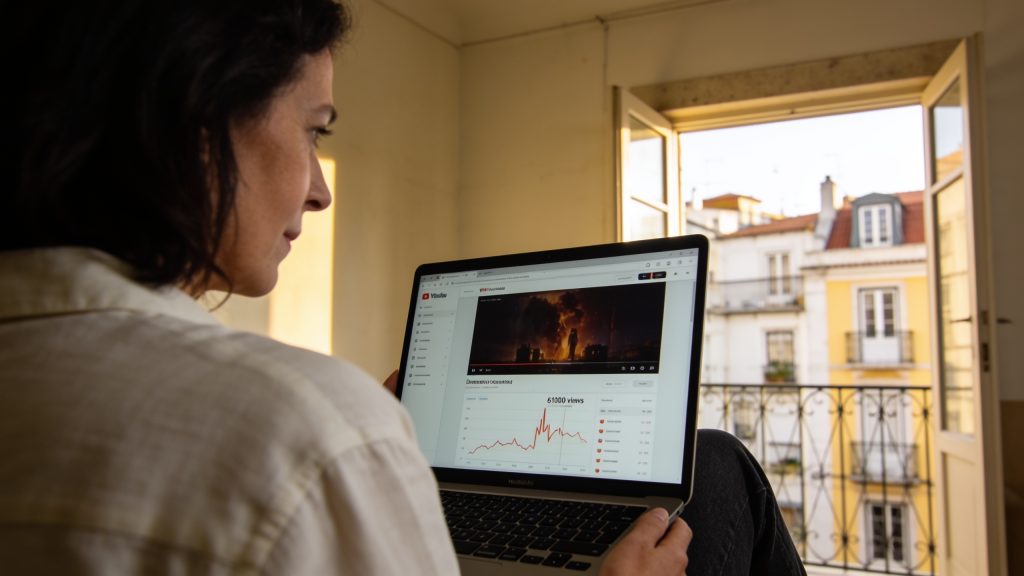
The video had 43 views when Isabel Ferreira posted it. By the following Thursday it had 61,000.
She hadn't done anything differently on Thursday. She'd uploaded it on a Sunday evening from her apartment in Lisbon's Mouraria neighbourhood, the same way she'd uploaded the previous eleven videos -carefully, anxiously, with the particular mix of pride and dread that anyone who puts something real into the world will recognize. Then she'd closed the laptop and gone to bed.
She found out about the 61,000 from her phone at 7:14 in the morning, and she sat on the edge of her bed for a long time without moving.
Isabel is 51. She spent twenty-two years as a management consultant, the last eight of them in senior roles that paid extremely well and required her to be extremely competent at things she had stopped finding interesting somewhere around 2018. She left in 2023 -not because she was forced out, but because she looked at her calendar one March morning and could not find a single thing on it she would miss.
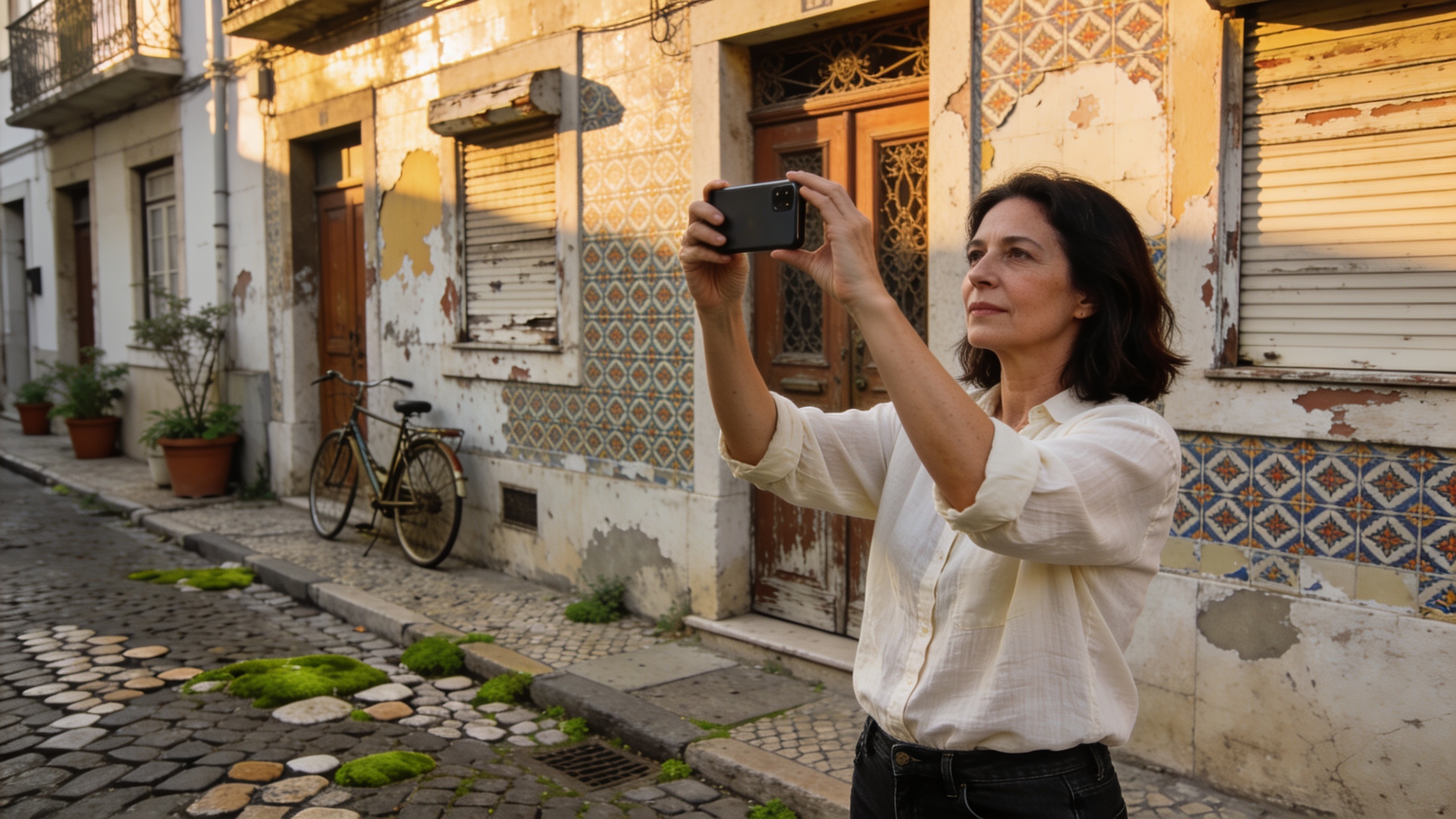
What she does now is make video essays about forgotten architecture. About the buildings in European cities that nobody photographs because they're not famous enough, the ones that are quietly extraordinary and quietly disappearing. She films them on her phone. She writes the scripts herself, in English and Portuguese. She edits in a software programme she learned from YouTube tutorials over three months of evenings that she now describes as among the most genuinely absorbing of her adult life.
She is not, by any standard definition, a content creator. She is a fifty-one-year-old former management consultant who decided, in the second half of her life, to care intensely about something and share that caring with strangers. And 61,000 of those strangers, it turned out, were waiting for exactly that.
What Actually Happened in Florence
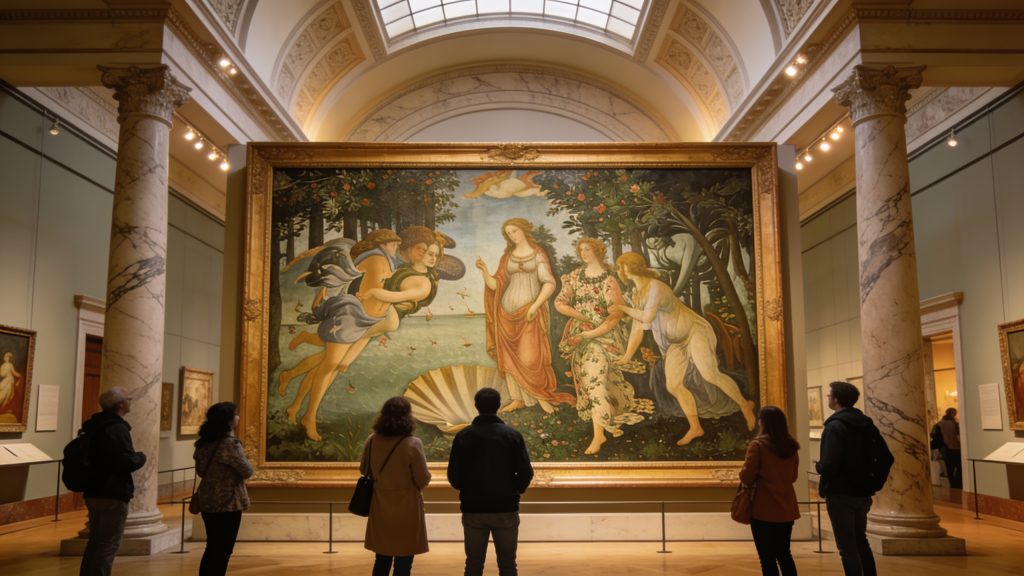
The standard story of the Italian Renaissance credits genius: Leonardo, Michelangelo, Botticelli. It attributes to individual brilliance what was, in significant part, a structural condition. The right people, in the right circumstances, with the right tools, and -crucially- the right amount of freedom from the grinding necessity of basic survival.
The Medici family, who built their fortune on banking and rose to dominate Florence's political and cultural life through the 15th century, understood something the knowledge economy of the 21st century is only now rediscovering. Surplus, directed toward creative people, multiplies. When artists, architects, philosophers, and scientists are freed from the scramble for subsistence and given space and resources to pursue what genuinely interests them, the output is disproportionate to the investment.
Cosimo de' Medici, who began the dynasty's rise in the 1430s, didn't commission beautiful things only because he loved art -though he did. He commissioned them because concentrated creative energy, given the right conditions, produces something that lasts far longer than the money that funded it. Lorenzo il Magnifico, his grandson, ran Florence like a patronage engine -drawing in poets, philosophers, and artists from across Italy, housing them, paying them, arguing with them at dinner, and asking only that they produce their best work.
The result was the Renaissance. Not despite the wealth. Because of what the wealth was pointed at.
The Structural Parallel Nobody Wants to Name
Here is the uncomfortable observation: the conditions that produced the Italian Renaissance are reassembling themselves. Not identically. Not cleanly. But the structural bones are recognizable.
A small group controls enormous surplus -not the Medici bank this time, but the technology companies whose valuations dwarf the GDP of most nations. That surplus is beginning -unevenly, inadequately, but genuinely- to trickle into the general population through automation-driven productivity gains, early experiments with universal basic income, and the fact that the tools for creating and distributing work have never been more accessible. A generation of people who would previously have spent their most energetic years in administrative and managerial work are finding that work automated away or compressed, leaving time and cognitive space that didn't exist before.
And the tools available to them are not chisels and fresco pigment. They are video editing software and publishing platforms and audience-finding algorithms and design tools that would have required a full studio team twenty years ago. Isabel is not unusual in kind. She is unusual in degree -in the seriousness of her intent and the quality of her attention. But the structural conditions that made her possible are being replicated for millions of people simultaneously.
What she's doing with forgotten buildings in Lisbon, someone else is doing with obscure music from the 1970s. With the history of typography. With traditional cooking techniques from regions nobody covers. With the engineering of things most people never think about. The niches are infinite. The tools are available. The audiences -fragmented, specific, hungry for exactly this- are there.
Palladium Magazine's analysis of the Medici method noted that "sustained, strategic investment in culture yields an innovation multiplier." The Medici demonstrated this at city scale. The question now is whether something similar can happen at civilizational scale, distributed across millions of people rather than concentrated in one banking family's patronage.
What's Different This Time -And It Matters-
The Renaissance comparison earns its place but also has real limits, and being honest about those limits is what keeps the argument from sliding into tech-utopian wishful thinking.
Florence in 1490 was extraordinary and tiny. The creative flowering that changed Western civilization happened in a city of roughly 50,000 people, a fraction of whom were active participants in the cultural project. It was also, let's be honest, extraordinarily unequal. The freedom that allowed Michelangelo to sculpt was built on a commercial and agricultural economy that left most Florentines with no such freedom at all. The Renaissance was a flowering for the few, funded by the many.
The potential difference now is scale and access. A phone and a genuine obsession are enough to build what Isabel built. The barriers to distribution that once required a publisher, a gallery, a record label, a broadcast network -those barriers are lower than they have ever been in human history. This doesn't mean everyone who tries will find an audience. Most won't. But the structural gatekeeping that once decided whose creative work reached the world has been partially dismantled, and what replaces it -imperfect, gameable, sometimes brutal- at least responds to quality of attention rather than proximity to power.
The video essay about forgotten Lisbon architecture found 61,000 people in four days. Not because an algorithm arbitrarily boosted it. Because the algorithm recognized genuine engagement -people watching to the end, rewatching certain sections, sharing it with friends who they thought would care. The Medici decided what got made. The audience now decides what spreads. That is not a small difference.
The Part That's Genuinely Uncertain
It would be satisfying to end here, with the parallel drawn and the optimism in place. But the Renaissance had its own shadow, and the honest version of this argument acknowledges it.
Renaissance Florence also produced Savonarola -the Dominican friar who convinced Florentines to burn their own books and paintings in the public square because their creativity was sinful. The flourishing and the destruction were simultaneous, produced by the same conditions, fuelled by the same surplus of energy that had nowhere settled to go.
The AI era has its own version of that tension. The same platforms that found Isabel's audience also amplify misinformation, radicalize the isolated, and concentrate attention in ways that would alarm even the Medici. The creative flowering and the destructive potential are not sequential. They are happening at the same time, in the same world, driven by the same technological moment.
Isabel knows this. She reads the news before she edits. She isn't naive about what the same tools can do in other hands. But she made a choice -specific, deliberate, unhurried- about which part of the moment she was going to inhabit.
The 61,000th view came in from somewhere in New Zealand. She doesn't know who watched it. She knows they watched it to the end.
She uploaded the next one on Sunday.
Lorenzo il Magnifico freed artists from survival. The algorithm freed Isabel from the gatekeepers. Whether that's the same thing is the question Florence never had to ask.
Maurice Joseph writes about the future of human life at inthacity.com/blog. Article 7 in this series looks at the fact that We're Already Living in 2098. We Just Haven't Noticed Yet..
Sources & Further Reading
- Smithsonian Associates. The Medici: Patronage, Power, and Art in Renaissance Florence. Read more →
- Palladium Magazine (2025). The Medici Method. Read the essay →
- Wikipedia. House of Medici. Reference →
Your Questions, Answered Plainly
Is the Renaissance comparison just flattery dressed up as analysis?
It's a fair challenge. The comparison earns its place not because the outcomes will be identical but because the structural conditions -surplus directed toward creative freedom, tools lowering the cost of creation and distribution, a generation with more time and more capability than the one before it- are genuinely similar. Whether it produces comparable results is unknown. That it's producing something is already visible.
Wasn't the Renaissance just for the elite? Isn't this the same?
The original Renaissance absolutely was, and that's worth acknowledging. The potential difference now is access - a phone and a genuine obsession are sufficient to build what Isabel built. Whether that potential translates into real democratized flourishing, or whether the surplus gets captured by a new class of digital Medici, is the central political question of the next thirty years.
What can I actually do with this idea?
The most direct application: treat your own genuine obsession -whatever it is, however niche- as structurally similar to what Botticelli had when Lorenzo freed him from subsistence. The tools are there. The audience is more findable than it's ever been. The only thing that doesn't exist is the cultural permission to take your own interest seriously enough to share it. That permission has to be self-granted. Nobody commissioned Isabel. She just started filming buildings.
Keep up with AI and technology news or explore the full AGI blog on iNthacity.
Disclaimer: This article may contain affiliate links. If you click on these links and make a purchase, we may receive a commission at no additional cost to you. Our recommendations and reviews are always independent and objective, aiming to provide you with the best information and resources.
Get Exclusive Stories, Photos, Art & Offers - Subscribe Today!
Related posts:
 A Cook’s Heart: Flavors of Betrayal and Love in Renaissance Florence
 The New Renaissance: What Will We Create When Work Ends?
 You’re Already Living in 2098. You Just Haven’t Noticed Yet.
 I Tried Living Like It Was 2098 for 30 Days. Here’s What Actually Happened.
 The Second Renaissance: How a Post-Work World Transforms Human Potential





Post Comment
You must be logged in to post a comment.