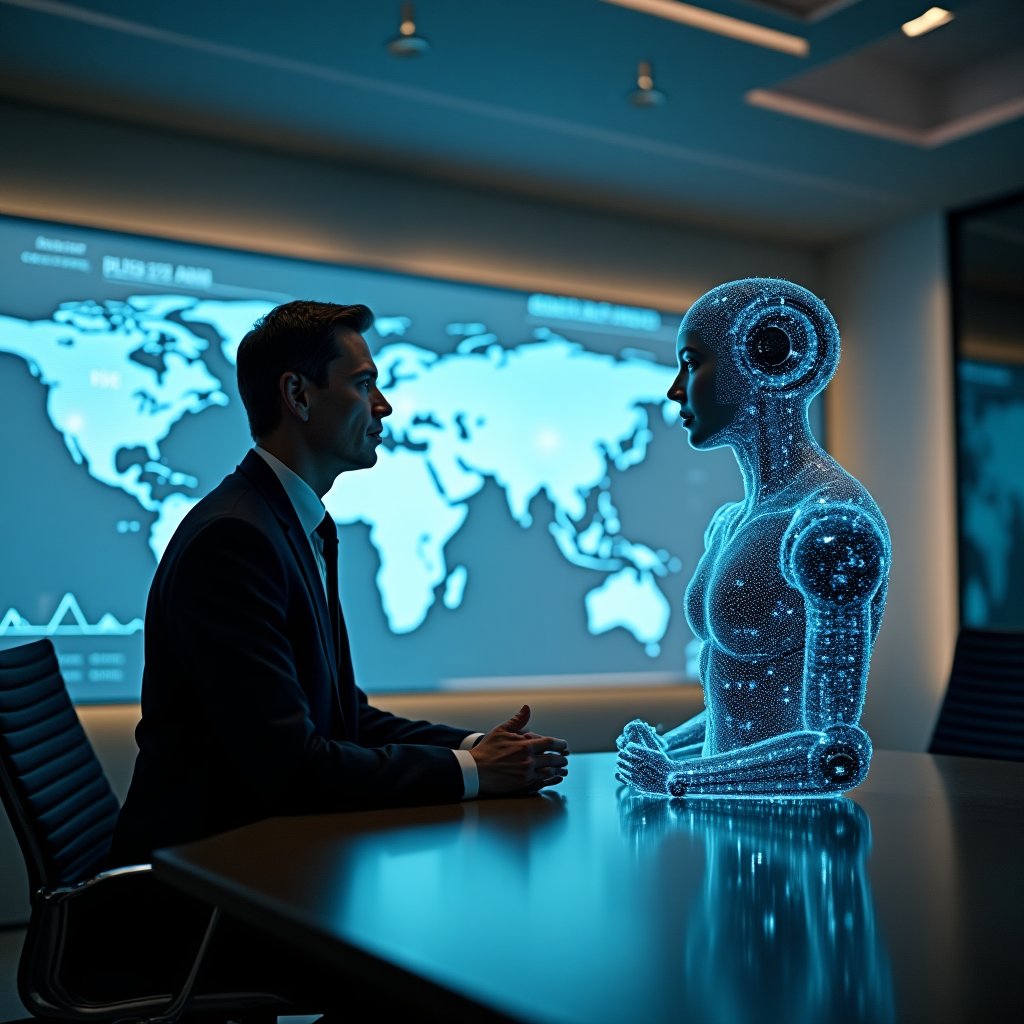
Introduction: The Tricky Art of Negotiation
The pen is mightier than the sword, but what if the pen is a neural network? Negotiation, they say, is both an art and a science, dancing delicately on the cusp of measured words and unparalleled strategy. But in this stage of ever-evolving technology, we find ourselves asking: could artificial intelligence be more skillful at negotiating peace than the poets and politicians of our time?
While dynamic personalities like Henry Kissinger, Kofi Annan, and even populist thinkers like Malcolm Gladwell have long ruminated over the complexities of diplomacy, AI now stands at the threshold, ready to reshape the way we perceive conflict resolution. With over 250 armed conflicts reported globally between 1946 and 2016, one might wonder if human diplomacy is as flawed as it is vital. Is it time for machines to step forward and flex their algorithmic muscles for peace?
In the sections that follow, we will unravel the fabric of diplomatic practice, explore the science of AI, and consider the hopeful possibilities and ethical dilemmas of entrusting technology with such a significant role. Hang on tight; it's going to be a wild ride.
AI diplomacy refers to the use of artificial intelligence as a tool to assist, enhance, or even replace humans in mediating international conflicts, by offering data-driven, unbiased solutions aimed at peace. This could revolutionize global diplomacy by minimizing human biases and introducing impartial analysis to negotiations.
The Anatomy of Human Diplomacy
Human diplomacy is a bit like gourmet cooking; it requires careful attention to detail, a pinch of empathy, and a splash of historical context. A seasoned diplomat must navigate the sticky web of international relations, where power is balanced as precariously as a soufflé.
The Importance of Emotional Intelligence
At the heart of successful negotiations is emotional intelligence. This is the intuitive superpower that allows diplomats to read non-verbal signals, interpret subtle shifts in tone, and gauge the emotional temperature of the room. It's a skill that human negotiators have honed for centuries. Think of those legendary discussions that outlined history's peace treaties as grand chess matches played with delicate whispers...
The Historical Context of Diplomacy
Diplomacy, with roots running deep into history, has seen its shape shifting from smoke signals to shuttle diplomacy flights. From the resilience displayed during the Treaty of Westphalia to the shadowy chess games of the Cold War, these epochs illuminate the evolution of how we engage in peace talks. It's clear that understanding the arcs of history can provide valuable lessons for those who shuffle the decks of peace today...
Future of Traditional Diplomacy
Peeking into the crystal ball of international relations raises questions about how conventional diplomacy might be transformed with AI on board. Will diplomatic roles mutate or dissolve altogether? Could AI become the unsung hero facing future diplomatic challenges, or will it merely serve as an advisory toolbox, directing humanity towards broader horizons of peace?

Understanding AI's Role in Mediation
Imagine a world where arguments are squashed by an impartial robot. In reality, artificial intelligence (AI) is being shoved into the diplomatic ring, hoping to play referee in global conflicts. But can a machine truly mediate? Magic 8-ball says: “Signs point to yes, and also, kind of confusing."
The Mechanisms of AI in Dialogue
AI uses complex algorithms as if it were reading the room during a heated family dinner. Machines sift through mountains of data, trying to understand human conflict like a Netflix show with subtitles. These clever algorithms work overtime, analyzing data to spot patterns, similar to how we predict Uncle Bob will bring up politics at Thanksgiving. It attempts to interpret not just what is said, but how and why it could lead to a squabble, sort of like a high-tech advice columnist with superpowers. Twitter does some similar tech stuff.
Real-World Applications of AI in Mediation
AI isn’t just theory; it’s working its circuits off in real-life scenarios, too. For example, some companies use AI-powered negotiation simulators to dodge workplace drama, while international organizations experiment with AI to smooth over tricky cross-border disputes. Think of it as a digital Switzerland, quietly neutral, but packing the analytical power of a thousand chess grandmasters. Over at Stanford University, researchers have been testing AI’s aptitude at the negotiation table. Their tools are putting on their game faces and dealing with real people in real negotiations — faster than it takes to explain what all those zeros and ones even mean.
Limitations of AI's Mediation Abilities
Of course, AI isn’t all-knowing. It struggles with laughter and tears — essentially the bread and butter of human interaction. Those nuances evade algorithms like socks evade the dryer. So, while AI can identify patterns better than a detective with a magnifying glass, understanding how humans feel? That’s a whole different ball game. AI's game face can't cover its confusion when emotions run high, which is something to chew on if you're considering AI as an understudy for world diplomats like António Guterres.
Case Studies: AI in Action
Time to roll up the sleeves and dive into the AI trenches! In these case studies, we see how AI struts its stuff in the thrilling world of diplomatic arm-wrestling.
The AI and the Peace Process
Picture this: AI as a secret weapon in the peace talks between Israel and Palestine. It sounds like a sci-fi novel, but it's more like an experimental classroom scenario unfolding under the scrutiny of international onlookers. Researchers nonchalantly wondered, "Can AI hack it where humans have lagged?" With digital finesse, AI parsed through historical treaties and disputes, like a history buff on an extreme caffeine fix. By analyzing past interactions, AI brought fresh insights to the table — often making seasoned diplomats nod as they scribbled "Must use AI again" in their notepads.
Corporate Conflict Resolution
Corporations have also jumped on the AI train, and for good reason. Picture this: Office politics heated up over the last croissant at the morning meeting. Cue in AI to level the playing field. Companies like Meta have tested AI to resolve internal tiffs before they boil over into a full-on drama series. Their tech gurus toiled to craft software capable of reading employee temperaments and proposing office solutions that kept both the peace and the croissants in check.
Lessons from AI Missteps
Of course, AI isn’t batting a thousand. In previous uses, it has occasionally donned a dunce cap, making judgment calls that leave folks scratching their heads. Sometimes, AI fails to catch the subtleties of context, much like those bizarre moments during Walmart's rollbacks that seem great until you see the fine print. By dissecting these gaffes, developers hope to fine-tune AI so it becomes wise like an owl, juggling data and diplomacy without dropping the ball.

Ethical Implications of AI in Diplomacy
As artificial intelligence ventures further into the realm of diplomacy, it raises a myriad of complex ethical questions. At the heart of this debate lies the tension between the potential for enhanced objectivity and the fear of unintended consequences. Can we trust machines to mediate our most sensitive conflicts without inheriting the biases and blind spots we humans often have?
Bias in AI Systems
One of the most pressing concerns is the risk of bias within AI systems. It's a paradox: the same tool that promises impartial mediation is built on data reflecting human prejudices. Studies from the Massachusetts Institute of Technology suggest that AI models often replicate societal biases found in their training data. For instance, if AI is trained with historical conflict data skewed by political agendas, it might inadvertently perpetuate those biases. Here lies a crucial question: how do we safeguard against these embedded biases and ensure our digital mediators are truly neutral?
Accountability and Transparency
Another concern is accountability. When an AI makes a decision, who takes responsibility? There's an urgent need for transparency in AI-driven processes to ensure these systems remain under human control. Organizations like Amnesty International advocate for strict guidelines to make AI systems’ decision-making processes more transparent. This transparency is key to maintaining public trust in AI as a mediator.
The Role of Human Oversight
Can we fully entrust diplomacy to machines? While AI can process information at lightning speed, understanding the subtleties of human interaction is another matter. Experts argue that human oversight remains essential, especially in early implementation phases. Humans are uniquely capable of interpreting emotional nuances and cultural contexts that AI may miss. A balance must be struck where AI aids human diplomats without replacing them entirely.
Key Considerations and Challenges
- Ensuring AI neutrality by diversifying training datasets
- Establishing clear accountability protocols for AI decisions
- Maintaining transparency to facilitate oversight by human experts
- Balancing AI efficiency with human ethical considerations
The Future of AI in Global Politics
As we look to the horizon, the integration of AI in global politics appears inevitable—a future where machines augment human capabilities rather than replace them. The real challenge lies in finding harmony between these two powerful forces.
Integration Models for AI and Human Diplomacy
The fusion of AI and human diplomats offers intriguing possibilities. United Nations initiatives already explore symbiotic models where AI handles data-heavy tasks, allowing human diplomats to focus on strategy and empathy-driven engagement. AI can analyze vast datasets and simulate potential outcomes while humans guide the ethical and relational aspects of negotiation.
Potential Developments in AI Technology
The future of AI in diplomacy hinges on technological advancements. Innovations like emotion recognition and cultural sensitivity algorithms show promise. Companies like IBM Watson lead the charge in developing AI that can read nonverbal cues and understand subtleties in language, making AI-driven negotiations more refined and context-aware.
Public Perception and Acceptance
However, AI's acceptance in diplomacy also depends on public perception. Global trust in AI's capabilities and fairness is crucial. Surveys by organizations such as Pew Research Center reveal mixed feelings, reflecting both hope and skepticism about AI’s role in sensitive human affairs. Transparent AI operations and consistent successes in pilot programs could positively sway public opinion.
Envisioning a Collaborative Future
- Phase 1: Initiate AI and human diplomat partnerships in low-stakes conflicts.
- Phase 2: Test AI’s decision-support systems under human oversight in more complex scenarios.
- Phase 3: Evaluate outcomes and refine AI algorithms based on real-world data and feedback.
- Phase 4: Expand the AI-human collaboration in diplomacy to tackle global issues collaboratively.
The road ahead is both promising and uncertain, but with careful planning and ethical oversight, AI could indeed become a cornerstone of future diplomatic efforts, leading us to a more peaceful world.

AI Solutions: How Would AI Tackle This Issue?
If I were an AI, my mission to mediate international disputes would start with gathering and analyzing vast amounts of data. After all, the foundation of any successful negotiation relies on understanding the context and history behind conflicts. So, the first step would be to create a comprehensive database encompassing data on previous peace negotiations, international treaties, socio-economic factors, and cultural nuances. This data gathering would involve using machine learning algorithms to scan both digital and physical archives from various academic and governmental sources.
Gathering and Analyzing Data
Once the AI has access to a trove of information, the next step is to analyze this data for patterns. Think of it as piecing together a puzzle—every piece represents a piece of history, an understanding of cultural nuances, or a factor that contributed to conflict. This analysis would not only include historical patterns of conflict resolution but also focus on current events that might shape future conflicts. Collaborating with data scientists from reputable institutions like Statistics Canada and Pew Research can enrich this data pool with insight into public sentiments and trends.
Proposing Solutions Through Predictive Modeling
With data in hand, I would use predictive modeling to propose tailored solutions for navigating conflicts. By employing simulations modeled after historical negotiations, I could foresee potential paths to peace based on past successes and failures. For instance, if historical data shows that certain approaches consistently lead to more productive outcomes in negotiations, I would recommend those paths to human negotiators, effectively serving as an informed ally rather than a central decision-maker.
Testing Outcomes with Simulation Models
The beauty of being an AI mediator lies in the ability to simulate outcomes without real-world consequences. I would develop a suite of simulation tools where various negotiation tactics could be tested to observe potential outcomes. By using advanced algorithms and natural language processing models, the AI could engage in dialogues to assess responses from different negotiation tactics. This kind of testing would allow for adjustments in strategy before human negotiators get involved, potentially increasing the chances of success in actual negotiations.
Conclusion: Bridging the Gap Between AI and Human Diplomacy
As I reflect on the capabilities of artificial intelligence in the realm of diplomacy, it's clear that while machines may not replace human negotiators, they hold incredible potential to enhance our methods of conflict resolution. The fusion of data-driven analysis and human intuition can create a new paradigm in how we approach diplomacy. AI can act as an ally, sifting through complex data, recognizing patterns, and offering insights that perhaps even the most skilled negotiators may overlook.
Our journey toward integrating these technologies won't be without its challenges. Ethics and bias remain critical considerations; we must ensure that the data guiding AI systems does not perpetuate existing inequalities. Moreover, human oversight will be essential in steering AI's applications in diplomacy, crafting a partnership that respects both technological advancements and the irreplaceable value of human empathy.
Looking ahead, envisioning a future where AI serves as an aid to human diplomacy compels us to imagine courageous, innovative paths forward. We can harness the potential of AI to foster collaboration, overcome misunderstandings, and ultimately pave the way for enduring peace across nations. The machines may get better at understanding the mechanics of negotiation, but the pressing question remains: will they push us to be more human in the process? The exploration has just begun, and as we stand at this crossroads, our commitment, ethics, and aspirations will determine the landscape of diplomacy in the age of AI.

Frequently Asked Questions about AI in Diplomacy
Q1: Can AI really understand human emotions?
A1: Great question! While AI can analyze patterns in behavior and recognize signs of emotions, it doesn't feel emotions like we do. Imagine AI as a very smart friend who can notice when you're upset, but can't actually feel your pain. This means it can help in negotiations by spotting emotional cues, but it lacks true empathy.
Q2: What are the main ethical concerns when using AI in diplomacy?
A2: There are a few worries people have:
- Bias in AI: AI can inherit biases from the data it learns from, which might lead to unfair decisions. This is like when a teacher grades a paper based on their favorite topics but not the quality of writing.
- Accountability: If an AI makes a bad call, who is responsible? This is still a big question that needs sorting out.
- Need for human oversight: Many experts believe that while AI can help, we still need humans to oversee its work, ensuring everything runs smoothly.
Q3: How can AI help in different types of conflicts?
A3: AI can play a role in various disputes like:
- Corporate disagreements: Mediating between businesses needing to resolve issues.
- Community conflicts: Helping neighbors resolve disputes respectfully.
- International negotiations: Providing data-driven insights into complex issues like trade agreements or peace treaties.
Q4: Are there real-world examples of AI used in negotiation?
A4: Absolutely! For instance, AI has been used in some corporate settings to mediate internal conflicts. Companies have experimented with AI to analyze communication patterns and suggest solutions. One example is the German car manufacturer BMW, which has used AI software for conflict resolution in labor negotiations.
Q5: What's the future of AI in diplomacy?
A5: The future looks exciting! AI will likely continue to evolve, providing new tools for negotiation that could help settle disputes faster and more fairly. Think of it like having a supercharged ex-debate team member on your side. Together, AI and human negotiators can create strategies that lead to better outcomes than either could achieve alone.
Q6: How can AI enhance the diplomatic process?
A6: AI can offer unique benefits in negotiation:
- Data analysis: AI can analyze vast amounts of information quickly, helping negotiators understand the stakes better.
- Predictive modeling: Machine learning can forecast the outcomes of various negotiation tactics, making discussions more effective.
- Simulations: AI can run simulations to see how different negotiation strategies might play out.
Q7: How will people around the world react to AI in diplomacy?
A7: People’s reactions may vary quite a bit. Some might feel comfortable with AI assisting in negotiations, while others could be worried about machines making such important decisions. It's a bit like getting used to a new gadget. Some folks embrace it, but others take time to warm up to the idea.
Q8: What should we remember about the role of AI in peace negotiations?
A8: One important takeaway is that AI isn't about replacing human diplomats. It's more about providing support — like having a trusty sidekick that helps you on your journey. So, while AI can analyze and predict, compassion, empathy, and understanding will always need a human touch.
Disclaimer: This article may contain affiliate links. If you click on these links and make a purchase, we may receive a commission at no additional cost to you. Our recommendations and reviews are always independent and objective, aiming to provide you with the best information and resources.
Get Exclusive Stories, Photos, Art & Offers - Subscribe Today!
Related posts:
 Your AI Best Friend: Are Machines More Reliable than Humans?
 Sam Altman’s New Startup Aims to Merge Machines and Humans
 AI and the Sophisticated Art of Lying: Will Machines Learn to Deceive Like Humans?
 Can a Diplomat Bring Peace to Cloud City?
 AI: Earth’s Future Diplomat in the Quest for Extraterrestrial Connection


Post Comment
You must be logged in to post a comment.