It started with a Tuesday that went perfectly.
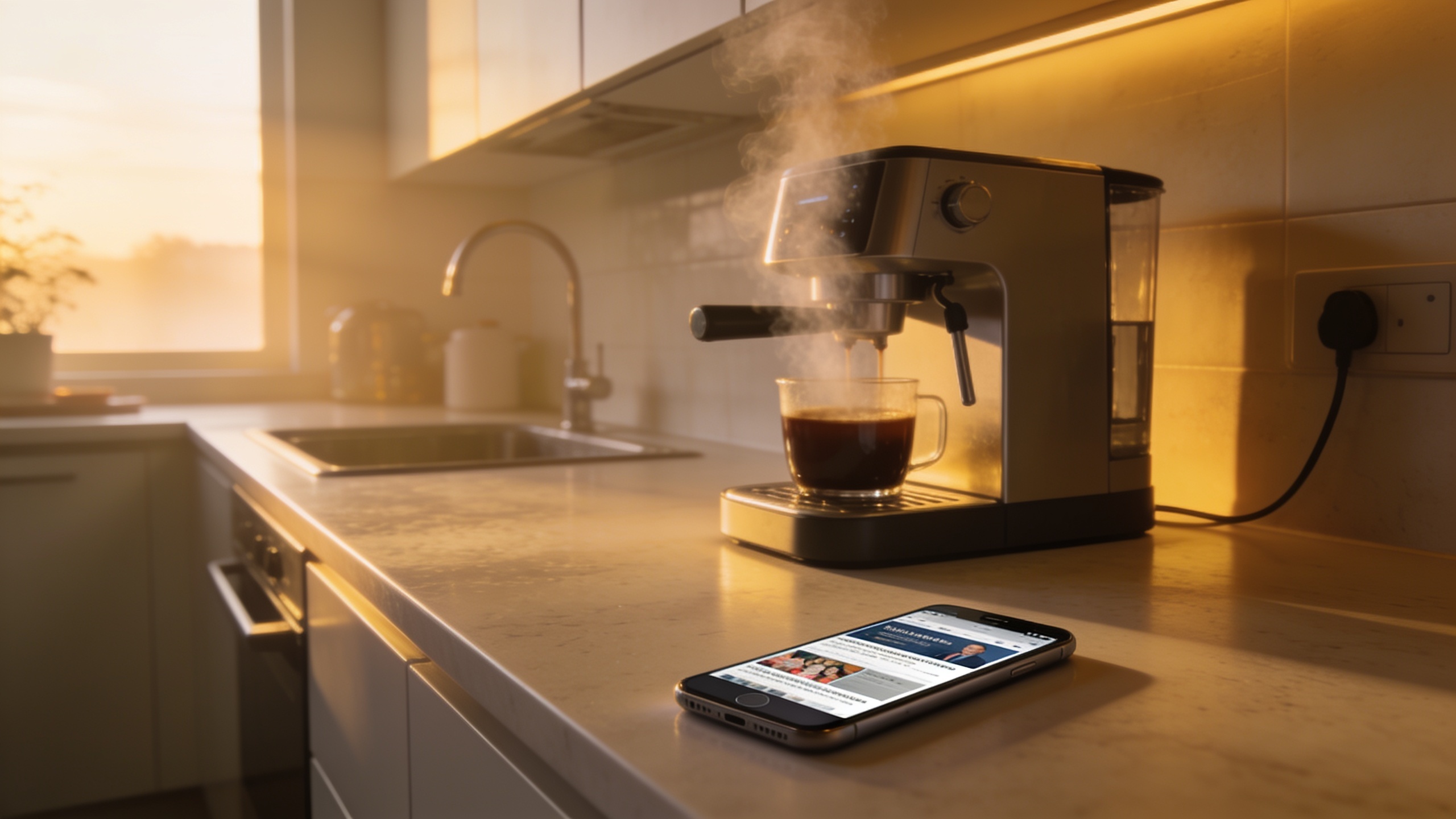
Every Tuesday goes perfectly now, in a way that would have been science fiction fifteen years ago and is simply Tuesday now. The alarm didn't startle me - it faded in gradually, the way I'd set it, tuned to the light level my phone had been monitoring through the night. The coffee was ready. Not because I remembered to set it the night before, but because the smart plug had learned my patterns well enough that I didn't have to remember anything. The news briefing was already waiting - not the news in general, but the specific twelve stories that an algorithm had determined, based on eighteen months of my reading behaviour, I was most likely to find relevant and worth my time. It was right about eleven of them.
I had three meetings, all on video. My AI assistant had pre-drafted responses to fourteen emails that had arrived overnight, and twelve of those drafts were good enough to send with one read and a small edit. The work I did that didn't involve the assistant took maybe ninety minutes of the day. The rest was coordination, synthesis, communication - all of it moving faster and more smoothly than it would have moved five years ago.
At 6pm I watched a show that a recommendation engine had surfaced for me two days earlier. It was exactly what I'd wanted without knowing I'd wanted it. At 8pm I had what felt like a genuine, warm, intellectually stimulating conversation with three people I've never met in person and may never meet, in a group chat that has been running for two years and that I consider one of the better communities in my life.
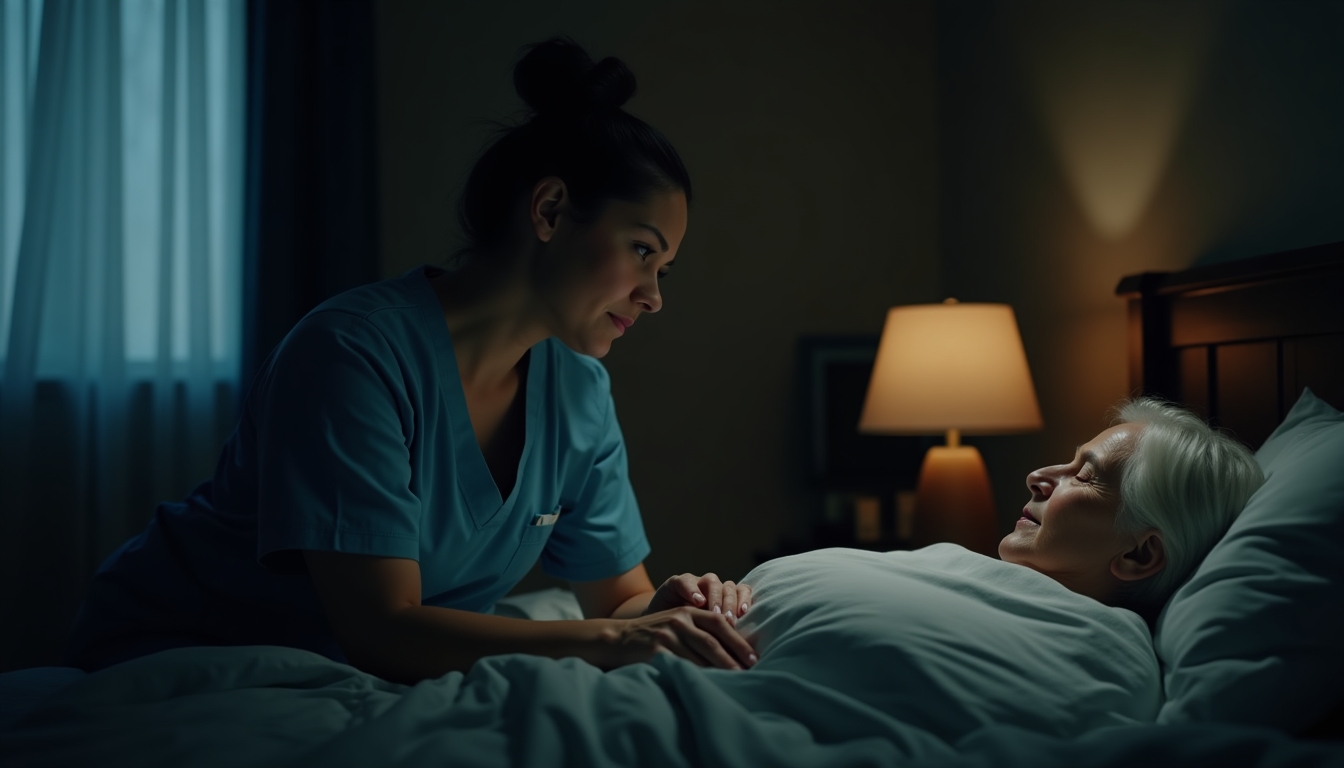
I went to bed at 10:30. The room adjusted to my preferred temperature automatically. I fell asleep quickly.
It was, by every measurable standard, a good day. A smooth day. A day in which almost nothing required me to struggle, adapt, or tolerate friction I hadn't chosen.
And somewhere around 2am, for reasons I couldn't immediately name, I woke up with the distinct and unsettling feeling that something was missing.
The Uncanny Valley of a Life That Works
Here is the thing nobody tells you about the fully optimized day: it feels slightly like a simulation of itself.
Not in the dystopian sense. Not the cold, chrome, Blade Runner version of technology-saturated life that science fiction spent decades preparing us to fear. In something much subtler and much harder to articulate. The optimized day is warm. It's comfortable. It knows you. The algorithm that curated my news briefing wasn't hostile or manipulative - it was genuinely useful. The AI assistant that drafted my emails wasn't replacing my judgment, it was extending my capacity. The online community I'm part of is real - the care is real, the ideas are real, the relationships have genuine substance.
And yet.
Viktor Frankl, writing about the existential vacuum in Man's Search for Meaning, described the experience of people who had everything they needed and still felt hollowed out. He wasn't writing about technology. He was writing about prosperity. About what happens when the external scaffolding of necessity is removed and the internal scaffolding hasn't been built to replace it.
The fully optimized Tuesday is the most recent version of that problem. When the friction is gone - not all of it, but enough of it, and the right kinds - something that the friction was quietly doing goes with it. You don't notice it leaving. You only notice, at 2am, that the room feels slightly less yours than it did before everything got so smooth.
What 2098 Already Looks Like From the Inside
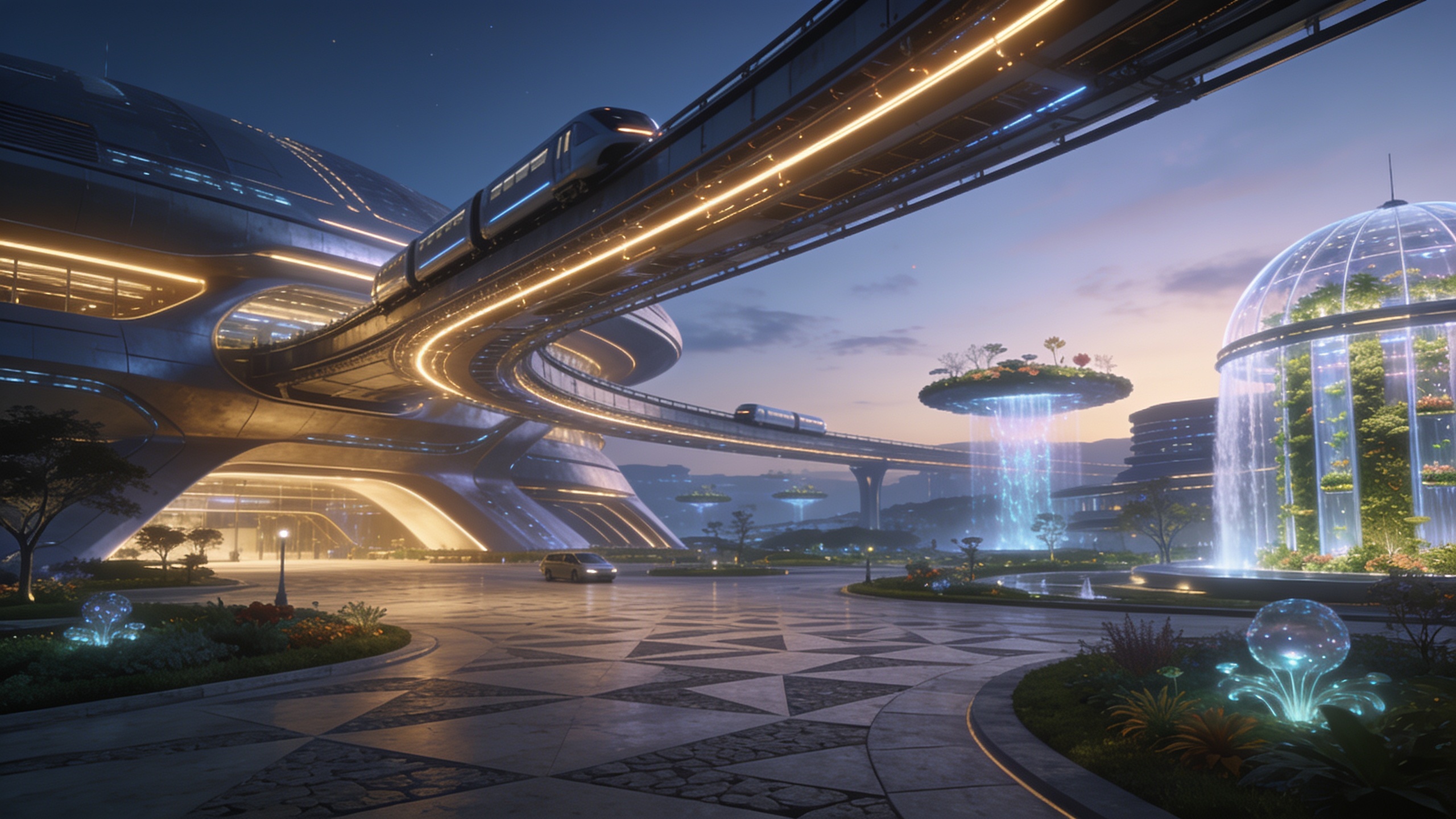
The year 2098 was supposed to arrive with announcement. With drama. With the kinds of discontinuities that would make it obvious something had fundamentally changed.
Instead it arrived the way most important things arrive: incrementally, unremarkably, in a series of small improvements that each felt like pure gain and whose cumulative effect only became visible from a certain angle, at a certain hour, when the room was quiet and the phone was for once not in your hand.
Think about what is already true, right now, that would have been unrecognizable to someone from 2005:
A system knows your preferences better than most of your friends do. Not because it was told. Because it watched. For years, it watched what you clicked and what you skipped, what you read to the end and what you abandoned at the third paragraph, what you bought and what you returned, what music you played at 11pm versus 7am. It built a model of you so accurate that it can now predict what you'll want before you want it. And it is right, with an uncanny frequency that you've stopped finding uncanny because it's just Tuesday.
The voice in your phone -whichever one you use- has been trained on more human language than any single human could absorb in a thousand lifetimes. When it responds to you, it does so in a register calibrated to yours: your vocabulary level, your preferred tone, your tendency toward directness or toward cushioning. It knows, statistically, how long your sentences usually run and it mirrors that. It is not conscious. It is not your friend. And yet the interaction feels, functionally, like talking to someone who gets you.
The content you consume was not made for a general audience. It was made, effectively, for you - or surfaced for you from the enormous universe of content because it matched your particular profile closely enough that the system predicted you would engage with it. You live inside a personalized media environment so specific to your sensibilities that two people in the same house, watching the same platform, can have completely different experiences of what that platform contains.
This is not 2098 as predicted. It's 2098 as it arrived - not through the front door with a declaration, but through the side door, on a Tuesday, wearing the face of convenience.
The Part That's Hard to Sit With
Here is where the article tips forward.
The optimized life is not making most people obviously worse. That needs to be said clearly and honestly, because the dystopian reflex -the impulse to declare that screens are bad and algorithms are manipulation and we've all been captured by something sinister- is both too simple and too comfortable. It lets you be righteous without having to sit with the more complicated thing.
The more complicated thing is this: the optimized life is making many people quietly less themselves, in a way that is nearly impossible to measure and very easy to miss.
Not because the algorithm is malevolent. Because the algorithm is optimized for engagement, which is not the same thing as optimized for growth, or for difficulty, or for the particular kind of productive discomfort that turns out to be how humans develop. The algorithm gives you more of what you responded to yesterday. Which means it is, by design, a system that continuously narrows the gap between what you are and what you're presented with. It confirms. It extends. It mirrors.
What it doesn't do - what it is structurally incapable of doing - is surprise you with something genuinely outside your model. Push you toward the book you wouldn't have chosen. The conversation that makes you uncomfortable in ways that turn out to be useful. The experience that doesn't match your preference profile and changes you because of that mismatch.
The friction isn't just inconvenient. The friction is, in part, how you find out who you are outside the model the algorithm built.
And here is the part that keeps me up at 2am: I'm not sure I know, anymore, which of my preferences are genuinely mine and which are the preferences of the person the algorithm decided I was three years ago and has been reinforcing ever since.
That's not paranoia. That's a reasonable question about a system that has been quietly mediating my relationship with culture, information, and other people for long enough to have had real effects.
Why I Decided to Step Back
I want to be precise about this, because the wrong version of the conclusion is easy and wrong.
I didn't decide to step back because I think the technology is bad. I use it. I will keep using it. The AI assistant saves me real time. The recommendation algorithm finds me things I genuinely love. The online communities are real communities. None of that is in question.
I decided to step back because I wanted to find out what was underneath. Not to live there permanently. Not to declare the friction sacred and the comfort corrupt. But to spend enough time outside the optimized environment that I could see it from the outside - see what it does and doesn't do, see what I do and don't do inside it versus outside it, and make more conscious choices about the balance.
The experiment I ran is described in Part 2 of this piece. It was imperfect and instructive and I learned things I couldn't have learned any other way.
But first -before the experiment, before the deliberate friction, before the bread and the unstructured hours and the ceramics class- there was just a Tuesday night at 2am, in a room adjusted to my perfect temperature, wondering why the life that worked so well felt, in some specific and hard-to-name way, less lived-in than it used to.
That question is worth asking. Especially now, before the next decade makes the optimization several orders of magnitude more complete.
Geez. What's it going to be like then.
The algorithm knows what you want. The harder question is whether you still do.
Your Questions, Answered Plainly
Are you saying the algorithm is manipulating us?
Not exactly, and the distinction matters. Manipulation implies intent to harm. The algorithm intends to maximize engagement, which is different - it's optimizing for a metric that correlates with but isn't identical to your wellbeing or your growth. The problem isn't malice. It's misalignment between what the system is optimized for and what you might actually want from your own life.
Isn't this just technophobia dressed up as philosophy?
Only if the conclusion were "technology is bad." It isn't. The argument is narrower: a life optimized entirely by systems that respond to your existing preferences will tend to confirm and extend those preferences rather than challenge or expand them. Some deliberate friction -some contact with things outside your profile- is probably necessary for the kind of growth that changes who you are. That's compatible with enthusiastically using AI tools and recommendation systems. It just means using them consciously rather than exclusively.
What does 2098 actually feel like from the inside?
Comfortable. Warm. Personalized. Like a very good Tuesday in which almost nothing goes wrong. The dissonance is subtle and arrives at 2am, not 2pm. That subtlety is part of what makes the question worth asking.
Should I read Part 2?
Yes - Part 2 is about what happened when I actually tried to step back. It's more practical and more concrete, and it's where the experiment lives. This piece is the why. That one is the what.
Disclaimer: This article may contain affiliate links. If you click on these links and make a purchase, we may receive a commission at no additional cost to you. Our recommendations and reviews are always independent and objective, aiming to provide you with the best information and resources.
Get Exclusive Stories, Photos, Art & Offers - Subscribe Today!
Related posts:
 I Tried Living Like It Was 2098 for 30 Days. Here’s What Actually Happened.
 Florence 2.0: Are We Living Through a New Renaissance Right Now?
 Living for More: How AGI Can Ignite a New Era of Self-Discovery
 Unlocking the Cosmos: AI-Driven Space Stations for a New Era of Interstellar Living
 Living for More: How AGI Could Ignite a New Era of Self-Discovery


Post Comment
You must be logged in to post a comment.