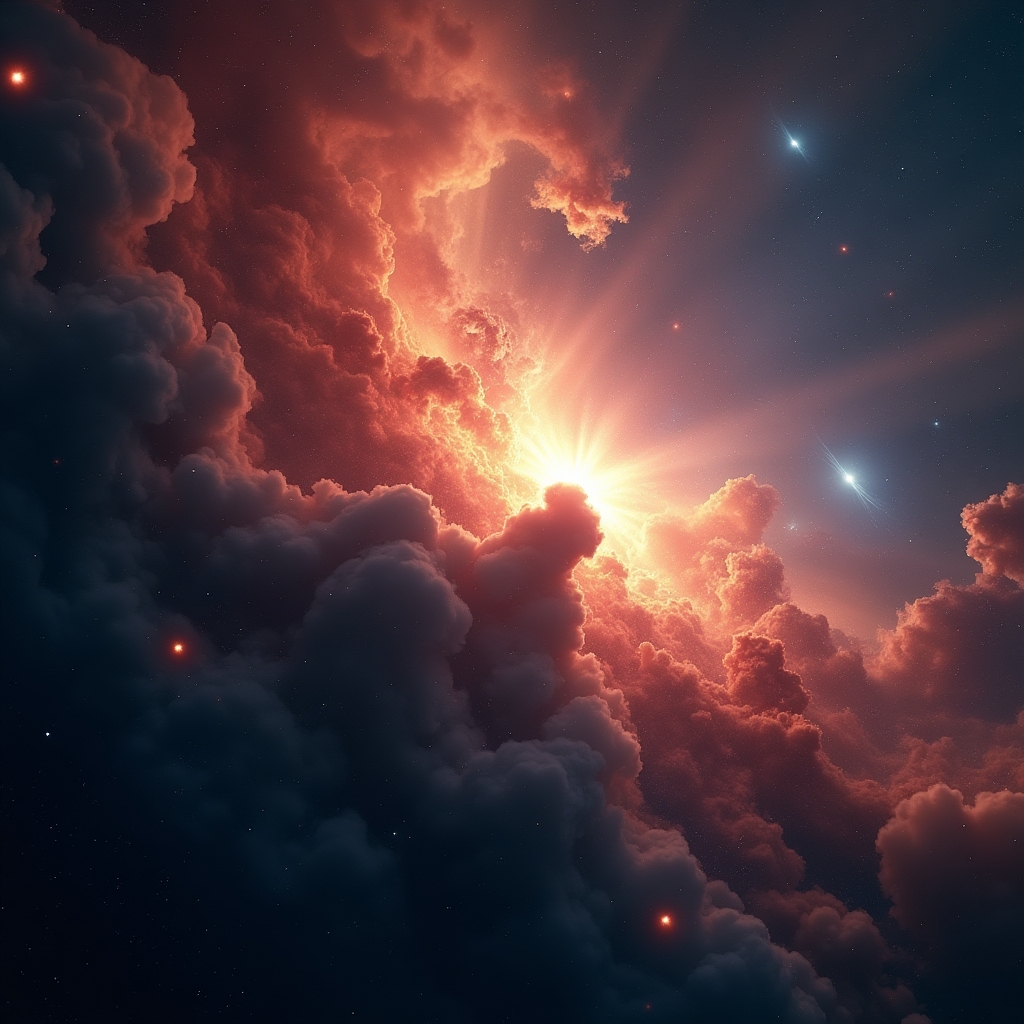
NASA’s James Webb Space Telescope has captured the imagination of both stargazers and scientists alike with its latest celestial masterpiece. Picture a cosmic canvas painted with a stunning array of colors and forms, almost as if it were plucked from the realms of fantasy. Dominating this scene is a brilliant mountain of light, a mass of swirling dust and gas expertly crafted by the roaring forces of stellar winds and powerful radiation. This awe-inspiring masterpiece unfolds in the region known as Pismis 24, nestled within the enchanting Lobster Nebula, approximately 5,500 light-years away amidst the stars of the constellation Scorpius.
In Summary
- 🪐 NASA's James Webb Space Telescope unveils breathtaking cosmic artistry in the Lobster Nebula.
- 🌌 Roughly 5,500 light-years away, this nebula resides in the Constellation Scorpius, home to Pismis 24.
- 💫 The nebula is illuminated by intense radiation and stellar winds from newborn stars.
- 🔭 This discovery exemplifies the capabilities of modern astronomy, expanding our understanding of the cosmos.
The fiery brilliance of the Lobster Nebula, as viewed through Webb's powerful lens, has inspired wonder akin to the awe felt by astronomers of yesteryear who looked up at the night sky with simpler tools. What makes this depiction extraordinary isn’t merely its breathtaking beauty but its potential to unlock new knowledge about the universe. This view offers a glimpse into the life cycles of stars, starting from their infancy.
The Magic Behind Pismis 24 and the Lobster Nebula
The Lobster Nebula, scientifically known as NGC 6357, is a vast region of space that serves as a birthing ground for stars. Within this vibrant cloud lies Pismis 24, a stellar cluster characterized by the presence of exceptionally massive young stars. These stars, much like our own Sun in its earliest days, are fueled by nuclear reactions in their cores, emitting energy that lights up the surrounding nebula in brilliant shades of red, blue, and gold.
The intensity of the radiation from these stars is nothing short of remarkable, leading to the luminous display seen in Pismis 24. Their stellar winds, representing streams of charged particles, carve stunning shapes into the surrounding dust and gas, akin to an artist molding clay with a gentle yet decisive touch.
How James Webb Captured This Marvel
The James Webb Space Telescope, a collaborative effort involving organizations such as NASA, the European Space Agency (ESA), and the Canadian Space Agency (CSA), builds on the legacy of the Hubble Space Telescope with advanced instruments and capabilities. Launched to peer deeper into the universe than ever before, Webb’s infrared technology allows it to penetrate dust clouds that obscure objects in visible light, revealing the hidden wonders beneath. To stay updated on such fascinating discoveries, check out news from regions like Montreal or New York.
The image of the Lobster Nebula was obtained using Webb's Near-Infrared Camera (NIRCam), capable of capturing light that travels vast distances, painting a picture that spans across time and space. This enables astronomers to observe the processes and structures that give birth to new stars, providing insight into the formative events that shape our universe (NASA, ScienceDaily).
Why This Discovery Matters
An understanding of star formation is crucial for piecing together the larger puzzle of cosmic evolution. With information gleaned from images like Webb's Lobster Nebula, scientists can trace the roots of stars and galaxies, gaining insight into how the universe came to be in its present form. This knowledge illuminates the interplay between radiation, gas, and gravity—fundamental forces that sculpt the celestial landscape.
Furthermore, the Lobster Nebula's study adds another chapter to the saga of astronomical exploration. It serves as a reminder of the childlike wonder that fuels scientific pursuits, encouraging us to look up and ask, "What else is out there?" For more global and regional discoveries, you can explore articles from other cities like Brisbane or London.
Where Does This Lead Us?
With technologies such as the James Webb Space Telescope enhancing our ability to look into the cosmos, one might wonder what future marvels await discovery. Will we find signs of life on distant worlds, or catch the birth of a new celestial phenomenon previously unseen? What does this mean for our understanding of humanity's place in the universe?
As you ponder these mysteries, why not become a part of the iNthacity community, the "Shining City on the Web", and add your voice to the conversation? Discuss your views below and let your curiosity soar alongside the stars! Remember, the universe is vast and full of wonder, with each discovery taking us one step closer to unraveling the secrets of creation.
And isn't it comforting to know that even amidst an endlessly expanding cosmos, there's always room for some stargazing?
Disclaimer: This article may contain affiliate links. If you click on these links and make a purchase, we may receive a commission at no additional cost to you. Our recommendations and reviews are always independent and objective, aiming to provide you with the best information and resources.
Get Exclusive Stories, Photos, Art & Offers - Subscribe Today!
Related posts:
 Hubble Unveils Stunning Star Cluster: A Dazzling Cosmic Treasure!
 New Evidence of Life Found on Saturn’s Icy Moon Enceladus – Discover the Stunning Clues!
 Stray Stars Unveil Cosmic Collision: Two Massive Galaxies Devouring Each Other!
 Black Holes Confirm Stephen Hawking’s Theory with Stunning New Evidence
 Star Survives Supernova Blast and Emerges Even Brighter! Discover the Cosmic Wonder!




Post Comment
You must be logged in to post a comment.