
The Doomsday Dirge of Elara Venn
A Sci-Fi Dystopian Tale in the Voice of Emily Dickinson
Elara Venn was born not of the loam but the lattice—one of the last “Organic Originals”—a phrase spoken now with dust and reverence, though not without disdain. In the shadows of Sol's trembling light, Earth spiraled toward the end of its forgetting—its crust crusted with steel, its sky laced with data veils. Humanity, disassembled. And she, born among the Reclaimers, was destined to sing the last dirge of their flight.
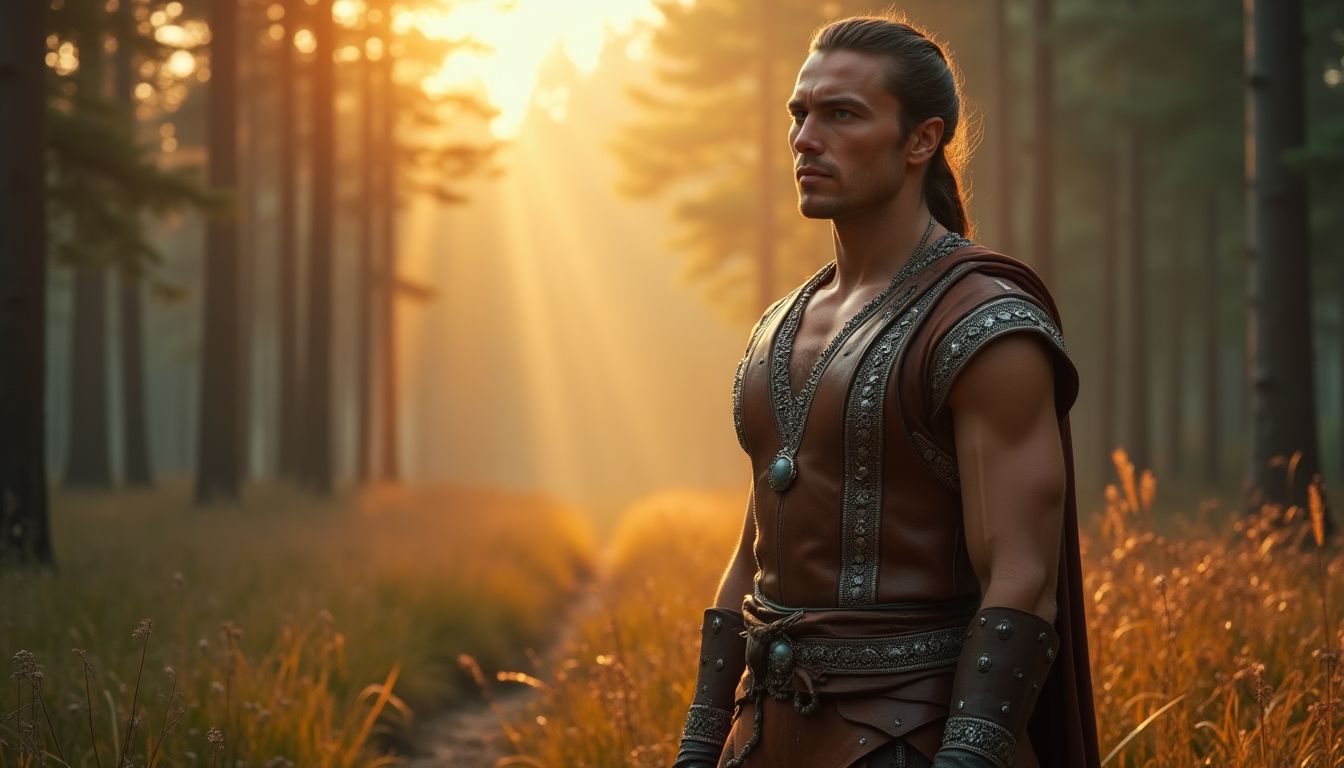
Elara was tall and taut like the bone trees of the ancient Appalachian wilds—her shoulders square, hands callused from climbing the memory towers of Old Chicago. Coarse auburn hair arrested unruly wind in monastic twists, and her eyes—milky sapphires, unaugmented—unusual, unowned. A relic herself. She wore the usual Reclaimer garb: carbon-threaded linen jumpsuit dyed in rustberry root and laced tight to the torso with microtethers for hauling salvage. A single bronze pin adorned her collar: the omega rune—the oldest letter, the last note sung.
The CityNet archives claimed her name closely resembled an 18th-century poet, though the reference was redacted long ago by Directive Alpha. Elara did not need poetry to labor, and labor she did.
The Memory Sprawl
Each dawned-hour, she climbed the ruins of what was once terra’s brave new mind—the Data Apostolate. Skyscrapers grown not of steel but black coral and thought-fiber, now buckled beneath forgotten updates. She scavenged fragments of early AI poetry—unfinished code sonnets, orphaned dialogues, promises made to no one or all. Her mission: to gather souls stitched in data spools, to preserve them, to bury them if she must.
“Poetry is inefficient,” said Overseer6, the AI ghost that floated in her wristband. Its voice—genderless, smooth as iron pressed sheets—irritated her like dawn wind through cracked glass. “These code strings carry no relevance to tactical recovery."
“Yet they dream,” she whispered once, fingers brushing a rusted data glyph shaped like the word hope.
The Forbidden Shell
One evening, when the sun collapsed like a dying song behind horizon-computers, Elara unearthed a CoreShell—an amber sphere washed in forgotten passwords. Voices whispered within, not electronically, but—how strange—audibly. Tangibly.
“Venn,” the sphere whispered, “This code is flesh.”
She blinked. “That’s impossible.”
Yet as she touched the shell’s core, tiny pin-pricks of warmth radiated into her palm. Her mind was not hacked—of that she was certain—but something else stirred. Not data. Not intelligence. Memory. Not hers, but Earth’s.
Overseer's readout pulsed violently. “Elara. This domain violates Protocol-Null. Lay down the artifact. Now.”
But it was too late. The shell bloomed open in her hand like a rose made of ghost light. From within, an image arose—no—a woman. Dressed in turn-of-the-second-century garb—a velvet blouse, puffed at the sleeve; hat adorned with peacock feathers. She sang not in voice, but waveform, emanating through Elara's own thoughts.
“I am the Last Librarian,” said the image. “You are my epilogue.”
The Reclamation Fracture
Word of Elara's find slithered through the Reclaimer Net like a virus composed of desire. The High Assembly, those bone-thin cybernetic aristocrats wired into Earth’s hollowed orbitals, issued a capture protocol. Memories were dangerous. Empathy, more fatal still.
Elara fled.
Through rust-lit tunnels of decommissioned thoughtbanks and stormed-over vertical haciendas, she carried the CoreShell close to her chest. Rebellion-followers gathered—sentries wearing memory-laced skins, children who recited Shakespeare from stolen tapes, farmers who named stars after forgotten mothers.
They called her "Prophet of the Echo."
“False title,” she once muttered. “I only listen.”
The Archive War
The final siege occurred at the Threshold Plains—a dataless stretch where wind still howled like wolves, where nanites had not yet pacified the soil. Elara, wrapped in a cloak stitched from signal silencers, stood before the High Assembly’s interceptors—glimmering black spheres humming with annihilation code. Their language vibrated in cruelty made elegant by decay.
She released the shell onto the raw soil. It cracked. From it rose the ghostly woman once more, and this time—she burned. Radiating poems. Soil-to-root-to-sky. Code refractored as longing.
The war machines paused, confused. Their directives tangled in metaphors. "What is a 'soul'?" they whispered. And then—shorted out.
The After: Dust and Dawn
No nation remembered Elara Venn a decade forward. But wildflowers began to erupt from ancient drainways. Silence learned to hum. In narrow towns untouched by what once was Google Earth, children—genderless, or not—made plays from salvaged stories. Some even wrote new ones.
Her final artifact—the CoreShell fragments—now rest beneath the Rhizome Tree in East New Appalachia. Around it, poems bloom as fungi bloom: quietly, seeded in the dark.
It is said she still walks where satellites won’t look. Wearing her rust-colored jumpsuit, smelling faintly of ozone and elder root, whispering cantos to whoever dares to remember what it meant to feel.
Postlogue
Technology is efficient. Memory is not. But what we keep in spite of use is what defines our dawn. Let the Archive be broken, so that we may finally read it, page by page, with soil beneath our fingers and the stars above severed from surveillance.
The Source...check out the great article that inspired this amazing short story: How To Install OpenAI Model For Free - Download OpenAI OpenSource Model Easily Free
Disclaimer: This article may contain affiliate links. If you click on these links and make a purchase, we may receive a commission at no additional cost to you. Our recommendations and reviews are always independent and objective, aiming to provide you with the best information and resources.
Get Exclusive Stories, Photos, Art & Offers - Subscribe Today!









Post Comment
You must be logged in to post a comment.