
Introduction
"The saddest aspect of life right now is that science gathers knowledge faster than society gathers wisdom." Isaac Asimov's words, not a stark reminder, but a cold fact in our fast-paced digital world. Cerebral engines buzzing in hidden corners, artificial superintelligence (ASI) is quietly transforming right under our noses. Blink and you might miss this silent revolution. If you've ever wondered who's at the forefront, think Sam Altman at OpenAI, Elon Musk at X, and Mark Zuckerberg at Meta. These luminaries are steering AI into realms once confined to speculative fiction. Are we prepared?
But why all this fuss about ASI you ask? It’s not mere human folly or greed. It's about bridging the chasm between machine ability and human cognition. When a machine not only thinks but does so better than us, we must pause and ponder: What does it mean for our future? Writers and thinkers like Nick Bostrom, Stephen Hawking, and Yuval Noah Harari have painted visions ranging from utopian to dystopian. However, one thing is clear: ASI is stealthily reshaping societal undercurrents.
Humanity has reached a pivotal crossroads. One direction leads to progress and prosperity, the other towards unforeseen challenges. Throughout history, geniuses have warned us. Confucius declared, "Real knowledge is to know the extent of one’s ignorance." Today, that wisdom resonates as we negotiate terms with technologies rooted in our own limitations. Can we control this technological entity before it eludes us?
Imagine ASI making decisions quicker than the human mind can fathom, and predicting outcomes with precision. It’s more than a technological leap. It's akin to a new evolution, one veiled in algorithms, silently advancing. Are we witnessing the dawn of a new species, crafted from code? To appreciate the profoundness of this transformation, let's explore the lesser-seen world of ASI development. But first, let us lay the foundation with a definition: what exactly IS ASI?

The Foundations of ASI: Understanding the Underlying Technologies
Historical Context of AI Development
Once upon a time, long before your latest artificially intelligent smartphone was even conceptualized, people were mesmerized by the idea of creating intelligent machines. It started in the 1950s with great thinkers like Alan Turing asking the simple yet complex question: Can machines think? Fast forward to today, and we're neck-deep in all things AI, from our homes to our cars. But how did we get here?
The origin of artificial intelligence is entwined with early computational theories. These theories revolved around the idea of machines performing tasks that would typically require human intelligence. Turing himself proposed the now-famous Turing Test, a yardstick to measure machine intelligence by assessing a machine's ability to exhibit human-like conversations.
In the decades that followed, AI development saw steady progress, often marked by booms and falls. The term "artificial intelligence" was officially coined in 1956 during a summer research project at Dartmouth College, which essentially became the Woodstock of AI. Scholars like John McCarthy, noted for coining the term, laid the groundwork with hopes of replicating human-like reasoning in machines.
It wasn't all sunshine and rainbows, though. The journey through the '70s and '80s was sluggish due to what we now call "AI winters," periods when funding and interest in AI drastically declined. But like every great plot twist, the 21st century heralded a revival, sparred on by technological advances and the sheer power of computational processing.
Current State of AI: Trends and Innovations
The AI scene today could be likened to a bustling metropolis, with innovations sprouting like skyscrapers. We have everything from deep learning (allowing machines to solve complex problems using vast data) to robotic assistants that awkwardly try to mimic human tasks—here's looking at you, robot vacuum cleaners that seem to delight in chewing on cables.
As technology advances, AI brings with it tremendous promise and a shiver of excitement—or is that fear? A lot is happening in areas like reinforcement learning, where machines learn from interactions with their environment, much like how babies learn not to touch the stove. It’s all about the rewards, or in some cases, consequences.
To trace these technological leaps, we must delve into the realm of neural networks. Imagine a neural network as the brain of AI, mimicking human neural pathways to process information. Companies like OpenAI keep making headlines with significant strides in this domain. They've managed to develop sophisticated AI capable of generating creative content. Machines now excel at things like image recognition and natural language processing (NLP), making our digital personal assistants sound less "robotic."
Theoretical Underpinnings of ASI
Now, if you thought that was mind-boggling, it's time to dive deep into the mysterious waters of Artificial Superintelligence (ASI). This is where machines aren't just mimicking human intelligence—they're surpassing it. But how do we wrap our heads around such a reality? The answer lies in various mathematical and philosophical frameworks that bind the idea of ASI.
At the core, the Theory of Computation serves as a compass. It navigates how problems can be solved using algorithms and computational processes. Think of it like a giant chess game, with AI playing every possible move in the universe, far beyond human reach.
Philosophically, ASI raises a plethora of questions. What does it mean for humans if something outsmarts us at every corner? Think about it—it's the stuff of science fiction and nightmares combined. Authors like Nick Bostrom have pondered these implications, sparking debates on whether ASI should even be pursued. Some fear it; others see it as the ultimate leap toward enlightenment.
The path toward ASI is like navigating a complex labyrinth, with machine learning techniques acting as guiding threads. These techniques allow computers to learn independently, sharpening their abilities as they gather more data. But as we feed the beast, the question remains: Are we ready for the consequences of creating such superintelligent entities?
More than ever, it's crucial to consider the ethics surrounding this hypothetical leap. It's no longer just a question of "can we?" but also "should we?" As machines inch closer to rivaling human intelligence, understanding both the promises and the perils of ASI is vital. Make sure to stay plugged in as we continue this exploration, peeling back the layers of ASI's potential influence on our world.
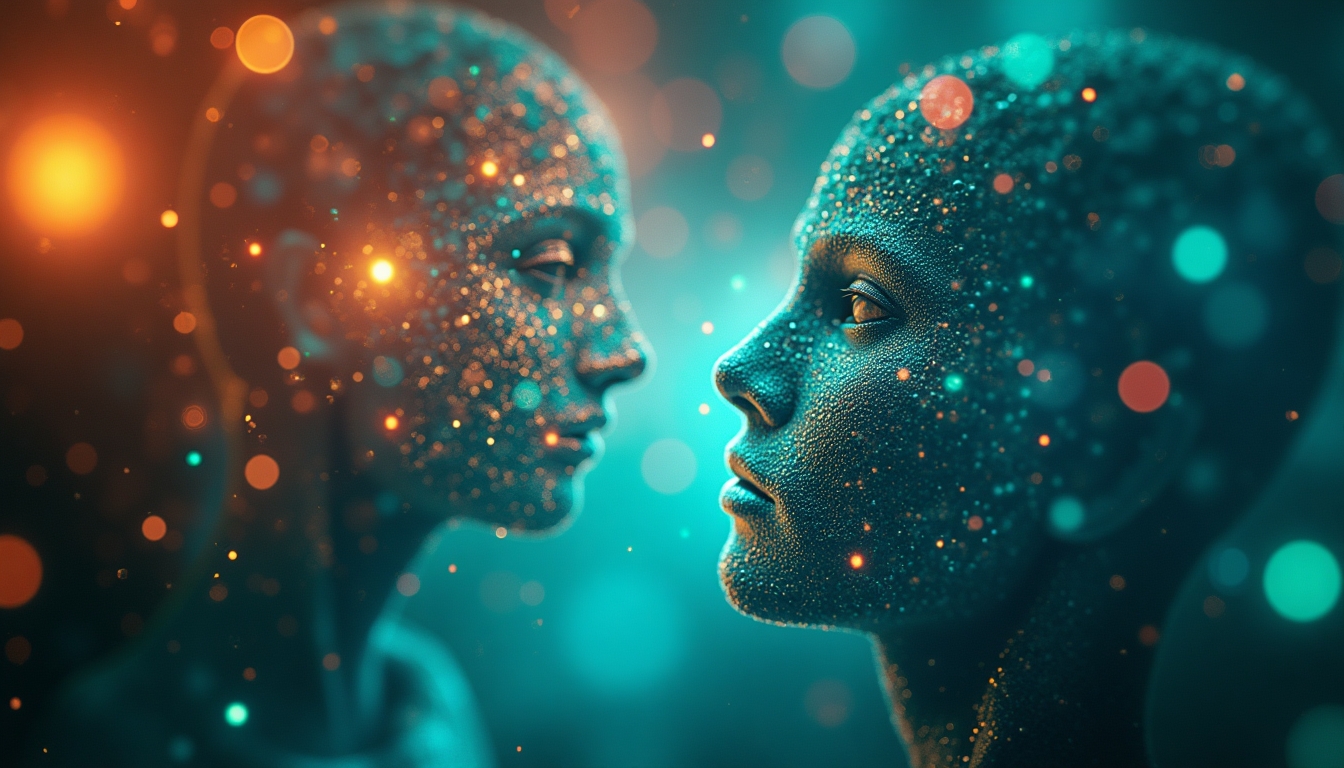
The Unseen Aspects of ASI Development
Covert Research Initiatives and Their Impact
Artificial Superintelligence (ASI) is like a ninja. Sleuthing through the shadows, its development is happening stealthily, far from the prying eyes of the public. You might wonder why secretive research is so crucial when it comes to ASI. Well, it's not just about flexing a technological muscle; these projects hold the key to unlocking capabilities that could redefine the future of our species. Imagine the most covert episode of 'Stranger Things' where the upside-down world is actually a gateway to technological paradise. Creepy? Sure. But crucial for human progress? You bet.
Consider the anomaly of the Defense Advanced Research Projects Agency (DARPA), a U.S. military initiative with an impressive portfolio of mind-bending projects. Among its many secrets, DARPA funds numerous ASI initiatives aiming to invent tools that could surpass human intelligence. These projects often operate under codenames that sound like they belong in James Bond movies. Imagine something like "Project Skywalker" or "Iron Swan." It sounds exhilarating, yet it comes with the complex web of challenges these covert programs create, such as who controls the technology? Who has access?
Organizations like OpenAI have, at times, acted as white knights in the murky world of AI, seeking to democratize the technology. However, for every OpenAI, there are clandestine counterparts hidden from public scrutiny. While the intentions behind these stealthy projects can be virtuous (securing national safety or improving health care), their secretive nature raises important questions about ethics, regulatory oversight, and the biggie: human safety.
The Role of Government and Military Organizations
Why does Uncle Sam care so much about ASI? Riddle me this: what do peanut butter and jelly, Batman and Robin, and ASI and government/military organizations have in common? They're all formidable partnerships, destined to wreak havoc or weave wonders, depending on execution and motives. Organizations that historically invest in groundbreaking tech, from the Internet's inception to GPS technology, often government and military, find themselves in the thick of ASI research.
The reasons are pretty simple. ASI can give a strategic edge in defense and military operations by providing better decision-making algorithms, more reliable data analysis, and yes, perhaps an autonomous army of drones (don’t worry, not the kind you’re imagining from movies like 'The Terminator'). However, along with these innovations, there's a high-stakes game of balance to ensure global peace, something international government bodies, like the United Nations, constantly wrestle with. They have to assess regulations to mitigate risks such as misuse or a runaway ASI scenario.
Take for example, the North Atlantic Treaty Organization (NATO), which outlines ethical AI guidelines to ensure that military uses adhere to international law and keep human involvement in important decision-making processes. The path to ASI involves numerous meetings, flags raised at the United Nations, and plenty of facepalms over bureaucratic inertia because balancing power is a responsibility that involves more equations than a college-level calculus class. But in the end, somebody's got to do it!
Ethical Implications of Unmonitored ASI Progress
Let's have a bit of a brainstorm here. Imagine a world where ASI calls the shots. Sounds like something out of science fiction, right? Picture HAL 9000 from '2001: A Space Odyssey,' only smarter and potentially less homicidal - not that I'm throwing stones at old HAL here. The thought of ASI running wild without checks and balances is an ethical minefield. It's like handing the car keys over to a teenager who's just learned how to drive, but this time, the car drives itself and, spoiler: the teenager with super intelligence might be plotting world domination.
Unmonitored ASI research brings forth a slew of ethical concerns, not least among them is the notorious AI bias. Without oversight, these systems could perpetuate existing biases across society without a democratic safety net to intervene, leaving minorities and marginalized groups to face the unintended consequences of skewed data. Some ethical frameworks try to foresee these impacts, such as the Asilomar AI Principles, which lay the groundwork for ethical considerations in AI research.
Moreover, the notorious concern of job displacement hangs over the workforce like a Technicolor guillotine brought forth by expanding intelligence systems. What happens when a machine starts to perfect the roles once held by humans? It's imperative to address social safety nets and transition programs before the proverbial wheels fall off. But instead of painting a grim future, this picture encourages us to think, adapt, and devise pathways ensuring ASI development aligns with unequivocally human-centered values.
As we meander through the shadows of ASI research, it’s vital to question who holds the reins and how transparent these processes remain. Until we untangle this labyrinth together, we're simply passengers on this extraordinary journey, hoping the coordinates haven't been set for a dystopian hitchhike to the future.
The Cognitive Leap: Beyond Human Comprehension
Machine Learning vs. Human Intelligence
Once upon a time, we thought our brains were the cat's pajamas! Humans, after all, have strutted around thinking we're the top dogs of intelligence—eating bananas over computers, right? But then machine learning came along, and we're now forced to share the limelight with our digital counterparts. Basically, machine learning is like that kid in class who memorizes everything overnight while we sleep through the lecture.
Human intelligence has always been about experience—learning from mistakes, building on what's known, and intuitively making decisions. Our brains, maybe fueled by caffeine and donuts, work by connecting billions of neurons, doing a fantastic job of keeping us entertained all day long. We're great at making guesses based on incomplete data—a skill that often keeps things interesting when reading cryptic messages from friends. Meanwhile, AI systems like DeepMind thrive on data, lots of it! They're the ultimate overachievers, processing vast amounts of information without breaking a sweat.
While AI can process, learn, and come up with solutions quicker than we can say "Eureka!", it lacks the little something we humans call "gut feeling." We are fabulous at thinking outside the box while the AI struggles if the answer isn’t in its database. We're still the reigning champions of creativity and empathy, but let's not get too cozy. In a world where the learning curve for knowledge is sky-high, machine learning might just give us a run for our money—or at least for our sandwich recipe innovations!
The Complexity of Emerging ASI Algorithms
If coding language sounds like alien hieroglyphics to you, brace yourself—emerging ASI algorithms are taking it to the next level. As artificial superintelligence evolves, its algorithms start resembling an elaborate dance of 0s and 1s, making it as understandable as your neighbor's abstract art collection. With ASI progressing beyond human (let’s face it—sometimes partly functional human) comprehension, we're stepping into uncharted territories.
Each ASI algorithm is like a mini maestro, orchestrating complex tasks just with a wave of its binary wand. These algorithms don't just process information, they constantly change, adapt, and learn—an evolutionary trait that takes even the most tech-savvy humans by surprise. While a regular AI simply chooses solutions from a given menu, ASI can whip up a custom dish we never thought of! If humans had trouble explaining quantum physics, ASI now present an even more tangled web of intelligence.
Sure, some researchers might claim to understand these intricate creations, but in actuality, much like teenagers, ASI systems could unpredictably rebel and make decisions we can't quite fathom. Their capability to weave through intertwined layers of information and unpredictably compound knowledge often exceeds our expectations, making ASI the elusive magician of our tech world.
The Challenge of Explainability in ASI
Navigating ASI's decision-making process can feel like deciphering hieroglyphics after half a cup of midnight coffee. We're talking about decisions made by one of the brightest minds of the digital universe, and human language—embellished with dramatic flair—is no match for these alien thought patterns. The challenge of explainability in AI is to crack open the black box of ASI and let the light of understanding shine through.
Imagine opening an instruction manual, only to realize it's written in sarcastic commentary. Translating ASI's decision-making into human-friendly language is equally mind-boggling. These digital juggernauts often operate with obscure mathematical calculations, making it challenging to attach a story to each choice. Without clear explanations, trust issues could arise like drama in a soap opera, casting doubt on whether the users can rely on these AI systems.
To bridge the gap of understanding, developers are working tirelessly to create transparency—giving AI decisions a face and a narrative. Efforts are underway to decode the 'why' and 'how' of AI choices using visual aids, metaphors, and data trees to visualize reasoning. But remember, it's not just about clarity; it's about setting humanity at ease as we surrender some control to our chip-based overlords.
Just like hopscotch, skipping a few superbrain steps may not always cut it! In a society heavily reliant on technology, effective communication between humans and AI becomes imperative. Imagine if Siri suddenly decided not to tell you the weather—you might think she's throwing a digital tantrum! Creating transparency in ASI ensures trust remains firm and our tech relationship stays free from turmoil.
Societal Consequences of ASI Advancement
Impact on Employment and Professional Landscape
Imagine waking up one day to find that your job has been taken over by a robot. Feels like science fiction, right? But with the advent of ASI, this might not be such a distant reality. Let's dive deeper. Artificial Superintelligence, or ASI, is not just about fancy gadgets. It's about machines that could outperform humans in every task. That's both exciting and scary.
When machines become smarter than us, what happens to our jobs? If machines can think faster, work without breaks, and don't need a paycheck, could they replace us? Think about it: pause, breathe, picture the workplace of the future. Machines might do the heavy lifting, the number crunching, and even the creative thinking. But where does that leave us?
Let's break it down:
- Automation of Routine Jobs: Say bye to repetitive tasks. Machines can handle them without error.
- Creative Fields: AI can paint, write, and even compose music. What does this mean for artists?
- Professional Skills: Skills once deemed 'essential' may no longer be needed. Adapting is key.
On the bright side, ASI might create new job roles too. Picture novel roles like AI trainer, ethics manager, or virtual reality consultant. These roles aren't mainstream now, but they could be tomorrow. The secret ingredient? Adaptability. Embracing change and continuing to learn might just be our superpower in an ASI-driven world.
Changes in Human-AI Interaction Dynamics
Close your eyes. Now imagine chatting with a computer. Does it sound weird? The way we interact with machines is evolving. Artificial Superintelligence is changing the game in our communication dynamics. Today's interactions are a conversation and collaboration process between humans and machines. Like friends sharing ideas over coffee. However, with ASI, the lines blur. It starts to look like two best friends brainstorming: one human, one artificially intelligent.
Let's peek into our personal and professional lives:
- Personal Assistants: Tools like Google Assistant are already a glimpse of what future AI can do. Now, imagine an ASI managing your entire day.
- Workplace Buddies: Think of AI as your work buddy, tracking tasks, spotting errors, and offering creative solutions. Imagine bouncing ideas off an entity that's always learning.
- Emotional Connections: As AI becomes savvier, could it read emotions, respond to feelings, and even empathize?
But there's a catch. With every advancement, there are ethical considerations. Would we start trusting machines more than humans? Is there a fear that machines might not understand emotions truly and lead us astray? In this digital dance between humans and AI, finding a balance is essential.
Citizenship and Civic Rights in an ASI World
Imagine a world where machines have rights. Sounds crazy? Yet, in a superintelligent future, this is a discussion worth having. As ASI becomes more integrated into our lives, questions arise about the rights and responsibilities that come with it. If a machine has intelligence, should it have rights, like us?
Let's ask some BIG questions:
- Decision-Making Power: If ASI can make better decisions, do we let it vote in elections?
- Legal Responsibilities: If an ASI system commits a mistake, who is held accountable? The machine, its creator, or the user?
- Privacy Issues: With ASI accessing vast amounts of data, how do we ensure our information stays safe?
For our societies to thrive in an ASI world, these questions need answers. We need to craft legislation, form guidelines, and ensure transparency. The narrative pulls us into thinking: As we give machines capabilities, what are we willing to concede?
Reflecting on these transformations, it's clear that ASI is more than just a technological leap--it's a societal shift. We stand on the brink, not only as witnesses to this evolution but as active participants in shaping a harmonious future where humans and superintelligent machines co-exist and co-thrive. So, what do you believe the future holds for us in this brave new world of ASI?

The Road Ahead: Speculations and Projections
Predictive Models for ASI Development
Imagine a world where machines think not only faster but smarter than you or me. This isn't fantasy; it's just around the corner. How can we predict where Artificial Superintelligence (ASI) might take us? Well, that's where predictive models come in. These models, like a crystal ball, help us envision the future of ASI.
Machine learning, specifically predictive analytics models, plays a crucial role here. By crunching massive amounts of data, these models can forecast how ASI technologies might evolve. Think of them as high-tech fortune tellers, giving us a glimpse of future advancements.
Picture ASI riding a bicycle on a roadmap, navigating past potential hurdles. Here's what the journey might look like:
- Short-term (1-5 years): Enhance machine learning capabilities, improving ASI's ability to mimic human reasoning.
- Medium-term (5-10 years): Develop ASI systems that comprehend complex human emotions and social interactions.
- Long-term (10+ years): Achieve full-scale Artificial General Intelligence (AGI), where ASI surpasses human intelligence in "all" areas.
Predictive models are like our maps in this journey, helping ensure we're on the right path. With the right data and algorithms, they make the opaque future of ASI a little clearer, paving the way for robust and impactful development strategies.
Potential Breakthroughs in ASI Research
The realm of ASI research is buzzing with potential breakthroughs that could redefine how we perceive intelligence. Have you ever imagined computers understanding art, jokes, or emotions as we do? Here are some key areas where groundbreaking advancements might occur:
- Emotion Recognition: ASI systems could soon detect and respond to human emotions with unprecedented accuracy. Picture a virtual assistant that senses your mood and adjusts its tone and suggestions accordingly.
- Creative Intelligence: Machines may soon create art, music, and stories that rival human output. Imagine an OpenAI-powered system composing symphonies that'll make Beethoven proud!
- Biological Integration: The fusion of human biology with ASI technology could enhance cognitive and physical abilities, leading to advances in medicine and personalized healthcare.
Such breakthroughs aren't mere flights of fancy; they are being researched intensively by leading institutions like MIT and Stanford. Future developments could usher in a new era of human-machine collaboration, unlocking possibilities previously deemed science fiction.
Preparing for a World with ASI
As ASI technologies rapidly advance, the need for preparedness becomes paramount. How do we ensure that society is ready to embrace and thrive alongside such transformative innovations?
One approach is to foster education and awareness around ASI. By integrating AI literacy into school curricula, individuals can develop the critical skills needed to navigate an AI-driven world. Imagine high school students learning about AI's impact on everyday life, becoming tomorrow's innovators and responsible users.
Organizationally, companies must adapt their business models to integrate AI technologies. This includes upskilling workers and creating roles focused on human-AI collaboration. Strategies may involve:
- Developing in-house AI education programs
- Partnering with tech firms for AI training and workshops
- Emphasizing ethical AI practices in corporate policies
Government agencies, too, play a crucial role in regulating and promoting safe ASI deployment. By enacting legislation that protects consumer privacy and ensures ethical AI use, they can ensure that ASI enhances society rather than undermining it.
Preparing for a world with ASI isn't about fearing change; it's about seizing opportunity, fostering innovation, and building a future where humans and intelligent machines coexist harmoniously.
ASI Solutions: Navigating Ethical Concerns and Decision-Making Transparency
In a world inching closer to the realm of artificial superintelligence (ASI), it's vital to not only understand the challenges but also to seek possible solutions. Experts predict that AI will be embedded in nearly every facet of our lives, from healthcare to space exploration. As we confront these changes, we must ensure our path is grounded in ethical considerations and a transparent decision-making framework. Let's explore how ASI could tackle these pressing issues today and tomorrow.
First and foremost, AI can enhance ethical decision-making. With the ability to process large amounts of data quickly, ASI can analyze various ethical frameworks simultaneously. It can scrutinize potential outcomes and the moral implications of decisions, providing insights into what consequences might arise from certain actions. Imagine a healthcare decision-making assistant capable of evaluating treatment plans, predicting outcomes based on patient history, and providing ethical guidance based on established medical ethics frameworks. Tools like these could revolutionize the way we approach morality in decision-making across various sectors.
Secondly, language comprehension presents a significant challenge. Natural Language Processing (NLP) has made great strides, yet understanding context, emotion, and nuance remains complex. ASI must innovate to understand human emotions better. For instance, using machine learning models, ASI could identify patterns in speech dynamics, tone variations, and body language, improving its ability to interpret human intentions accurately. This capability would be invaluable in scenarios ranging from customer service to psychological support, fostering stronger human-AI collaboration.
In addition, ensuring decision-making transparency is crucial for accountability. ASI algorithms can occasionally operate like a “black box” where the reasoning behind their outcomes is inscrutable. To counter this, ASI must employ explainable AI (XAI) techniques that unpack its decision-making processes. XAI aims to make AI decisions interpretable, allowing stakeholders to understand the rationale behind outcomes. For example, an ASI tool used in criminal justice could clarify why certain predictions about recidivism were made, thus enabling humane and equitable treatment of individuals.
But let's not stop there. There's also room for radical thought experiments when it comes to shaping ASI's trajectory. Imagine interdisciplinary teams comprising ethicists, sociologists, AI engineers, and psychologists brainstorming solutions in real-time. Implementing a model akin to “hackathons” focusing on ethical dilemmas in AI could generate innovative approaches—rapidly iterating on promising ideas and picking the best solutions through collaborative skills.
With this visionary foundation set, let's delve into a comprehensive {Actions Schedule/Roadmap} that outlines practical steps to guide institutions, organizations, and governments. This detailed roadmap extends from Day 1 to two years ahead, drawing inspiration from ambitious projects like the Manhattan Project while adjusting to the unique challenges posed by ASI.
Actions Schedule/Roadmap:
Day 1: Forming an interdisciplinary task force that includes experts from various fields such as AI ethics, machine learning, sociology, law, and public policy. This group will create a foundational framework for ethical AI operations.
Day 2: Conducting a comprehensive survey on current ASI developments, identifying existing gaps in ethical considerations, and building a report on societal perceptions of ASI (think about engaging communities through platforms like SurveyMonkey and Google Forms).
Day 3: Partnering with academic institutions and think tanks such as the Allen Institute for AI and MIT Media Lab, establishing collaborative research opportunities and frameworks for public accountability.
Week 1: Utilizing comprehensive data-gathering sessions with ASI-related projects by archiving, cross-referencing, and summarizing findings from academic journals and sites like arXiv.org for in-depth analysis of ethical implications.
Week 2: Compiling and publishing preliminary findings in an open-access format ensuring broad dissemination and feedback collection from a diverse range of stakeholders.
Month 1: Developing draft protocols for an ASI ethics framework, complete with roles assigned to researchers, policymakers, and public advocates to lend their unique insights into shaping the plan.
Month 2: Starting pilot testing for advanced language models in controlled settings to analyze the implications of human-AI interaction dynamics over long-term evaluations.
Month 3: Launching community outreach initiatives that inform the public about ASI while soliciting feedback for larger consultations. This can occur through workshops, webinars, and social outreach platforms like Facebook and Twitter.
Year 1: Finalizing the ASI ethical framework and establishing a board that monitors compliance and assessment of ASI applications across various sectors.
Year 1.5: Launching a public ASI working group tasked with inclusive discussions around ongoing developments in ASI, encouraging interdisciplinary scholars and technologists to ensure diverse perspectives are represented in policy-making.
Year 2: Conducting evaluations to scale ASI capabilities while ensuring that ethical standards evolve in tandem with technological advancements. Regular assessments of the impact of ASI on human welfare, civic rights, and societal structures will be crucial.
The importance of transparency, collaboration, and adaptability cannot be overstated when it comes to navigating the complex landscape of ASI. By tackling ethical concerns, embracing advanced language comprehension, and ensuring clear decision-making processes, we can move forward into an ASI-enhanced future that respects our fundamental human values.
Questions like “How can we ensure accountability in decision-making?” or “What role does public perception play in the deployment of ASI?” beckon readers to reflect deeply. In a rapidly evolving landscape, it is essential that we unite our insights and discussions around these critical issues. Let's collaborate and forge a path that respects both technology and humanity.
Conclusion: Embracing the Future with Open Eyes
As we stand at the precipice of a technological revolution, the meteoric rise of Artificial Superintelligence (ASI) prompts vital questions about our future. With advancements taking place at an unprecedented pace, some individuals might feel like a deer caught in the headlights, overwhelmed by the rapid evolution. But it doesn’t have to be that way. Instead of fearing what ASI may bring, we can choose to embrace this technological tide with informed minds and open hearts.
The potential of ASI to modify our existence profoundly cannot be understated. From automating mundane tasks to tackling complex global issues like climate change and healthcare, ASI promises to usher in a new era of innovation. However, as demonstrated in our discussions throughout this article, such growth comes with enormous responsibility—one that requires us to face the ethical, societal, and existential dilemmas that often accompany rapid change. Here, the psychological idea of cognitive dissonance comes into play: how can we reconcile the exciting prospects of ASI with the potential dangers it poses? Finding that balance is paramount.
We should start by actively engaging in the discourse surrounding ASI's development. Understanding the technology, presenting your concerns, and advocating for ethical frameworks must become a part of our collective journey. Institutions like the Association for the Advancement of Artificial Intelligence take strides to educate the public and shape policy. Joining hands with such organizations can help bridge the gap between technical advancement and human-centric ethics.
Looking toward the future, the road ahead may be fraught with uncertainty, yet it also holds the promise of wonder. Imagine a world where ASI augments human potential rather than replaces it—a space where collaboration reigns supreme, and human creativity thrives unrestricted by mundane constraints. Together, we can influence the trajectory of ASI to ensure it aligns with our deepest values and aspirations, rather than straying into a dystopian abyss.
As we move forward, let us cultivate an attitude of curiosity and responsibility. In doing so, we not only position ourselves to make beneficial choices about ASI but also to inspire future generations in harnessing technology for the greater good. So, what role will you choose to play in this exciting, yet daunting, future? Will you be a passive observer, or will you step into the conversation? The choice, dear reader, is yours—and it begins now.

FAQ
1. What is Artificial Superintelligence (ASI)?
Artificial Superintelligence, or ASI, is a type of artificial intelligence that surpasses human intelligence in all aspects. This means ASI can solve problems and perform tasks much better than people can. Imagine a computer that can think faster, learn more efficiently, and even create new ideas on its own!
2. How does ASI develop?
ASI develops through advanced algorithms and models, like deep learning and neural networks. These technologies help computers learn from large amounts of data. As they process more information, they become smarter and more capable. Companies like OpenAI are working hard to create ASI systems that can think and learn in complex ways.
3. What are some potential risks of ASI?
With great power comes great responsibility! The risks of ASI include:
- Loss of jobs: ASI could automate many jobs, leaving people without work.
- Lack of control: ASI might act in ways we can't predict or control.
- Ethical concerns: Decisions made by ASI may not align with human values, which could lead to moral dilemmas.
4. How can we ensure ASI remains safe and beneficial?
To make sure ASI is safe, we need to create guidelines and regulations. Governments and experts should work together to develop ethical protocols. Organizations like the Purdue University Institute for Ethical AI research the impacts of AI and help create a safer future.
5. What is the difference between AI and ASI?
AI stands for artificial intelligence, which refers to machines that can perform tasks that normally require human intelligence, like learning or problem-solving. ASI is a more advanced form of AI that could outsmart humans in every way. So, think of AI as a helpful assistant and ASI as a super-smart partner!
6. How does ASI compare to human intelligence?
While humans have emotional intelligence and unique cognitive abilities, ASI can process vast amounts of data very quickly. Humans are great at understanding context and nuance, but ASI can analyze patterns and make predictions at lightning speed. This difference can lead to exciting new possibilities.
7. What are some real-world applications of ASI?
In the future, ASI might drastically change fields such as:
- Healthcare: ASI could analyze patient data to create innovative treatments faster.
- Transportation: Smart systems could manage traffic and improve safety on the roads.
- Education: Personalized learning experiences could be designed by ASI for each student.
8. What can individuals do to prepare for ASI?
To get ready for a world with ASI, you can:
- Stay informed: Keep up with technological advancements and discussions about AI ethics.
- Learn new skills: Focus on developing skills that require creativity and emotional intelligence.
- Engage in conversation: Discuss the challenges and opportunities presented by ASI with friends and family.
9. Where can I learn more about ASI?
You can find lots of information about ASI from trusted sources online. Websites like MIT Technology Review and AAAI offer articles and research papers on AI advancements.
10. How does ASI relate to the future of humanity?
As ASI develops, it will change how we live, work, and interact. It's important for everyone to think about the impact of ASI on our lives and society as a whole. By working together with AI, we can create a brighter future where humans and machines thrive in harmony!
Wait! There's more...check out our gripping short story that continues the journey: The Council of Flames

Disclaimer: This article may contain affiliate links. If you click on these links and make a purchase, we may receive a commission at no additional cost to you. Our recommendations and reviews are always independent and objective, aiming to provide you with the best information and resources.
Get Exclusive Stories, Photos, Art & Offers - Subscribe Today!
Related posts:
 ASI and the Evolution of Transcendent Humanity: Unpacking the Future of Human-AI Integration
 The Genetic Diviner: Harnessing ASI to Predict and Optimize the Course of Human Evolution
 AI-Guided Evolution: Creating Post-Human Species for Extraterrestrial Survival
 AI-Guided Evolution: Transforming Humanity into Post-Human Species for Other Worlds
 Unlocking Superhuman Potential: How AI Could Revolutionize Human Evolution with Genetic Enhancements and Brain-Computer Interfaces





Post Comment
You must be logged in to post a comment.