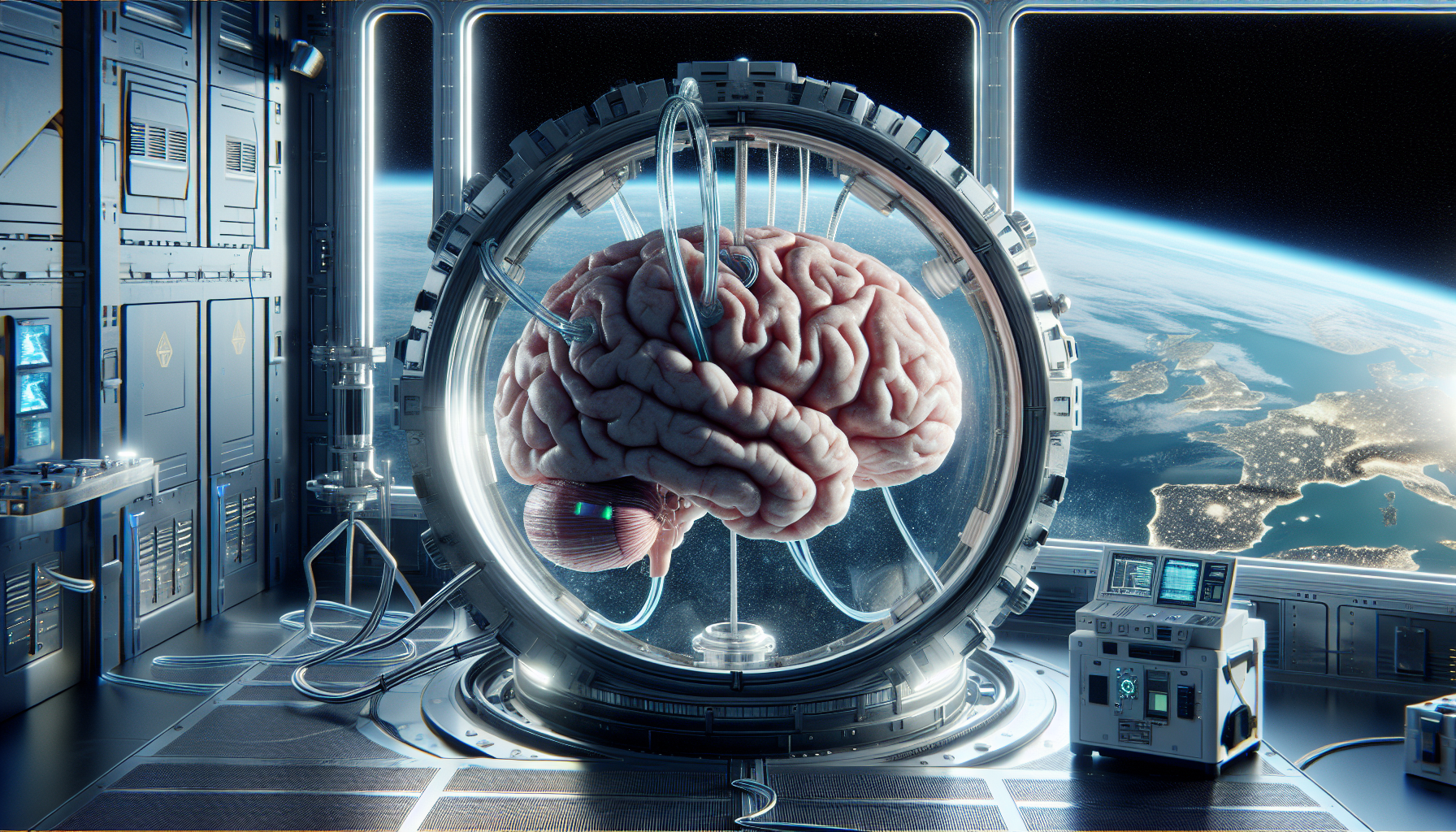
Is it a bird? Is it a plane? No, it’s a tiny brain floating in space! In an unprecedented move, scientists have been growing brain-like organoids aboard the International Space Station (ISS) in a bid to fast-track discoveries for debilitating conditions like Alzheimer's and Parkinson's. And no, these space brains aren't planning a hostile takeover.
If you're wondering why we're sending brain matter on a zero-gravity joyride, it's all about simulating conditions we just can't replicate on Earth. Under Elon Musk's imaginary city skylines, even our most advanced labs have limitations. Enter the ISS, our out-of-this-world Petri dish!
The Science of Growing Mini-Brains in Space
Growing brain-like organoids, otherwise known as "mini-brains," is like baking grandma's cookie recipe in a zero-gravity oven. The purpose of this orbital adventure is to advance our understanding of neurodegenerative diseases. Freed from earthly constraints like gravity, cells grow with a zest they just don't exhibit on ground swims.
Why the Space Laboratory?
The pristine conditions aboard the ISS provide researchers with a unique environment to unearth secrets buried inside our noggins. With microgravity's subtle touch, these organoids develop differently, providing insights that just can’t be gleaned here on Earth. Imagine if you could grow plants in the sky to make better pesto sauce—now that’s food for thought.
Playing Cosmic Doctor
Free from the tyranny of gravity, scientists can observe cellular activities with the freedom of Neil Armstrong’s moon walk. This means unraveling new information about neurological patterns that could lead to breakthrough treatments for nasty ailments like Alzheimer's, Parkinson's, and even spinal injuries—problems that send healthcare experts' brains into overdrive.
How Does Gravity—or the Lack Thereof—Affect Brain Growth?
The interaction between neurons, the cogs and wheels of our thoughts, undergoes an influential transformation in space. When in orbit, the cells have a disco with a lack of pressure, altering their growth and connectivity. This offers insights into neuropathologies when things start getting funky down here on Earth.
- Cell Communication: Space allows a detailed observation of neuron communication free from gravity-induced interference.
- Structural Changes: Organoids take quite different shapes, offering insights on cell development for unlocking brain resilience secrets.
- Research Potential: Opening doors to neurogenesis studies like never before, unleashing the next big development in brain research.
Implications of Space-Based Research
The implications of this brainy display are massive. With crippling diseases such as Alzheimer's and Parkinson's posing serious challenges for ever-aging populations, scientists could soon shift how we approach treatment possibilities, thanks to these ambitious studies. Experts hope that having globe-trotting organoids will unlock new therapeutic methods and shed light on these merciless ailments.
Bringing it Back Home
While some aspects of space travel still resemble science fiction, the tangible benefits hit home with the potential for groundbreaking therapies. From reformulating how research is conducted to accelerating treatment developments, there’s hope that those suffering from neurological conditions could witness a real-world impact.
Thinking Ahead: Space Brains and Their Transformative Potential
Join us in pondering, where might research thrive next? Could aging be reversed in a galaxy far, far away or could it be that lattes served on Mars will include brain-stimulation additives?
Comments and Debriefs
Before we lose you to the cosmic thoughts of omnipotent brain solutions, we ask our iNthacity readers: What do you think about sprouting brain cells in space? What condition would you prioritize for space-age research? Share your brain (and heart) in our comments below!
Become part of the iNthacity community and apply to become permanent residents then citizens of the "Shining City on the Web", where curiosity soars beyond Earthly borders!
Disclaimer: This article may contain affiliate links. If you click on these links and make a purchase, we may receive a commission at no additional cost to you. Our recommendations and reviews are always independent and objective, aiming to provide you with the best information and resources.
Get Exclusive Stories, Photos, Art & Offers - Subscribe Today!
Related posts:
 AI-Powered Artificial Gravity Generators: Transforming Space Habitats into Comfortable Homes
 Ex-Google CEO’s 2026 Warning: AI Will Outsmart Humans and Become Uncontrollable
 Unveiling the Matrix: Discover the Hidden Geometric Magic in AI Brains
 Gravity-Defying Skyscrapers: AI’s Revolution in Architecture and Design
 The Mind Mesh: Connecting Brains with AI for Enhanced Thought and Knowledge Sharing




Post Comment
You must be logged in to post a comment.