
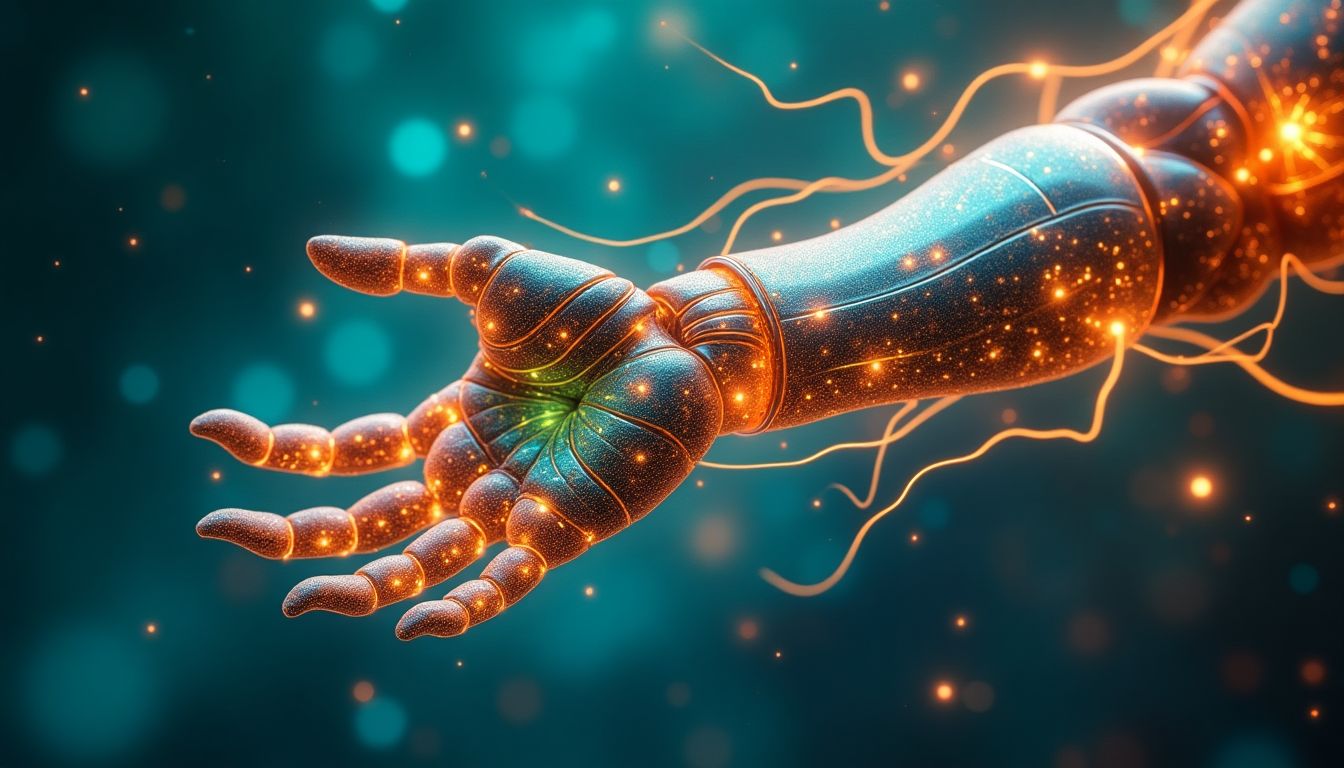
What if robots could heal themselves like living organisms? Picture a robot working in a hazardous environment—say, a nuclear reactor or the surface of Mars—when suddenly, a crack appears in its structure. Instead of shutting down, it activates an internal repair mechanism, sealing the crack and continuing its mission. This isn’t a scene from a sci-fi movie; it’s the future of robotics, and it’s closer than you think. Self-healing robots, powered by artificial intelligence (AI) and inspired by biological regeneration, are poised to revolutionize industries from space exploration to disaster response.
Renowned futurist Ray Kurzweil once predicted that by 2045, machines would surpass human intelligence. While we’re not quite there yet, the development of self-healing robots is a significant step toward that vision. Similarly, Michio Kaku, a theoretical physicist, has often spoken about the potential of AI to create machines that mimic biological systems. And let’s not forget Cynthia Breazeal, a pioneer in social robotics, who has long championed the idea of robots that can adapt and repair themselves. These luminaries have laid the groundwork for a future where robots are not just tools but resilient, self-sustaining entities.
But how do we get from here to there? What does it take to build a robot that can heal itself? The answer lies at the intersection of materials science, AI, and bio-inspired engineering. This article will explore the science behind self-healing robots, the challenges they face, and how AI is driving this transformative technology. By the end, you’ll understand why self-healing robots are not just a cool idea—they’re a necessity for the future.
Self-healing robots, inspired by biological regeneration, are the future of robotics. This article explores how AI and advanced materials science are enabling robots to autonomously repair themselves, revolutionizing industries like space exploration and disaster response. Learn about the challenges, breakthroughs, and roadmap to achieving this transformative technology.
1. The Science of Self-Healing Materials
1.1 Bio-Inspired Materials
Nature has been perfecting self-repair for millions of years. Think about how your skin heals after a cut or how a lizard regrows its tail. Scientists are now borrowing these ideas to create materials that can repair themselves. For example, self-healing polymers use tiny capsules filled with a healing agent. When the material cracks, these capsules burst open, releasing the agent to fill the gap. It’s like a robot with a built-in first-aid kit.
But it’s not just polymers. Researchers are also exploring metals and composites that can heal themselves. One exciting development is the use of shape-memory alloys, which can return to their original shape after being bent or deformed. Imagine a robot arm that gets dented during a mission but can pop back into shape like a cartoon character. It’s not magic—it’s science.
1.2 Challenges in Material Design
Creating self-healing materials is no walk in the park. These materials need to be durable, lightweight, and capable of healing multiple times without losing functionality. Plus, they have to work seamlessly with other components like sensors and actuators. It’s like trying to build a car that can fix its own flat tire while still driving at 60 mph.
Another challenge is cost. Many self-healing materials are expensive to produce, which could limit their use in everyday applications. Researchers are working on cheaper alternatives, but it’s a slow process. As the saying goes, Rome wasn’t built in a day—and neither are self-healing robots.
1.3 Current Breakthroughs
Despite the challenges, there have been some exciting breakthroughs. For instance, scientists at the Massachusetts Institute of Technology (MIT) have developed self-healing hydrogels that mimic human tissue. These hydrogels can repair themselves after being cut, making them ideal for use in soft robotics. Another breakthrough comes from the University College London, where researchers have created a self-healing concrete that could be used to build more resilient structures.
These advancements are just the tip of the iceberg. As researchers continue to push the boundaries of materials science, we’re getting closer to a future where self-healing robots are the norm rather than the exception.

2. The Role of AI in Autonomous Repair
2.1 AI-Driven Damage Detection
Imagine a robot that can sense a crack in its frame just like you feel a splinter in your finger. Thanks to AI, this is becoming a reality. AI algorithms are like the robot's nervous system, constantly analyzing sensor data to detect damage. Whether it's a vibration sensor picking up unusual movements or a camera spotting a crack, AI is the first responder. For example, NASA's Perseverance rover uses AI to analyze images and detect potential damage on Mars. It's like having a robot doctor that knows when something's wrong before it becomes a big problem.
2.2 Decision-Making for Repair
Once the damage is detected, the next step is figuring out what to do about it. Should the robot stop everything and fix itself, or can it wait until it's safer? Here's where AI shines again. It can weigh the pros and cons faster than you can say "duct tape." AI considers factors like the severity of the damage, the importance of the current task, and how much "healing juice" the robot has left. It's like a robot version of a triage nurse, deciding who gets treated first in an emergency room. For instance, a robot working in a disaster zone might decide to finish rescuing people before fixing its own broken leg.
2.3 Learning from Experience
What makes AI even cooler is its ability to learn from past mistakes. Through reinforcement learning, robots can get better at repairing themselves over time. Think of it as a robot that goes to school every time it gets a scratch. Each repair is a lesson, and the more lessons it has, the smarter it becomes. For example, a robot arm in a factory might learn that a certain type of crack needs a specific type of repair. It's like having a robot that gets wiser with every bump and bruise. Who knew robots could be such quick learners?
3. Applications of Self-Healing Robots
3.1 Space Exploration
Space is a tough place for robots. The conditions are harsh, and there's no one around to fix things when they break. That's where self-healing robots come in. Imagine a Mars rover that can repair its own wheels or solar panels. It could keep exploring long after its warranty expires. NASA and other space agencies are already looking into this. For example, the European Space Agency is developing self-healing materials for future missions. It's like giving robots a Swiss Army knife, but for repairs.
3.2 Disaster Response
Disaster zones are dangerous places for humans, but they're perfect for self-healing robots. Whether it's an earthquake, a nuclear meltdown, or a wildfire, these robots can go where humans can't. They can navigate rubble, repair their own damage, and keep working without putting anyone at risk. For example, the Red Cross could use these robots to search for survivors in collapsed buildings. It's like having a team of indestructible first responders.
3.3 Industrial Automation
Factories are another place where self-healing robots could make a big difference. Imagine a robotic arm that can fix itself after hours of repetitive work. It could reduce downtime and save companies a lot of money. Companies like Siemens are already exploring this technology. It's like having a factory worker who never calls in sick and can fix their own tools. Who wouldn't want that?

4. Ethical and Societal Implications
4.1 Job Displacement
As self-healing robots become more advanced, they could replace human workers in industries like manufacturing, construction, and even healthcare. Imagine a factory where robots not only assemble products but also repair themselves when they break down. Sounds efficient, right? But what happens to the workers who used to do those jobs? According to a McKinsey report, up to 800 million jobs could be lost worldwide to automation by 2030. Policymakers and businesses need to address this by:
- Investing in reskilling programs to help workers transition to new roles.
- Creating policies that encourage human-robot collaboration rather than replacement.
- Exploring universal basic income (UBI) as a safety net for displaced workers.
While self-healing robots promise efficiency, we must ensure they don’t leave humans behind.
4.2 Safety Concerns
What happens if a self-healing robot malfunctions during repair? Imagine a robot in a nuclear power plant attempting to fix itself but accidentally causing more damage. The stakes are high. Safety protocols must be airtight, and AI systems need to be rigorously tested. For example, NASA’s robotics division has strict safety standards for autonomous systems, which could serve as a model for self-healing robots. Key safety measures include:
- Redundant systems to prevent catastrophic failures.
- Real-time monitoring by human operators for critical tasks.
- Fail-safes that shut down the robot if repair attempts go awry.
Safety isn’t just about preventing accidents—it’s about building trust in this transformative technology.
4.3 Environmental Impact
Self-healing materials sound futuristic, but what happens when they reach the end of their lifecycle? Many of these materials rely on polymers and composites that aren’t biodegradable. A study by the Environmental Protection Agency (EPA) highlights the growing problem of electronic waste, which could worsen with self-healing robots. To mitigate this, researchers are exploring:
- Biodegradable self-healing materials inspired by natural processes.
- Recycling programs for robotic components.
- Designing robots with modular parts that can be easily replaced or upgraded.
Sustainability must be at the heart of self-healing robotics to ensure they don’t harm the planet they’re designed to protect.
5. The Future of Self-Healing Robots
5.1 Integration with AI and IoT
Self-healing robots won’t work in isolation—they’ll be part of a larger ecosystem powered by AI and the Internet of Things (IoT). Imagine a fleet of robots in a smart factory, communicating with each other and sharing repair strategies. For instance, if one robot detects a crack in its structure, it could upload the data to a central AI system, which then distributes the solution to other robots facing similar issues. Companies like Siemens are already pioneering IoT-enabled manufacturing, and self-healing robots could take this to the next level. Key benefits include:
- Faster problem-solving through shared knowledge.
- Reduced downtime as robots repair themselves autonomously.
- Enhanced efficiency through real-time data analysis.
The future isn’t just about smarter robots—it’s about a smarter world where machines work together seamlessly.
5.2 Human-Robot Collaboration
In the future, humans and self-healing robots will work side by side, each complementing the other’s strengths. Picture a construction site where a self-healing robot assists workers by lifting heavy materials and repairing its own wear and tear. This collaboration could revolutionize industries like healthcare, where robots like Intuitive Surgical’s da Vinci system already assist surgeons. The key to success lies in:
- Designing intuitive interfaces for human-robot interaction.
- Ensuring robots can adapt to human workflows.
- Building trust through transparency and reliability.
Human-robot collaboration isn’t just about efficiency—it’s about creating a future where technology empowers people.
5.3 Long-Term Vision
The ultimate goal of self-healing robotics is to create machines that can adapt and evolve, much like living organisms. Imagine a Mars rover that not only repairs itself but also learns from its environment to improve its performance. This vision requires breakthroughs in:
- AI algorithms that enable continuous learning and adaptation.
- Materials science to develop more resilient and versatile self-healing materials.
- Robotics engineering to integrate these advancements into practical systems.
While the road ahead is challenging, the potential rewards are immense. Self-healing robots could transform industries, save lives, and even help us explore the cosmos. The question isn’t whether this future is possible—it’s how soon we can make it a reality.

6. AI Solutions: How Would AI Tackle This Issue?
6.1 Step 1: Data Collection and Analysis
AI would begin by collecting vast amounts of data on material properties, damage types, and repair outcomes. Machine learning models would analyze this data to identify patterns and optimize repair strategies. For example, researchers at MIT are already using AI to predict how different materials will behave under stress. This data-driven approach allows for the creation of more resilient self-healing materials. Additionally, IBM is leveraging its AI systems to analyze sensor data from robots in real-time, enabling quicker and more accurate damage detection.
6.2 Step 2: Simulation and Testing
AI-driven simulations would test various repair scenarios, allowing researchers to refine self-healing materials and algorithms without physical prototypes. For instance, Ansys is using simulation software to model how self-healing materials behave in different environments. This approach accelerates development and reduces costs. Companies like NVIDIA are also contributing by providing the computational power needed to run these complex simulations. By simulating thousands of damage scenarios, AI can identify the most effective repair strategies before they are implemented in real-world robots.
6.3 Step 3: Real-World Implementation
Once validated, AI systems would be deployed in real-world robots, continuously learning and improving from their experiences. For example, Boston Dynamics is already integrating AI into their robots to enhance their capabilities in dynamic environments. This iterative process would lead to increasingly sophisticated self-healing capabilities. Additionally, SpaceX is exploring the use of self-healing robots for space missions, where autonomous repair could be a game-changer.
AI Solutions Action Schedule/Roadmap
Day 1: Assemble a multidisciplinary team of experts in AI, materials science, and robotics. Key players include leading institutions like Stanford University and Caltech, as well as industry leaders like Google and Amazon.
Day 2: Conduct a literature review to identify existing research and gaps in knowledge. Utilize resources from NCBI and ResearchGate to gather comprehensive data.
Week 1: Develop a prototype self-healing material and test it in controlled conditions. Use facilities at NIST for accurate testing and validation.
Week 2: Begin training AI models on damage detection and repair strategies. Utilize TensorFlow and PyTorch for machine learning model development.
Month 1: Integrate self-healing materials into a robotic prototype and conduct initial tests. Collaborate with Festo for advanced robotic components.
Month 2: Analyze test results and refine materials and algorithms. Use Tableau for data visualization and analysis.
Year 1: Deploy self-healing robots in a real-world environment, such as a manufacturing plant. Partner with Siemens for industrial automation expertise.
Year 1.5: Evaluate performance and make further improvements. Conduct field tests in collaboration with NASA for space applications.
Year 2: Scale up production and explore new applications, such as space exploration. Utilize the global network of SpaceX for large-scale deployment.
A Bright Future for Self-Healing Robots
Imagine a world where robots, much like living organisms, can heal themselves after damage. This vision is not just a distant dream but a rapidly approaching reality, thanks to the convergence of AI, materials science, and robotics. The journey to achieving self-healing robots is fraught with challenges, but the roadmap is clear, and the potential benefits are immense.
From space exploration to disaster response, self-healing robots could revolutionize industries and improve human lives. The integration of AI and IoT will enhance their capabilities, making them more efficient and reliable. Human-robot collaboration will become seamless, paving the way for safer and more productive work environments.
As we continue to innovate and push the boundaries of what is possible, we must also consider the ethical and societal implications of this technology. Job displacement, safety concerns, and environmental impact are all issues that need to be addressed. However, with careful planning and responsible development, self-healing robots can be a force for good, ushering in a new era of resilient and adaptive technology.
So, what does the future hold for self-healing robots? The possibilities are endless. With continued research and collaboration, we can turn this vision into reality, creating a world where robots are not just tools but partners in our quest for a better future. What role will you play in this exciting journey? Share your thoughts in the comments below, and let’s continue the conversation.
Don’t forget to subscribe to our newsletter for a chance to become permanent residents of iNthacity: the "Shining City on the Web" and like, share, participate in the debate and comment.
FAQ
1. What are self-healing robots?
Self-healing robots are machines designed to repair themselves when damaged, much like how your skin heals after a cut. These robots use special materials and AI to detect and fix problems, making them more reliable and longer-lasting. Imagine a Mars rover that can fix its own wheels or a NASA robot that repairs a cracked surface on the moon without human help. It’s not science fiction—it’s the future!
2. How do self-healing materials work?
Self-healing materials are inspired by nature. For example, some materials have tiny capsules filled with a healing liquid. When a crack forms, the capsules break open, and the liquid fills the gap, fixing the damage. Other materials, like shape-memory alloys, can return to their original shape after being bent or twisted. Think of it like a sponge that always bounces back, no matter how much you squeeze it.
3. What role does AI play in self-healing robots?
AI is like the brain of a self-healing robot. It helps the robot:
- Detect damage: AI uses sensors to find cracks or breaks. For example, it might notice unusual vibrations or temperature changes.
- Decide what to do: AI figures out the best way to fix the problem. Should it repair itself right away or wait until the task is done?
- Learn from mistakes: AI gets better over time by remembering what worked in the past. It’s like learning from experience.
Without AI, self-healing robots wouldn’t be as smart or efficient.
4. What are the potential applications of self-healing robots?
Self-healing robots could change the way we work and explore. Here are a few examples:
- Space exploration: Robots on Mars or the moon could repair themselves, reducing the need for expensive missions from Earth.
- Disaster zones: After an earthquake or nuclear accident, self-healing robots could enter dangerous areas to search for survivors or clean up without risking human lives.
- Factories: In manufacturing, robots that fix themselves could save time and money by reducing downtime.
These are just a few possibilities—self-healing robots could be used in many other fields, too.
5. What challenges do self-healing robots face?
While self-healing robots are exciting, there are still some hurdles to overcome:
- Material durability: Self-healing materials need to last a long time and work well in extreme conditions.
- Safety: What if a robot makes a mistake during repair? Ensuring these robots are safe is crucial.
- Job displacement: If robots can fix themselves and work longer, some human jobs might be at risk. We’ll need to think about how to retrain workers.
- Environmental impact: Creating and disposing of self-healing materials could harm the environment. Researchers are working on making these materials more sustainable.
6. How long will it take to develop self-healing robots?
Self-healing robots are already in development, but it might take 5 to 10 years before we see them in real-world applications. Companies like Boston Dynamics and research institutions like MIT are leading the way. The timeline depends on how quickly we can solve challenges like material durability and AI reliability. But don’t worry—the future is closer than you think!
7. Are self-healing robots safe?
Safety is a top priority for researchers. Self-healing robots will need to be thoroughly tested to make sure they don’t malfunction during repairs or cause harm to humans. For example, if a robot is working in a factory, it must be programmed to stop if a person gets too close. Think of it like a car with automatic brakes—it’s designed to keep everyone safe.
8. How will self-healing robots impact the environment?
Self-healing robots could actually help the environment by reducing waste. Instead of throwing away broken machines, we could repair them. However, we also need to make sure the materials used in these robots are eco-friendly. For example, researchers are exploring biodegradable polymers and recyclable metals.
9. Will self-healing robots replace human workers?
Self-healing robots might take over some jobs, especially in dangerous or repetitive tasks. But they’ll also create new opportunities. For example, we’ll need people to design, build, and maintain these robots. The key is to prepare for the future by learning new skills. Think of it as upgrading your toolbox for the 21st century!
10. Where can I learn more about self-healing robots?
If you’re curious about self-healing robots, check out these resources:
- NASA’s website for updates on space robotics.
- MIT’s robotics lab for cutting-edge research.
- TED Talks on AI and robotics for inspiring videos.
The world of self-healing robots is full of possibilities—so dive in and explore!
Wait! There's more...check out our gripping short story that continues the journey: The Last Machine’s Question

Disclaimer: This article may contain affiliate links. If you click on these links and make a purchase, we may receive a commission at no additional cost to you. Our recommendations and reviews are always independent and objective, aiming to provide you with the best information and resources.
Get Exclusive Stories, Photos, Art & Offers - Subscribe Today!
Related posts:
 AI-Powered Construction Sites: How Autonomous Robots Are Revolutionizing Building with Minimal Human Input
 When Biology Meets AI: Unveiling the Era of Growing, Healing Robots
 AI and the Age of Supermaterials: How AI is Revolutionizing Transparent Steel, Self-Healing Alloys, and the Future of Technology
 Nanobot Surgery: Revolutionizing Healing from the Inside Out
 China’s Advanced Robots Are Revolutionizing Industry with Engine AI Technology





Post Comment
You must be logged in to post a comment.