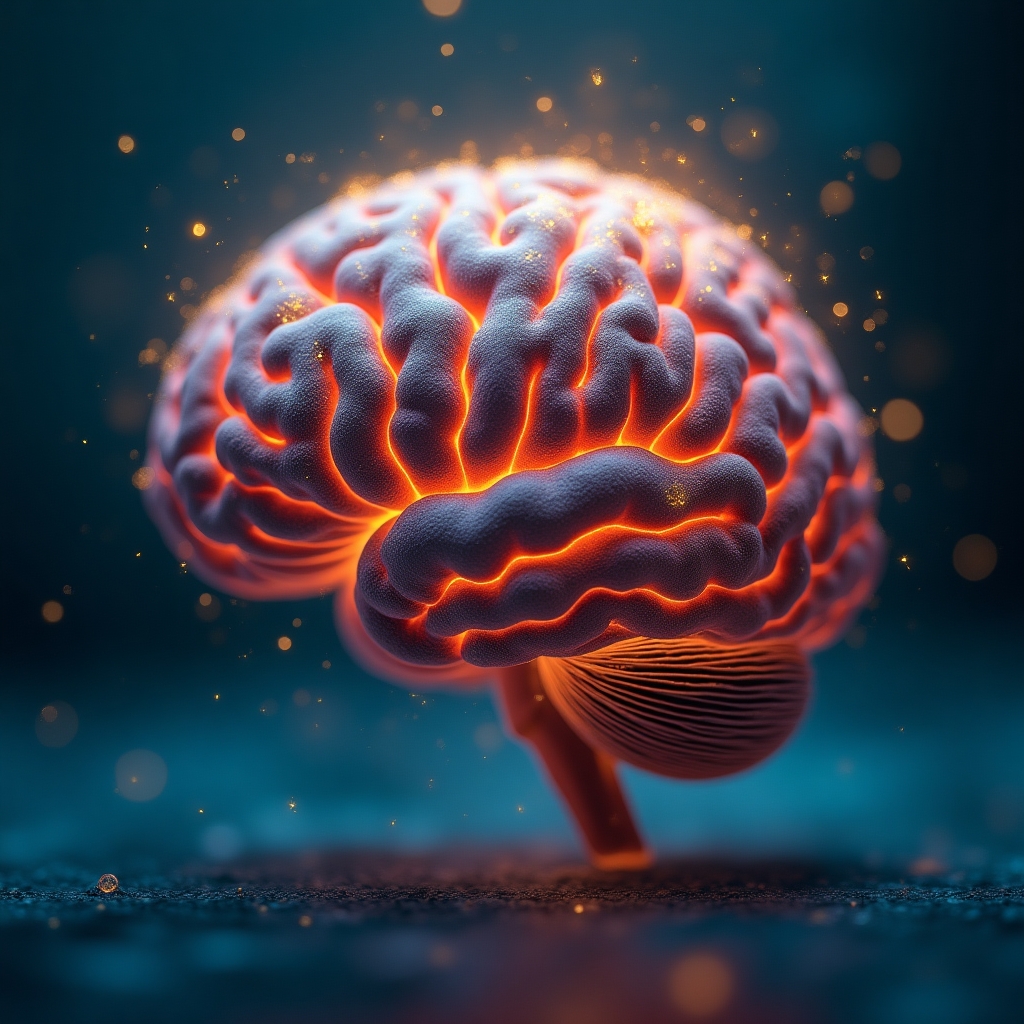
At the forefront of modern science, Johns Hopkins University scientists have recently achieved a milestone with the creation of a mini human brain that mimics the complexities of a living brain. This groundbreaking accomplishment has paved the way for new explorations in understanding neurological conditions and offers unprecedented opportunities in the realm of medical research.
iN SUMMARY
- ? Scientists at Johns Hopkins have created a groundbreaking mini human brain.
- ? This organoid includes rudimentary blood vessels and neural activity.
- ? Researchers aim to understand and test treatments for conditions like autism and schizophrenia.
- ? This innovation opens new avenues for medical research, bypassing animal models.
The miniature brain organoid, dubbed the "multi-region brain organoid," is a first-of-its-kind innovation that simulates the development of an entire human brain. Equipped with basic blood vessels and generating electrical signals, this organoid mimics the early developmental stages of brain functionality. According to researchers, the organoid is not a full replication of the human brain but rather a simplified model that connects distinct regions of the brain, producing rudimentary brain functions (Science Daily, https://www.sciencedaily.com/releases/2025/08/250803233113.htm).
The Brain's Journey from Lab Bench to Breakthrough
Imagine the potential of a lab-grown brain shedding light on the mysteries of the human mind. At Johns Hopkins, teams of eager researchers spent years perfecting this technology. The organoids are crafted by transforming stem cells into brain cells, nurturing them in controlled environments where they develop and connect in ways remarkably similar to how a brain forms in the human body.
Such advancements offer profound implications. By observing these organoids, scientists can follow the course of brain development, unveiling insights into how conditions such as autism or schizophrenia might arise. Moreover, this technology allows for testing treatments in a manner traditional animal models cannot replicate. This advancement paves the path for an era where animal testing might see a notable decline, showcasing an evolution in ethical scientific research.
Connecting Brains and Borders: Global Implications
As the organoids continue to evolve under the dedicated guidance of researchers, this breakthrough stirs excitement beyond the confines of the laboratory. It opens discussions across continents about the future of neuroscience, drawing interest from policymakers, ethicists, and the general public alike. The potential to address global health concerns, such as neurological disorders, through such sophisticated modeling is indeed a beacon of hope.
On a larger scale, cities across the globe, from Toronto to Sydney, are paying close attention to these developments. As the scientific community continues to explore these possibilities, collaborations between international institutions could amplify their collective understanding and ethical considerations, while fostering a global community dedicated to solving one of humanity's most compelling puzzles.
Innovation Meets Ethical Exploration
This innovation does not come without its questions. At the heart of this discourse lies the ethical consideration of manipulating human cells to such a degree. It’s an area rife with philosophical ponderings about the essence of consciousness and life itself. However, the clear potential benefits—transformative insights into disease mechanisms and therapeutic development—offer an enticing counterbalance that keeps the scientific community moving forward with cautious optimism.
In parallel to these ethical explorations, technology continues to evolve enhance our everyday well-being. From wearable health tech available on Amazon to smart home devices that monitor our environments, the intersection of science and lifestyle is ever-expanding.
The Path Forward: Empathy-Driven Research
The road ahead is as exciting as it is challenging. For the scientists at Johns Hopkins and their global counterparts, the journey is just beginning. With every new finding, our collective toolkit for understanding the brain's complexities is enriched, promising a future where medical interventions are more accurate and personalized than ever before.
What would you do if this research eventually leads to a cure for Alzheimer's or better mental health support systems? The curiosity, determination, and compassion driving these studies are values echoed in community discussions worldwide, reminding us of the profound impact of empathetic, well-supported research.
For those interested in keeping abreast of scientific leaps like this one, engaging with local news portals—like those in Montreal and Melbourne—ensures you are never out of the loop.
In bringing this article to a close, what possibilities do you see in the union of science and society, especially as advancements like these reshape our understanding of life? Share your thoughts and become part of the iNthacity community, collaborating and commenting on the future of this "Shining City on the Web" project. Let's continue this conversation together, share insights, and function as a collective force for a future brimming with potential—where the sky is quite literally the limit!
After all, in a world where mini brains can change the landscape of medical science, who knows what other wonders lie just around the corner?
Feel free to visit our city news portals for Calgary or overseas for updates from Manchester. We hope to see you participate in the lively debates and discussions these fascinating topics spark!
Disclaimer: This article may contain affiliate links. If you click on these links and make a purchase, we may receive a commission at no additional cost to you. Our recommendations and reviews are always independent and objective, aiming to provide you with the best information and resources.
Get Exclusive Stories, Photos, Art & Offers - Subscribe Today!
Related posts:
 Alzheimer’s Risk Begins at the Brain’s Edge: What You Need to Know!
 Ozempic: The Weight Loss Drug That May Shield Your Brain from Stroke Risks!
 Discover Pain Relief Without Pills: How VR Nature Scenes Activate Your Brain’s Healing Power
 Discover Why Cold Feels Amazing: Scientists Reveal the Secrets of the Chill Pathway!
 Breakthrough Discovery: Scientists Capture Elusive Neutrinos Near Reactor After 50 Years!




Post Comment
You must be logged in to post a comment.