
Men’s Journal aims to feature only the best products and services. If you buy something via one of our links, we may earn a commission. Prices are accurate and items in stock at time of publishing.
Whether your yard is covered in a tall fescue or Kentucky bluegrass, there are probably vital nutrients that are lacking in the soil. Lawn fertilizers add what’s missing and help your grass stand up to weed invasion, keep its rich green color, and strengthen its ability to recover from stress. But how do you choose the best fertilizer for your lawn?
“The ideal fertilizer choice varies depending on your grass variety, soil conditions, and specific lawn goals,” says Isaac Mertz, Ph.D., regional technical manager for the Carolina region of lawn care service TruGreen. However, you also need to know when to fertilize and how much to use in order for your grass to benefit and not be harmed by overdoing it.
While there are different types of fertilizers to consider, experts agree that there is a best lawn fertilizer for every situation. Here are the experts’ picks for top fertilizers and their lawn care tips that can help you achieve your landscaping goals.
Best Lawn Fertilizers of 2026 at a Glance
- Best Lawn Fertilizer Overall:Milorganite All-Purpose Lawn Fertilizer
- Best Organic Granular Fertilizer:Suståne 8-2-4 All-Natural, Slow-Release Nitrogen Fertilizer
- Best Synthetic Granular Fertilizer:Scotts Turf Builder Weed & Feed Lawn Fertilizer
- Best Liquid Fertilizer:Simple Lawn Solutions Lawn Food 16-4-8 Complete Balanced NPK Fertilizer
- Best Liquid Fertilizer for Pet Repair:Sunday Pet Patch All-Purpose Lawn Fertilizer
- Best Weed-Killing Fertilizer:Vigoro Weed and Feed Fertilizer
Best Lawn Fertilizers of 2026
Since there are so many different climates and conditions across the country, there isn’t a one-size-fits-all fertilizer for every yard. The best fertilizer for grass depends on your particular situation. But no matter which fertilizer you choose from the following expert picks in this lawn fertilizer buying guide, keep in mind that fertilizers can contain ingredients that shouldn’t be used near food gardens and many aren’t great for humans or pets. “It’s also a good idea to use basic safety gear like gloves and eyewear during application,” says Cameron Brown, merchant of seed and fertilizers at The Home Depot.
Here are the experts’ top picks for lawn fertilizer.
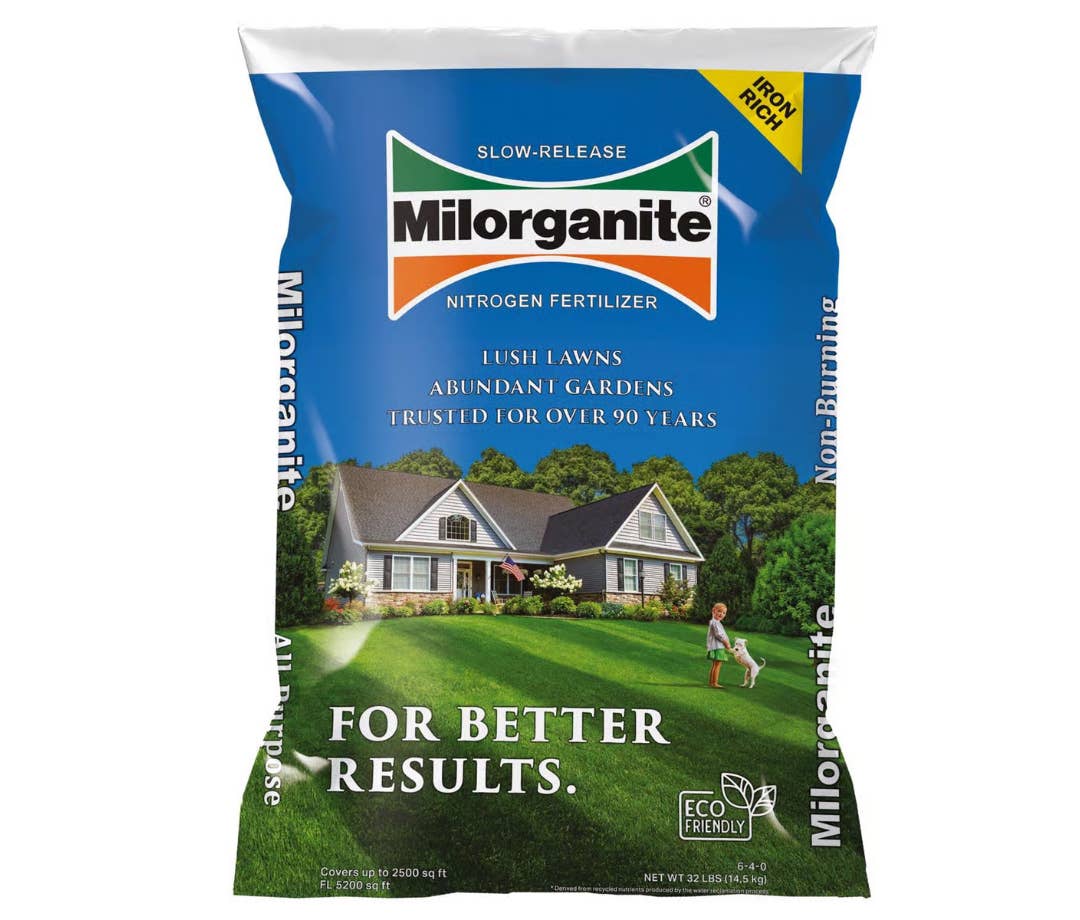
Best Lawn Fertilizer Overall: Milorganite All-Purpose Lawn Fertilizer
Courtesy
“Milorganite All-Purpose Lawn Fertilizer is an iron-rich natural fertilizer that can be used on lawns and gardens and won’t burn if over applied,” says Lou Manfredini, Ace Hardware’s home expert. George P. Carrette, owner and operator of EcoQuiet Lawn Care LLC, agrees: “We also like Milorganite, which is not strictly organic but does add high amounts of organic matter to the soil. It also contains a lot of iron, which can give grass that nice blue-green color.”
Available in a 32-pound bag that can cover up to 2,500 square feet, Milorganite is a slow-release nitrogen granule fertilizer that feeds a lawn for up to 10 weeks. It is also suitable for vegetables and its NPK is 06-04-00.
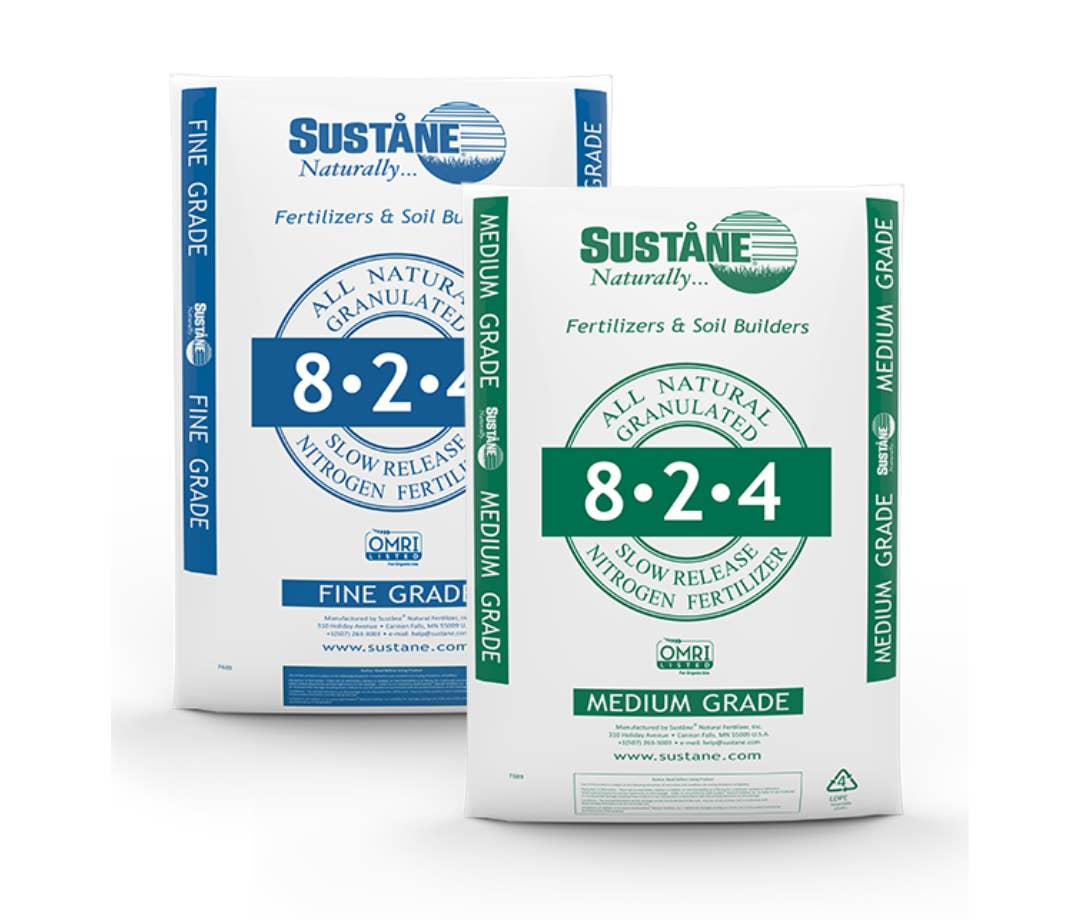
Best Organic Granular Fertilizer: Suståne 8-2-4 All-Natural, Slow-Release Nitrogen Fertilizer
Courtesy
“We like using products like this organic, granular one from Sustane, which offers higher-on-average macronutrient levels and also adds organic matter to the soil, acting like compost. This is especially important for sandy soil, which drains so well that it can suffer from nutrient leaching (washing away). Organic matter prevents that,” says Carrette.
Suståne 8-2-4 All-Natural, Slow-Release Nitrogen Fertilizer adds about six percent humic acid for a source of carbon and is made with aerobic compost to support the suppression of natural disease. A 50-pound bag covers about 4,000 square feet. It is safe for fruit and vegetables, and its NPK ratio is 8-2-4.
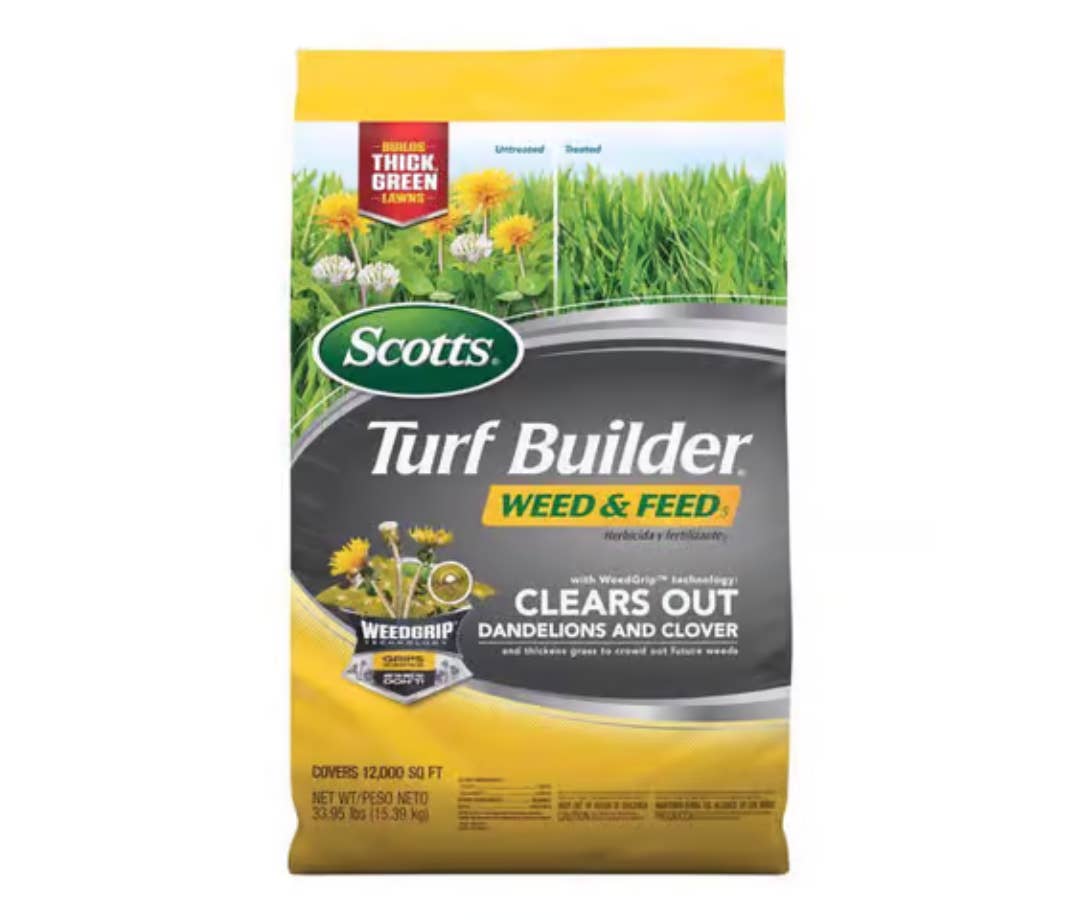
Best Synthetic Granular Fertilizer: Scotts Turf Builder Weed & Feed Lawn Fertilizer
Courtesy
Among the options for synthetic granular fertilizers, Scotts Turf Builder Weed & Feed Lawn Fertilizer is one of the best. “Scotts Turf builder weed and feed is a terrific spring fertilizer application to promote grass growth and weed control,” says Manfredini. Not only can it fertilize, it also can control more than 50 weeds, including clover and dandelion. For best results, it’s important to apply when the weeds are wet.
It’s not suitable for vegetables, and it is for established lawns. A 33.95-pound bag of granules can cover up to 12,000 square feet and its NPK ratio is 28-0-3.
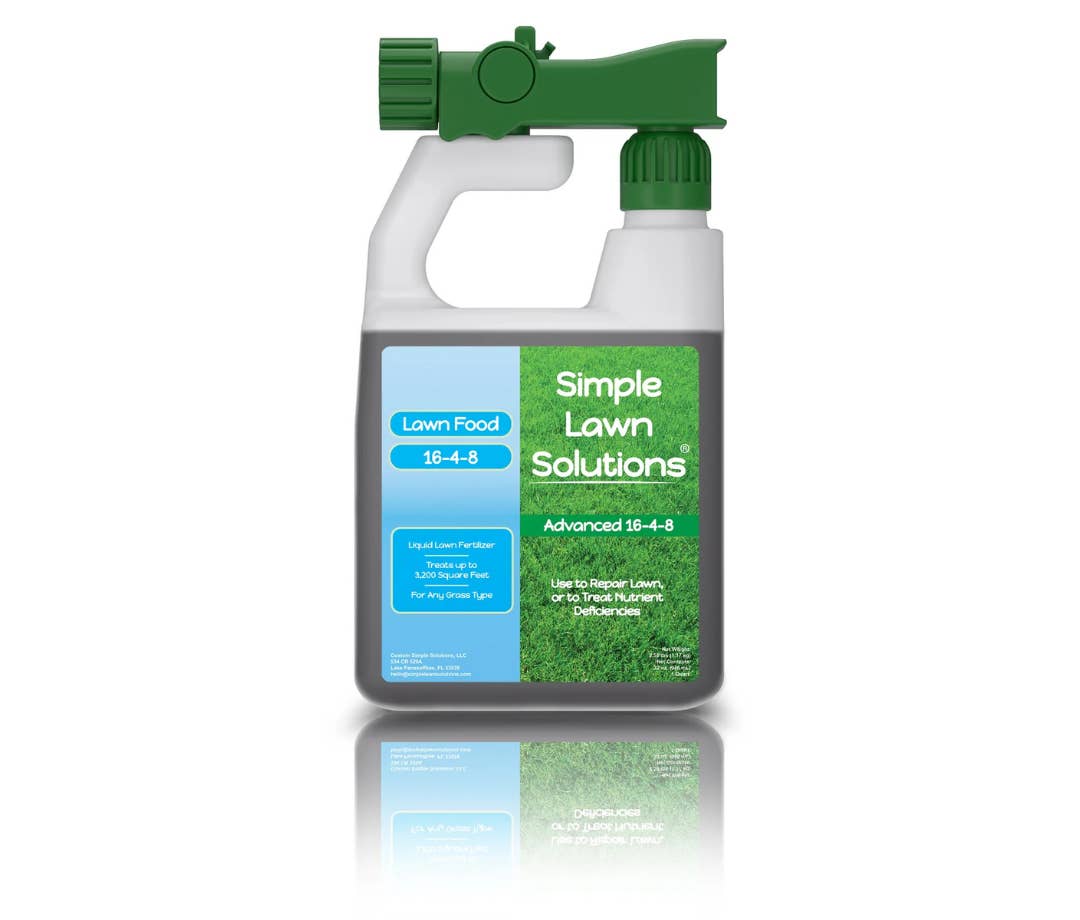
Best Liquid Fertilizer: Simple Lawn Solutions Lawn Food 16-4-8 Complete Balanced NPK Fertilizer
Courtesy
Liquid fertilizers can be easy to apply as they often just attach directly to a hose, like Simple Lawn Solutions Lawn Food 16-4-8 Complete Balanced NPK Fertilizer. From Zoysia to Perennial Ryegrass, it can be used on all grass types.
Created and manufactured by a family-owned business in the U.S., Simple Lawn is infused with seaweed and fish and its NPK ratio is 16-4-8. One 32-ounce bottle can cover up to 3,200 square feet of grass.
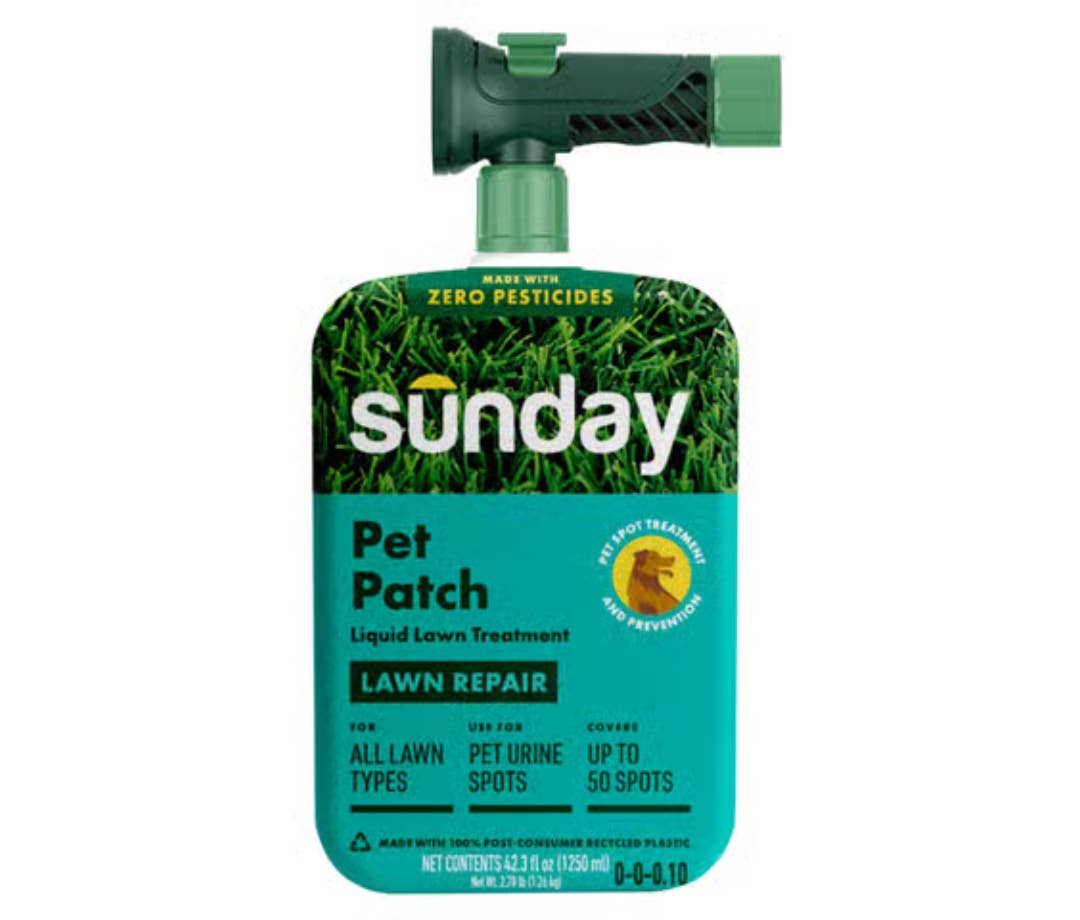
Best Liquid Fertilizer for Pet Repair: Sunday Pet Patch All-Purpose Lawn Fertilizer
Courtesy
Sometimes there’s just a few patches of lawn that need repair and fertilizer, like when a dog has a few favorite spots in the yard to do its business. Sunday Pet Patch All-Purpose Lawn Fertilizer is a liquid lawn repairing spray that is designed as a spot treatment instead of a whole-lawn fertilizer. It “attaches to a hose and is easy to apply,” says Manfredini.
Sunday Pet Patch contains humic acid to help improve soil structure and seaweed to help heal the damaged area so it can grow back healthy. Not safe for vegetables, its NPK is 0-0-0.10 and one 42.3-ounce bottle can cover up to 2,500 square feet.
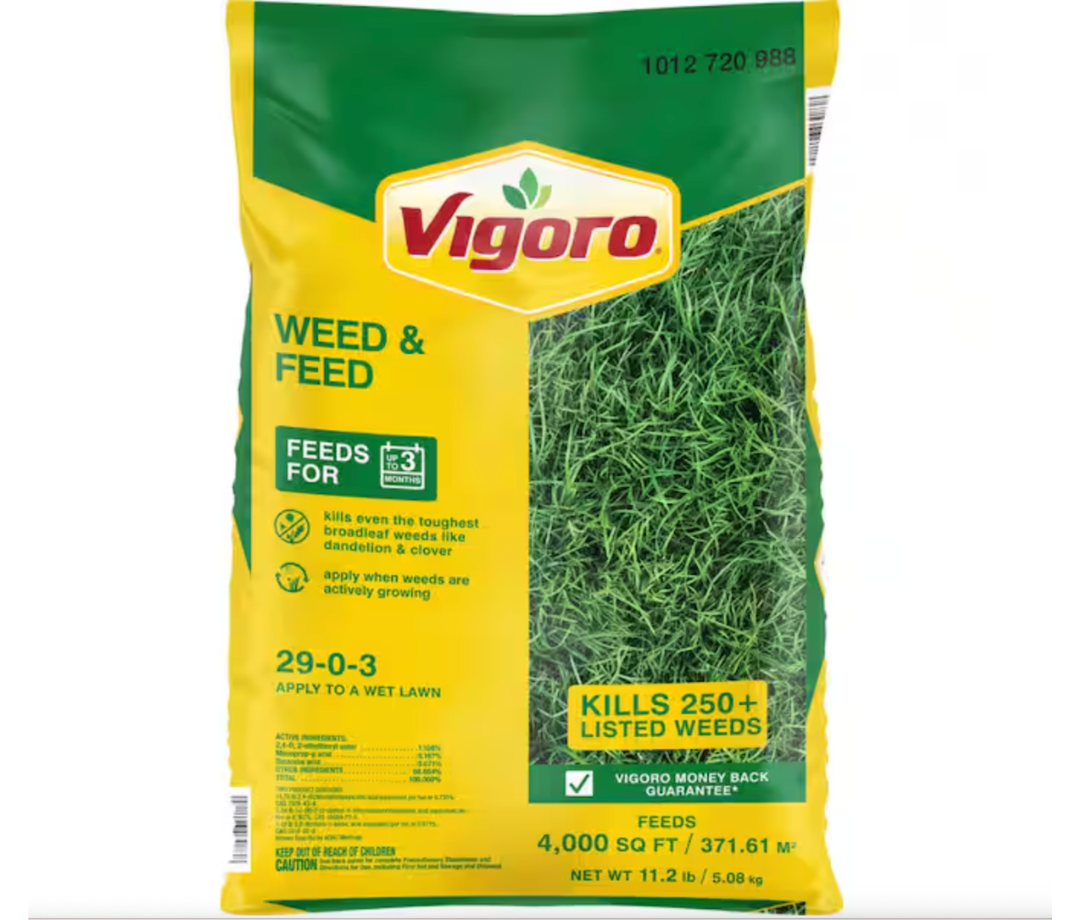
Best Weed-Killing Fertilizer: Vigoro Weed and Feed Fertilizer
Courtesy
A quick-acting fertilizer, Vigoro Weed and Feed Fertilizer can make grass green within 72 hours. Brown says: “Vigoro offers a broad range of lawn care solutions, whether that’s in organics or traditional fertilizer products, with a terrific performance at an incredible value.”
It’s important to use a spreader and apply on a moist lawn. Also, the grass will need to be thoroughly watered after application. Designed to kill broadleaf weeds like clover and dandelion, it can keep your lawn weed-free for up to three months. A 11.2-pound bag can cover up to 4,000 square feet and its NPK ratio is 29-0-3.
Types of Lawn Fertilizer Explained
While there are different kinds of lawn fertilizers, all types of fertilizer can cause harm to a lawn if not used correctly. As a general rule, read the bag and follow the directions. While there is some nuance regarding which product to use and what time of year to use it, most of what you need to know is on the bag. The directions will help you verify everything from spreader settings to optimum application times. For example, morning is often a good time because there’s dew, and the water catches the granules. Fertilizing after rainfall can also be helpful. Here’s what you need to know about the different types of fertilizer available.
Granular Fertilizer
Granular fertilizers are small pellets that require a drop spreader or a broadcast spreader to apply them to a lawn. Basically, you walk back-and-forth with the spreader like you walk to mow the lawn. It’s the most common type for home lawns and it’s inexpensive when compared to other types of fertilizers. Since it’s a slow-release fertilizer, it can be a good option for spring, keeping grass nourished through summer. However, it usually has a high salt content and can take longer for absorption. Some people will go back over the lawn and cover the granules with a liquid fertilizer, too.
Liquid Fertilizer
Another common type is liquid fertilizer. Usually you’ll add water through a hose or by mixing, and applying it is similar to watering the lawn. Unlike granules, liquid fertilizers absorb quickly and have a lower salt content. But since it absorbs more quickly, lawns require more frequent application and it is more expensive than granular options. Liquid fertilizers are usually synthetic, too.
Related: When to Fertilize Your Lawn This Spring for Greener Grass All Summer
Organic Fertilizer
Made from organic waste or microbes like composted manure, worm castings, compost, and biosolids, organic fertilizers are designed to improve your soil’s biology. The soil’s natural microbes actually help convert an organic fertilizer into nutrients that your lawn needs. Usually more expensive than synthetic, it usually doesn’t require frequent applications as it is a slow-nutrient-release formula.
Synthetic Fertilizer
Fast-acting, synthetic fertilizers are made from inorganic minerals and inorganic waste like petroleum, gases, and other materials. They can be liquid or granule, and include ammonium nitrate, sulfur-coated urea, super-phosphate, and urea formaldehyde. Since they work quickly to create a faster greening effect for a yard, they also need to be reapplied regularly to keep up the appearance. Water-soluble, they can leach into waterways and can burn grass if they’re over-applied. Still, it can be your best lawn fertilizer for green grass in a hurry.
Related: Is Spring Really the Best Time to Dethatch Your Lawn? It Depends on Your Grass Type
Understanding Fertilizer Numbers (N-P-K)
Since most lawns don’t have enough nutrients naturally to support a healthy lawn, chemists have formulated lawn fertilizers based on a nitrogen-phosphorous-potassium (NPK) ratio. NPK is a weight ratio of each nutrient and the rest of what’s inside the fertilizer package is filler that bulks it up and makes it easier to spread across the lawn.
“Grass requires 17 essential elements to thrive. While it pulls a lot of what it needs from the air and soil, it’s usually starving for three macronutrients you see on every fertilizer bag: nitrogen, phosphorus, and potassium,” says Carrette. In addition to NPK and carbon, hydrogen, and oxygen, plants also need calcium, magnesium, sulfur, boron, chlorine, copper, iron, manganese, molybdenum, nickel, and zinc.
Carbon, hydrogren, and oxygen “act as the building blocks for the plant’s physical structure and internal chemistry. Specifically, nitrogen promotes leafy growth and green color in grass; phosphorus helps the metabolism of grass and cell structure; and potassium regulates water and enzymes in the plant,” says Carrette.
Nitrogen (N)
Nitrogen is an essential nutrient for grass. It promotes leaf growth and green color and it’s usually the highest number in the ratio.
Phosphorus (P)
Helpful for root development so a plant can be strongly anchored to the earth, phosphorus is the second number in the NPK ratio. However, having too much can cause harm to plants.
Potassium (K)
Potassium supports metabolic processes. It helps to move nutrients through a plant and build stress resistance and overall health. It also helps plants endure temperature fluctuations and resist disease. It’s usually the smallest part of the ratio.
Related: Is Spring a Good Time to Aerate Your Lawn? Experts Weigh In
How to Choose the Best Lawn Fertilizer
Choosing the best lawn fertilizer depends on your grass type, soil conditions, and lawn goals.
Grass Type
There are many different types of grass filling up lawns. One big difference among grasses is whether they thrive in cool or warm weather. There are cool-season grasses like Kentucky bluegrass and fescue, and there are warm-season grasses like Bermuda and Zoysia.
Cool grasses usually need nitrogen fertilizers in early spring and again in the early fall. Warm grasses thrive with fertilizing from spring through summer months. And then, if the grass is mostly in the shade, you will need to use about half as much nitrogen.
Soil Condition
Before choosing a fertilizer, make sure you know what your lawn needs. A simple soil test can help identify nutrient deficiencies. “If you’re not seeing results, the most likely issue is that your lawn isn’t getting the nutrients it actually needs,” says Brown.
“The best next step is to test your soil. For homeowners who want to be more precise, soil testing kits can help identify nutrient deficiencies and guide more targeted treatment. That will tell you exactly what’s missing so you can choose the right product instead of guessing.”
Related: Gray, Matted Patches on Your Lawn After Winter? It Could Be Snow Mold. Here’s How to Fix It
Lawn Goals
After you know the make-up of the lawn and its nutrient needs, the decision about a fertilizer can be based on your lawn goals. If you want a greener color quick, then a synthetic fertilizer can help. If you want long-lasting root development and to strengthen the health of your lawn over time, then an organic fertilizer is a good choice.
And if you just want an expert’s opinion on your specific lawn situation, The Home Depot’s Magic Apron Outdoor Assistant allows you to input your location or upload photos of your yard to receive personalized lawn care recommendations, product suggestions, and seasonal guidance for maintaining a healthy lawn.
Lawn Fertilizer FAQ
What is the best fertilizer for lawns?
Many experts recommend balanced granular fertilizers or slow-release organic options depending on lawn conditions. Keep in mind that while you can often achieve faster results with an inorganic fertilizer, there are environmental concerns.
How often should you fertilize your lawn?
Lawns do best when they are fertilized about three to four times per year during the growing season, depending on your location. “This is highly region-dependent,” says Carrette. “For the New England region, three to five times a year should do it. More for sandy soils, less for clay soils.”
Is organic fertilizer better than synthetic?
It depends on your goals. While organic fertilizers improve soil health, they may act more slowly than synthetic fertilizers. “It’s a matter of choice,” says Manfredini. “Organics continue to rise in popularity but you tend to have to use more of it to achieve the best results. Synthetics are proven and can do a much better job at certain things, weed control being one of them.”
Source: Life – Fitness – mensjournal