

Each week on The Newsfeed, host Paris Jackson and a team of veteran journalists dive deep into one topic and provide impactful reporting, interviews and community insights from sources you can trust. Each day this week, this post will be updated with a new story from the team.
WSU researchers analyze ultra-processed food purchasing habits
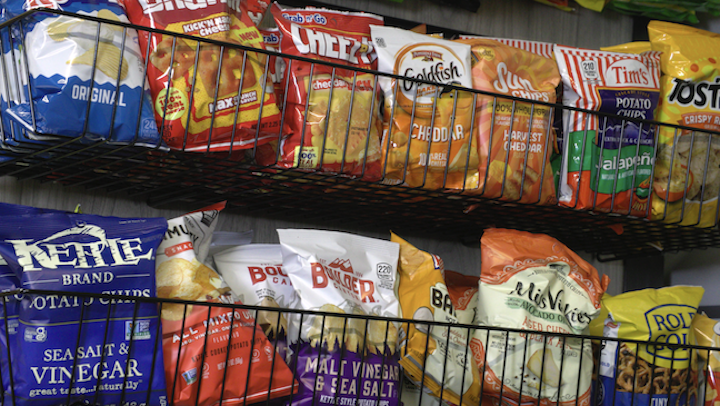
Washington State University researchers are looking into what we eat, what we buy at the grocery store, and the changing food market across the country.
In a recent study, those researchers analyzed national data and focused on ultra-processed food, to understand why some scientific findings suggest that kind of food is addictive.
Since 2024, Washington State University researchers have been analyzing consumer habits through standard data from grocery stores across the country.
Lead WSU researcher, Jill McCluskey, says grocery stores use a four-category scale, called the Nova System.
Within the system, group 1 is unprocessed or minimally processed foods, which include fruits, veggies, and fish. Group 2 is processed culinary ingredients, such as olive oil and butter. Group 3 is comprised of processed foods, like cheese, bread, and wine. Group 4 is ultra-processed foods, which includes chips, hot dogs and soda.
McCluskey says they’re finding consumers who purchased ultra-processed foods don’t necessarily cut back in this category as much as in others when prices rise.
“And we found that [Group 4] has … the lowest sensitivity to price of all the categories by by a lot,” said McCluskey who is a Regents Professor and WSU School of Economic Sciences Director.
McCluskey says their analysis has found people are willing to spend more on ultra-processed food, especially people with younger children. She says if a healthier food's price goes up, they may also substitute with an ultra-processed food: like replacing an apple with chips.
McCluskey says her study aims to also learn more about how and who food companies target with their marketing and pricing.
“Food companies might want to underprice to children, so that they're lifelong … consumers almost like cigarettes or drugs. They might want to get people to start consuming them and then have them as lifetime customers,” McCluskey said.
McCluskey says the study is ongoing.
Tulalip Tribes foster collaboration to restore salmon passages
By Venice Buhain, story published 06/08/2026
The Tulalip Tribes have worked to restore salmon populations for decades. In recent years, they’ve taken a new approach: coordinating public agencies and private landowners to remove culverts and restore streams.
“Fish passage projects are so important to get those juvenile and adult fish back to their habitats that they historically had access to,” said Brett Shattuck, who manages the Tulalip Tribes’ Restoration, Acquisition and Stewardship program.
There are thousands of culverts and other barriers to fish passage throughout the state on both private and public land. The Tulalip Tribes have not only coordinated the collaboration between agencies, but they have secured tens of millions of dollars in recent years, receiving money from both government agencies and private grants.
“So now we're working to replace those crossings that not only convey water, but also convey fish both up and downstream so that we can both get our transportation that we need to the places we need to go and allow those fish to access their habitats upstream,” Shattuck said.
The Northwest Indian Fisheries Commission, an organization that co-manages salmon and other natural resources along with state agencies, recently featured the Tulalip Tribes’ work in a short film called “Passage Home: Tulalip Tribes remove barriers to salmon habitat.” The short documentary was produced by Northwest Treaty Tribes, which is one arm of the commission.
The film features Jason Gobin, Tulalip Tribes’ Director of Natural and Cultural Resources, whose family works in the seafood industry. He said the work helps preserve the salmon and other fish for future generations.
“Projects like this and the returning fish that they provide, provides that opportunity for, you know, myself, my family, our people to go out and harvest out there on the saltwater and in the river here,” Gobin said in the film.
Source: Seattle – rss.app → manual entry