

Each week on The Newsfeed, host Paris Jackson and a team of veteran journalists dive deep into one topic and provide impactful reporting, interviews and community insights from sources you can trust. Each day this week, this post will be updated with a new story from the team.
WA cities pause data center construction to weigh electricity use
By Lizz Giordano, story published 08/17/2026
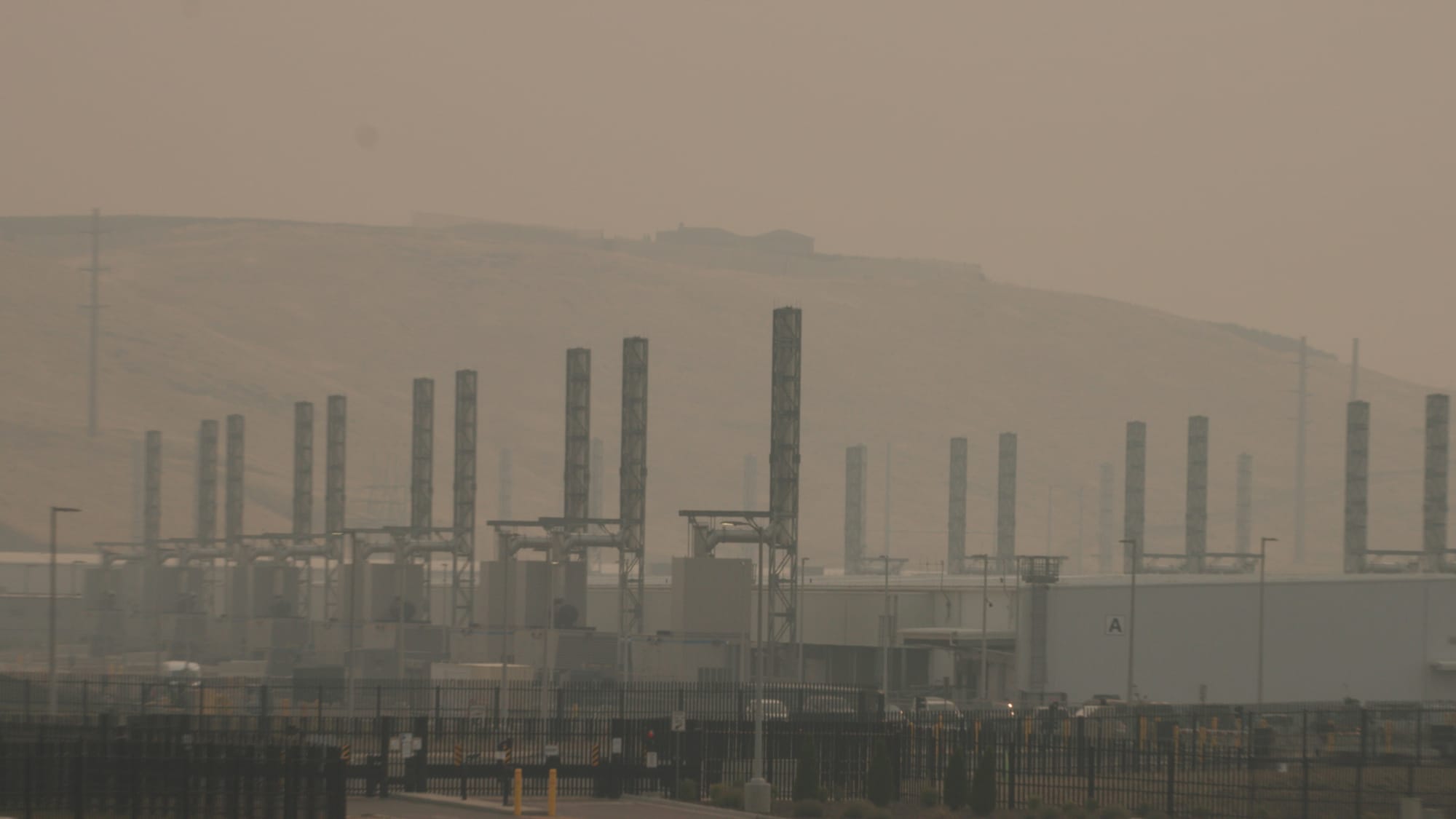
Data center development is moving fast — faster than the laws meant to regulate it. Now some cities are calling for a pause to catch up.
We sat down with a councilmember from the state's largest city to find out why he's proposed and passed a moratorium on large-scale data centers — right as utilities and municipalities brace for a surge in electricity demand.
“We did not and do not have a definition of data centers in our land use code. So what that means is they are largely unregulated at this point, a and so we needed the time to build in to study the issue, put in the appropriate regulations.”
I’m not convinced that this within city limits is the right place for mega data centers, but you know, again, that's the whole purpose of the moratorium is for us to explore that issue.
In WA there are approximately 126 data centers and related facilities with a footprint of nearly 7 million square feet, according to the research firm Baxtel.
Along with Seattle; ten other cities or counties have passed moratoriums on the building of data centers.
Lawmakers and residents worry the electricity demand coming from current and future data centers will strain the already stretched power grid increasing rates for everyone else.
Water usage and noise are also raising concerns, as these facilities run 24/7 … and some rely on large amounts of water each day for cooling.
“I think there's a potential win-win if these data, you know, large-scale data center companies can help us build the the electric grid, the transmission lines to power their needs, but also that can power our you know cities and region more generally. Like that's a potential win-win. But if they if we're not regulating it correctly and they're just soaking up all the energy or making our climate goals even harder to achieve, you know that that would be pretty devastating for our region.
Inside Sabey's newest building: a look at Quincy's data center boom
By Lizz Giordano, story published 08/18/2026
By one estimate there are 56 data centers in Quincy, WA, a town of 8,500 people, which makes it the 11th largest market in the country. Today we take you inside Sabey’s fifth and newest building on its Quincy campus, 15 years after the company first showed up.
Past the corner from a security desk and security gate stretch hallways wide enough to roll a pallet of servers down. Windowless metal doors lead to four data halls, each covering 40,000 square feet.
Some customers have leased just a handful of server cabinets, while others take over entire buildings. These companies include banks, hospitals, airlines, streaming services; platforms most people use every day.
Inside the data hall, rows of servers sit back-to-back to each other. The ends are enclosed in their own boxes to keep contain the warm air the servers emit.
Fans pull that hot air into cooling rooms that line two sides of the data hall where it is chilled down with water. Outside, that same water gets cooled and recirculated back through the closed loop system.
Around the corner, batteries about the size of a person smooth out the incoming power, keeping the voltage steady. Those batteries hold enough power to charge the data hall for a few minutes. Diesel generators are also installed in case of a longer outage. State permits limit the usage of these carbon-emitting power sources.
Typically, companies like Sabey price leases in terms of kilowatt. The entire campus usage is capped at 70 megawatts, the max they can draw at a time from the local utility.
As one data hall gets built out, another one sits empty until Sabey can find more power. Demand is there, says the company. They plan to build 4 more data halls after that at this campus in Quincy, once electricity capacity catches up.
Data center questions surround Central Washington energy development
By Jaelynn Grisso, story published 08/19/2026
With more data centers, comes an increased need for power. But that comes at a time when Washington is already facing a projected energy shortfall, according to a report from an energy consulting firm released earlier this year.
The firm, Energy and Environmental Economics, predicted the northwest would be short nine gigawatts of effective capacity by 2030 and 14 to18 gigawatts by 2035. For comparison, they estimated the total needed energy by 2030 to be about 57 gigawatts.
Developers of the Goldendale Storage Pump in central southern Washington say the facility they’re building will help to meet that need. They estimate the storage pump would generate enough energy to power half a million homes.
But opponents such as the Yakama Nation have long opposed the development, largely because of its location.
“It's a legend site, a cultural site,” said Jeremy Takala, Councilman for the Confederated Tribes and Bands of the Yakama. “There's a lot of archeological sites that is on both sides of the Klamath River, basically identifies and tells us who we are and why. It's been a food gathering site since the beginning of time until the smelter plant came in and that obviously impacted our ability to go to this place.”
Takala said the new development is an example of history repeating itself and compared it to desecration of other holy sites.
“We're in this same scenario again, historical patterns are occurring again, but now it's just on land.” he said. “So what does that mean for this legendary site or important site?… The church and Notre Dame church, when it got burned up, oh everyone freaked out. Everyone was crying around because it's a historical church.”
He also said the Yakama Nation is tracking about 85 development projects on their ancestral lands that are intended to be data centers or energy facilities.
Krystal Two Bulls of the indigenous advocacy group Honor the Earth says tribal lands are often targeted for development and extraction, which has only increased with the rise of hyperscale data centers.
“You're going to see native communities being targeted for them because we have access to land. We have access to water,” she said. “Oftentimes, we have jurisdictional loopholes and issues where we can't hold these corporations accountable … And so we're watching this happen and watching this play out.”
Honor the Earth raises awareness about the impacts and about data center developments themselves, including in a crowdsourced map on its website used to track projects near native lands.
Recent local news reports on the Goldendale Storage Pump tied it to a data center project being developed on nearby land with the same owner.
But the developer says that’s not true. In a written statement provided to Cascade PBS, a spokesperson said, “The Goldendale Energy Storage Project offers a cost-effective, reliable way to store and deliver electricity over long periods. The energy storage project is not linked to the prospective data center. It is being developed independently of the prospective data center and has its own grid connection."
For Takala, it’s important to note that the Yakama Nation is not against renewable energy in general.
“The Yakama Nation is in the heart of all of this energy movement, and while we’re trying to balance out the energy needs, we also want to ensure that people know that the tribe is not against it,” he said.
Two decades of data centers: Quincy's mayors look back
By Lizz Giordano, story published 08/20/2026
Cheap hydropower. Cheap land. That's what drew Microsoft and other tech companies to Quincy, Washington back in 2006 — and it kicked off a data center boom that's reshaped the small city ever since. We sat with two mayors to talk about how data centers have shaped the town over the last two decades.
Out among the rolling hills of Quincy, powerlines cascade across fields of crops, feeding into rows of long, low white buildings. Inside, servers hum away — powering the online services most of us rely on every day.
Along with reshaping the landscape, the data center boom has also given the city's economy a real boost.
“There's all sorts of new stuff in town. When I first got on City Council, we were 25 years behind on all our streets and roads and infrastructure. Now we're kind of caught up,” said current Quincy Mayor Paul Worley.
Along with freshly paved roads, added tax revenue has helped fund new police and fire stations, a hospital, city hall and recreation center.
“They've been good partners all the data centers,” Worley said.
“There's benefits, but it's not… You've got to, you have to weigh the the risks, right? There's still the unknown of of water, electrical use,” said former Quincy Mayor Patty Martin.
Martin, who was mayor from 1993-1997, said the tech companies have taken over massive amounts of farmland.
“It changes the character of the community, right? It had been a food processing town. Now it's controlled by people that, you know, larger corporations that aren't even really present,” Martin said.
Larger data centers are being planned here in WA and across the country to support artificial intelligence.
“AI is going to consume substantially, I mean, orders of magnitude… power, right? And then and then water consumption, and because it’s going to generate more heat,” Martin said.
Washington's next data center boom comes with real tradeoffs
By Lizz Giordano, story published 08/21/2026
Bigger data centers are coming to Washington — and they're bringing some real tradeoffs: more strain on the electrical grid and added pressure on water systems that are already stretched thin by years of drought. Yet, some say data centers are also badly needed for tax revenue and jobs.
We headed to Central Washington, where a local utility is gearing up for the county's first data center — and heard from a lawmaker and a resident on what the next data center boom means for them.
In Malaga, not far from the Columbia River, bulldozers flatten land to make way for another massive building that Microsoft plans to fill with servers and fans. A total of three buildings are planned for the site.
It’s the first data center in the Chelan County Public Utility District. The PUD is in a unique position where it sells most of its Hydro power on the open market.
“We are a surplus generator, which means we generate more electricity than we need locally, and we use about 20% of it on average locally,” said Kirk Hudson, General Manager of the Chelan Public Utility District.
The PUD’s board requires any facilities that consume large amounts of power must find that electricity from an outside source.
“Our board has just said we're not willing right now to sell that energy to data center, and our customers have been very vocal about that. They've been very concerned about using up the excess hydropower for large loads that could be built really quickly, so that's the concern. They can they can be built quickly, and then want to make sure that we have the capacity for the years for load growth here first,” Hudson said.
According to Microsoft, at full operation, this data center site could draw as much as 150 Megawatts at any one time. The tech company says they will be bringing in clean power from outside the region.
Construction of data centers over the last two decades is one bright spot in the industry, says Matthew Hepner, East Wenatchee councilmember and IBEW Union official.
He also says Central Washington towns have benefited economically from the larger tax base data centers have brought in. Hepner wants to see the state build a lot more clean energy to supply the growing data center industry.
“If we have the energy, we will get the economic development that goes with it. And when we do have, when they are coming here, then we get to set the rules for both workers as well as the environment,” Hepner said. “If we drive data centers out from here, they're going to go to the south, and they're just going to run the entire thing on diesel. So we're still going to be using the internet, and those data centers are still going to be operating 24 hours a day. You know, spewing more carbon.”
About 10 miles south of Quincy, Jaque and Alan Rasmussen are feeling the personal impacts of data center growth in the area. They are trying to stop a 230-kilowatt transmission line from ending up in their front yard.
Grant County PUD says they need to build a new 32-mile transmission line to carry more electricity.
“I know that they need the power for the data centers. I understand that… but ratepayers - we’re paying - with our rates increasing for this line, and some of us are paying with our homes,” Jacque Rasmussen said.
The PUD said in a statement that route was chosen because it follows an existing power-line corridor and avoids sensitive federal and state lands, which requires more extensive environmental permitting and leads to construction delays.
The Rasmussens want the PUD to use alternative routes that go through a larger percentage of public land.
If that doesn’t happen, they plan to move.
“We say public use for public good, and so even though like this power is benefiting the data centers that are in Quincy, we live lots of miles away from that, and it's having a huge impact on us and our lives,” Rasmussen said.
Source: Seattle – rss.app → manual entry