

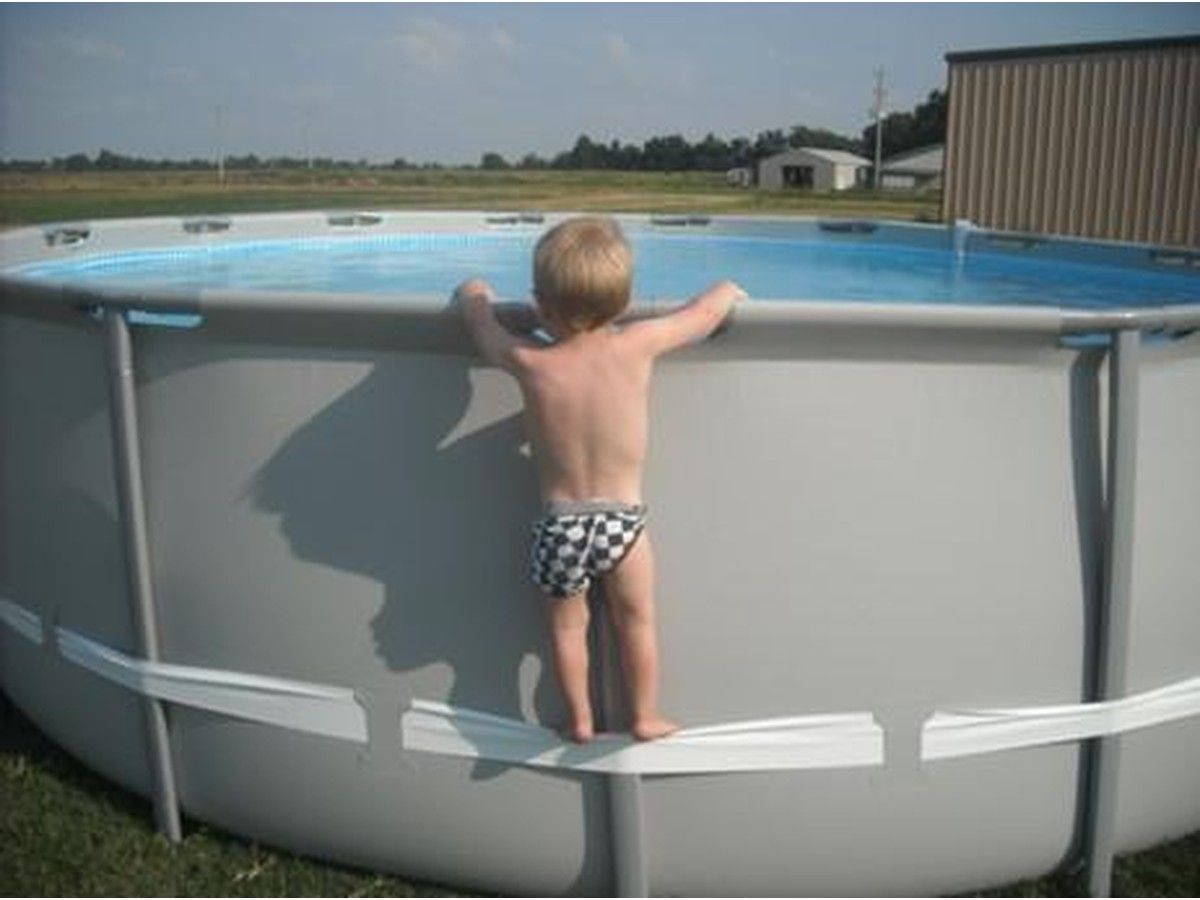
Having a child die is a tragedy every parent fears. When such a tragedy is preventable, it perhaps makes that pain even worse. The aftermath involves guilt, shame and blame for a lifetime.
I remember sitting in a huge ballroom in Chicago in 2018. The speakers were the famous downhill skier Bode Miller and his wife, volleyball star Morgan Beck. That year, their 19-month-old daughter, Emeline Miller, died after drowning in a swimming pool at a neighbour’s house in California.
At the time, I represented the Alberta Chapter of the American Academy of Pediatrics (AAP) during an annual leadership forum in Chicago. Miller and his wife wanted to work with the AAP to raise awareness of the importance of preventing drownings.
Another famous athlete, Jack Nicklaus, lost his grandson in 2005 in a drowning tragedy. The 17-month-old toddler left the pool area with his nanny and older brother, but went back to a hot tub where he drowned.
The above stories are about pools and hot tubs, but what about toilets, inflatable pools, pails of water, river banks, thin ice, boats on lakes, parties by piers and docks, and bathtubs? These are all high-risk areas for drowning, where awareness of the dangers can never be overstated.
In July, the AAP is coming out with new recommendations regarding water safety and the prevention of drowning. They cover topics such as swimming lessons, inflatable pools, drain covers which prevent entrapment under water, the use of inflatable arm bands versus life vests, swimming pool covers and the importance of constant supervision during baths.
Canadian data regarding drownings is available at www.statcan.gc.ca. Closer to home, Alberta data can be found at www.lifesaving.org. The statistics show that toddlers and male adolescents are at the highest risk of drowning.
The good news is that the incidence of drowning in some parts of North America has been reduced due to public education and doctors raising the topic as part of an injury prevention discussion during wellness check-ups.
Swimming lessons were not suggested before the age of four in past AAP position papers. The experts now suggest that swimming lessons be considered between the ages of one and four. The AAP reminds parents that a toddler who knows how to swim should not lead to a false sense of security.
Even when a toddler can swim, supervision at arm’s length is ideal. A napping nanny by a pool, a multi-tasking parent, or supervision by an older sibling are invitations for sudden disaster to strike.
The AAP frowns upon Internet posts of babies under the age of one year who, fully clothed, are shown floating on their backs in a pool or swimming under water. The intentions may be pure and sincere, but the science backing that up is sorely lacking.
Inflatable pools have become more popular. Concerns here are the soft sides, which are easy to lean against and then fall into the pool. Inflatable pools often lack proper fencing surrounding the hazard zone.
Leaving colourful beach balls floating in a pool can be a magnet to a curious toddler who may reach for them and topple over the edges.
Fencing around pool areas must be at least four feet tall, and not be the kind where there are holes allowing the toddler to climb the fence or spaces wide enough to slip through. Proper latches on the gates are also important, and, sadly, when immature supervisors forget to properly latch a gate, it may lead to a tragedy.
Inflatable arm bands are discouraged because they may easily deflate. Life vests are ideal, and these are suggested whenever youngsters are close to a river’s edge, camping, or having parties near docks and piers.
It takes as little as two minutes for a young child to drown; they rarely flail and splash — they simply sink to the bottom.
Pool covers may lead to a false sense of security. Some toddlers may walk on them and fall through. I am also aware of a family whose toddler walked off when both parents assumed the other was supervising. The dead toddler was found under the cover of their indoor pool.
Infant bath seats are another thing to watch. They can topple over very easily, so a child should never be left unattended in one. The AAP discourages supervision of an infant in a bathtub by an older sibling.
In a social media post, Bode Miller’s wife wrote, “I pray to God no other parent feels this pain.” Sadly, some parents will in the summer months ahead; thus, the timing of the AAP statement on water safety. Drowning should be preventable. Deliberate and frequent reminders of prevention are never obsolete.
Dr. Nieman has worked as a community pediatrician since 1987. He is the founder of Centre 70 Pediatrics and has been a Herald columnist since 1999.
Source: Life Fitness – Calgary Herald