

Harvard astrophysicist Avi Loeb has been appointed as the head of a new White House group to study unidentified anomalous phenomena or UAP, a new catch-all term for UFOs that might appear not just in the air but also in space or underwater. Loeb says the group is focused on evidence, instrumentation, data analysis and collection standards.
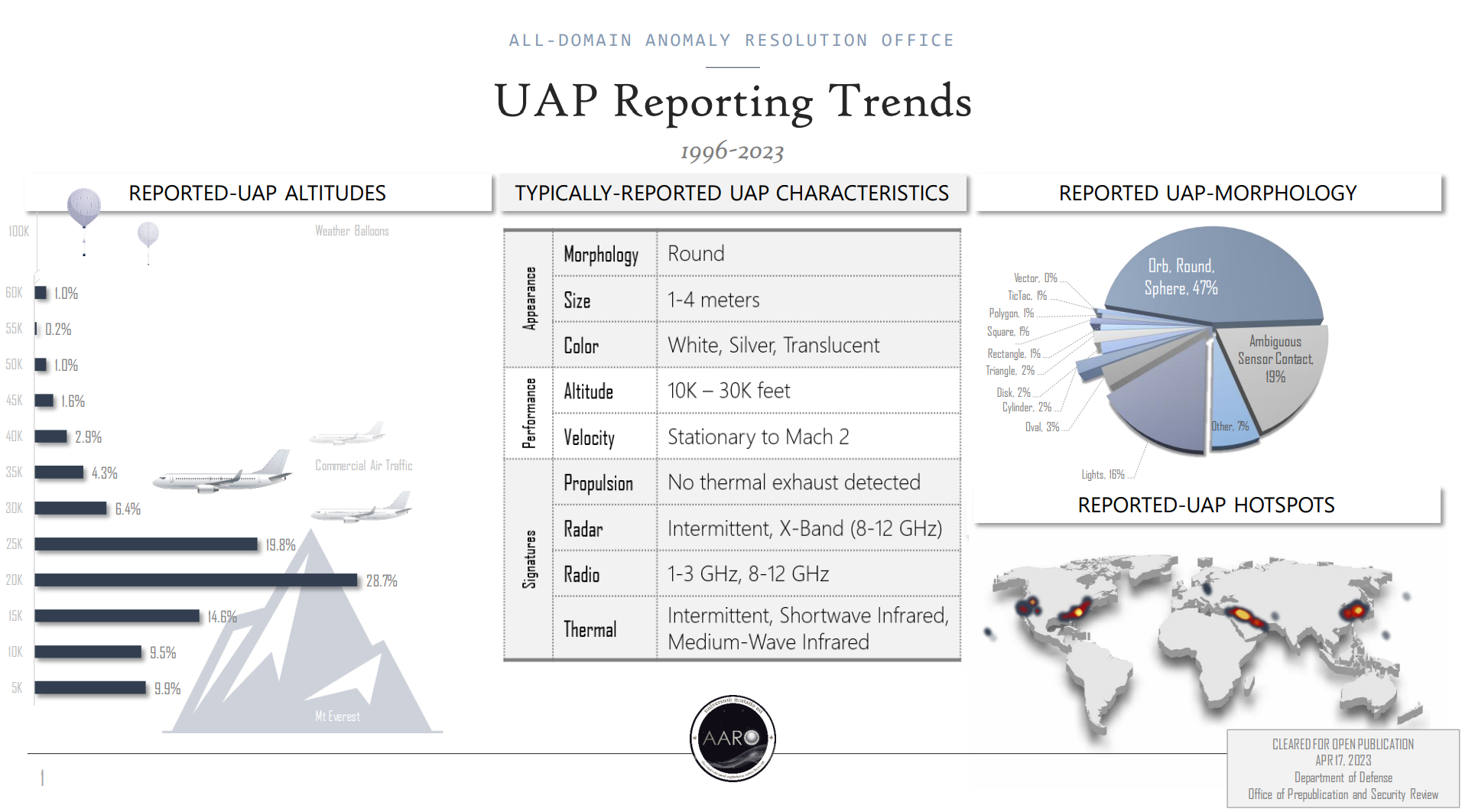
The move follows recent Trump administration initiatives to bring more transparency to the topic of UFOs, or UAP. The UAP Science Advisory Council, Loeb explains, was established by the White House, the Pentagon’s All-Domain Anomaly Resolution Office (AARO), the Office of the Director of National Intelligence (ODNI), the Federal Bureau of Investigation, and other members of the Intelligence Community.
Loeb co-founded and leads the Galileo Project, designed to bring the search for extraterrestrial technological signatures of extraterrestrial technological civilizations “from accidental or anecdotal observations and legends to the mainstream of transparent, validated and systematic scientific research.”
As chair of the just-formed UAP Science Advisory Council, Loeb has built a team of researchers that he describes as “an amazing A-team of exceptional scientists and experts.”
Members of the group come from a wide range of disciplines from data science and instrumentation to biology, oceanography, anthropology and psychology.
The council’s stated purpose is to help government agencies study the nature of UAP through rigorous scientific methods, with an emphasis on collecting and analyzing higher-quality data rather than relitigating older material that cannot be independently verified.
Meet the team
But first things first.
What is the current membership makeup of Loeb’s Council? It’s quite a mix of talent to undertake a new look at UAP:
- Liberty Capito is a professor of practice in data science at the Olin Business School at the Washington University in St. Louis.
- Carol Cleland is a professor in the Department of Philosophy at the University of Colorado Boulder.
- Richard Cloete is a computer scientist at Harvard University and a member of Loeb’s Galileo Project.
- Omer Eldadi is in the department of psychology at Reichman University, Herzliya, Israel.
- Tim Gallaudet is a retired Navy admiral and oceanographer.
- Dale Hanson is an associate professor of economics at George Mason University statistics and economics.
- Ross Howard is producer of John Michael Godier’s Event Horizon podcast that explores the technosignatures of alien technology. He is also with the Sol Foundation aimed at addressing the UAP issue and preparing society for its social implications.
- Kevin Knuth is a professor of physics at the University at Albany.
- Ben Lamm is the co-founder and CEO Of Colossal Biosciences, the world’s first de-extinction company.
- Devesh Nandal is a Swiss National Science Foundation postdoctoral fellow at the Center for Astrophysics at Harvard and Smithsonian.
- Garry Nolan is professor in the Department of Pathology at Stanford University School of Medicine and is executive director of the board of the Sol Foundation.
- Michael Shermer is the founding publisher of Skeptic magazine and an educator on critical thinking.
- Peter Skafish is a sociocultural anthropologist and secretary of the Sol Foundation.
- Matthew Szydagis is an associate professor in the Department of Physics at the University at Albany.
- Jennice Vilhauer is a clinical psychologist with expertise in quantitative psychology and the psychological dimensions of potential disclosure.
Data-driven, physics-based
Space.com reached out to several of the UAP Council members to get their personal views on this new study approach.
“I expect the council and myself to follow methods and techniques deeply rooted in the scientific principles,” said Devesh Nandal.
“The UAP Science council in particular is focused on a data-driven and physics-based approach on the topic of UAP,” said Nandal. “We approach this topic with the same rigor we apply in our respective scientific fields and we hope to provide an unbiased analysis on this topic.”
Nandal said his role is to help with quantitative data analysis and apply his expertise in astrophysics to help the council decipher the origin of UAPs.
“My first and foremost passion is in stellar astrophysics where I study the life and death of massive and supermassive stars,” Nandal said. “I also find the anomalous nature of UAP sightings to be quite intriguing, and whether these events are of terrestrial or extraterrestrial origin, I am excited to apply my understanding of physics to decipher their true nature,” he said.
If such events can be explained using known principles, “that’s excellent,” Nandal advised, as this gives him a chance to test the laws of physics to explain a phenomenon that is captivating fellow humans.
“If such events are beyond our current understanding, I see this as a brilliant opportunity to learn all that I can about the Universe and share my findings with everyone,” Nandal concluded.
Public trust in science
Council member Liberty Capito said she’s honored to be a part of the study group.
“Avi is one of the most brilliant scientists of our time and what he has put together, is what I believe to be a blueprint for re-establishing the public’s trust in science by having people with vastly different views, beliefs and science on it,” Capito said.
From Council member, Robin Hanson: “It’s an honor to be invited, and it’s a great cause. I worried at first if we could find much useful to do, but it seems that we do have some promising ideas.”
Another member of the UAP Council is Carol Cleland, a professor in the Department of Philosophy at the University of Colorado Boulder. She is a Search for Extraterrestrial Intelligence Institute Affiliate and a member of CU Boulder’s Center for Astrobiology.
“I anticipate having a council of outside experts will pressure the government to be more open about releasing information and allowing members of the council to interview UAP witnesses,” Cleland told Space.com.
Potential positive
Identifying the unidentified deserves a high priority within the U.S. government and the scientific community, explains Loeb.
Nevertheless, for organizations that also continue to diligently sort out what’s behind unidentified flying objects (UFOs) in the past and the current UAP tag line, they are taking a cautiously optimistic attitude.
“The involvement of serious, independent scientists is a potential positive development, and the government requires that for any thorough and credible investigation of UAP,” said Mark Rodeghier, president and scientific director of the J. Allen Hynek Center for UFO Studies since 1986.
The key issue is not the credentials of the people involved, Rodeghier said, but the structure they are working within.
“If the Council lacks a clear mandate, access to relevant data, a collaborative relationship with those actually grappling with the UAP problem in the government, and then a path for public reporting, its practical value may be quite limited,” Rodeghier told Space.com.
Wait and see
Robert Powell, an executive board member of the Scientific Coalition for UAP Studies, said he’s adopting a “wait and see” attitude regarding the UAP Council at this point in time.
“Since the UAP Council seems to have the ear of some in Congress,” Powell told Space.com, “I hope that they will spend some of their time advocating that Congress appropriate funding specific to the study of UAP through the National Science Foundation.”
In SCU board meetings, Powell added, they are a strong proponent of making funding available to the scientific community and academia.
“We never know from where a breakthrough may occur in the study of UAP,” Powell said, “and the more scientists involved from all areas of research, the better.”
Source: Space.com