
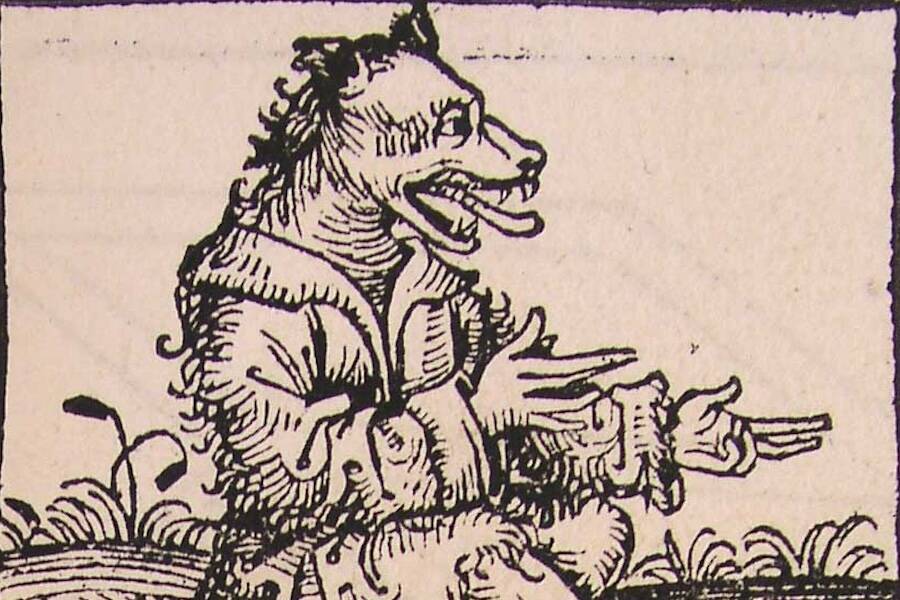
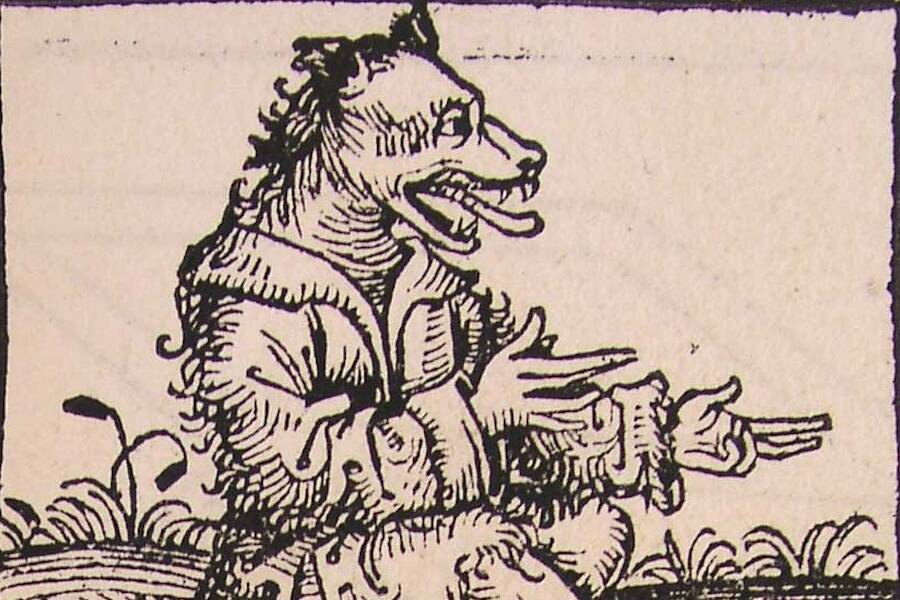
Public DomainAn illustration of a cynocephalus from Hartmann Schedel’s 1493 Nuremberg Chronicle.
Throughout ancient history, strange figures known as cynocephali have appeared in art and literature across the globe. These beings were depicted as humans with the heads of dogs, but their mannerisms varied from culture to culture.
Cynocephali were first mentioned by the ancient Greeks, who claimed that they lived on the outskirts of civilization and barked to communicate. However, rumors of canine-like people were also documented by Marco Polo and other medieval explorers, and some of them were purportedly just like humans aside from their bizarre heads.
Reports of human-dog hybrids even made it to the New World, where Hernán Cortés was asked to confirm their existence during his travels through Mesoamerica.
While modern science has debunked the myth of cynocephali, scholars still aren’t sure exactly what historical writers were referring to. Perhaps the records were the result of a misunderstanding, or maybe “dog-headed” was simply a way for ancient people to describe “others.” But regardless of their origins, cynocephali certainly made their mark on history.
What Were These Dog-Headed Creatures?
It’s important to note that Greek and Roman audiences saw distant, unknown, and unconquered lands as blank slates for their imaginations, waiting to be filled in by the fantastical tales of those who dared travel there. As such, cynocephali may have been a representation of their curiosities, illustrating their sense of wonder — and their fears.
Some people at the time only needed mere descriptions of these dog-headed beings from those who claimed to have seen them in order to believe that they existed. The only question was where these creatures lived. Some thought they dwelled in India, while others placed them in Africa, central Asia, or distant islands in the eastern seas.
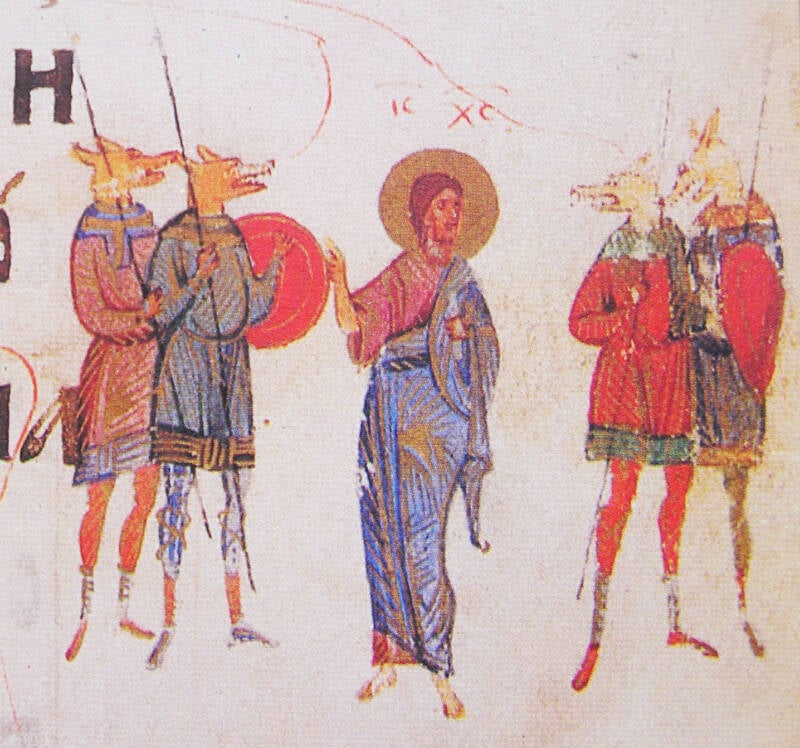
Public DomainCynocephali surrounding Jesus Christ in an illustration from the Kiev Psalter of 1397.
The descriptions themselves were ghastly, but they dramatically varied depending on the source. Most accounts agreed on the underlying physiognomy: Cynocephali possessed the bodies of humans but the heads of large dogs. They also had sharp teeth to tear raw flesh apart and were often described as being covered in coarse hair.
Their faces were said to resemble mastiffs, greyhounds, and jackals — or bloodthirsty wolves. These beings purportedly barked, howled, and growled to communicate, and they used their exceptional sense of smell to hunt their prey. However, cynocephali employed human tools, such as bows and spears, to bring their enemies down. They also traded with neighboring humans and lived in organized communities.
These accounts of cynocephali are scattered throughout history — but where did the myth begin?
Cynocephali In The Ancient World
The legend of cynocephali first emerged in ancient Greece as writers attempted to describe lands far beyond the limits of their understanding. Historians at the time fused alleged eyewitness accounts of these creatures with the hushed hearsay of startled explorers and terrified merchants — to rather ominous results.
The term cynocephali derives from Kynokephalos, the ancient Greek words for “of the dog” (kynos) and “head” (kephalos). However, reports of these enigmatic beings appear across antiquity, from Egypt to China, and well into the medieval period and beyond.
One of the earliest accounts was that of Greek physician Ctesias, who attempted to chronicle his travels to India in the fifth century B.C.E. The resulting manuscript, Indica, has since been lost, but references to it appear in later texts. For instance, Photius’ Bibliotheca states that Ctesias wrote of mountains in India that are home to “men with the head of a dog, whose clothing is the skin of wild beasts.”
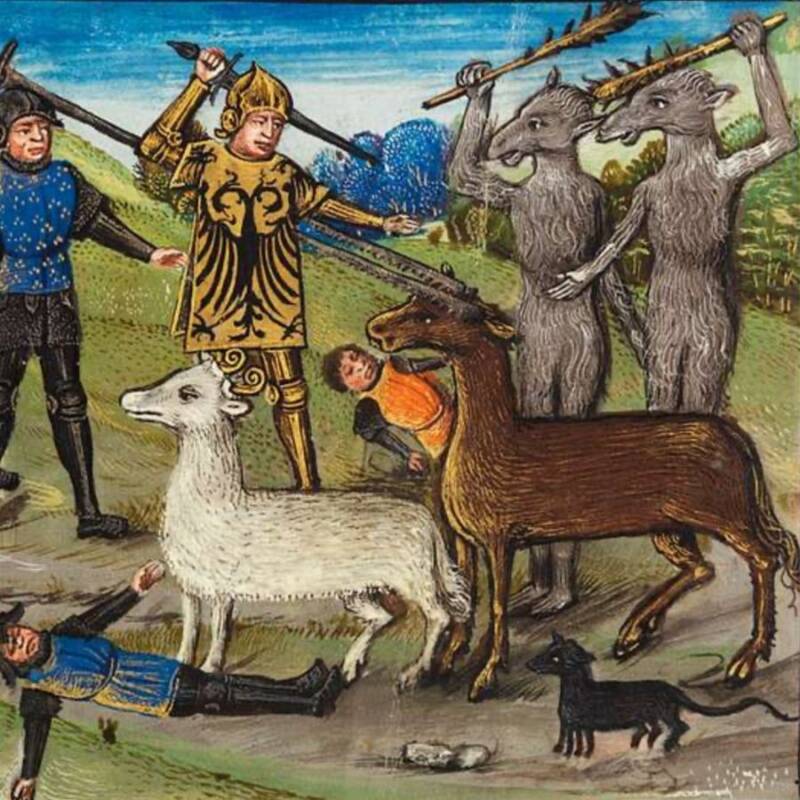
Public DomainA 15th-century illustration of Alexander the Great battling dog-headed men.
According to Ctesias, “They speak no language, but bark like dogs, and in this manner make themselves understood by each other… They understand the Indian language but are unable to converse, only barking or making signs with their hands and fingers by way of reply.” These cynocephali purportedly survived by hunting and raising sheep, lived in caves, and were known to be fierce in battle.
Since there is no surviving primary source, many historians dismiss Ctesias’ words — but other, more reputable ancient writers also mentioned cynocephali. In his Natural History, Pliny the Elder described a nomadic tribe in Ethiopia that lived off the milk of “dog-headed apes.” Herodotus also wrote of “dog-headed men” who lived in the lands west of Libya.
Some scholars believe that these early tales of cynocephali may have been inspired by ancient travelers seeing creatures like baboons for the first time and misunderstanding what they were. But these bizarre beings continued to appear in various works for millennia.
The Legend During Medieval Times
Around 1000 C.E., dog-headed creatures were mentioned in an unexpected text: the Nowell Codex, which contains the epic poem Beowulf. One of the manuscripts in the codex, The Wonders of the East, describes “half-hounds” that live near the Red Sea.
Later in the Middle Ages, two famous explorers claimed to have seen cynocephali during their sea voyages near India. First, in The Travels of Marco Polo, Polo himself reported spotting human-dog hybrids on the Andaman Islands.
“And I assure you,” Polo wrote, “that all the men of this Island of Angamanain have heads like dogs, and teeth and eyes likewise; in fact, in the face they are all just like big mastiff dogs!”

Public DomainCynocephali as described in The Travels of Marco Polo.
Half a century later, Maghrebi Muslim adventurer Ibn Battuta recorded a similar sight on an island between India and Sumatra. He wrote in Travels in Asia and Africa, “Fifteen days after leaving Sunarkáwán we reached the country of the Barahnakár, whose mouths are like those of dogs… Their men are shaped like ourselves, except that their mouths are shaped like those of dogs.”
These men may have been exaggerating the features of Indigenous tribes in the area. Indeed, Battuta was likely describing the Mentawai people, who are known to practice tooth sharpening. In this way, they continue the ancient tradition of using dog-headedness to describe “others” — that is, non-Western, “uncivilized” humans.
Some medieval Christian traditions even transformed cynocephali from a horrid race of impossible creatures to a creed of humanoid beings that were worthy of God’s love. One legend claimed that St. Christopher, the martyred patron saint of travelers, had the head of a dog.
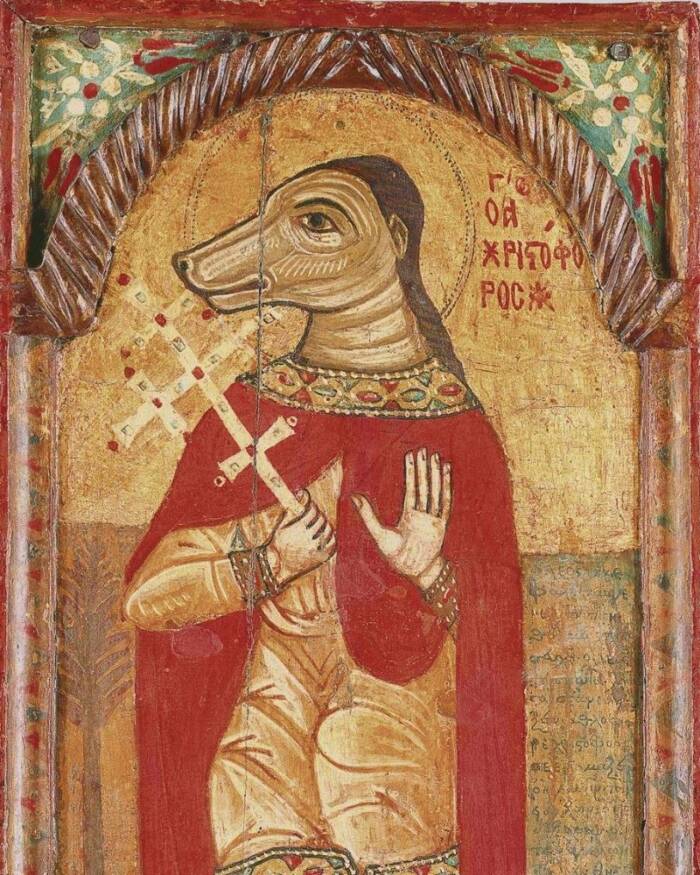
Public DomainSt. Christopher was sometimes depicted as a cynocephalus in the Eastern Orthodox Church.
Christopher was allegedly a cynocephalus before his conversion to Christianity — but this tale, too, may have been the result of misinterpretation. Some scholars believe that a medieval scribe mistook the Latin word for “Canaanite” (Cananeus) as “canine” (caninus).
In fact, there is no solid evidence that cynocephali ever existed — and that’s not for a lack of searching.
Did Cynocephali Really Exist?
The myth of cyncoephali persisted into the 16th century, when reports of dog-headed humans emerged in the New World. As Hernán Cortés set out to colonize Mexico and Central America in the early 1500s, the governor of Cuba asked him to investigate rumors of people with “huge ears” and “the faces of dogs” living in the area.

Public DomainHernán Cortés explored Mesoamerica and brought about the collapse of the Aztec civilization — but he found no sign of cynocephali.
Cortés never found them. And as the Age of Discovery progressed, it became clear that cynocephali didn’t exist anywhere. Coastlines were charted, distant woodlands were explored, and no evidence of dog-headed humans emerged.
Today, scholars largely agree that ancient and medieval descriptions of cynocephali were simply our ancestors’ way of portraying the unfamiliar. Still, the stories were so fantastical that human-dog hybrids have made their way into modern media, appearing in comic books and video games.
Of course, there are still small corners of the Earth that have yet to be explored — so we can’t count out cynocephali quite yet.
After learning about cynocephali, read about Anubis, the jackal-headed god of ancient Egypt. Then, discover 11 mythical creatures from folklore and legend.
The post What Are Cynocephali? Inside The Historical Records Of The Dog-Headed Humans Who Lived Across The Globe appeared first on All That's Interesting.
Source: Learn – allthatsinteresting